

Fujairah Traffic Truck & Bus
Practice mode· Heavy vehicle skillsFujairah Traffic - UAE Heavy Vehicle Skills Test 1
First set of questions on truck and bus operation: braking distances, load stability, blind spots, turning space and vehicle checks. Master the skills unique to heavy vehicles.
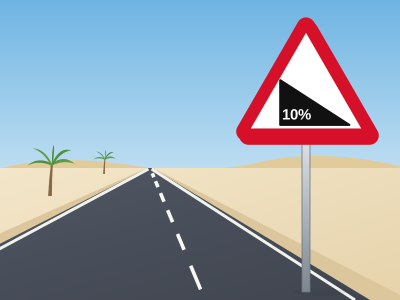
What is brake fade in a heavy vehicle?
The other 12 questions in this test
Read them all. The answer and the reason for each, and the timed 22-question run, are in the Fujairah Traffic Theory Test Questions PDF.
- Q11Heavy vehicle
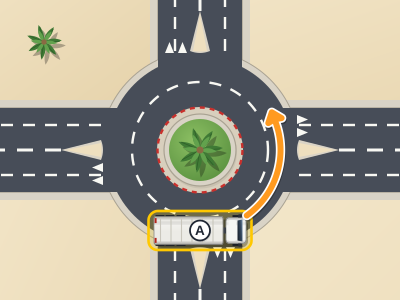
How should a heavy-vehicle driver approach a roundabout to reduce the risk of rollover?
- AMaintain motorway speed and brake sharply at the give-way line
- BAccelerate through the roundabout to minimise time spent turning
- CSlow down well before the roundabout and enter at a speed that keeps the vehicle stable throughout the full arc of the turn
- DUse the handbrake to control speed on the roundabout itself
Answer and explanation in the bank
- Q12Heavy vehicle
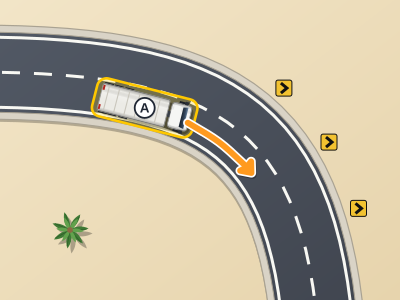
A heavy vehicle is carrying bulk liquid in a partially filled tanker. Why is this particularly hazardous on bends?
- ALiquid loads cause the brakes to vibrate and lose effectiveness
- BThe liquid surges sideways (free surface effect), raising the effective centre of gravity and greatly increasing rollover risk
- CA partial fill reduces tyre grip on the inside wheels of the bend
- DA partly filled tanker is always lighter and therefore inherently safer than a full one
Answer and explanation in the bank
- Q13Heavy vehicle
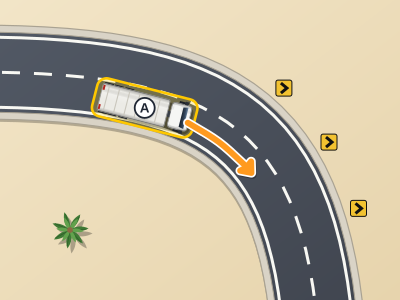
Which of the following best explains why a loaded high-sided truck rolls over at a lower cornering speed than the same truck when unladen?
- AA loaded truck has higher tyre pressure, which reduces tyre grip on bends
- BEngine power increases with load, causing the driver to over-accelerate into bends
- CA loaded truck has stiffer suspension that transfers excessive force directly to the tyres
- DThe load raises the centre of gravity, so less lateral force is needed to tip the vehicle past its stability threshold
Answer and explanation in the bank
- Q14Heavy vehicle
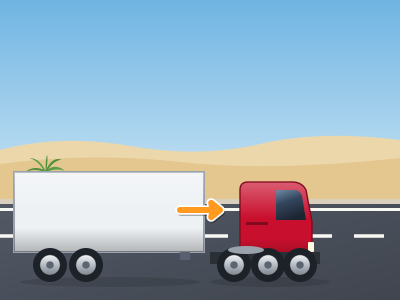
What is the fifth wheel on a tractor unit?
- AThe spare wheel stored under the tractor chassis
- BAn additional tag axle fitted between the drive axles
- CThe horseshoe-shaped coupling plate mounted on the tractor that the trailer kingpin locks into, connecting tractor to trailer
- DA steering-assistance mechanism on the front axle
Answer and explanation in the bank
- Q15Heavy vehicle
After coupling a trailer to a tractor, how should a driver verify the connection is secure?
- APull gently forward against the trailer brakes and visually confirm the kingpin lock is engaged and the safety latch is in place
- BDrive on the road for 10 km to let the coupling settle before checking
- CRev the engine hard; if the trailer does not move the coupling is secure
- DThe coupling mechanism self-checks and no driver inspection is needed
Answer and explanation in the bank
- Q16Heavy vehicle
When uncoupling a trailer on a flat surface, what must the driver complete before releasing the kingpin?
- AApply the trailer parking brake, lower the landing legs to take the weight, and disconnect air and electrical lines
- BRelease the kingpin first, then apply the trailer brakes and lower the legs
- CLeave the trailer brakes off so the trailer can be repositioned by hand later
- DOnly the landing legs need to be lowered; the brakes and lines can be dealt with afterwards
Answer and explanation in the bank
- Q17Heavy vehicle
What is the kingpin on a semi-trailer?
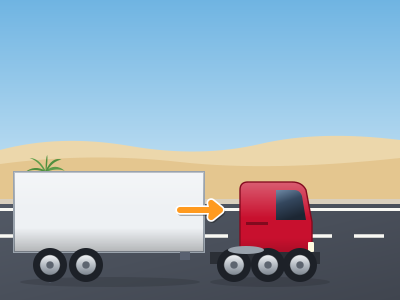
- AThe heavy steel pin fixed to the underside of the trailer's front that locks into the tractor's fifth wheel to join the two units
- BThe main retaining bolt holding the trailer's rear axle assembly
- CThe pin connecting the trailer landing leg to the chassis frame
- DA pivot pin on the front steerable axle of a self-steering trailer
Answer and explanation in the bank
- Q18Heavy vehicle
When should a banksman (spotter) be used to assist a heavy-vehicle driver who is reversing?
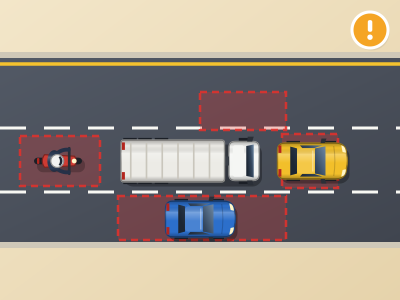
- AOnly when reversing on public roads after dark
- BOnly when the vehicle is carrying dangerous goods
- CA banksman is legally required only for vehicles longer than 20 metres
- DWhenever the driver cannot clearly see all areas behind the vehicle, especially in confined yards or busy areas
Answer and explanation in the bank
- Q19Heavy vehicle
What is the standard signal a banksman uses to tell a reversing heavy-vehicle driver to stop immediately?
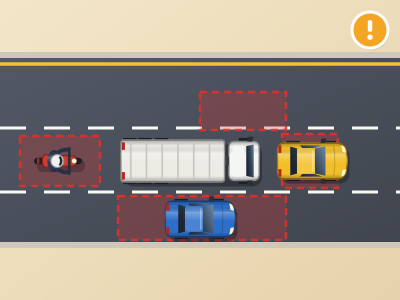
- ABoth arms raised or crossed clearly above the head, or a raised fist held prominently
- BOne hand pointing to the left side
- CBoth hands waving downward toward the ground
- DOne finger pointing at the ground directly behind the vehicle
Answer and explanation in the bank
- Q20Heavy vehicle
You are reversing a truck with a banksman guiding you. You suddenly lose sight of the banksman in your mirrors. What must you do?
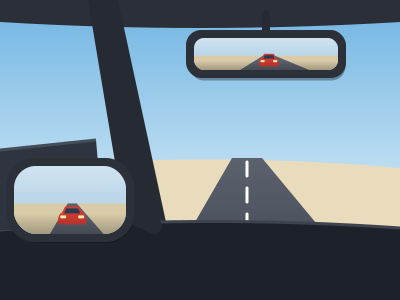
- AContinue slowly because the banksman will reappear in your mirrors shortly
- BStop immediately and do not move again until visual contact with the banksman is re-established
- CSound the horn and continue at the same cautious speed
- DAsk a passenger in the cab to lean out and look for the banksman while you continue
Answer and explanation in the bank
- Q21Heavy vehicle
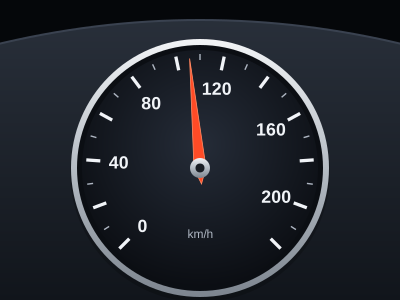
Are the speed limits for heavy vehicles on UAE highways generally the same as, lower than, or higher than those posted for private cars?
- AExactly the same as posted limits for all vehicle types
- BLower: heavy vehicles have their own, lower limits shown on signs, and many must be fitted with speed limiters
- CHigher, because trucks are engineered for sustained high-speed operation
- DThere are no separate speed limits for heavy vehicles
Answer and explanation in the bank
- Q22Heavy vehicle
Why are separate, lower speed limits set for heavy vehicles on UAE roads?
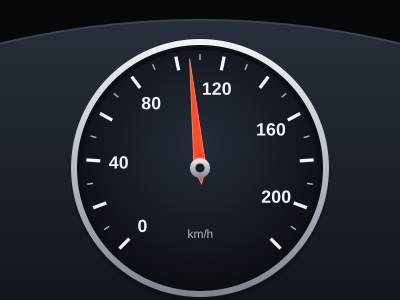
- AHeavy vehicles are less aerodynamic and physically cannot safely reach the speeds cars can reach
- BLower limits are set purely to reduce the fuel consumption of commercial fleets
- CMuch longer stopping distances and higher rollover risk mean a crash at the same speed as a car causes far greater damage and injury
- DSeparate limits make it easier for police to issue fines to commercial operators
Answer and explanation in the bank
Every answer above, with the rule it comes from, plus the full 22-question timed test.
Get the Fujairah Traffic Theory Test Questions - AED 29What this test covers
Topics include road signs, traffic signals, right of way, roundabouts, speed limits, seat belts, fines and penalties, and the safe-driving rules specific to your vehicle category. Full question-by-question feedback with explanations is shown immediately after you finish the test above.
Frequently asked questions
How many questions is the Fujairah Traffic truck & bus theory test?
The official Fujairah Traffic truck & bus theory test in Fujairah has 40 questions and you need 30 correct (75%) to pass. This practice test has 22 questions.
Is this the real exam?
These are practice questions for study only, written from the public RTA handbook and UAE traffic rules and to what candidates report from the real test. They are not the official exam questions and Wathim is not affiliated with the RTA, ITC, SRTA or any UAE government body. Test format, question count and pass mark can change and vary by emirate, so always confirm the current requirements with the licensing authority before your real test.
Is this practice test free?
The first 10 questions are free, with no signup, and each shows the answer and the reason. The full 22-question test, timed, is in the Fujairah Traffic Theory Test Questions PDF (AED 29, one payment), with every question in the bank.
What does the Fujairah truck & bus theory test cover?
Road signs, traffic signals, right of way, roundabouts, speed limits, seat belts, penalties and safe-driving rules, plus the handling and safety topics specific to your vehicle.