

Sharjah Police Light vehicle
Practice mode· Right of way & safetySharjah Police - UAE Safe Driving Practice Test
Covers defensive driving, following distances, fatigue, visibility, adverse weather and hazard awareness. Safe driving habits save lives and keep your licence clean.
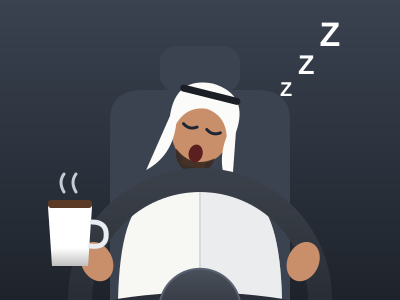
On a long drive in hot UAE weather, why does staying hydrated matter for safety?
The other 12 questions in this test
Read them all. The answer and the reason for each, and the timed 22-question run, are in the Sharjah SRTA Theory Test Questions PDF.
- Q11Safe driving
What does good hazard anticipation in defensive driving require?
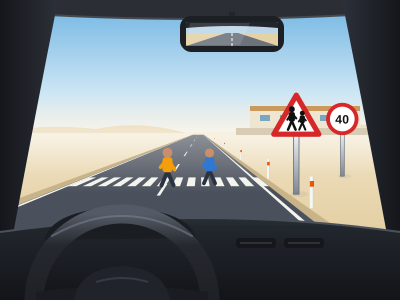
- AScanning far ahead, checking mirrors regularly, and reading the road for clues of danger
- BFocusing only on the vehicle directly in front of you
- CReacting only after a hazard has fully developed
- DTrusting other drivers to warn you before acting
Answer and explanation in the bank
- Q12Safe driving
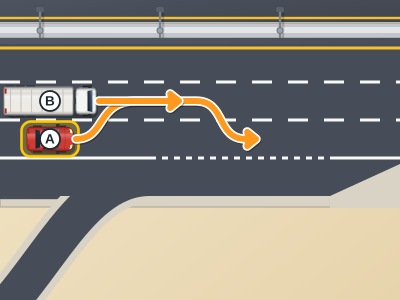
When following a large truck, why should you increase your following gap beyond normal?
- ATrucks always stop faster than cars, so you need less distance
- BYou do not need any adjustment when following a truck
- CThe truck blocks your view ahead, so you need extra time to see and react to hazards
- DA bigger gap lets you draft behind the truck to save fuel
Answer and explanation in the bank
- Q13Safe driving
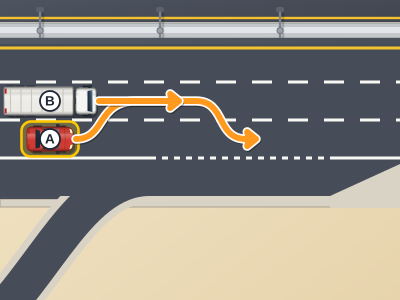
What is the safest way to overtake a large truck on a multi-lane road?
- AStay alongside the truck until traffic clears ahead
- BPass quickly in one smooth move, do not linger in the truck's blind spots
- CMove into the space directly alongside the cab first and signal to the driver
- DOvertake on the right-hand side, where the driver can see you better
Answer and explanation in the bank
- Q14Safe driving
Your vehicle breaks down on a motorway. In what order should you take the first actions?
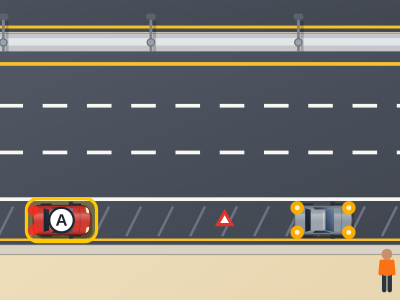
- AStop in the live lane, then get out to inspect the vehicle
- BStay in the car in the live lane and wait for police
- CMove to the hard shoulder, switch on hazard lights, get everyone out by the right-hand (passenger) doors away from traffic, put out a warning triangle if safe and call for help
- DPush the car to the nearest junction before stopping
Answer and explanation in the bank
- Q15Safe driving
Where should you place a warning triangle after breaking down on a fast road?
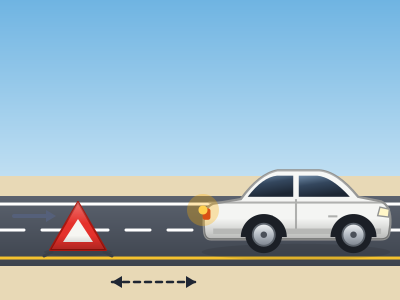
- ADirectly against the rear bumper
- BAt the nearest junction regardless of distance
- CWell behind the vehicle on the same side, far enough for approaching drivers to see it and slow down, and further back on high-speed roads
- DWarning triangles are not used in the UAE
Answer and explanation in the bank
- Q16Safe driving
You arrive at a serious road crash. After making the scene safe, what is the internationally accepted first action of basic first aid?
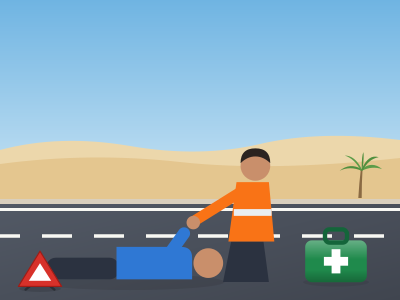
- ACheck for danger, then assess the casualty's response and call emergency services
- BMove all casualties off the road immediately
- CGive the casualty water and reassurance before anything else
- DBegin CPR on every unconscious person without checking for breathing
Answer and explanation in the bank
- Q17Safe driving
After a minor collision with no injuries, what should you do before moving vehicles?
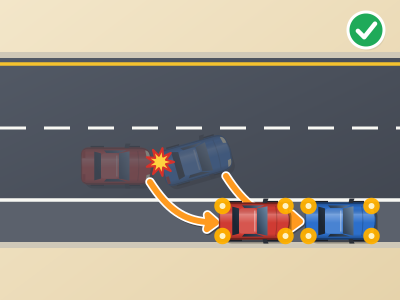
- ADrive away quickly to avoid a traffic jam
- BMove vehicles immediately without documenting anything
- CExchange details with the other driver and photograph the scene, then notify police as required
- DWait for police even if the road is clear and both sides agree on what happened
Answer and explanation in the bank
- Q18Safe driving
How does unsecured load in a vehicle or trailer create a hazard for other road users?
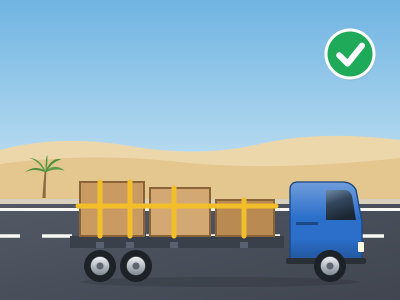
- AAn unsecured load only risks the carrier vehicle, not others
- BIt only matters for loads above 500 kg
- CLoad securing is optional on private roads
- DItems can shift, unbalance the vehicle, or fall into the road and strike other vehicles
Answer and explanation in the bank
- Q19Safe driving
Why is using a hand-held mobile phone while driving so dangerous?
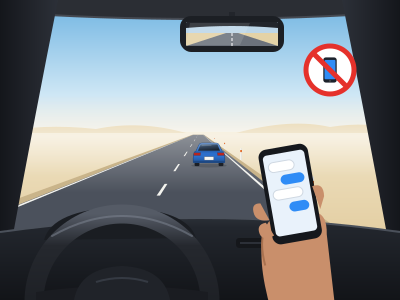
- AIt only matters if the phone screen is bright
- BIt is safe as long as you glance at the screen briefly
- CIt occupies your hand and diverts your attention, significantly slowing reaction time
- DThe risk only applies at speeds above 100 km/h
Answer and explanation in the bank
- Q20Safe driving
Which distraction is considered just as risky as a hand-held phone call, even though your hands stay on the wheel?
- AListening to the radio on low volume
- BHolding a hands-free phone conversation when mentally demanding
- CUsing cruise control on a clear motorway
- DChecking your dashboard instruments every few seconds
Answer and explanation in the bank
- Q21Safe driving
What is the safest approach to programming your satellite navigation device before a journey?
- ASet the destination before you set off, not while driving
- BType the destination at the first red light
- CAsk a passenger to hold the device in front of your face
- DProgramme it while on the motorway at 120 km/h
Answer and explanation in the bank
- Q22Safe driving
What is eco-driving and how does it contribute to safety?
- ADriving as slowly as possible regardless of conditions
- BSmooth acceleration and braking that reduces fuel use and also lowers crash risk from sudden manoeuvres
- CSwitching off the engine at every red light without exception
- DEco-driving has no safety benefit and is purely environmental
Answer and explanation in the bank
Every answer above, with the rule it comes from, plus the full 22-question timed test.
Get the Sharjah SRTA Theory Test Questions - AED 29What this test covers
Topics include road signs, traffic signals, right of way, roundabouts, speed limits, seat belts, fines and penalties, and the safe-driving rules specific to your vehicle category. Full question-by-question feedback with explanations is shown immediately after you finish the test above.
Frequently asked questions
How many questions is the Sharjah Police light vehicle theory test?
The official Sharjah Police light vehicle theory test in Sharjah has 40 questions and you need 30 correct (75%) to pass. This practice test has 22 questions.
Is this the real exam?
These are practice questions for study only, written from the public RTA handbook and UAE traffic rules and to what candidates report from the real test. They are not the official exam questions and Wathim is not affiliated with the RTA, ITC, SRTA or any UAE government body. Test format, question count and pass mark can change and vary by emirate, so always confirm the current requirements with the licensing authority before your real test.
Is this practice test free?
The first 10 questions are free, with no signup, and each shows the answer and the reason. The full 22-question test, timed, is in the Sharjah SRTA Theory Test Questions PDF (AED 29, one payment), with every question in the bank.
What does the Sharjah light vehicle theory test cover?
Road signs, traffic signals, right of way, roundabouts, speed limits, seat belts, penalties and safe-driving rules, plus the handling and safety topics specific to your vehicle.