

Sharjah Police Truck & Bus
Practice mode· Heavy vehicle skillsSharjah Police - UAE Heavy Vehicle Skills Test 2
Second set of heavy-vehicle questions covering coupling, tunnels and bridges, passenger safety, hill starts and managing long or wide loads. Complete both tests for full coverage.
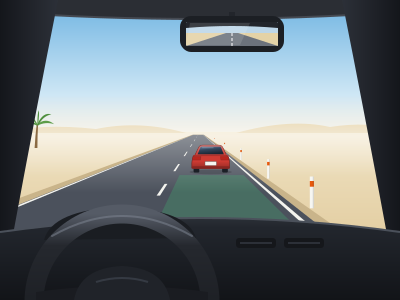
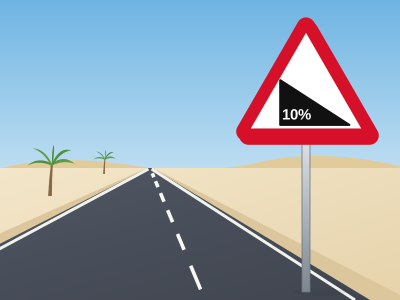
Which of the following is a warning sign that your truck may be experiencing brake fade on a long descent?
The other 12 questions in this test
Read them all. The answer and the reason for each, and the timed 22-question run, are in the Sharjah SRTA Theory Test Questions PDF.
- Q11Heavy vehicle
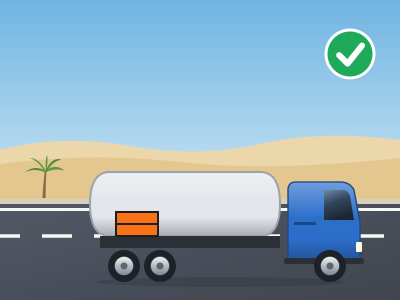
Which document relating to the cargo must a driver carrying dangerous goods have available in the cab at all times?
- AOnly a standard commercial invoice or delivery note is required
- BA photocopy of the operator's trade licence is sufficient documentation
- CNo additional documents beyond a standard driving licence are required for dangerous goods
- DA transport document stating the goods' UN number, hazard class, quantity, and emergency contact details
Answer and explanation in the bank
- Q12Heavy vehicle
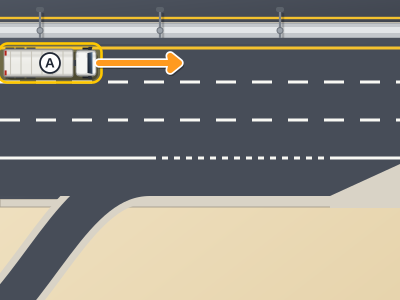
What is the purpose of a range-change (split) gearbox on a heavy truck?
- AIt allows the driver to change gear without using the clutch pedal in traffic
- BIt doubles the number of effective gear ratios, with a low range for steep hills and heavy loads and a high range for normal road speeds
- CIt enables four-wheel-drive operation on slippery or off-road surfaces
- DIt automatically selects the correct gear based on the vehicle's load weight
Answer and explanation in the bank
- Q13Heavy vehicle
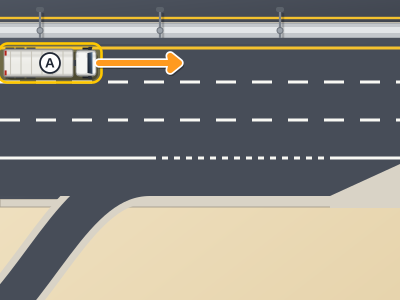
On a long flat motorway stretch with a full load, which range should a driver select in a range-change gearbox?
- ALow range at all times for maximum engine control and safety
- BLow range in the driving lane and high range only when overtaking
- CHigh range, to access the taller gear ratios suited to efficient motorway cruising
- DThe range selector is automatic on modern trucks and cannot be changed by the driver
Answer and explanation in the bank
- Q14Heavy vehicle
Why are high-sided vehicles such as curtain-sided lorries and empty box trailers particularly vulnerable to strong crosswinds?
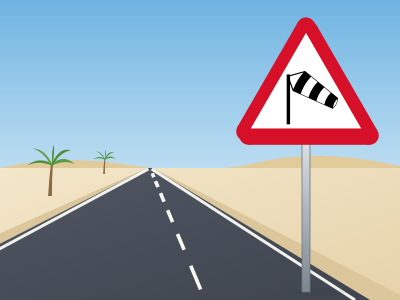
- AThey are heavier on one side, which makes them lean into the wind
- BTheir aerodynamic shape amplifies wind speed around the vehicle body
- CCrosswinds only significantly affect motorcycles and have little impact on large vehicles
- DTheir large flat sides present a huge area to the wind, creating a lateral force that can push the vehicle across lanes or even cause rollover
Answer and explanation in the bank
- Q15Heavy vehicle
School buses in the UAE are fitted with speed limiters set to what maximum?
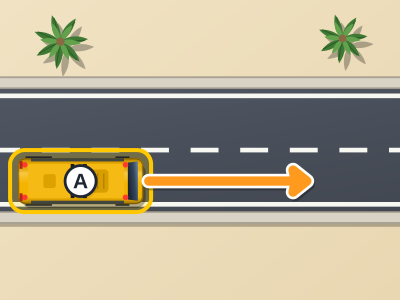
- A60 km/h
- B80 km/h
- C100 km/h
- D120 km/h
Answer and explanation in the bank
- Q16Heavy vehicle
What does a vehicle's maximum rated load (payload) include?
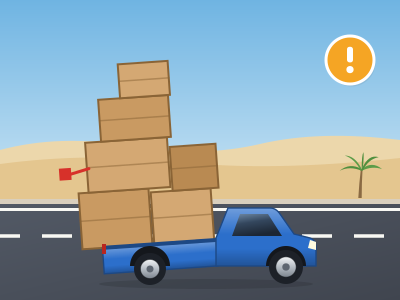
- ACargo only
- BCargo and extra equipment only
- CThe combined weight of cargo, occupants and added equipment
- DOccupants only
Answer and explanation in the bank
- Q17Heavy vehicle
Compared with an empty truck, a fully laden truck travelling at the same speed will have a stopping distance that is
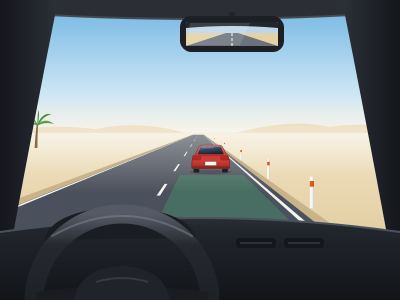
- AConsiderably longer, because higher mass requires more braking force over a greater distance
- BRoughly the same, because the brakes are the same physical size
- CSlightly shorter, because extra weight increases tyre contact area and grip
- DShorter on wet roads only, due to increased weight pressing the tyres down
Answer and explanation in the bank
- Q18Heavy vehicle
What is the recommended minimum following distance for a heavy vehicle on an open highway in dry conditions?
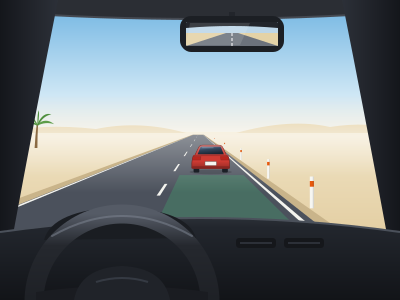
- AA gap well beyond the two-second rule used for cars, because heavy vehicles need far more distance to stop safely
- BOne car length for every 10 km/h of speed
- CThe same two-second rule as for a light vehicle
- DTen metres regardless of speed
Answer and explanation in the bank
- Q19Heavy vehicle
How does rain affect the stopping distance of a heavy vehicle?
- AIt has no effect because truck tyres have deep tread patterns
- BIt slightly reduces stopping distance because water cools the brake drums
- CIt only affects stopping distance on gravel or unpaved roads
- DIt increases stopping distance significantly because wet roads reduce tyre grip
Answer and explanation in the bank
- Q20Heavy vehicle
A truck is travelling at the posted speed limit. The vehicle ahead brakes suddenly. Which factor MOST increases the risk that the truck will not stop in time?
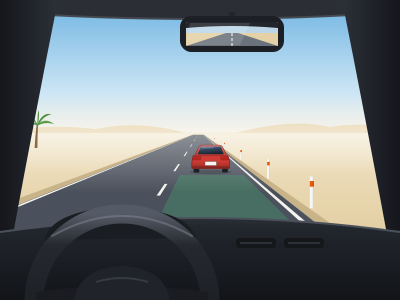
- AThe truck's engine is running at low revs at the time of braking
- BThe truck is fully loaded, greatly increasing its kinetic energy and extending stopping distance
- CThe driver changed lanes shortly before the emergency arose
- DThe truck is fitted with disc brakes rather than drum brakes
Answer and explanation in the bank
- Q21Heavy vehicle
What is brake fade in a heavy vehicle?
- AThe automatic release of brakes when air system pressure drops below a safe level
- BThe gradual wear of brake pads over thousands of kilometres of normal use
- CA warning light that tells the driver the brake linings need adjustment
- DA loss of braking effectiveness caused by heat build-up in the brakes after repeated or prolonged use
Answer and explanation in the bank
- Q22Heavy vehicle
Why must cargo on a flatbed truck be properly secured before the journey begins?
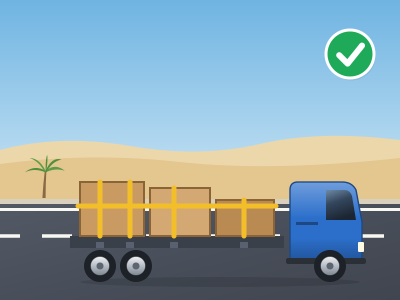
- ASecuring is only required when the journey is over 100 km
- BCargo securing is optional if the goods are not classified as hazardous
- CCargo only needs to be secured when travelling on motorways
- DUnsecured cargo can shift under braking or cornering, altering the vehicle's balance and potentially falling onto other road users
Answer and explanation in the bank
Every answer above, with the rule it comes from, plus the full 22-question timed test.
Get the Sharjah SRTA Theory Test Questions - AED 29What this test covers
Topics include road signs, traffic signals, right of way, roundabouts, speed limits, seat belts, fines and penalties, and the safe-driving rules specific to your vehicle category. Full question-by-question feedback with explanations is shown immediately after you finish the test above.
Frequently asked questions
How many questions is the Sharjah Police truck & bus theory test?
The official Sharjah Police truck & bus theory test in Sharjah has 40 questions and you need 30 correct (75%) to pass. This practice test has 22 questions.
Is this the real exam?
These are practice questions for study only, written from the public RTA handbook and UAE traffic rules and to what candidates report from the real test. They are not the official exam questions and Wathim is not affiliated with the RTA, ITC, SRTA or any UAE government body. Test format, question count and pass mark can change and vary by emirate, so always confirm the current requirements with the licensing authority before your real test.
Is this practice test free?
The first 10 questions are free, with no signup, and each shows the answer and the reason. The full 22-question test, timed, is in the Sharjah SRTA Theory Test Questions PDF (AED 29, one payment), with every question in the bank.
What does the Sharjah truck & bus theory test cover?
Road signs, traffic signals, right of way, roundabouts, speed limits, seat belts, penalties and safe-driving rules, plus the handling and safety topics specific to your vehicle.