

Saudi traffic signs and meanings: the short answer
This page is the reference chart for road signs in Saudi Arabia. It sets out every family of sign you will meet on the road and in the Saudi driving theory test, the shape and colour that identify each family, and what the sign orders you to do. It is written for candidates preparing for the computer test at a Dallah or other Moroor-approved driving school, and for anyone who simply wants to read the signs on the road correctly.
Saudi Arabia uses the standard GCC sign system, so the logic is the same as in the UAE, Qatar or Kuwait. Shape and colour tell you the type of instruction before you read the picture. A red-bordered triangle warns. A red ring forbids. A blue disc commands. A red octagon means stop. Green and blue rectangles inform and direct. Direction boards are written in Arabic and English, so the Arabic place name and the Latin spelling sit side by side.
Chart first, then the signs test
Read a section, then test yourself on the same signs. The signs test is our free Saudi road signs practice paper: 22 questions, a picture for each, 17 correct to pass, with the reason shown after every answer. Signs test 2 gives you 22 different questions. These two pages are the quiz. This page is the chart that feeds them, so use them together, one after the other, rather than reading the chart on its own.
Which page does what
For the format and the score you need on the real paper, read the Dallah driving test guide and the Saudi theory test pass mark guide. If you have already failed once, go to what to do after failing the Saudi theory test. The country hub, Saudi driving theory test practice, links to every region and vehicle type.
How signs appear in the Saudi theory test
Signs are the single biggest block on the Saudi computer test. Candidates who sat the Dallah paper report that about 40% of the questions are sign recognition and about 60% are traffic rules. On the reported 35-question paper that is roughly 14 sign questions. Moroor publishes no official count, pass mark or topic split, so treat these as the reported format and confirm the detail with your branch when you book.
| Item | What is reported for the Dallah computer test |
|---|---|
| Questions | 35, one per screen |
| Correct to pass | 22, which is about 63% |
| Time | About 30 minutes |
| Share that is signs | About 40%, so around 14 questions |
| Share that is rules | About 60%, so around 21 questions |
| Languages | Arabic and English are confirmed; others vary by branch |
| Skipping | Reported as allowed: skip, then return before you submit |
What a sign question looks like
The sign is shown on screen and the question asks what it means or what you must do. You then pick from three or four short options. Some questions describe a situation and ask which sign applies. The wording is blunt, for example a sign with a red octagon and the question "what must you do?", with the right answer being to stop completely at the line.
The arithmetic matters. If you answer all 14 sign questions correctly, you need only 8 of the roughly 21 rule questions to reach 22. If you drop four sign questions, you must find 12 correct among the rules. Signs are the cheapest marks on the paper, which is why they deserve the first days of your revision. Our first full mock uses the same mix so you can see the split yourself.
Where the signs hurt people
Almost nobody fails on a sign they have never seen. They fail on a sign they half know: no stopping against no parking, a speed limit against its end, a stop octagon against the give way triangle. The look-alike table later on this page lists the pairs.
Every Saudi sign family at a glance
If you can rebuild this table from memory, you already understand the structure of the signs test. The columns that matter most are shape and colour, because they give you the type of instruction before you read the symbol.
| Family | Shape and colour | What you must do | Example |
|---|---|---|---|
| Warning | Triangle with a red border | Slow down and be ready for the hazard shown | Pedestrian crossing, slippery road, falling rocks |
| Prohibition | Red ring, usually a white face and black symbol | Do not do what is shown | No overtaking, no left turn, speed limit |
| Mandatory | Blue disc with a white symbol | Do exactly what is shown | Keep right, ahead only, roundabout |
| Priority | Red octagon, inverted triangle | Stop, or give way, at the junction | Stop, give way |
| Parking and stopping | Blue disc with a red ring | Obey the bar or cross: no parking or no stopping | No parking, no stopping |
| Information | Blue or green rectangle | Use it to find services and routes | Hospital, parking, one way |
| Direction and highway | Green boards with white text in Arabic and English | Choose your exit or lane | Motorway start, exit boards |
| Temporary and roadworks | Often yellow or orange, on portable stands | Follow the diversion, expect narrowing and workers | Road narrows, lane closed |
| Road markings | Lines, arrows and zigzags painted on the road | Stay in lane, do not cross solid lines | Solid, broken, double solid, zigzag |
| Traffic lights | Red, amber, green; steady or flashing | Stop on red, go on green when clear | Red light, amber light |
| Police signals | Arm and hand positions of an officer | Obey the officer over any sign or light | Raised hand to stop |
The four shapes that carry the paper
Triangle warns, red ring forbids, blue disc commands, rectangle informs. A candidate who knows only those four rules can answer a large share of sign questions by elimination. The exceptions, the octagon and the inverted triangle, are the ones the test likes to ask about, so learn them as a pair.
Every explanation in our Saudi signs test names the family first. When you miss a question, say the family out loud before you read the reason.
Warning signs: the red-bordered triangles
Warning signs tell you what is coming so that you can slow down and prepare. They are triangles with a red border and a picture of the hazard. The test asks what the hazard is and what you should do, and the answer to the second part is nearly always the same: reduce speed and be ready to stop. Roadworks and temporary warnings may use a yellow or orange face, but the triangle shape is the clue.
| Sign | What it shows | Meaning | What you must do |
|---|---|---|---|
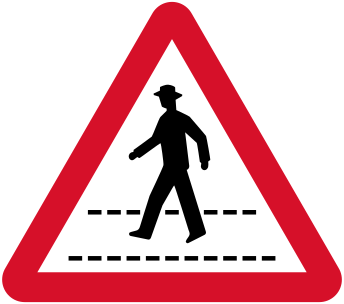 | Walking figure | Pedestrian crossing ahead | Slow down and give way to anyone crossing |
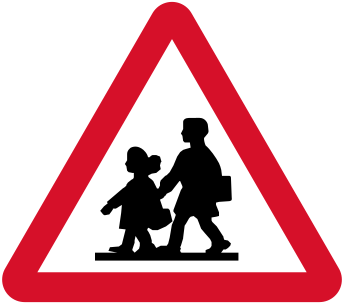 | Two children | School or play area nearby | Slow down and expect a child to step out |
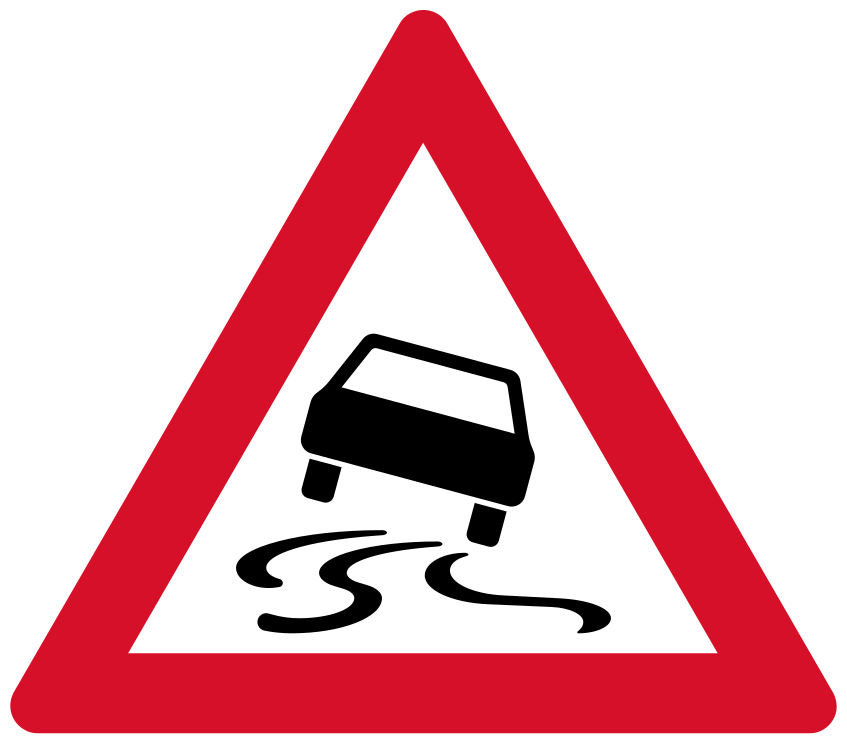 | Car with skid marks | Road may be slippery | Reduce speed, no hard braking or sharp steering |
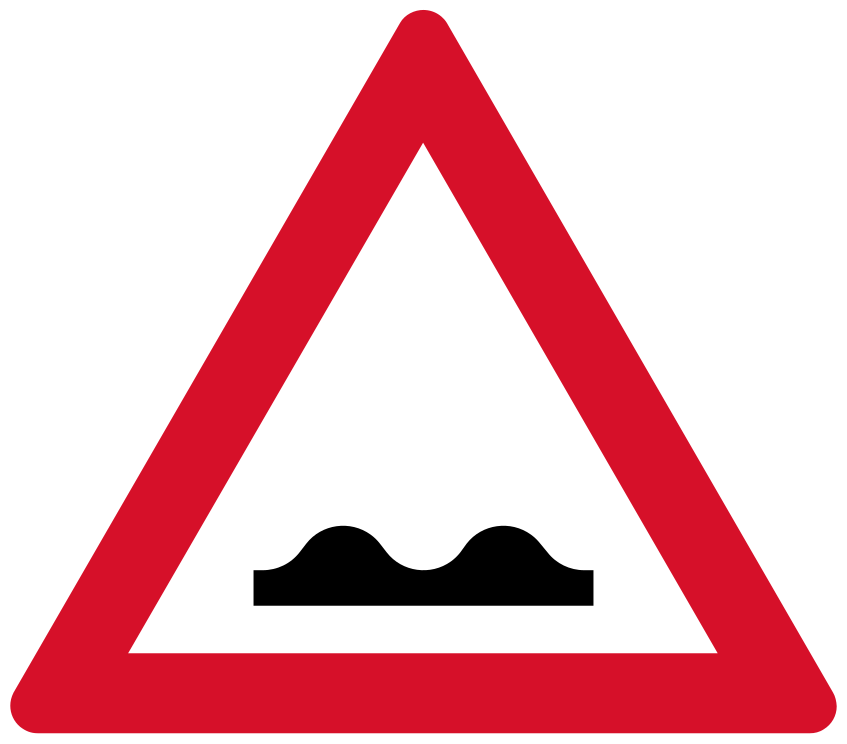 | Hump in the road | Speed bump ahead | Slow right down before the bump |
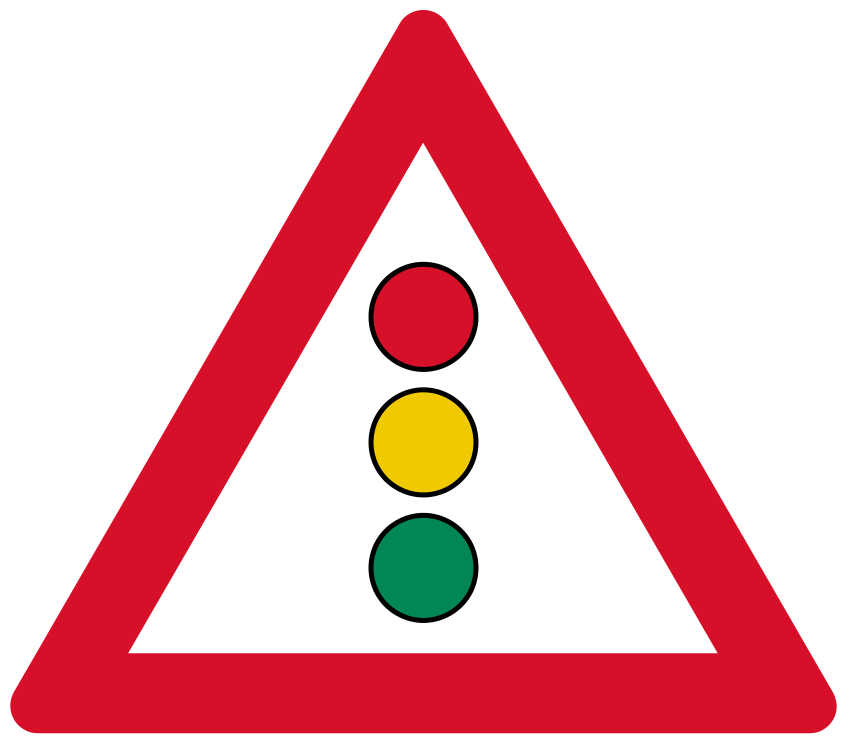 | Three lights | Traffic signals ahead | Be ready to stop and watch the lights |
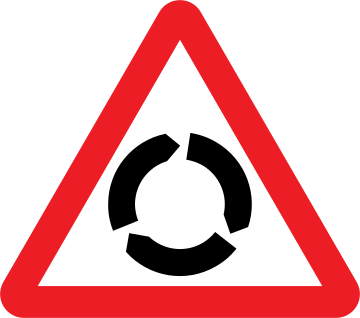 | Three curved arrows | Roundabout ahead | Slow down and prepare to give way |
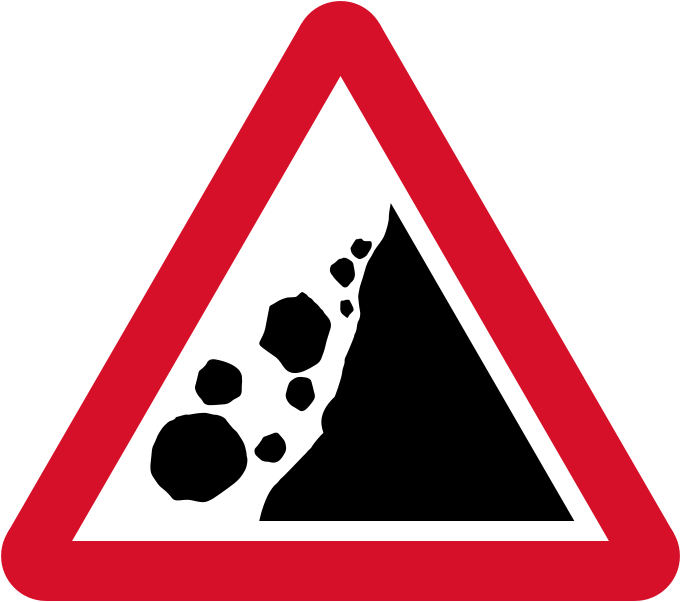 | Rocks on a slope | Falling rocks possible | Watch for debris and do not stop under the slope |
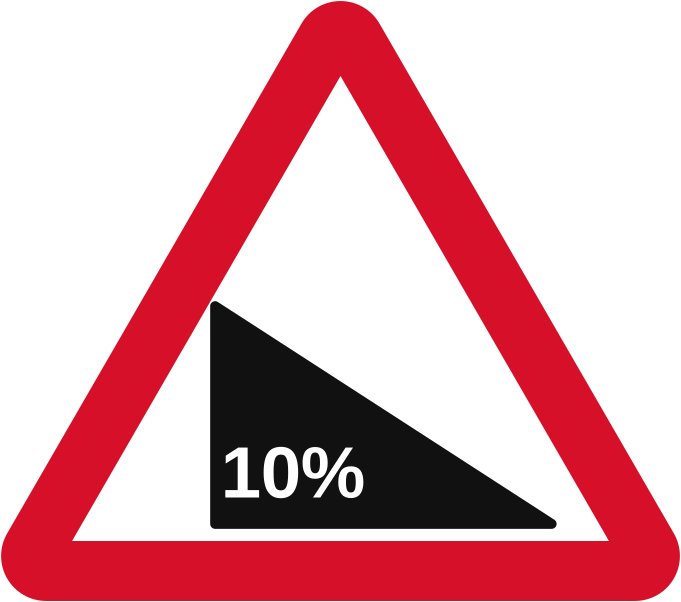 | Downhill slope | Steep descent ahead | Use a lower gear and do not ride the brakes |
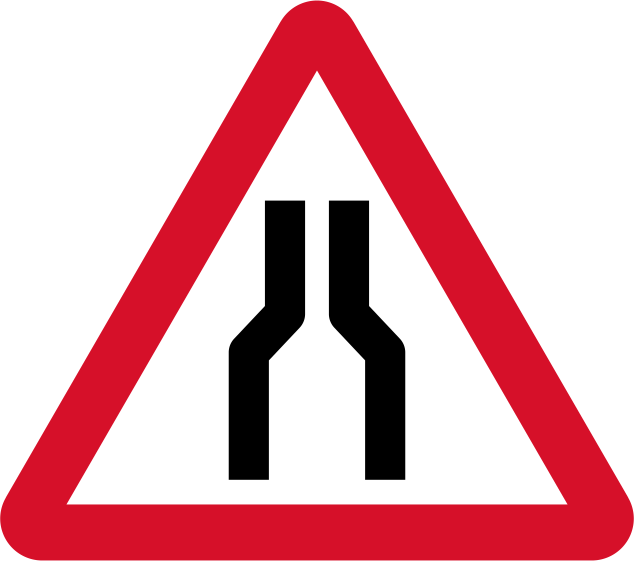 | Pinched lines | Road narrows on both sides | Slow down and do not overtake |
Camels and animals
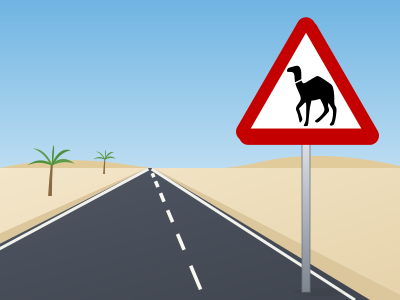
Saudi Arabia has a warning you will not find on a European paper. Camels crossing signs stand beside many desert and intercity roads, and they matter because a collision with a camel is a serious one. The test shows the sign and expects you to slow down, especially at dusk and at night, and to be ready to stop.
Warning against instruction
A warning does not change what you are allowed to do. It tells you to be careful. A prohibition or a mandatory sign changes what you are allowed to do. If the question asks "what does this sign order?" and the sign is a triangle, the honest answer is that it does not order anything, it warns. That distinction picks up a question or two on most papers. Test it in the Saudi signs test.
Prohibition, priority and mandatory signs
These are the signs that tell you what you may and may not do, and they carry most of the exam's tricky questions. Red rings forbid. Blue discs command. Learn the speed signs and the priority pair first, because they are asked most often.
| Sign | Shape and colour | Meaning | What you must do |
|---|---|---|---|
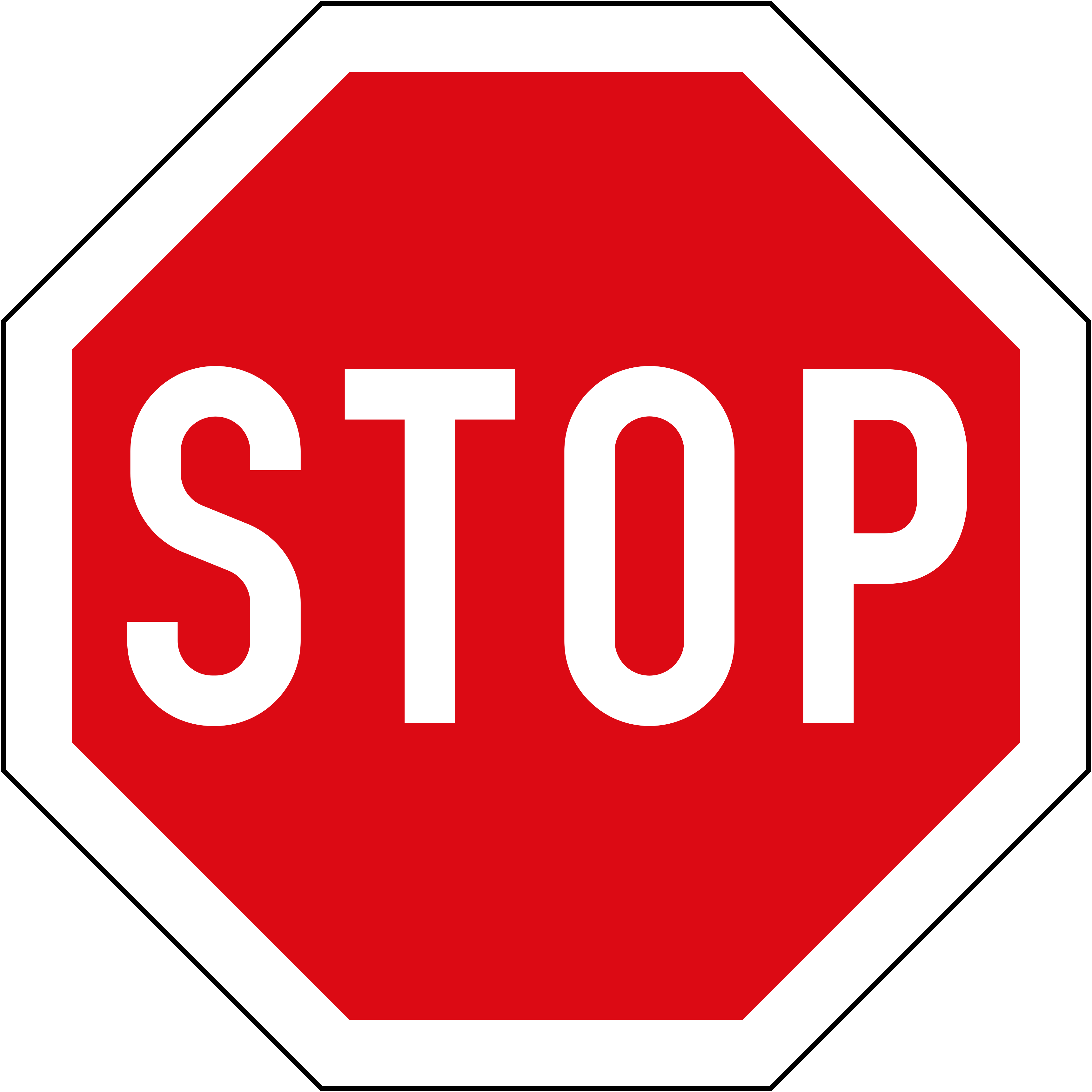 | Red octagon | Stop | Come to a full stop at the line, give way to all traffic, then go when clear |
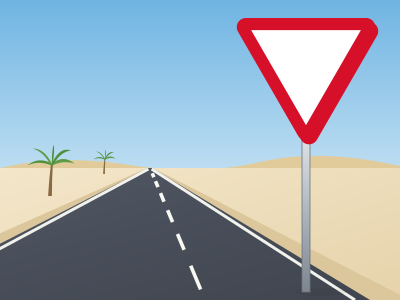
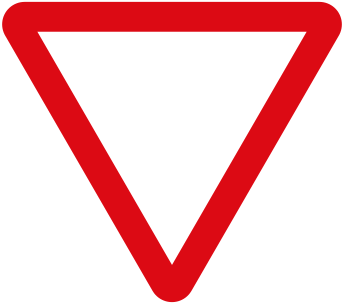 | Inverted triangle, red border | Give way | Slow down and stop only if you need to |
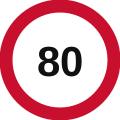 | Red ring with a number | Maximum speed | Never go faster than the number in km/h |
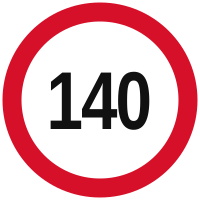 | Red ring with a number | Highest limit, on some highways only | Keep to the number shown on that stretch |
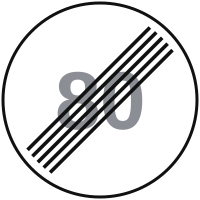 | Number with a diagonal bar | End of that limit | The limit stops here, so check the next sign |
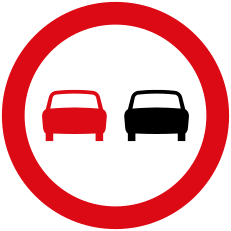 | Red ring, two cars | No overtaking | Stay behind the vehicle ahead |
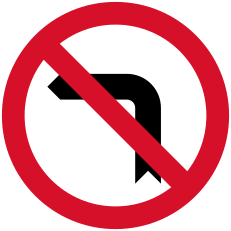 | Red ring, crossed arrow | No left turn | Go another way |
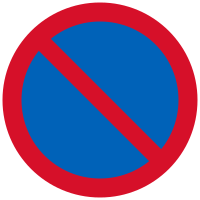 | Blue disc, red ring, one bar | No parking | You may stop briefly to load or drop, but do not leave the car |
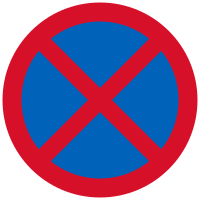 | Blue disc, red ring, cross | No stopping | Do not stop at all, even for a moment |
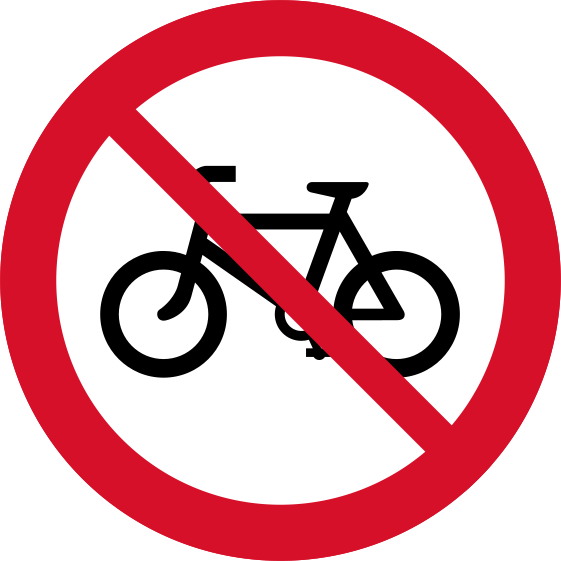 | Red ring, bicycle | No cycling | Cyclists must not enter |
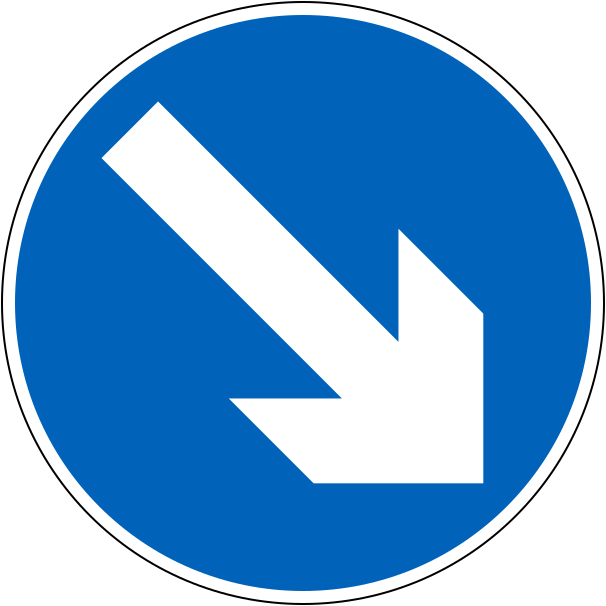 | Blue disc, arrow | Keep right | Pass the obstacle on its right side |
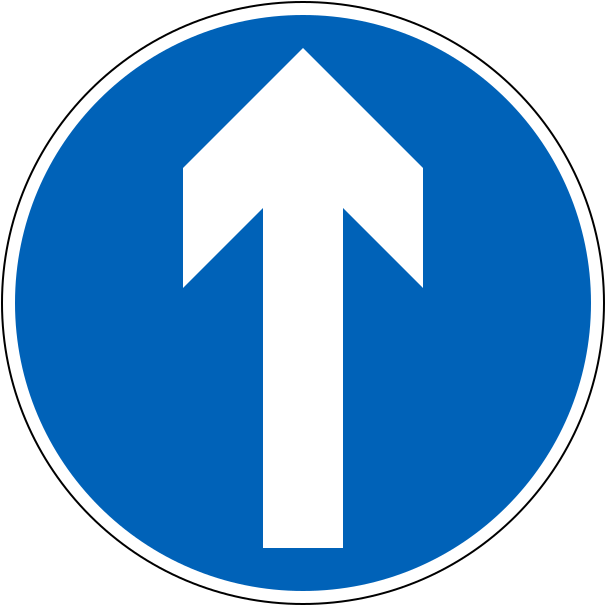 | Blue disc, straight arrow | Ahead only | Go straight. No turning |
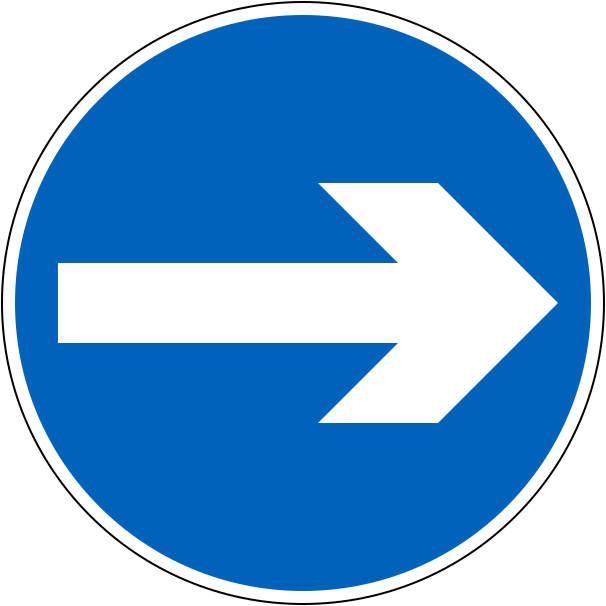 | Blue disc, bent arrow | Turn right | Turn right at the junction |
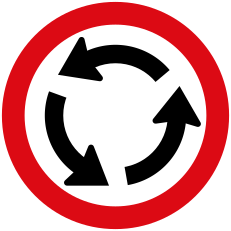 | Blue disc, circular arrows | Roundabout, go round the island | Follow the arrows, give way to traffic already in it |
Stop is a full stop
A stop sign means the wheels stop moving, at the line, every time. A slow roll is not a stop. The Saudi test asks this directly, and the right option is to stop completely and give way to all traffic. The give way sign is lighter: you slow down and stop only if there is traffic you must let past.
Speed signs: red is the maximum
A red ring with a number is a maximum, in kilometres per hour. A diagonal bar through the same number cancels it. Different roads carry different numbers, which is why speed questions often show two signs and ask which road allows more. Practise reading the number, not just the colour, in signs test 2.
Direction, information and highway signs
Direction and information signs do not forbid or command anything. They help you decide where to go. They are rectangles, usually green for routes and blue for services, with white text and symbols. On Saudi roads the text is bilingual, with the Arabic name and the English spelling on the same board. Candidates sometimes find the Latin spellings of Arabic towns the harder half, so read a few place names in both scripts.
| Sign | Shape and colour | What it tells you |
|---|---|---|
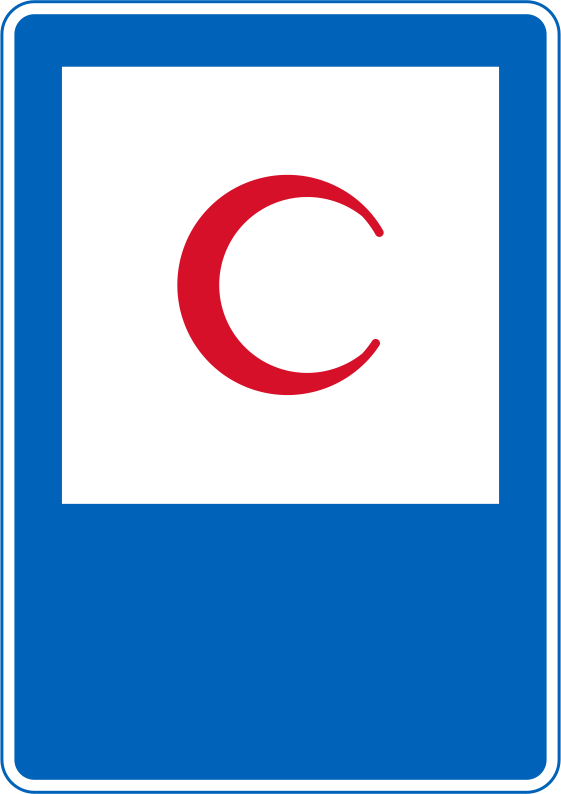 | Rectangle with a blue border and the hospital symbol | A hospital is nearby. Keep noise down and give emergency vehicles room |
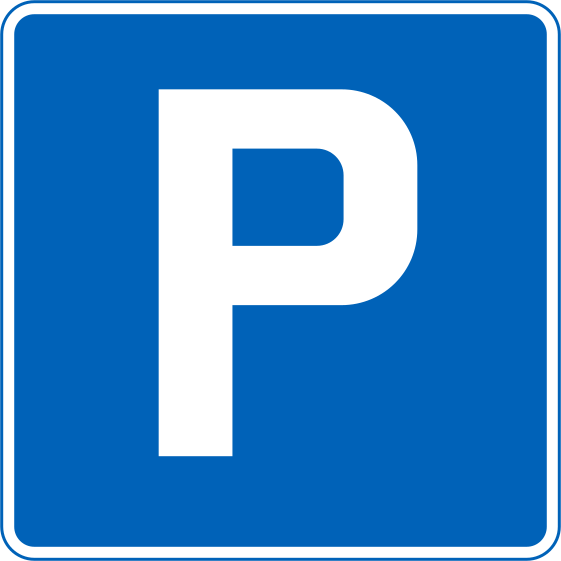 | Rectangle with a blue border and a P | Parking is permitted here |
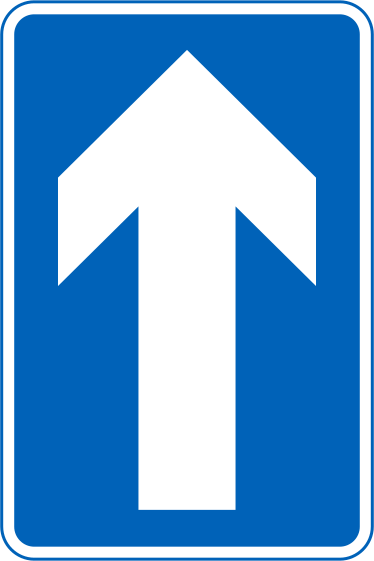 | Rectangle with a blue border and an arrow | Traffic flows one way only, in the arrow direction |
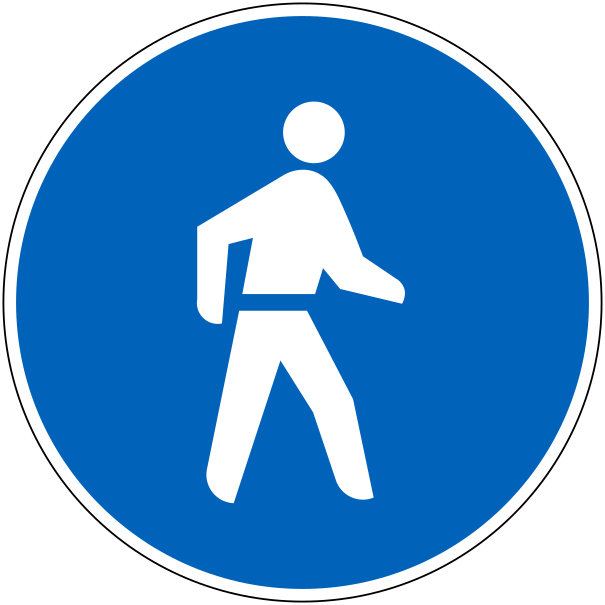 | Round sign, walking figure | Pedestrians only. No vehicles |
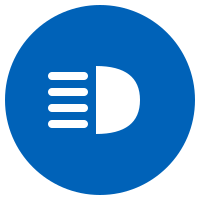 | Blue disc, headlight | Switch dipped headlights on, for tunnels and some roads |
Highway and motorway boards
Saudi intercity roads are fast and long, so highway boards give early notice of exits. You will meet motorway start and end signs, exit boards and service direction signs, plus electronic variable message signs that can show a speed limit or a warning that changes with conditions. The principle for the test is the same as for the road. Follow the number or the message currently displayed, not the one you remember.
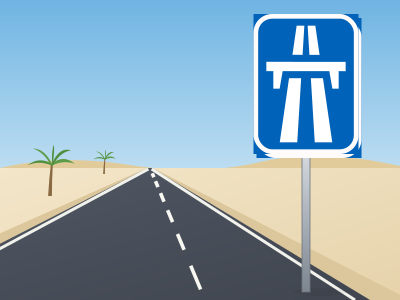
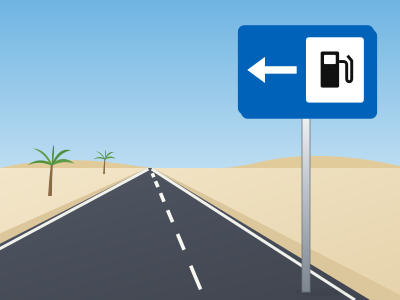
A variable message sign overrides what you remember
A variable message sign may display a lower limit because of fog, sand or an incident ahead. When a question shows one, the number on the sign is your limit. Test this idea in our second mock, where electronic signs appear among the questions.
Saudi question bank + printable papers
568 questions with the answer and the rule, 3 full papers at the real length. One payment, no account.
Fail on the day
SAR 115-500
Pass first time
SAR 19
- 3
- Full papers
- 568
- Questions
- 35
- question timed mocks
That's 3.3 halala a question, every answer explained.
Roadworks, temporary and end-of-restriction signs
Temporary signs warn of work that will not be there forever: lane closures, diversions, narrowed carriageways and workers on the road. They are often orange or yellow, mounted on portable stands or barriers, and they take priority over the permanent signs they sit next to. A cone line is a sign too. The question asks what you do, and the answer is slow down, follow the diversion and give the crew room.
Road narrows and lane closed
The road narrows signs show the lines of the carriageway pinching in from one side or both. The action is the same: reduce speed, do not overtake, and merge early without forcing your way. A lane closed sign tells you to move across before the closure, not at the last cone. Merging late and cutting in is a common cause of collisions at works, and it is a common topic in the rules half of the test.
End of restrictions
An end-of-restrictions sign cancels every restriction that applied before it, such as speed limits and no overtaking, and returns you to the normal rules of that road. It does not mean that you may go as fast as you like. Read the next permanent sign after it. The test shows the sign and asks what it tells you.
| Sign | Looks like | What to do |
|---|---|---|
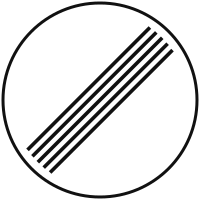 | White disc with diagonal lines | All earlier restrictions end. Follow the normal rules and watch for the next sign |
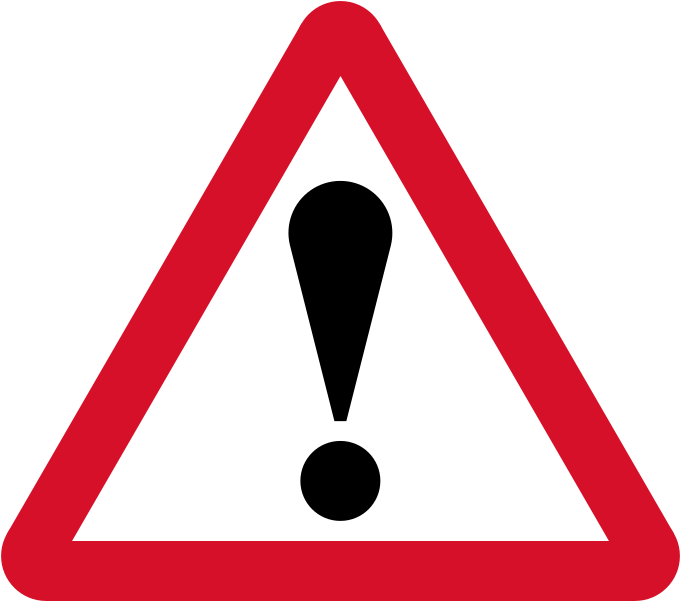 | Triangle with an exclamation mark | An unspecified hazard. Slow down and look for what it is |
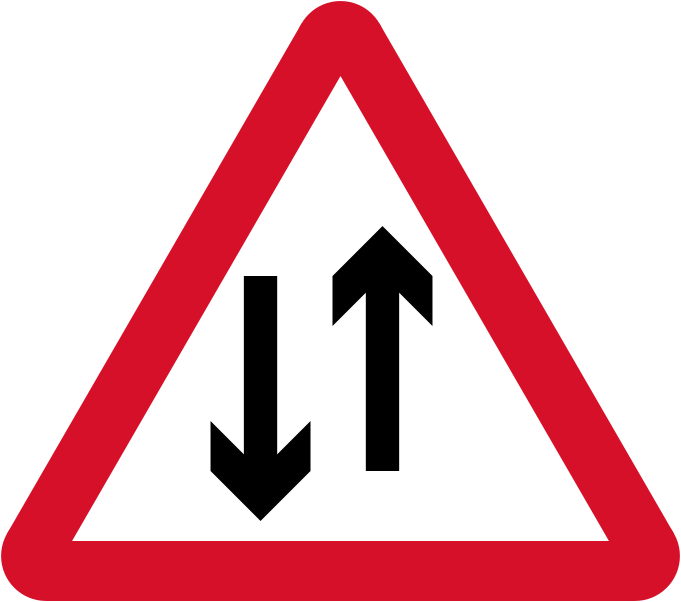 | Triangle with two arrows | Two way traffic ahead. Keep right and watch oncoming vehicles |
Why the test asks about them
Roadworks are frequent on Saudi roads and the examiners know it. These questions are short, and the answer is nearly always the cautious option. If a choice tells you to speed up to clear the works quickly, it is wrong. Practise the cautious reading in the road rules test, which covers works and merging.
Road markings: lines, arrows and zigzags
Markings are signs painted on the road, and the signs test includes them. The rule that covers most of the questions is simple. A broken line is a permission, a solid line is a barrier, and a double solid line is a firm barrier in both directions.
| Marking | What it means | What you must do |
|---|---|---|
| Broken line | You may cross if it is safe | Check mirrors, signal, then change lane or overtake |
| Solid line | Do not cross | Stay in your lane. Overtaking over a solid line is a violation |
| Double solid line | Do not cross from either side | No overtaking and no U-turn over it |
| Zigzag lines | A crossing or a protected zone | Do not overtake or stop, and give way to pedestrians |
| Arrows on the lane | The movements allowed from that lane | Follow the arrow, do not turn from the wrong lane |
| Stop line | Where you must halt | Stop behind it, not on it |
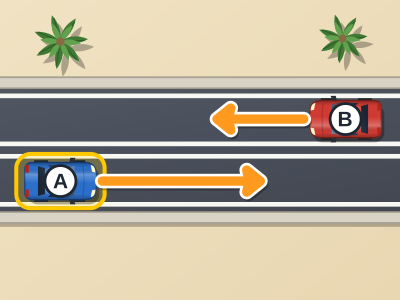
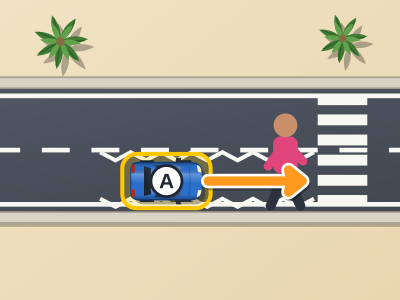
One way roads and lane use
On a one way road, markings and arrows tell you which lane to use for which movement. Saudi drivers keep to the right, and slower traffic should use the right lane, leaving the left for overtaking. The test shows a top-down scene and asks what car A may do. Look at the line next to car A before you read the options.
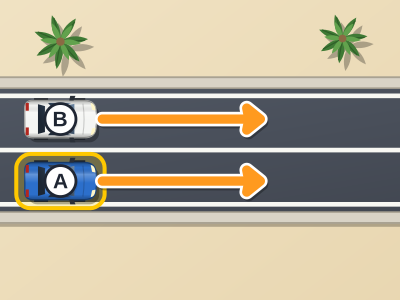
For more scenes with lines, overtaking and junctions, use the right of way test after this section.
Traffic lights, speed cameras and police signals
Lights and officers give moving instructions that override the static signs around them. The test usually shows a single light or an officer, and asks what you do.
| Signal | Meaning | What you must do |
|---|---|---|
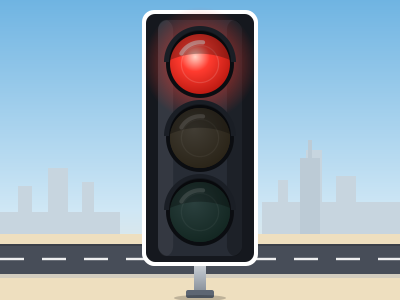
| Steady red | Stop | Stop behind the line and wait for green. Never run a red light |
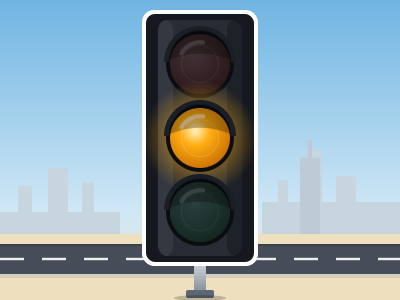
| Steady amber | Light is about to turn red | Stop if you can do so safely. Go on only if you are too close to stop |
| Steady green | Go when clear | Move off, still giving way to anyone already in the junction |
| Flashing amber | Caution | Slow down and proceed only when the way is clear |
| Flashing red | Stop | Treat it as a stop sign. Stop, look, then go when clear |
| Officer with raised hand | Stop | Stop where the officer directs, even if the light is green |
| Officer beckoning | Go | Move forward when it is safe |
What the lights look like in the test
You will see lights as a single large signal in a picture. Say the colour, then what you do. Amber is the favourite for a question, because the safe answer is not "go" and not "always stop". It is stop if you can, and that wording matters.
Speed camera signs
Fixed and mobile speed cameras are widespread, and signs warn you of them. The sign does not give you the limit. The limit is on the speed limit sign. A camera warning means check your speed now.
Look-alike pairs people confuse
Most lost marks come from two signs a candidate has seen many times and swaps. Use this table as a checklist, and for each pair say aloud what separates them. The mocks deliberately put the twin among the wrong options.
| Pair | How to tell them apart |
|---|---|
| No stopping against no parking | Cross means no stopping at all. Single bar means no parking, but you may stop briefly |
| Stop against give way | Octagon is a full stop. Inverted triangle is give way, stop only if needed |
| Speed limit against end of speed limit | A bar through the number cancels the limit. It is not a new limit |
| Roundabout ahead against roundabout | Red triangle is the warning before it. Blue disc is the instruction at it |
| No left turn against turn right | A crossed arrow in a red ring forbids. A blue disc with an arrow commands |
| Pedestrian crossing against children crossing | One walking figure against two children. Both mean slow down, children means a school is near |
| Parking against no parking | Plain P on blue allows it. A bar through the P forbids it |
| Keep right against ahead only | Keep right passes an obstacle on the right. Ahead only forbids turning |
| Flashing red against steady red | Steady means wait for green. Flashing means stop, then go when clear |
| Solid against broken line | Solid is a barrier. Broken is a permission |
Drill one pair a day
Write one row on a card with the picture on one side. Then take a timed paper and look for that pair in the questions. Each time you pick the right sign over its twin, you are doing exactly the job the real test asks. Do the pairs in signs test 2, then check your result on the third mock.
Say the family, then the sign
Before you look at the options, say the family: warning, prohibition, mandatory, priority or information. That removes at least half the options and cuts the chance of falling for the twin.
A seven day plan to learn every Saudi sign
You do not need weeks for signs, you need repetition with feedback. This plan takes 30 to 40 minutes a day and finishes with two timed papers, so you finish above the line and not on it. Move days around to fit your classes.
| Day | Work | Check |
|---|---|---|
| 1 | Family table and warning triangles, with the action for each | Cover the table and rebuild it from memory |
| 2 | Prohibition, mandatory and speed signs | Signs test 1 |
| 3 | Priority signs, junction rules and information signs | Right of way test |
| 4 | Road markings, roadworks and highway boards | Redo the wrong answers from days 2 and 3 |
| 5 | Traffic lights, police signals, camera signs | Signs test 2 |
| 6 | Look-alike pairs, one at a time | Mock test 1, timed |
| 7 | Weak signs only, then a second paper | Mock test 4, aim above 28 of 35 |
Memory tricks that work
- Red takes, blue gives. A red ring takes something away from you. A blue disc tells you what to do.
- Look for the bar. A diagonal bar usually cancels or forbids.
- Cross is stronger than bar. A cross means no stopping. A single bar means no parking.
- Draw it. Sketching a sign from memory fixes it better than looking at it again.
If you drive already
If you have driven in another GCC country, you will know most of these. Do the plan anyway, in half the time. The Saudi paper still asks the details, and "I drive already" is exactly the thought that costs marks on look-alike pairs.
Saudi traffic signs PDF and printable sheets
Many people search for this chart as a PDF so they can keep it on a phone or print it for the commute to class. There are two sensible sources, and they do different jobs.
The official reference
The General Department of Traffic and the Ministry of Interior define the signs. Moroor-approved schools such as Dallah hand out a sign sheet or study booklet in class, and that sheet is the authority on how a sign should look. We could not confirm a single public download address for a current official PDF, so ask your branch for the current sheet and treat it as the final word on artwork.
Printable practice
Reading a chart does not tell you whether you can recall it under a clock. Our Saudi printable papers give you question sheets with the pictures that you can print and mark by hand. They are written to the published rules and to what candidates report from the real test. They are practice, not the official exam.
How to use a printed sheet
- Print one paper and set a 30 minute timer.
- Answer without the chart in front of you.
- Mark it and circle every sign you got wrong.
- Write the family and the action next to each circled sign.
- Sit it again two days later.
The same questions are in the online Saudi bank with a timer, a score and the reason for every answer, if you prefer to work on a screen.
Mistakes that fail people on signs, and what a fail costs
These are the patterns candidates describe most often after a failed sign section. Each is a habit and not a lack of intelligence, and each has a fix you can apply this week.
| Mistake | Fix |
|---|---|
| Skipping the sign sheet because "I drive already" | Learn every sign on the sheet. Signs are about 40% of the paper |
| Memorising the answer letter from a PDF | Learn the reason. Option order changes and wording differs |
| Confusing no stopping and no parking | Put the two signs side by side until the difference is automatic |
| Reading the colour but not the number | Read the number on speed signs, then the colour |
| Spending two minutes on one picture | Skip, move on, and come back with the time left |
What a fail costs
Moroor and the schools do not publish a fixed theory retest fee or waiting period, and the figures vary by school and package. One expat guide reports a retest fee of about SAR 86, but other sites quote different amounts, so ask your branch for the figure in writing. The fee is the smaller cost. A fail delays your in-car training, can mean a wait for the next slot, and can push the whole course back by days or weeks. You cannot book the road test until you pass.
Practise before you book
Take the signs test now, and the second one tomorrow. When you score 20 or more of 22 on both, move to the full mock. Book your real slot only when two mocks in a row are above 28 of 35. The full Saudi bank adds every mock and topic test with explanations, and the printable papers let you work offline. Passing on the first attempt is cheaper than any retest. Start with the free 10-question test above this page to see where you stand.
Free Riyadh mock tests and topic tests
Every test opens on ten free questions. Pick a full mock at the real length, or drill one topic.
- Saudi Theory Mock Test 1Mock · 35 questions
- Saudi Theory Mock Test 2Mock · 35 questions
- Saudi Theory Mock Test 3Mock · 35 questions
- Saudi Theory Mock Test 4Mock · 35 questions
- Saudi Road Signs Practice Test 1Topic · 22 questions
- Saudi Road Signs Practice Test 2Topic · 22 questions
- Saudi Road Rules Test 1Topic · 20 questions
- Saudi Road Rules Test 2Topic · 20 questions
- Saudi Right of Way Practice TestTopic · 22 questions
- Saudi Safe Driving Practice TestTopic · 22 questions
- Saudi Fines & Black Points Test 1Topic · 20 questions
- Saudi Fines & Black Points Test 2Topic · 20 questions
Practise for your region
The rules are national, but the test centre, booking and fees can differ by area.
Frequently asked questions
Saudi Arabia uses the GCC road sign system. Red-bordered triangles warn, red rings forbid, blue discs give commands, the red octagon means stop, and green or blue rectangles give directions and information. Direction boards are written in Arabic and English. This page lists every family with its shape, colour, meaning and the action you must take.
Moroor publishes no official count. Candidates who sat the Dallah computer test report about 35 questions in total, with about 40% on signs, which is roughly 14 questions. Because the real format can vary by school, confirm the count with your branch and practise with a full 35-question mock.
Moroor-approved schools such as Dallah give out a sign sheet in class. We could not confirm a single public official PDF, so ask your branch for the current copy. For printable practice, our Saudi printable papers have sign questions with pictures that you can print and mark.
Both use a blue disc with a red ring. No stopping has a red cross and means you must not stop at all. No parking has a single diagonal bar and means you must not leave the vehicle, though a brief stop to load or drop off is usually allowed. The test asks this often.
They follow the same GCC system, so shapes, colours and most symbols match. Differences are in detail: local warnings such as camels, the direction boards, speed limits and the way a test presents them. Learn the Saudi paper's own questions, and use the UAE chart only as a back-up.
Arabic and English are both confirmed for the computer test at Dallah, and other languages vary by branch. Direction boards on the road are bilingual. Choose the language you read fastest and check with your branch which languages it offers when you book.
A blue disc with a number is a minimum speed, not a maximum. A red ring with a number is the maximum. They are opposite instructions, so check the colour before you read the number. The test often puts both among the answer options.
You are normally given another attempt, scheduled by the school after a waiting period. Moroor does not publish a fixed fee or delay, and sources differ, so ask your branch on the day. Treat the first day as diagnosis, retake a timed mock, and book only when you score well above the pass line.
With 30 to 40 minutes a day, a first-time candidate can learn the signs in about a week, using the chart, the two signs tests and then timed mocks. If you drive already, you may need half that. The aim is to finish above the pass line, not on it.
Saudi question bank + printable papers
568 questions with the answer and the rule, 3 full papers at the real length. One payment, no account.
Fail on the day
SAR 115-500
Pass first time
SAR 19
- 3
- Full papers
- 568
- Questions
- 35
- question timed mocks
That's 3.3 halala a question, every answer explained.