


The Saudi theory pass mark, straight answer
The pass mark most often reported for the Saudi driving theory test is 22 correct out of 35, which is about 63%, in around 30 minutes. That figure is tied to the computer test at Dallah Driving School and is repeated by several candidate-led sites. It is the number our full mock tests use.
Here is the part many pages leave out. The General Department of Traffic (Moroor) does not publish an official question count or pass mark. The test is run at approved driving schools, and the numbers you read online come from candidates, forums and commercial prep sites. They do not all agree. So the honest answer is: 22 of 35 is the best-supported figure, it may differ at your school, and your school has the final word.
What the percentage means in practice
63% is a lower pass mark than many Gulf theory tests. Oman, for example, is practised at 75%. That does not make the Saudi paper easy. The questions are short, but the sign section has look-alikes and the rules section leans on the points and fines schedule, which most drivers have never memorised. Candidates who treat 63% as a comfortable target often find they are two or three marks short.
Where to go next
If you want the format of the Dallah paper in detail, read the Dallah driving test guide. If you have already missed the mark, the failed Saudi theory test guide covers retests. To check your level right now, take the free Saudi theory mock test 1.
Every reported format compared
If you have searched this topic you have seen different numbers. The table lists what is reported and how much weight to give each. The first row is the one we use.
| Reported format | Where it comes from | How to treat it |
|---|---|---|
| 35 questions, 22 to pass, about 30 minutes | Dallah computer test, per lifeinsaudiarabia.net and saudicomputertest.com | Best-supported, school-specific. Our mocks use it |
| 30 questions, 21 to pass, about 20 minutes | A commercial prep guide from 2025 | Plausible for some schools, unconfirmed |
| 20 questions, 15 or 17 to pass | Other prep sites | Unconfirmed. Possibly older or school-specific |
| 32 questions | Scattered prep sites | Unconfirmed |
| 15 correct to pass | One expat forum poster | Anecdote. Do not rely on it |
The practical conclusion is simple. Every one of these formats sits at or below the 63% to 75% range. If you can score 80% or more on a 35-question timed paper, you clear all of them with room to spare. That is why we mark our mocks at 22 of 35 and tell you to aim well above it.
Why the numbers differ
Schools run the test, not Moroor's own centres in every city, and question banks have been updated over the years. A page written in 2016 describes a different paper from one written in 2025. When a source gives no date or school, treat its numbers as a rumour. When your school gives you a number, trust that over any website, including ours.
Score bands: what each result tells you
Use this table to read your practice scores. It is built on the reported 35-question, 22-to-pass paper.
| Score out of 35 | Percent | What it means |
|---|---|---|
| Below 18 | Under 51% | Not ready. Go back to the signs and the basic rules |
| 18 to 21 | 51% to 60% | Fail. Close, but you are guessing too many |
| 22 to 24 | 63% to 69% | Pass on the line. One bad day turns it into a fail |
| 25 to 27 | 71% to 77% | Likely pass. Fix your two weakest topics |
| 28 to 31 | 80% to 89% | Safe. Sit the test |
| 32 to 35 | 91% to 100% | Very safe |
Why we say 28 or more
A real test is not your practice test. You will be nervous, the wording will differ, and you may meet two or three questions that are phrased in a way you have not seen. Experience from candidate reports is that scores drop a few marks between practice and the real thing. A buffer of six marks above the line absorbs that drop. It is the difference between a pass and a retest.
Track your score across at least two different full papers, such as mock test 1 and mock test 2, and take the lower one as your honest level.
How the 35 questions are split
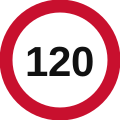
The reported split is about 40% sign recognition and about 60% traffic rules. On a 35-question paper that is roughly 14 sign questions and 21 rules questions. Knowing this lets you see where the marks are, and where the cheap ones are.
Signs are the cheapest marks
There are a finite number of signs and they never change. A candidate who learns the sign sheet from class can realistically score 12 or 13 of the 14 sign questions. That alone puts you over half way to 22. Start with the road signs practice test 1 and test 2.
Rules carry the risk
The rule questions are where candidates fall short. Points and fines are the largest rules topic in the commonly reported question set, followed by overtaking and lines, roundabout and junction priority, seat belts and children, night lights and emergencies. If you need 8 or 9 of the 21 rule questions after a strong sign score, you have margin. If you do not know the fines schedule, you can drop 5 to 8 marks there. Work through fines and black points test 1 and road rules test 1.
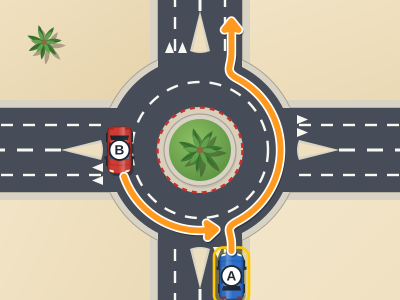
Diagram questions like the one above reward understanding rather than memory. Read who is already on the roundabout, which lane each car holds and who is entering. Then pick the answer that matches the rule, not the one that matches what drivers around you tend to do. Habits from busy city roundabouts are the most common reason a confident driver loses these marks.
The reported paper has no separate pass mark per section. It is a single total. That means a strong sign score can cover for a weak rules score, which is how most candidates pass.
Time: 30 minutes for 35 questions
About 30 minutes for 35 questions is just under 52 seconds a question. Most sign questions take under 10 seconds if you know them. Most rule questions take 30 to 45 seconds because you must read every option. The mix usually leaves time to spare, but only if you do not stall.
Pacing that works
- Spend the first 12 to 15 minutes on a first pass. Answer what you know and skip what you do not.
- Use the next 10 minutes to return to skipped questions and reason them out.
- Keep the last 5 minutes for a check that no screen is unanswered.
The computer test lets you skip and come back, so use it. A skipped question costs nothing, but a question you spend four minutes on can cost two that you never reach.
Unconfirmed: the time limit
Thirty minutes is the figure most sources give. One source says 20 minutes. Because the time is not officially published, ask your school what your screen will show. If your paper is shorter, the same pacing applies at a faster rate, and our timed mocks help you build speed. Take them without pausing, for example the mock test 3, and note how many questions you skip.
Saudi question bank + printable papers
568 questions with the answer and the rule, 3 full papers at the real length. One payment, no account.
Fail on the day
SAR 115-500
Pass first time
SAR 19
- 3
- Full papers
- 568
- Questions
- 35
- question timed mocks
That's 3.3 halala a question, every answer explained.
Why you should aim above the pass mark
The pass mark is the minimum, not the target. There are three practical reasons to aim for 80% or more, and each one is about money and time.
Formats vary
If your school runs a stricter paper than the one reported, a margin saves you. A candidate who has trained to exactly 63% has no protection if the line is 70% or 75%. A candidate who has trained to 80% passes either way.
The real test is harder than practice
Nerves, unfamiliar wording and a new screen all cost marks. Plan for a drop of a few questions and you will not be surprised.
A fail costs real time
A retest means a new slot from the school, a waiting period, and a delay before your in-car training and road test. Moroor and the schools do not publish a single retest fee or fixed wait, and sources conflict, so you cannot plan around it. One expat guide lists the Dallah 30-hour private-licence course at SAR 456.75 with government fees on top, which means a fail is a delay inside a package you have already paid for. If you start work, need to drive for school runs or a commute, every extra week matters. Spending a few more evenings above the line is far cheaper than a retest.
The mistakes that cost the last few marks
Candidates who score 18 to 21 tend to lose marks in the same places. This table matches each mistake to a fix.
| Where marks leak | Why it happens | Fix |
|---|---|---|
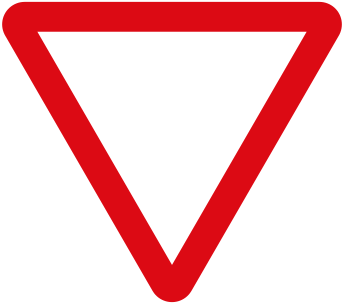
| Look-alike signs | Shape and colour are similar | Study signs in pairs, not in a long list |
| Fines and points numbers | Old PDFs show 2014 to 2016 values | Learn the reasoning and check current schedule |
| Roundabout priority | Habit from local driving | Drill with right of way test |
| "All of the above" options | Reading only the first correct option | Read all options before you answer |
| Rushing at the start | Nerves | Do a calm first pass and skip, then return |
| Learning answer positions | PDF memorising | Practise with mocks that change order |
Do not trust a single score
A single good mock can be luck. Two separate papers above 28 is evidence. Use mock test 4 as your final check.
A 10-day plan to beat the pass mark
This plan assumes about an hour a day. Compress it if you are short on time, but do not skip the signs.
- Days 1 and 2: signs. Learn the class sheet and take both sign tests.
- Day 3: right of way and roundabouts with the right of way test.
- Day 4: overtaking, lines and speed with road rules test 2.
- Day 5: safe driving, lights, emergencies using the safe driving test.
- Day 6: fines and points with both fines tests.
- Day 7: first full timed mock. Record your score.
- Days 8 and 9: redo the topics you missed.
- Day 10: second full timed mock. Sit the test if you are at 28 or more.
What to do if you plateau
If you stall at 24 to 26, the cause is almost always one topic. Look at the explanations for your wrong answers and find the pattern. If every miss is a sign, go back to signs. If every miss is a number, rebuild the fines section.
When and where the pass mark is applied
You take the theory test at an approved driving school after your theory classes, using the school's computers. The result appears on screen at the end. Once you pass, you move on to practical training hours and the road test with a Moroor examiner.
Which licence paper are you sitting?
Our light-vehicle mocks use the 35-question format. We also build motorcycle and heavy vehicle papers on the same format, so check the right track for your category: motorcycle or truck and bus.
Does your region matter?
The rules are national, so a candidate in Jeddah studies the same material as one in Riyadh. Our practice is organised by region only to match how people search, so you can start from Riyadh, Makkah, Madinah or the Eastern Province.
Languages
Arabic and English are confirmed. Other languages are reported inconsistently, so ask your school. Choose the language you read fastest, because reading speed is part of the time pressure.
How to practise until you clear it with room to spare
The aim is a repeatable score above 28 of 35 on papers you have not seen. Here is how to get there.
Start with a diagnosis
Take the free 10-question test on this page. If you get 8 or more right you are in decent shape. Below that, begin with the signs.
Then build a streak
Use the four timed mocks, 1, 2, 3 and 4. Do not repeat a paper until you have reviewed every wrong answer.
When you need more volume
If your scores are stuck, you may be running out of fresh questions. The printable Saudi papers provide a zip of separate papers with answer keys and score bands, and the full online Saudi bank gives you the whole question set to drill by topic. These are practice materials written to the published rules and to what candidates report from the real test, not the official exam. They are there so that on test day the only surprises are small ones.
The Saudi hub lists every test and region.
How to judge any pass mark claim you read online
Pass mark pages are some of the least reliable content in this niche, because the real number is not published and many sites copy each other. Before you rely on a figure, run it through four quick checks.
Is it tied to a school?
A figure that names a school, such as the Dallah computer test, is more useful than one that says "Saudi Arabia" with no source. The test is run at schools, so a school-specific number is closer to what you will face.
Is it dated?
Question banks and formats change. A number from a 2016 PDF may describe a paper that no longer exists. Look for a date, and prefer recent material.
Is the number suspiciously tidy?
Some commercial sites publish the same 30 questions and 24 to pass for dozens of countries. When a number looks templated, it usually is. We would rather tell you a figure is unconfirmed than present it as fact.
Does your school agree?
Ask at the desk when you register: how many questions, how many must be correct, how long, and what language options your branch offers. Write down the answer. If it differs from ours, follow the school and adjust your target accordingly. Either way, practising to a margin above 80% protects you from being wrong about the number. You can compare how we handle the same question for another school in the Dallah test guide.
Free Riyadh mock tests and topic tests
Every test opens on ten free questions. Pick a full mock at the real length, or drill one topic.
- Saudi Theory Mock Test 1Mock · 35 questions
- Saudi Theory Mock Test 2Mock · 35 questions
- Saudi Theory Mock Test 3Mock · 35 questions
- Saudi Theory Mock Test 4Mock · 35 questions
- Saudi Road Signs Practice Test 1Topic · 22 questions
- Saudi Road Signs Practice Test 2Topic · 22 questions
- Saudi Road Rules Test 1Topic · 20 questions
- Saudi Road Rules Test 2Topic · 20 questions
- Saudi Right of Way Practice TestTopic · 22 questions
- Saudi Safe Driving Practice TestTopic · 22 questions
- Saudi Fines & Black Points Test 1Topic · 20 questions
- Saudi Fines & Black Points Test 2Topic · 20 questions
Practise for your region
The rules are national, but the test centre, booking and fees can differ by area.
Frequently asked questions
22 out of 35, about 63%, is the figure reported for the Dallah computer test. Moroor does not publish an official figure and formats can differ by school, so aim for 28 or more in practice to be safe.
35 is the most specific reported figure, tied to the Dallah paper. Other sources say 20, 30 or 32. Ask your driving school which format it runs, because Moroor does not publish an official count.
About 30 minutes is what most sources report. One source says 20 minutes. The time is not officially published, so check the timer on your screen and use the skip button to manage your pace.
Yes. Arabic and English are both confirmed. Some sites list Urdu, Hindi, Malayalam or Bengali too, but this is inconsistent between sources, so ask your school which languages your branch offers.
Not necessarily. The reported formats differ between sources and schools, and Moroor publishes no single figure. Treat 22 of 35 as the line to beat and ask your school for its own number.
Yes. The same theory test is taken at women's driving schools and women's sections. The questions, the signs and the pass line are the same, so the same practice works for everyone.
No source describes a separate section pass mark. The reported paper is scored as one total, with about 40% signs and 60% rules, so a strong sign score can offset weaker rules, though you should not rely on that.
Aim for 28 or more out of 35, about 80%, on two different timed mocks. That gives you a margin of about six marks over the reported line, which covers nerves, new wording and any stricter school format.
Your school books you another attempt after a waiting period. Moroor does not publish a fixed fee or wait, and sources conflict, so ask your branch. Revise weak topics and retake only after two strong mocks.
Saudi question bank + printable papers
568 questions with the answer and the rule, 3 full papers at the real length. One payment, no account.
Fail on the day
SAR 115-500
Pass first time
SAR 19
- 3
- Full papers
- 568
- Questions
- 35
- question timed mocks
That's 3.3 halala a question, every answer explained.