

Al Jahra General Traffic Department Truck & Bus
Practice mode· Heavy vehicle skillsAl Jahra General Traffic Department - Kuwait Heavy Vehicle Skills Test 2
Second set of heavy-vehicle questions covering coupling, tunnels and bridges, passenger safety, hill starts and managing long or wide loads. Complete both tests for full coverage.
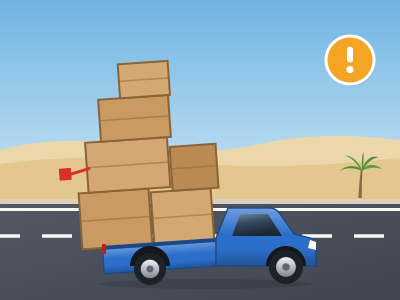
You are about to drive a truck and suspect the gross vehicle weight (GVW) may exceed the legal limit. What should you do?
The other 12 questions in this test
Read them all. The answer and the reason for each, and the timed 22-question run, are in the Kuwait Driving Theory Online Practice Bank.
- Q11Heavy vehicle
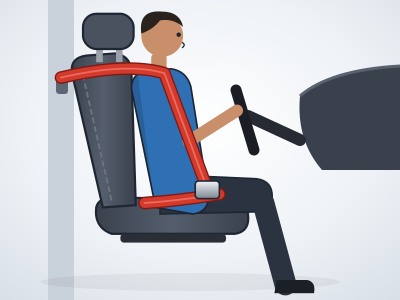
A heavy bus is carrying a full load of passengers and must make an emergency stop. Why is the driver's braking technique especially critical?
- AThe bus is more likely to skid with passengers because they add weight to the roof
- BPassengers without seatbelts can be thrown forward if braking is too harsh, causing serious injuries to multiple people simultaneously
- CEmergency stops are not permitted in buses under any circumstances
- DThe additional passenger weight improves braking efficiency so no special technique is needed
Answer and explanation in the bank
- Q12Heavy vehicle
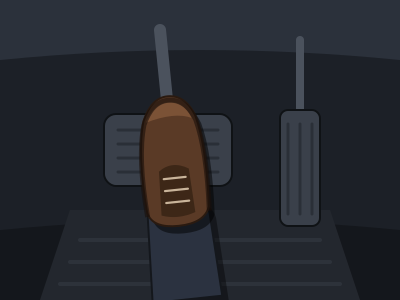
What is the purpose of the 'yellow zone' (caution range) markings on an air brake pressure gauge?
- AIt shows the maximum pressure that must not be exceeded during normal operation
- BIt indicates the pressure range below which the low-pressure warning will activate; the vehicle should not be operated if pressure is in this range
- CIt shows the ideal operating pressure for maximum brake performance
- DIt indicates that the air dryer filter needs replacing
Answer and explanation in the bank
- Q13Heavy vehicle
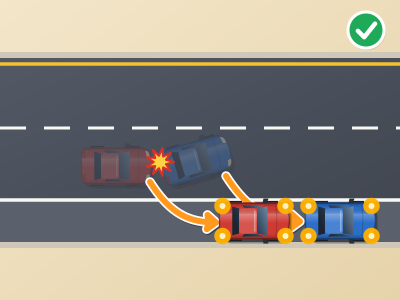
A truck carrying a dangerous goods load is involved in a minor collision. There is no apparent damage to the cargo. What must the driver do?
- AContinue to the destination and report the incident on arrival
- BFollow the emergency procedures specified in the dangerous goods transport document, notify the employer and the appropriate authorities, and remain at the scene until cleared to leave
- CCheck the load visually, and if it looks intact, drive on without reporting
- DImmediately begin offloading the dangerous goods to the roadside to prevent any potential leak
Answer and explanation in the bank
- Q14Heavy vehicle
How should a driver position a heavy truck when parking on the hard shoulder of a motorway after a breakdown?
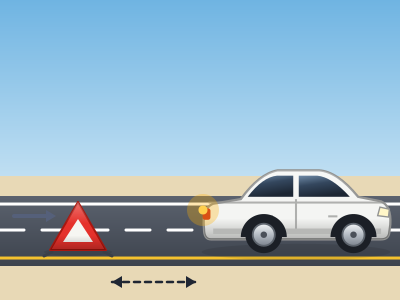
- AAs far to the right of the hard shoulder as possible, away from moving traffic, with hazard lights on and reflective warning triangles placed behind the vehicle according to regulations
- BIn the leftmost lane of the motorway with hazard lights on
- CAcross the hard shoulder and lane 1 to make the truck more visible
- DAs close to the barrier as possible with no warning devices since the hazard lights suffice
Answer and explanation in the bank
- Q15Heavy vehicle
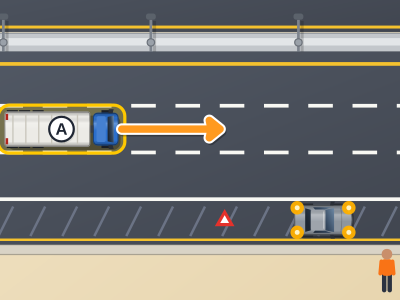
On a long motorway grade with a descending gradient, a truck's speed has crept up to 20 km/h above the intended speed despite closed throttle. The driver applies the service brakes. They feel effective initially but then fade after 90 seconds of continuous application. What should the driver do next?
- AContinue to hold the brake pedal down as the brakes will recover when the vehicle slows
- BApply the trailer hand brake to compensate for the faded service brakes
- CSwitch off the engine to stop all driven movement
- DDownshift immediately to a lower gear to use engine braking and allow the service brakes to cool before using them again for short, firm applications only
Answer and explanation in the bank
- Q16Heavy vehicle
A driver notices the kingpin is visibly worn and has excessive lateral play before coupling the trailer. What is the correct action?
- ACouple the trailer but drive slowly on back roads only
- BDo not couple the trailer. Report the worn kingpin and arrange for it to be inspected and replaced before the vehicle is used
- CPack grease around the kingpin to fill the gap, then couple as normal
- DProceed normally; slight kingpin wear is acceptable on short journeys
Answer and explanation in the bank
- Q17Heavy vehicle
A heavy vehicle must cross a bridge with a signed weight limit of 30 tonnes. The tractor alone weighs 18 tonnes and the loaded trailer weighs 16 tonnes. What should the driver do?
- ADecouple the trailer and cross separately in two trips
- BCross at very low speed because the dynamic impact is reduced at slow speeds making the limit effectively higher
- CCross immediately because 34 tonnes is close enough to 30 tonnes to be acceptable
- DNot cross the bridge; find an alternative route because the combined weight of 34 tonnes exceeds the 30-tonne limit
Answer and explanation in the bank
- Q18Heavy vehicle
A driver completing a thorough pre-trip walk-around checks the air brake chambers. One chamber has a push-rod stroke that is visibly longer than the others when the brakes are applied. What does this indicate?
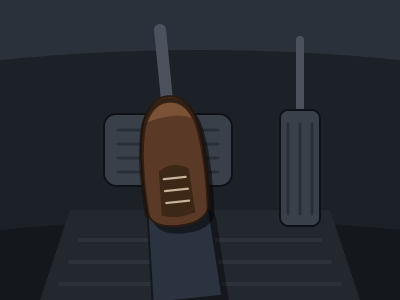
- AThat brake is working harder and is actually more effective than the others
- BA long push-rod stroke is normal on the drive axle
- CThe chamber needs to be replaced with a larger one
- DThat brake is out of adjustment and is less effective than properly adjusted brakes; it must be adjusted or the vehicle must not be driven
Answer and explanation in the bank
- Q19Heavy vehicle
When driving a heavy truck down a long steep gradient, which technique best protects your brakes from fade?
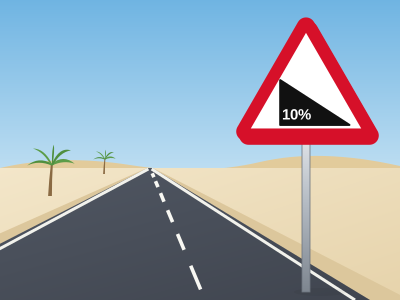
- AKeep the truck in the highest possible gear to reduce engine noise
- BApply the brakes firmly and continuously throughout the descent
- CPut the gearbox into neutral so the engine does not interfere with braking
- DSelect a low gear before starting the descent and use engine braking to maintain a safe speed
Answer and explanation in the bank
- Q20Heavy vehicle
What is the primary purpose of an exhaust (engine) brake on a heavy truck?
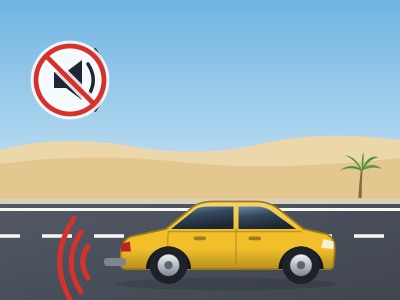
- ATo reduce engine emissions when descending hills
- BTo lock the rear axle on slippery roads
- CTo increase fuel efficiency on flat roads
- DTo use back-pressure in the exhaust system to slow the vehicle without using the service brakes
Answer and explanation in the bank
- Q21Heavy vehicle
Before driving a loaded flatbed truck, you must secure the load using approved straps or chains. When is the load considered properly secured?

- AWhen at least one strap is placed across the load
- BWhen the load cannot move in any direction during normal driving, braking, or cornering
- CWhen the load is stacked as high as possible to reduce wind resistance
- DWhen the load is resting against the headboard only
Answer and explanation in the bank
- Q22Heavy vehicle
A truck carries a load that is heavy at the rear and light at the front. What handling problem is most likely to occur?

- AThe front axle will be underloaded, reducing steering response and front-wheel traction
- BThe truck will accelerate faster than normal
- CThe rear brakes will become more effective
- DFuel consumption will decrease
Answer and explanation in the bank
Every answer above, with the rule it comes from, plus the full 22-question timed test.
Get the Kuwait Driving Theory Online Practice Bank - KWD 3.5What this test covers
Topics include road signs, traffic signals, right of way, roundabouts, speed limits, seat belts, fines and penalties, and the safe-driving rules specific to your vehicle category. Full question-by-question feedback with explanations is shown immediately after you finish the test above.
Frequently asked questions
How many questions is the Al Jahra General Traffic Department truck & bus theory test?
The official General Traffic Department truck & bus theory test in Al Jahra has 20 questions and you need 18 correct (90%) to pass. This practice test has 22 questions.
Is this the real exam?
These are practice questions to help you revise, written to the published rules and to what candidates report from the real test. They are not the official Kuwait exam and the real question bank, format, fees and pass mark are set by the General Traffic Department (Ministry of Interior), and can change. Always confirm the current requirements with your driving school or the traffic department.
Is this practice test free?
The first 10 questions are free, with no signup, and each shows the answer and the reason. The full 22-question test, timed, is in the Kuwait Driving Theory Online Practice Bank (KWD 3.5, one payment), with every question in the bank.
What does the Al Jahra truck & bus theory test cover?
Road signs, traffic signals, right of way, roundabouts, speed limits, seat belts, penalties and safe-driving rules, plus the handling and safety topics specific to your vehicle.