

Mubarak Al-Kabeer General Traffic Department Motorcycle
Practice mode· Motorcycle skillsMubarak Al-Kabeer General Traffic Department - Kuwait Motorcycle Control Practice Test
Focused practice on motorcycle handling: balance, braking, cornering, gear use, positioning and low-speed control. Build the machine skills the theory test expects.
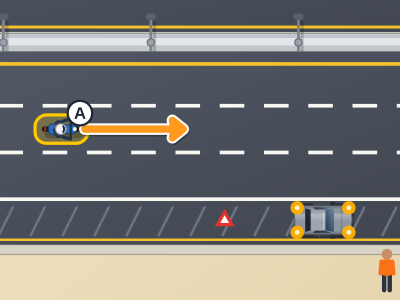
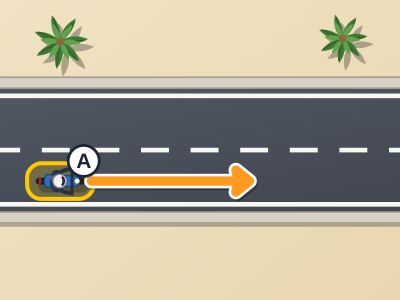
When riding at highway speed in Kuwait (right-hand traffic) and you want to turn right, what is the correct counter-steering input?
The other 10 questions in this test
Read them all. The answer and the reason for each, and the timed 20-question run, are in the Kuwait Driving Theory Online Practice Bank.
- Q11Motorcycle control
When practising a slow-speed figure-of-eight, which body technique most aids stability?
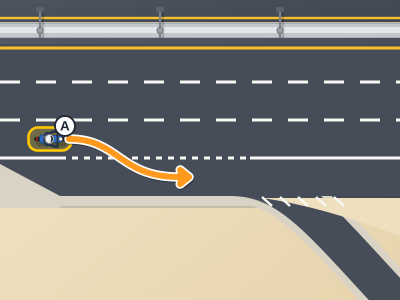
- AKeep both eyes fixed on the ground directly in front of the front wheel
- BLean your body to the outside of each arc to counterbalance
- CLook ahead through each arc toward your exit and keep your upper body upright while leaning the motorcycle beneath you
- DCross your arms over the tank and use body weight alone to steer
Answer and explanation in the bank
- Q12Motorcycle control
When is engine braking most effective for slowing a motorcycle?
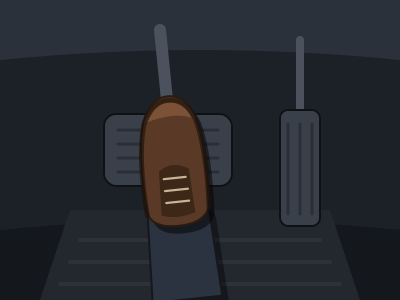
- AWhen the gearbox is in neutral
- BWhen riding in a lower gear at higher engine speeds
- CWhen the clutch lever is fully pulled in
- DWhen the rear brake is applied at the same time as neutral is selected
Answer and explanation in the bank
- Q13Motorcycle control
During a hill start, what prevents the motorcycle from rolling backward before drive engages?
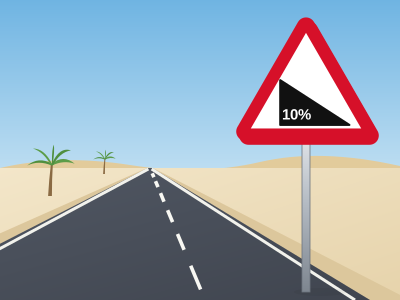
- AKeeping the rear brake applied until the clutch reaches the friction zone and the engine begins to pull
- BSelecting a high gear so engine resistance holds the bike stationary
- CApplying the front brake and releasing the clutch as quickly as possible
- DRevving the engine to maximum before touching the clutch
Answer and explanation in the bank
- Q14Motorcycle control
A rider carrying a pillion notices the front of the motorcycle feels unusually light and vague. What is the most likely cause and the correct response?

- AThe pillion's weight is concentrated at the rear, reducing front-wheel load; reduce speed, increase following distance, and consider adjusting suspension preload
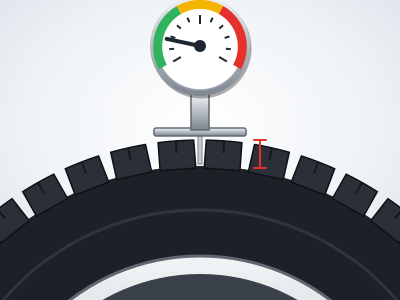
- BThe front tyre is underinflated; stop immediately and add air
- CWind is lifting the front; reduce speed and lean further forward
- DThe pillion is sitting too far forward and should move back further
Answer and explanation in the bank
- Q15Motorcycle control
The term 'friction zone' in motorcycle clutch control refers to which of the following?
- AThe area of highest wear on the brake pads
- BThe tyre contact patch at maximum lean angle
- CThe partial engagement range of the lever where drive is progressively transferred to the rear wheel
- DThe section of road surface with the lowest grip coefficient
Answer and explanation in the bank
- Q16Motorcycle control
On a right-hand-traffic road in Kuwait, what is the ideal entry position when approaching a left-hand curve?
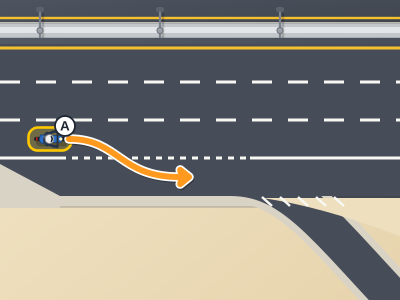
- AHug the left edge of your lane throughout the corner
- BStart toward the right side of your lane (wide entry), apex toward the left, then return to the right side on exit
- CCross the centre line to shorten the corner radius
- DRide in the exact centre of the lane at all times
Answer and explanation in the bank
- Q17Motorcycle control
A rider travelling at 80 km/h on a Kuwait expressway wants to change direction to the right. Which statement best describes counter-steering at that speed?
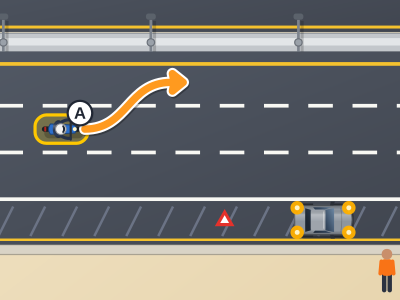
- ATurning the handlebars directly to the right steers the motorcycle to the right at all speeds
- BLeaning the body to the right without any bar input is sufficient to initiate the turn at 80 km/h
- CPressing the right handlebar forward briefly steers the front wheel left, the gyroscopic reaction tips the bike right, and the motorcycle follows that lean into a right turn
- DPulling the right handlebar backward steers the motorcycle to the right at highway speed
Answer and explanation in the bank
- Q18Motorcycle control
Why should you complete all downshifting before entering a corner rather than during it?
- ADownshifting in a corner automatically increases lean angle to a dangerous level
- BYou should always be in the highest possible gear when cornering for maximum stability
- CDownshifting during a corner applies sudden engine braking to the rear tyre, which can cause a slide when grip is already committed to cornering
- DThe gearbox will not accept a downshift while the motorcycle is leaned over
Answer and explanation in the bank
- Q19Motorcycle control
As you lean into a corner at the apex, how should you manage the throttle?
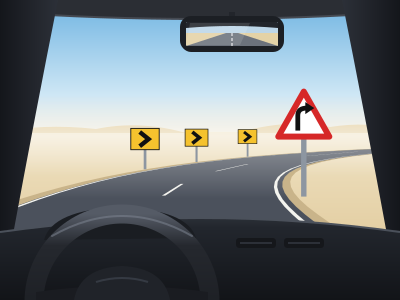
- AReduce the throttle to zero at maximum lean
- BSnap the throttle open to stand the bike up quickly
- CMaintain a smooth, steady throttle and avoid sudden changes
- DRoll the throttle fully off then reapply it sharply at the apex
Answer and explanation in the bank
- Q20Motorcycle control
In a very slow, tight manoeuvre such as a car-park turn, why is the rear brake preferred over the front brake for speed control?
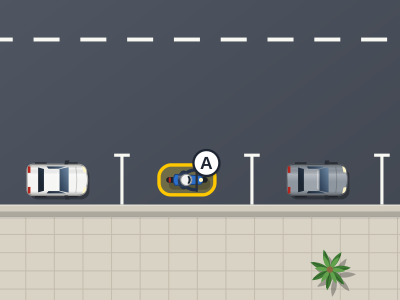
- AThe rear brake is more powerful than the front brake at speeds below 10 km/h
- BThe rear brake slows the motorcycle without affecting front-wheel direction or stability, whereas the front brake can cause a fall at very low speeds
- CThe front brake is mechanically disconnected below 10 km/h
- DApplying the front brake at low speed always locks the wheel regardless of input force
Answer and explanation in the bank
Every answer above, with the rule it comes from, plus the full 20-question timed test.
Get the Kuwait Driving Theory Online Practice Bank - KWD 3.5What this test covers
Topics include road signs, traffic signals, right of way, roundabouts, speed limits, seat belts, fines and penalties, and the safe-driving rules specific to your vehicle category. Full question-by-question feedback with explanations is shown immediately after you finish the test above.
Frequently asked questions
How many questions is the Mubarak Al-Kabeer General Traffic Department motorcycle theory test?
The official General Traffic Department motorcycle theory test in Mubarak Al-Kabeer has 20 questions and you need 18 correct (90%) to pass. This practice test has 20 questions.
Is this the real exam?
These are practice questions to help you revise, written to the published rules and to what candidates report from the real test. They are not the official Kuwait exam and the real question bank, format, fees and pass mark are set by the General Traffic Department (Ministry of Interior), and can change. Always confirm the current requirements with your driving school or the traffic department.
Is this practice test free?
The first 10 questions are free, with no signup, and each shows the answer and the reason. The full 20-question test, timed, is in the Kuwait Driving Theory Online Practice Bank (KWD 3.5, one payment), with every question in the bank.
What does the Mubarak Al-Kabeer motorcycle theory test cover?
Road signs, traffic signals, right of way, roundabouts, speed limits, seat belts, penalties and safe-driving rules, plus the handling and safety topics specific to your vehicle.