

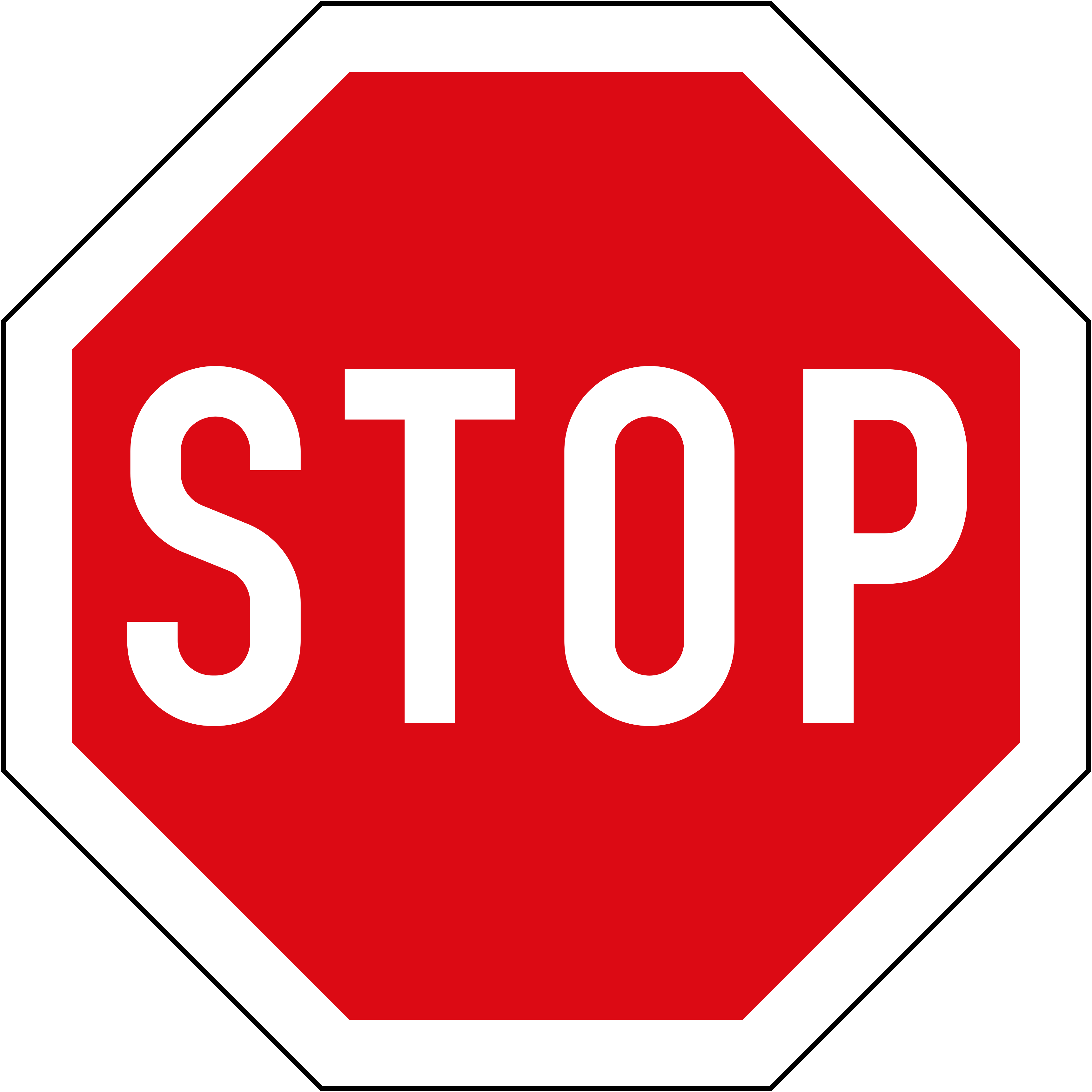
The pass mark in one line: 18 out of 20
The Kuwait driving theory test has 20 questions, and the figure reported by Kuwait guides is 18 correct to pass. That is 90 percent. Put the other way round, you can afford exactly two wrong answers, and the third one fails you. There is no partial credit, no section minimum that we know of, and no way to carry a good topic over a weak one.
Be clear about the source. The Ministry of Interior's own practice test at ttd.moi.gov.kw confirms the format (20 questions and a 10-minute timer) but it only shows a score at the end, not a pass line. The 18 of 20 figure comes from kuwaitlocal.com (18 May 2026) and autoviatest.com (October 2026), and both agree. Your test centre is the final word, but you should plan as if 18 is the line, because planning for 15 and being told 18 is how people fail.
The test is taken on a touchscreen at the General Traffic Department (GTD) centre, usually on your first visit, before the practical test. Once you pass it, you do not sit it again, even if you later fail the road test. That makes it the cheapest stage to get right first time. This page explains how the 90 percent mark works in practice, what the questions look like, and how to practise until two mistakes is a bad day rather than a normal one. If you want the wider picture first, start with the Kuwait driving test hub.
Kuwait theory test format at a glance
Everything below is what the Ministry's public practice simulator shows, plus the pass mark reported by Kuwait guides. We mark the one figure that the Ministry does not publish.
| Item | What to expect | How sure we are |
|---|---|---|
| Questions | 20 | Confirmed by the MOI practice test |
| Time | 10 minutes for the whole test, about 30 seconds per question | Confirmed by the MOI practice test |
| Pass mark | 18 correct (90%) | Reported by two guides, not published by the MOI |
| Languages | Arabic, English, Urdu or Hindi | Shown on the MOI practice test |
| Question types | 3-option, 4-option and true or false | Confirmed by the MOI practice test |
| Pictures | Signs and kerb markings only, roughly one question in four | Measured on the MOI practice test |
| Delivery | Touchscreen at the GTD test centre | Reported by kuwaitlocal.com |
| Retake | Reported as no limit on attempts, waiting period not published | Single source, confirm at the centre |
Two things in that table matter more than they look. First, 30 seconds per question is tight when a question is worded in the negative. Second, only about one question in four has a picture, so most of your marks come from reading a sentence quickly and judging it true or false. Practising with signs alone will not get you to 18.
What 90 percent really means
Each question is worth 5 percent of the test. That sounds obvious, but it changes how you should study. On a 30-question test you might shrug at a weak topic. On a 20-question test, a topic that shows up in three questions can take you from a pass to a fail on its own.
Score table
| Your score | Result | What it tells you |
|---|---|---|
| 20 of 20 | Pass | Full command, keep your timing |
| 19 of 20 | Pass | One slip, no cause for worry |
| 18 of 20 | Pass | The exact line, you used both mistakes |
| 17 of 20 | Fail | One mark short, usually one weak topic |
| 16 of 20 | Fail | Two weak topics or a timing problem |
| 15 or lower | Fail | Not ready, go back to the topic tests |
Why a mock score of 17 is a warning, not a near miss
Practising at 17 feels close. It is not. On the day you will have nerves, a touchscreen you have not used before and a clock running, and all three cost accuracy. A candidate who scores 17 at home should expect to land at 15 or 16 on the day. Aim to score 19 or 20 on three separate mock tests in a row before you book. If you are consistently at 18 in practice, you are one tired morning from failing.
What the questions look like
The MOI practice simulator draws from a pool of roughly 150 to 170 questions for a private licence. In 600 recorded draws, about 28 percent of questions carried an image. Those images are road signs and kerb markings. Everything else is a sentence you answer true or false, or a question with three or four options. Candidates also report that many items are about fines, points and penalties under the 2025 traffic law.
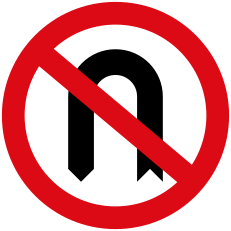
Sign and kerb questions
You are shown the sign or the painted kerb and asked what it means. The kerb colours that come up are black and white, yellow and black, and blue and white. Learn them as a set, because the wrong answers are usually another colour from the same set. Our two road signs tests (the second one is harder) cover the signs, and the scene images in the mocks cover kerbs.
Text questions
The text questions test whether you know the rule or the penalty. Examples of the kind of wording candidates report include negatives such as a road user must not abide by traffic rules. Read the whole sentence before you tap, because the negative flips the answer. Our road rules test 1 and right of way test train this reading habit.
The topics that cost people marks
The Ministry does not publish a topic weighting, so nobody can honestly tell you how many questions come from each area. What we can say is what recurs. In the practice simulator, the most frequent items were law and penalty questions, then lights, insurance and hazard lights, then signs and kerb colours. Use the table to decide where to spend your time.
| Topic | What the question usually asks | Where to practise |
|---|---|---|
| Fines, points and suspension | What the penalty is under Decree-Law 5 of 2025, and when a licence is withdrawn | Fines and black points test 1 and test 2 |
| Lights at night and hazard lights | When to dip, when to use hazards, what to do in fog or a sandstorm | Safe driving test |
| Insurance and overloading | What the law requires before you drive and what an overloaded vehicle risks | Road rules test 2 |
| Signs | No stopping, no U-turn, give way, roadworks, children, no entry | Road signs test 1 |
| Kerbs and lines | Colours of kerbs, centre line types | Road signs test 2 |
| Roundabouts and junctions | Who gives way and which lane exits first | Right of way test |

The 2025 law trap
Decree-Law 5 of 2025 came into force on 22 April 2025 and raised most fines. Many study sheets still on the internet pre-date it. If you revise from a sheet that says a phone at the wheel is a few dinars, you will answer wrongly on a question that now carries a much larger figure. Check the date on anything you revise from.
Kuwait question bank + printable papers
772 questions with the answer and the rule, 3 full papers at the real length. One payment, no account.
Fail on the day
KWD 12
Pass first time
KWD 1.5
- 3
- Full papers
- 772
- Questions
- 20
- question timed mocks
That's 1.9 fils a question, every answer explained.
Why 10 minutes catches people out
Ten minutes for 20 questions is 30 seconds each. If you know the answer, that is plenty and you will finish with minutes to spare. The problem is the questions you do not know. A candidate who spends a minute and a half on one hard question has borrowed that time from three others.
A pacing rule that works
- Answer every question you know straight away. Most true or false items take under ten seconds.
- If you are unsure, pick your best answer and move on. A guess you can change later beats an unanswered question.
- Aim to reach question 10 by the five-minute mark. That leaves a margin for the hard ones.
- Keep the last minute for reviewing negatives. Re-read any question with the word not in it.
Why practising on a clock matters
Most people revise untimed and feel confident, then meet the real timer and rush. Our mocks use 20 questions to match the format, so run them against a 10-minute countdown. If you finish a mock in under 8 minutes at 19 or 20, your timing is safe. If you need all 10 minutes to reach 18, you do not have a margin.
What failing by one mark costs you
The pass mark is a money question as much as a knowledge question. Kuwait guides report that each visit to the test centre costs KWD 12 (an administrative fee plus the test fee), and that there is no stated limit on attempts. That sounds harmless, but the fee is the smallest part of the cost.
| What you lose | Why it adds up |
|---|---|
| Test-centre fee | KWD 12 per visit as reported by kuwaitlocal.com, so each failed attempt costs you that again |
| Time | You need another slot through Sahel or the MOI portal, and the waiting period is not published |
| Momentum | Your school lessons and the practical test cannot start until the theory is passed |
| Paperwork windows | Documents such as the eye test record can expire while you wait for a re-sit |
We cannot give you a pass rate, because nobody publishes one, and we will not invent one. What we can say is that a retake costs real money and real weeks, and the exam is a fixed 20 questions. Spending a few evenings getting to 19 on the mocks is a far cheaper route than a second visit. If you do miss, read what to do after you fail the Kuwait theory test for the recovery plan.
A 7-day plan to get above 18
This plan assumes you have about an hour a day. If you have longer, do the same tasks and add a second mock each evening.
Days 1 to 3: close the gaps
- Day 1: take mock test 1 untimed. Mark every wrong answer and write down the topic, not the question.
- Day 2: do road signs test 1 and the kerb colours. Learn every sign you got wrong.
- Day 3: do both fines and black points tests and check the date of every figure you memorise.
Days 4 to 6: add the clock
- Day 4: mock test 2 with a 10-minute timer. Aim for 18 as a starting point.
- Day 5: right of way and safe driving tests, then redo any you missed.
- Day 6: mock test 3 on a timer. Aim for 19.
Day 7: the dress rehearsal
Take mock test 4 in one sitting, on a phone or tablet, with the timer. If you score 19 or 20, book with confidence. If not, go back to the topic of your two worst mistakes and repeat. Do not book a slot just because the week is over.
Test-day checklist
Most failures on the day are avoidable. Run this list the evening before and again at the centre.
- Check your appointment time and centre on Sahel or the MOI portal. If a booking will not go through, a common cause reported by candidates is that the eye-test record has not yet been linked to your file.
- Bring your Civil ID and the documents your driving school told you to bring.
- Choose your language in advance. Arabic, English, Urdu and Hindi are offered on the practice test, so check your centre offers yours.
- Sleep. Thirty seconds a question punishes tired reading.
- On screen, read each question to the end, especially the ones with a negative.
- Do not leave a question blank. Pick the best answer and move on.
- In the last minute, check the questions you were unsure of.
Treat the first question as a warm-up and the next 19 as the test. Candidates who panic over an early hard question tend to drop marks on easy ones afterward.
Does the pass mark change by licence type?
The reported 18 of 20 applies to the standard private (car) test. If you are taking a motorcycle or truck and bus licence, the Ministry has not published a separate pass mark that we could find, so do not assume a different one. Practise to the same 90 percent and ask your driving school.
Our bank mirrors this. The motorcycle track and the truck and bus track each use 20-question mocks scored against 18, so you can rehearse in the right format for your category. Motorcycle candidates can use the first motorcycle mock, and heavy vehicle candidates the first truck and bus mock.
The same logic applies across governorates. The test is run by the GTD for the whole country, so it does not matter whether you are in Al Asimah, Hawalli, Al Farwaniyah, Al Ahmadi, Al Jahra or Mubarak Al-Kabeer. The format and the target score are the same, and only the centre and the appointment availability differ.
Practise until 18 feels easy
The honest way to beat a 90 percent pass mark is to practise at a standard above it. Our free test on this page gives you 10 questions in the real format, with the answer and the reason after each one. If you miss more than one, you are not at the line yet.
From there, work through the free light vehicle tests: four full 20-question mocks, signs, rules, right of way, safe driving and fines. Each one tells you the answer and the reason, so every wrong answer becomes a rule you now know. Use them to find your weak topics, not just to collect scores.
When you want depth, the full bank at Kuwait theory online adds hundreds more questions, so you are not just memorising the free ones. For offline revision, the printable Kuwait papers come as a zip of separate PDFs: a start-here guide, each paper with its own answer key and score bands, and the revision bank. If you want the questions themselves, see Kuwait driving test questions and answers. Our questions are written to the published rules and to what candidates report from the real test. They are practice material and not the official exam.
Free Al Asimah (Capital) mock tests and topic tests
Every test opens on ten free questions. Pick a full mock at the real length, or drill one topic.
- Kuwait Theory Mock Test 1Mock · 20 questions
- Kuwait Theory Mock Test 2Mock · 20 questions
- Kuwait Theory Mock Test 3Mock · 20 questions
- Kuwait Theory Mock Test 4Mock · 20 questions
- Kuwait Road Signs Practice Test 1Topic · 22 questions
- Kuwait Road Signs Practice Test 2Topic · 22 questions
- Kuwait Road Rules Test 1Topic · 20 questions
- Kuwait Road Rules Test 2Topic · 20 questions
- Kuwait Right of Way Practice TestTopic · 22 questions
- Kuwait Safe Driving Practice TestTopic · 22 questions
- Kuwait Fines & Black Points Test 1Topic · 20 questions
- Kuwait Fines & Black Points Test 2Topic · 20 questions
Practise for your governorate
The rules are national, but the test centre, booking and fees can differ by area.
Frequently asked questions
The reported pass mark is 18 correct out of 20, which is 90 percent. Two Kuwait guides agree on this figure, but the Ministry of Interior does not publish it on its practice test, so confirm it at your test centre.
Two. With 20 questions and 18 needed to pass, a third wrong answer fails you. Each question is worth 5 percent, so one weak topic that covers three questions can fail you on its own.
There are 20 questions. The Ministry of Interior's own online practice test shows 20 questions with a 10-minute timer, which is about 30 seconds per question. Questions are true or false or have three or four options.
The whole test has a 10-minute timer, about 30 seconds per question. The practice test on the Ministry's site shows the same timer. Practise on a countdown so the pace feels normal on the day.
The Ministry's practice test offers Arabic, English, Urdu and Hindi. Choose the language you read fastest, because the clock is tight, and check with your test centre that it offers your language.
Yes. It is a touchscreen computer test at the General Traffic Department test centre, normally taken on your first visit before the practical test. Results are shown on screen at the end.
No. Once you pass the theory test you do not repeat it, even if you fail the practical test. This is why it pays to pass it cleanly first time and move on to your lessons.
The tight margin. With only two mistakes allowed, candidates lose marks on penalty questions based on the 2025 law, on negative wording, and on rushing under the 10-minute timer. Timed practice fixes all three.
Yes. Many questions are about fines, points and penalties under Decree-Law 5 of 2025, in force since 22 April 2025. Use study material written after that date, because older sheets give outdated figures.
No. They are practice questions written to the published rules and to what candidates report from the real test. They are not the official exam, and the pass mark and format are set by the General Traffic Department.
Kuwait question bank + printable papers
772 questions with the answer and the rule, 3 full papers at the real length. One payment, no account.
Fail on the day
KWD 12
Pass first time
KWD 1.5
- 3
- Full papers
- 772
- Questions
- 20
- question timed mocks
That's 1.9 fils a question, every answer explained.