

Royal Oman Police (ROP)
Oman Driving Theory Test
Practice for the Oman driving theory and signals test (the computer-based knowledge test taken through the Royal Oman Police). Timed mock exams and topic tests with the answer and an explanation for every question, written from the public Oman traffic rules and the standard GCC road signs.
- 30 questions · 23 to pass (75%)
- 30 minutes
- 7 wrong allowed
- English, Arabic
First 10 questions of every test free, answer and reason shown. No signup. Road signs quiz
Try one now
From the Oman bank · road signs
What does this sign mean and what must you do?
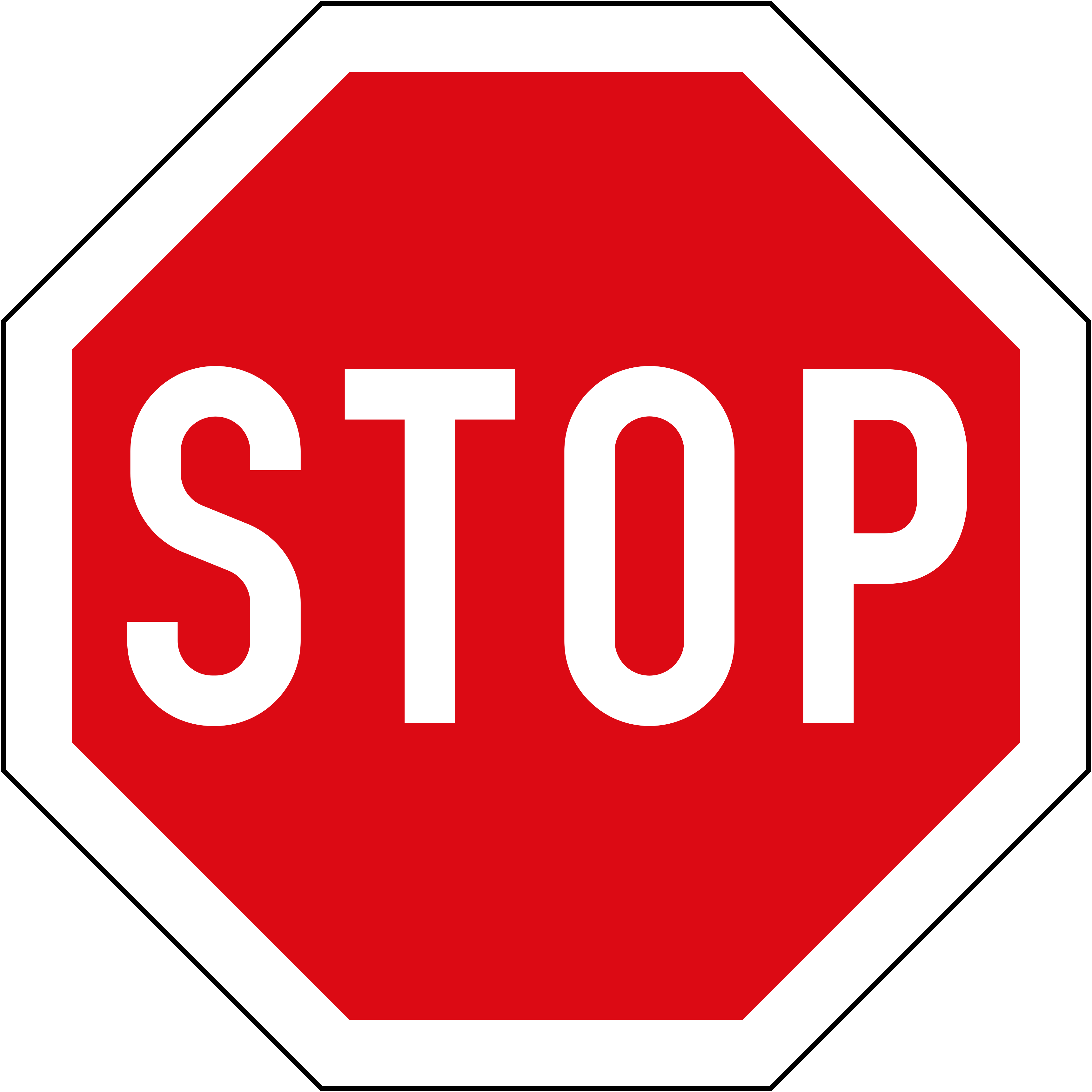
Pick an answer to see the reason.
Every question in the bank is explained like this.
All 485 Oman questions, OMR 1.5 →Pass first time, not on the retake
Printable PDFOman Driving Test Questions PDF (ROP)
Oman's signal and sign questions are what people search for most, and the ROP scores thirteen separate areas on the road test that follows. Both are covered.
- Questions in the pack
- 485
- questions, all explained
- Real test
- 30 Q · 30m
- real test, 75% to pass
- Full exam papers
- 3 × 30
- full exam papers
- 3 full exam papers at the real 30-question length, each with a key
- All 485 questions by topic, with the answer and the rule
- A mark-yourself scale and a printable road-sign sheet
A retake
~OMR 25
The pack, once
OMR 1.5
OMR 4 OMR 1.5one payment, no subscription
3 full papers + 485 questions, printable
Get the Oman packPractice questions written from the public rules, not the authority's own bank.
Choose your governorate
The theory test is run by each governorate’s own authority, so pick where you are testing. Every governorate gets its own branded practice with a distinct set of questions.
How to prepare in three steps
Pick your governorate
Choose where you are testing so the branding and questions match your licensing authority (Royal Oman Police).
Drill and mock
Warm up by topic with instant feedback, then sit a full timed mock exam just like the real test.
Review and retake
Read the explanation for every miss, then retake until you clear the pass mark comfortably.
Oman signal test questions with answers
Practice questions with the answer and the reason, from the free sample of the same bank our Oman tests run on, most of them traffic signs shown as you will see them. Before reading the options, try naming each sign aloud, as you may have to on the day.
Oman traffic sign questions
What does this sign mean?
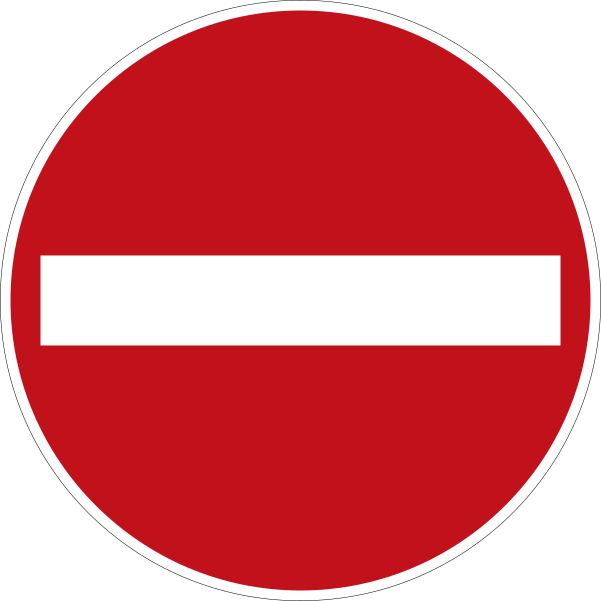
Pick an answer to see the reason.
You reach a junction marked with this sign and no traffic is visible. What is the correct action?
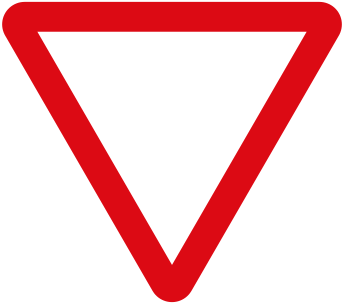
Pick an answer to see the reason.
This sign is posted inside a residential area. What does it mean?
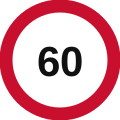
Pick an answer to see the reason.
You passed an 80 km/h sign 1.5 km ago and no new sign has appeared. Does the limit still apply?
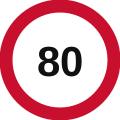
Pick an answer to see the reason.
This sign is displayed on an Omani expressway. A fellow driver argues there is a guaranteed 20 km/h tolerance above the posted limit. Is this correct?
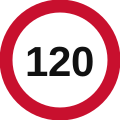
Pick an answer to see the reason.
A no-overtaking sign is posted at the start of a bend. You can see the road ahead is empty. May you overtake?
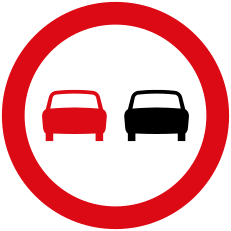
Pick an answer to see the reason.
A driver wants to stop in a No Parking zone for 2 minutes, engine running, to buy water from a roadside shop. Is this permitted?
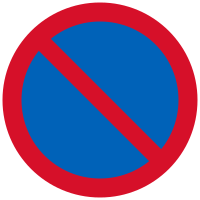
Pick an answer to see the reason.
The Stop sign question at the top of this page and the Give Way junction question here are the classic pair. A Stop sign means a full stop even when nothing is coming; a Give Way sign lets you continue after slowing and checking, if the junction is genuinely clear. Officers and papers both test that difference.
The speed questions show how Oman tests speed signs: not "what number is this" but what the number means in practice. A limit is a maximum, not a minimum or a recommendation; it lasts until a new sign or an end-of-restriction sign; and there is no legal tolerance above it, whatever you have heard about cameras.
Roundabouts, mountain roads and children
At a roundabout in Oman, who has priority?
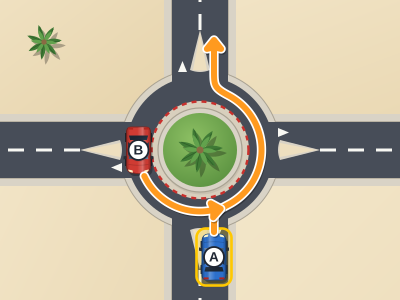
Pick an answer to see the reason.
You are driving up a narrow mountain road and you meet a vehicle coming downhill. There is only room for one vehicle to pass. Who should give way?
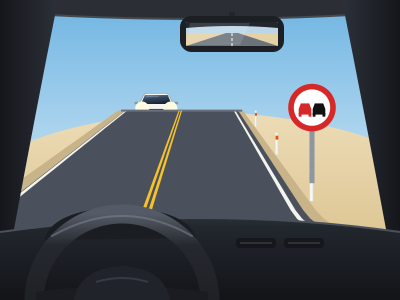
Pick an answer to see the reason.
Under Oman's traffic regulations, which children are generally prohibited from travelling in the front passenger seat of a private car?
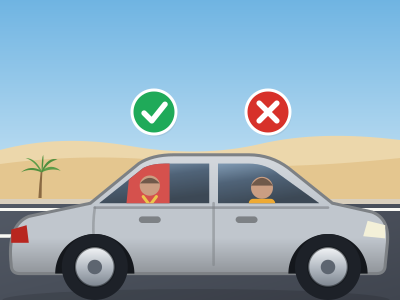
Pick an answer to see the reason.
The roundabout question deserves more attention than it gets. Incorrect roundabout behaviour is one of the most common reasons people fail the Oman road test, and the rule behind it, give way to traffic already circulating, coming from your left, is the same one the theory test asks. Learn it once, properly, and it pays twice.
These come from the free sample. Get all 485 Oman questions in the printable pack · OMR 1.5 →
The ROP signal test: oral or on paper?
The Oman signal test is the theory test for a driving licence, run by the Royal Oman Police, not by a separate transport authority. It is mostly about traffic signs, with questions on road rules, right of way and safe driving.
| What you need to know | The figure | How sure it is |
|---|---|---|
| Who runs it | Royal Oman Police, through its licensing / traffic department | Certain |
| Format we publish | 30 questions, 23 to pass (75%), 25 minutes | Wathim driving-test data, verified July 2026 |
| How it is conducted | Reported as largely oral: the officer points to signs and you name them | Reported; the ROP sets the format and it can change |
| Languages | Primarily Arabic; English and possibly others at some centres | Availability varies by centre |
| Fee | Around OMR 25 for the test; OMR 20 for licence issuance on top | autoviatest.com, October 2026 - the only source we found |
| Retest | No published retest fee or waiting period found | Ask your driving school |
There are two descriptions of the test in circulation, and the honest position is that both may be true depending on centre and time:
- A question paper. Our practice tests and pack use 30 questions in 25 minutes with 23 to pass, the format we verified in July 2026. On that format you can afford seven mistakes.
- An oral sign test. The ROP licensing process is also reported to run the signal test largely as an oral examination: an officer points to signs on a board or sheet and you say what each one means, with a relatively high standard expected and limited time.
The preparation that covers both is the same: learn every sign well enough to name it aloud without options in front of you. Multiple-choice practice is useful for the rules and for checking yourself, but if the officer points and you need four answers to choose from, you are not ready. A simple test: cover the options on each sign question above and say the answer before you look. Ask your driving school which form your centre uses when you book.
Oman traffic signs: the families to learn first
Oman uses the standard GCC road signs, so they follow the same shape and colour logic you will find in the UAE, Saudi Arabia or Qatar. Learn the families before the individual signs, and an unfamiliar sign will never be a complete blank.
| Shape and colour | Family | What it tells you | Examples on the test |
|---|---|---|---|
| Red circle | Prohibitory | You must not do something, or must not exceed a figure | No entry, no overtaking, no parking, speed limits |
| Blue circle | Mandatory | You must do this | Roundabout direction, keep right, turn left or right |
| Red triangle | Warning | A hazard is ahead; slow and be ready | Roundabout ahead, slippery road, falling rocks, camels crossing |
| Inverted triangle | Give way | Yield to traffic with priority | The Give Way sign |
| Red octagon | Stop | Full stop at the line, every time | The Stop sign |
| Blue or green rectangle | Information and direction | Where you are and where the road goes | Motorway signs, parking, direction boards |
Oman's landscape adds a few warning signs that newcomers from flat cities meet for the first time: steep descents, falling rocks, animals and camels on the road, drifting sand. Mountain driving also brings its own right-of-way rule, which the mountain road question above covers.
Where Oman sign questions catch people
The sign questions are not hard individually. People fail them for predictable reasons:
- Knowing the picture but not the rule. "No overtaking" is easy; "may you overtake if the road ahead is clearly empty?" is the same sign asked properly, and the answer is still no.
- Folk rules about speed. Camera tolerances, "the limit ends at the junction", "limits only apply near the sign". None of these is law. The posted limit applies until it is replaced or ended.
- No parking treated as "quick stops are fine". Leaving the vehicle to go into a shop is prohibited regardless of duration.
- Mixing up the warning and the instruction. A red triangle with a roundabout symbol warns you one is coming; a blue circle with arrows tells you how to drive round it.
- Freezing when asked aloud. If your centre runs the test orally, a sign you can recognise among options but cannot name cold is a sign you will miss. Practise saying answers.
A two-week plan for the Oman signal test
| Days | Focus | Practise with |
|---|---|---|
| 1-4 | Sign families, then every sign, named aloud without options | Road signs test 1 and test 2 |
| 5-7 | Lanes, overtaking, roundabouts, U-turns | Road rules test 1 |
| 8-9 | Right of way, including mountain roads and school zones | Right of way test |
| 10 | Safe driving in heat, sand and rain | Safe driving test |
| 11-14 | Full timed papers, then only the questions you got wrong | Mock test 1 |
Ready means: you clear full timed mocks comfortably twice in a row, and you can name every sign in the bank aloud with the options covered. The second test matters more in Oman than anywhere else in the Gulf.
On the free route each test shows its first 10 questions with the answer and the reason. Riders and heavy-vehicle drivers sit the same shared signs and rules plus their own questions: see the motorcycle tests and the truck and bus tests.
Oman signal test fee and traffic sign PDFs
The only figures we found are around OMR 25 for the test and OMR 20 for licence issuance (autoviatest.com, October 2026). We could not cross-check them against a second source, so treat them as approximate. We found no published retest fee or waiting period anywhere, and we are not going to guess; your driving school will tell you both. Driving-school training is usually the largest single cost, and the signal test is the stage most fully within your control, which is the reason to pass it first time.
Traffic signs in Oman PDF: what is official and what is not
- The ROP does not publish its question bank. There is no official "Oman signal test questions PDF".
- Sign study material comes with your file. Road-sign material is typically provided in the licence booklet or by your driving school. Ask your school for it at registration.
- Free PDFs online are often copied from other countries' material, undated and without explanations. The signs are largely shared across the GCC; the rules, fines and procedures around them are not.
Holders of a licence from some countries can convert directly without the tests, and the ROP's list changes. Check yours with the driving licence conversion checker before you register with a school.
How to get your Oman driving licence
In the Sultanate of Oman, driving licences for light vehicles (private cars) are issued by the Royal Oman Police (ROP) through its Directorate of Licensing (Traffic Department). There are two broad pathways: direct conversion for holders of licences from certain approved countries, and the full new-licence process for everyone else. Applicants who must take the full route (which includes many expatriate nationalities) typically complete a medical and eye test, open a licence file with the ROP, train with a licensed driving school or certified instructor, pass an oral signals and theory test, pass a set of stage-one practical tests (including parking and hill-start manoeuvres), and finally pass an on-road driving test before the licence is issued. The minimum age to hold a licence is generally 18. All procedures, fees, and eligibility criteria are set by the ROP and are subject to change; confirm the current requirements with the Royal Oman Police before beginning the process.
The step‑by‑step journey
- 1
Complete the eye test and medical requirements
Before opening a licence file you generally need a vision (eye) test from an ROP-authorised optician, and in many cases a blood group certificate from a licensed clinic. The eye test certificate is time-limited (reportedly valid for around 30 days), so obtain it shortly before your ROP visit. If you wear glasses or contact lenses, attend the test with them. Confirm the current medical and eye-test requirements, approved centres, and certificate validity period with the Royal Oman Police.
- 2
Gather documents and obtain an NOC if required
Assemble your passport, resident card (Civil ID), passport-sized photographs (commonly required with a blue background), the eye test certificate, and the blood group certificate. Expatriates employed under sponsorship are typically required to provide a No Objection Certificate (NOC) from the sponsor or employer; the NOC is generally required to be in Arabic and duly signed and stamped, and an English-only version may be rejected. Confirm whether an NOC applies to your visa category, and the current document list, with the Royal Oman Police.
- 3
Open a licence file with the ROP (the licence booklet)
Visit the ROP Directorate of Licensing / Traffic Department (or use the ROP mobile app or portal to book and reduce waiting time) to submit your documents, pay the file-opening fee, and receive your driving licence file, sometimes referred to as a booklet or 'green book'. This file records your test attempts and often contains the road-signs reference used in the signals test. Confirm the current file-opening procedure and fee with the Royal Oman Police.
- 4
Train with a licensed driving school or certified instructor
Register with an ROP-approved driving school or a certified independent instructor in your governorate to prepare for the theory and practical tests. Training should cover vehicle control, mirror and signal use, roundabout navigation (very common in Oman), parking, hill starts, and public-road driving. The number of lessons needed varies by individual; confirm any minimum training requirements and current lesson rates with the Royal Oman Police and directly with driving schools, as fees vary.
- 5
Pass the signals and theory test
The signals test is administered by an ROP officer at a Traffic Department / licensing centre and focuses on recognising Omani road signs and traffic rules. It is reported to be conducted largely orally (the officer points to signs and asks you to identify them) and to require a high pass mark. It is primarily conducted in Arabic, though English and other languages may be available at some centres; availability varies. Confirm the current format, number of questions, pass mark, language options, and retake rules with the Royal Oman Police.
- 6
Pass the stage-one practical tests (signs, parking, hill start)
After the theory stage, applicants typically complete a set of practical sub-tests in a controlled area, commonly including: a brief repeat sign check; a parking/manoeuvring test through a course marked by drums or cones that must not be touched (including a reversing element that many find the hardest); and a slope or hill-start test requiring a smooth uphill start without rolling back. Confirm the current stage-one test components, marking criteria, and fees with the Royal Oman Police.
- 7
Pass the on-road driving test
The final road test is conducted on public roads with an ROP examiner in the vehicle. It assesses mirror use, speed control, lane discipline, full stops at stop signs, correct and safe roundabout entry, following distance, and parking. Multiple attempts are common, and there is typically a waiting period of several weeks between attempts. Confirm current retake waiting periods and any caps on attempts with the Royal Oman Police.
- 8
Collect the driving licence
On passing the road test, pay the licence issuance fee and the ROP issues the Omani light-vehicle driving licence, increasingly delivered digitally through the ROP mobile app with physical cards available from self-service kiosks or police service centres. Licence validity differs for nationals and non-nationals and may be tied to residency; confirm the current validity period, issuance fee, and renewal process with the Royal Oman Police. Carry your licence whenever driving.
What to bring: documents checklist
- Valid Resident Card (Civil ID) for expatriate residents, or national ID for Omani nationals (original and copy)
- Original passport (and copy)
- Recent passport-sized photographs (a blue background is commonly required; confirm count and specification with the ROP or your driving school)
- Eye test certificate from an ROP-authorised optician (time-limited validity, reportedly around 30 days)
- Blood group certificate from a licensed clinic (where required)
- No Objection Certificate (NOC) from the sponsor or employer, generally in Arabic, signed and stamped, if required for your visa category
- The ROP-issued licence file or booklet (green book) once opened
- Valid or recently expired foreign driving licence, plus translation if not in Arabic or English, for conversion applicants
- Payment receipts for applicable fees
Each stage in detail
Eye test
A vision (eye) test from an optician authorised by the Royal Oman Police is a mandatory prerequisite before opening a licence file and sitting the tests. It checks that your visual acuity meets the minimum standard for safe driving, with corrective lenses noted if you wear them; that condition will then appear on your licence. The eye test certificate has a limited validity period (reported to be around 30 days), so obtain it shortly before your ROP visit to avoid it expiring. Many applicants also need a blood group certificate from a licensed clinic as part of the file. Confirm the current vision standards, certificate validity, and list of approved centres with the Royal Oman Police.
Theory (knowledge) test
The theory test, commonly called the signals test, is administered by a Royal Oman Police officer at a Traffic Department / licensing centre and focuses on identifying Omani road signs and knowing the rules of the road. It is reported to be conducted largely as an oral examination in which the officer points to signs and the candidate names them, with a relatively high pass mark required, and there is generally a limited time to complete it. The test is primarily conducted in Arabic; English and possibly other languages may be available at some centres, but availability varies and is subject to change. The exact number of questions, the pass mark, the languages offered, and the rules and waiting periods for retakes are all set by the ROP; confirm the current details with the Royal Oman Police. Road-signs study material is typically provided in the licence booklet or by your driving school. Booking is usually done through your driving school, the ROP mobile app, or the ROP portal.
Road test
The final practical road test is conducted on real public roads with a Royal Oman Police examiner in the vehicle. It assesses safe vehicle control, mirror and blind-spot checks, appropriate and steady speed, lane discipline, coming to full stops at stop signs, correct and safe roundabout entry (Oman has a very large number of roundabouts and this is a frequent focus), safe following distance, and parking. Commonly reported reasons for failure include: touching or crossing yellow edge lines, rolling rather than fully stopping at stop signs, entering a roundabout when lanes to the left are not clear, harsh or late braking, not checking mirrors before changing lanes, excessive or erratic speed, and poor parking. Many candidates, including experienced drivers, take several attempts, and there is typically a waiting period of several weeks between attempts. Note also the earlier stage-one practical tests (a parking/manoeuvring course marked by drums and a hill-start slope test) that generally precede the on-road test. Confirm the current assessment criteria, retake waiting periods, and any caps on attempts with the Royal Oman Police.
Converting a foreign licence
Holders of a valid driving licence from certain approved countries may be able to convert directly to an Omani licence without sitting the tests. Countries reportedly on the approved list have historically included the GCC states (Saudi Arabia, United Arab Emirates, Kuwait, Bahrain, Qatar) and a range of others such as the United Kingdom, United States, Canada, Australia, New Zealand, Japan, South Africa, and several European countries; however, the approved-country list is determined by the Royal Oman Police and is subject to change. Nationalities not on the list (which has historically included India, Pakistan, Bangladesh, the Philippines, Nepal, Sri Lanka, and others) generally must complete the full new-licence process. The typical conversion process for eligible applicants involves obtaining an eye test (and blood group certificate where required), presenting the original foreign licence (with translation if not in Arabic or English, and often required to have been held for at least a period such as one year), passport, resident card, and photographs at the ROP or via the ROP app, and paying the conversion fee, with the licence often issued quickly. Visitors' foreign or international licences are typically accepted only for a limited period after arrival before conversion or a local licence is required. Confirm whether your country of issue qualifies, the holding-period requirement, and the current process with the Royal Oman Police.
How to book
The Royal Oman Police offers services through its official portal (rop.gov.om) and through the ROP mobile application, which is available on the Apple App Store and Google Play and supports appointment booking, fee payment, and digital licence issuance. Using the app or portal to book appointments can significantly reduce in-person waiting times, which can otherwise run to a few hours at busy centres. In practice you should: (1) obtain your eye test and any required medical certificate first; (2) open your licence file at the ROP Directorate of Licensing / Traffic Department (bookable via the app); (3) register with an ROP-approved driving school, which can help coordinate test bookings; and (4) check rop.gov.om and the ROP app for the latest self-service options and the current list of approved schools. Confirm current booking procedures with the Royal Oman Police, as digital services are updated periodically.
Fees
The full new-licence process involves several separate fees: the eye test, a blood group certificate where required, the licence file (green book) opening fee, the signals/theory test fee (per attempt), stage-one practical test fees (per attempt), the road test fee (per attempt), the licence issuance fee, and separately the cost of driving-school lessons. Because retakes are common and lesson needs vary, total cost varies widely between applicants. Individual government fee components are commonly reported in the range of a few Omani rials each for tests and certificates, with the licence issuance fee typically higher, and driving-school training often being the largest single cost. Conversion of an eligible foreign licence is generally much cheaper than the full process. All figures reported in third-party and community sources may be out of date, so no exact amounts are asserted here; confirm the current fee schedule for each stage directly with the Royal Oman Police and your chosen driving school before committing.
Typical timeline
Timeframes vary greatly. Direct conversion of an eligible foreign licence is often completed within a day or a few days once documents are ready. The full new-licence process is considerably longer because of training time, test scheduling, and the common need for retakes: with waiting periods of several weeks between practical-test attempts and multiple road-test attempts being common, the full process frequently takes several months and can extend to a year or more for some applicants. These timeframes are indicative only; confirm current waiting times for each test and for processing with the Royal Oman Police and your driving school.
Tips to pass
- Book appointments through the ROP mobile app or rop.gov.om rather than walking in, as in-person queues at busy licensing centres can take a few hours.
- Obtain the eye test (and blood group certificate) before your ROP visit, and act quickly, as the eye test certificate is only valid for a short window (reportedly around 30 days).
- If an NOC is required for your visa category, ensure it is in Arabic, signed, and stamped, since an English-only NOC may be rejected; arrange it early as employer processing times vary.
- Practice roundabout entry extensively and only enter when the lanes to your left are clear, as incorrect roundabout behaviour is one of the most common road-test failure points.
- For the stage-one practical tests, rehearse the reversing/parking manoeuvre through drums and the hill-start on a slope, as these controlled-area tests catch out many first-time applicants.
- Do not book the road test until you are genuinely confident; rescheduling after a failed attempt can add several weeks, and keep copies of all receipts and certificates for every stage.
Passing the Oman theory test
The Oman theory (knowledge) test is 30 multiple-choice questions with a 75% pass mark, so you need 23 correct answers. It is administered by each governorate’s own authority, so where you test matters. Start with road signs and signals, then move on to right of way, roundabouts, speed limits and penalties, and finish with full timed mock exams so the 30-minute format feels familiar on the day.
Every question here comes with the correct answer and a short explanation drawn from the public traffic rules, so you learn the reasoning rather than memorising answers. Pick your governorate above to get practice matched to your licensing authority.
Other GCC countries
Testing elsewhere in the Gulf? Practise for another country’s theory test.
Oman driving test guides
Oman theory test FAQs
The Oman light-vehicle theory test has 30 multiple-choice questions and you need 23 correct to pass, which is 75%. You get about 30 minutes to complete it. The question count and pass mark can vary by governorate and by vehicle class, so confirm the details with your governorate's authority.
You need 75% to pass, which is 23 of 30 questions correct. Our mock exams score you against the same 75% pass mark so you always know where you stand before the real test.
The Oman theory test is commonly available in English and Arabic. Exact language and interpretation options are set by the licensing authority, so confirm what is offered at your test centre when you book.
The theory test is run by each governorate's own authority: Muscat (Royal Oman Police), Dhofar (Royal Oman Police), Musandam (Royal Oman Police), Al Buraimi (Royal Oman Police), Al Dakhiliyah (Royal Oman Police), Al Batinah North (Royal Oman Police), Al Batinah South (Royal Oman Police), Al Sharqiyah North (Royal Oman Police), Al Sharqiyah South (Royal Oman Police), Al Dhahirah (Royal Oman Police) and Al Wusta (Royal Oman Police). Choose your governorate above to get practice matched to that authority's branding, question count and pass mark.
Fees are set by the governorate's authority and approved driving schools and can change, so we do not quote a fixed price. In most cases you register with an approved driving school or the traffic department, complete the required lectures, then sit the theory (knowledge) test at an approved centre. Always confirm the current fee and steps with your driving school or the authority before booking.
The first 10 questions of every Oman mock exam and topic test are free, with no account or signup, and each shows the answer and the reason. The full tests, timed at the real length and marked against the pass mark, are in the Oman question bank, for one payment.
It is the theory test for an Omani driving licence, run by the Royal Oman Police. It focuses on identifying road signs and knowing the rules of the road, and is sat after you open your licence file and before the practical tests.
It is widely reported to be largely oral: an ROP officer points to signs and you say what they mean. Prepare by learning every sign well enough to name it aloud without options in front of you, which also covers a written or on-screen format.
The ROP does not publish its question bank. Road-sign study material is typically provided in the licence booklet or by your driving school. Wathim's Oman pack includes a printable road-sign reference sheet alongside the full bank of practice questions with explanations.
Around OMR 25 for the test, with OMR 20 for licence issuance on top, from the only source we found (autoviatest.com, October 2026). We found no published retest fee or waiting period; your driving school will have the current figures.
Anyone without a licence that can be converted directly. The ROP's conversion list has historically included the GCC states and countries such as the UK, US, Canada and Australia, while licences from countries such as India, Pakistan, Bangladesh and the Philippines have generally needed the full process. The list changes, so check before enrolling.
Traffic already on the roundabout, which approaches from your left. Oman roundabouts circulate counter-clockwise, and you give way before entering. Signal right before your exit.
No. The ROP does not publish its live bank. These are original practice questions written to the format and syllabus, from the public traffic rules and the standard GCC road signs.
Ready for the real licence?
Practise here, then let Wathim handle the paperwork. We manage Oman driving-licence issuance, transfer and conversion for expats, end to end.