

Al Batinah North Royal Oman Police Motorcycle
Practice mode· Motorcycle skillsAl Batinah North Royal Oman Police - Oman Motorcycle Safety Practice Test
Rider safety essentials: protective gear, visibility, safe following distances, hazard awareness, lane position and sharing the road with larger vehicles.
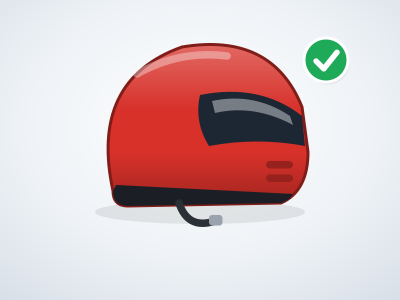
Which helmet standard is commonly accepted for motorcycle road use in Oman?
The other 10 questions in this test
Read them all. The answer and the reason for each, and the timed 20-question run, are in the Oman Driving Test Questions PDF (ROP).
- Q11Motorcycle safety
When riding into strong sun glare in Oman, what should a motorcyclist do?

- ARemove the helmet visor entirely for better vision
- BPull down the sun-visor available on all helmets
- CSun glare only affects car drivers; helmets shield motorcycle riders fully
- DReduce speed, increase following distance, and use a tinted or anti-glare visor
Answer and explanation in the bank
- Q12Motorcycle safety
When approaching a junction from behind, where should a motorcyclist position within the lane?
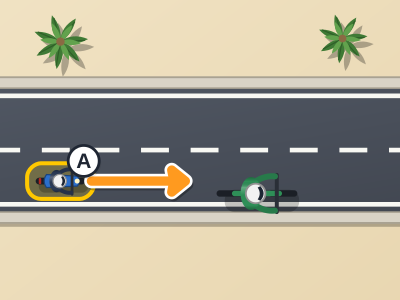
- ADirectly behind the vehicle in front, tight to the centre of the lane
- BAlways in the left-third of the lane regardless of junction type
- CToward the side of the lane that makes you most visible to drivers who may pull out, typically the right-third when approaching from behind a queue
- DPosition does not matter at junctions as long as speed is reduced
Answer and explanation in the bank
- Q13Motorcycle safety
On a multi-lane Oman highway, which lane should a motorcyclist avoid using for extended periods of cruising?
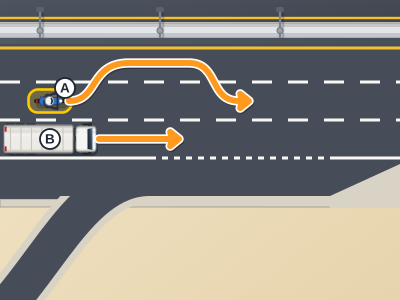
- AThe rightmost (slow) lane, as trucks frequently enter from slip roads
- BThe left-most (fast or overtaking) lane, as sustained occupation invites tailgating by faster vehicles and reduces escape options
- CThe middle lane, as it has the most lateral exposure to lane changes
- DAll lanes are equally safe for extended cruising
Answer and explanation in the bank
- Q14Motorcycle safety
In a group ride, how should the lead rider signal to the group that everyone should stop?

- AApply the brakes suddenly so the brake light flashes repeatedly
- BUse the horn in a long continuous blast
- CRaise the left fist above the head or use pre-agreed hand signals briefed before the ride
- DSwerve left and right across the lane
Answer and explanation in the bank
- Q15Motorcycle safety
Why should a motorcycle helmet visor be kept clean and free from scratches?

- AA scratched visor weakens the structural integrity of the helmet shell
- BDirt and scratches scatter light and create glare, reducing visibility especially when riding toward the sun or in oncoming headlights at night
- CA dirty visor affects the aerodynamics of the helmet and increases wind noise only
- DVisors only need cleaning for cosmetic reasons; vision is not significantly affected
Answer and explanation in the bank
- Q16Motorcycle safety
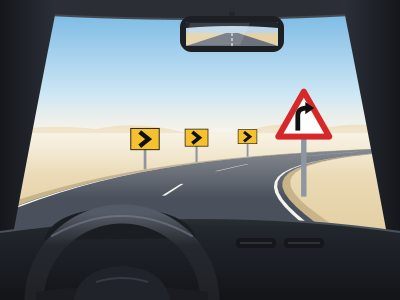
You see gravel scattered across a bend ahead. What is the safest course of action?
- AMaintain speed and lean hard to clear the gravel quickly
- BApply the rear brake only through the gravel
- CAccelerate to keep the bike stable through the gravel
- DReduce speed significantly before the bend, straighten the bike as much as possible through the gravel section, and avoid any sudden inputs
Answer and explanation in the bank
- Q17Motorcycle safety
When overtaking a large truck on an Oman highway, which wind-related hazard should a motorcyclist anticipate?
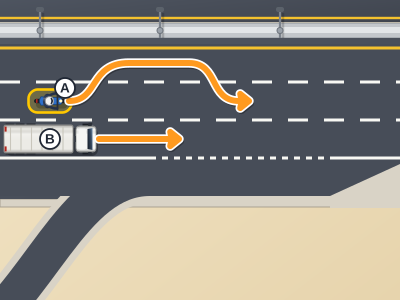
- AA tailwind that accelerates the motorcycle uncontrollably
- BA reduction in wind that makes the steering feel very heavy
- CA sudden crosswind gust as the motorcycle exits the truck's wind shadow, which can push the bike sideways
- DWind turbulence only affects riders when travelling at less than 60 km/h
Answer and explanation in the bank
- Q18Motorcycle safety
Why are camels on the road an especially serious hazard for motorcyclists riding at night in Oman?
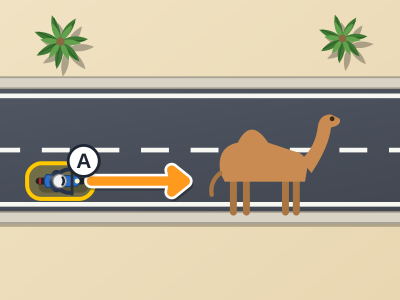
- ACamels are very dark in colour, stand at bonnet height so headlights can pass under them, and their eyes may not reflect light clearly
- BCamels are aggressive at night and will charge motorcycles
- CCamels always stand in the centre of the road at night
- DNight vision goggles are required to see camels; standard headlights are ineffective against any animal
Answer and explanation in the bank
- Q19Motorcycle safety
How does rain affect grip on an Oman road that has been dry for several weeks?
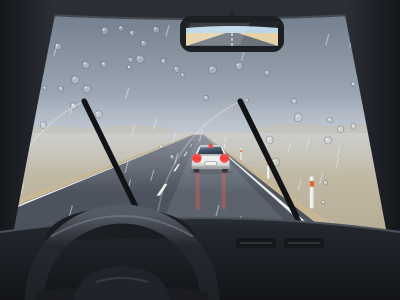
- ARain always improves grip by cleaning the surface
- BThe first rain brings up oil and rubber deposits from the surface, making it extremely slippery before the rain washes them away
- CRoads in Oman are impervious to rain and grip is unaffected
- DRain only reduces grip on gravel roads, not tarmac
Answer and explanation in the bank
- Q20Motorcycle safety
You approach a wadi crossing and the road surface is wet following recent rainfall. What should you do?
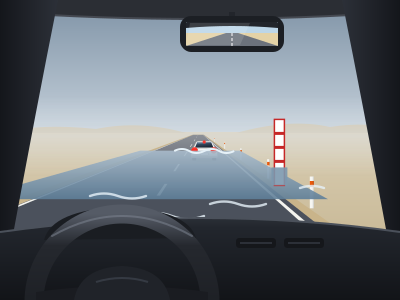
- ACross quickly at speed to minimise contact time with the water
- BFollow any vehicles already crossing as they will show the safe route
- CStop and assess the depth and flow of water; do not attempt to cross moving flood water regardless of its apparent depth
- DCross if the water is less than 30 cm deep
Answer and explanation in the bank
Every answer above, with the rule it comes from, plus the full 20-question timed test.
Get the Oman Driving Test Questions PDF (ROP) - OMR 3What this test covers
Topics include road signs, traffic signals, right of way, roundabouts, speed limits, seat belts, fines and penalties, and the safe-driving rules specific to your vehicle category. Full question-by-question feedback with explanations is shown immediately after you finish the test above.
Frequently asked questions
How many questions is the Al Batinah North Royal Oman Police motorcycle theory test?
The official Royal Oman Police motorcycle theory test in Al Batinah North has 30 questions and you need 23 correct (75%) to pass. This practice test has 20 questions.
Is this the real exam?
These are practice questions to help you revise, written to the published rules and to what candidates report from the real test. They are not the official Oman exam and the real question bank, format, fees and pass mark are set by the Royal Oman Police, and can change. Always confirm the current requirements with your driving school or the Royal Oman Police.
Is this practice test free?
The first 10 questions are free, with no signup, and each shows the answer and the reason. The full 20-question test, timed, is in the Oman Driving Test Questions PDF (ROP) (OMR 3, one payment), with every question in the bank.
What does the Al Batinah North motorcycle theory test cover?
Road signs, traffic signals, right of way, roundabouts, speed limits, seat belts, penalties and safe-driving rules, plus the handling and safety topics specific to your vehicle.