

Al Buraimi Royal Oman Police Light vehicle
Practice mode· Right of way & safetyAl Buraimi Royal Oman Police - Oman Right of Way Practice Test
Tests your understanding of priority rules: unmarked junctions, roundabouts, emergency vehicles, merging lanes and more. Getting right of way right can prevent serious accidents.
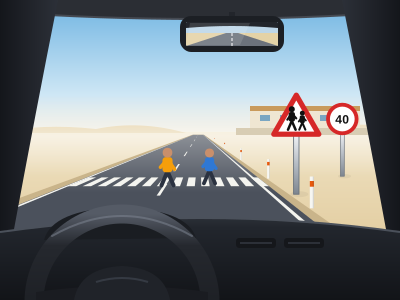
You are driving through a school zone during school hours. A group of children is waiting at the edge of the road. What should you do?
The other 12 questions in this test
Read them all. The answer and the reason for each, and the timed 22-question run, are in the Oman Driving Test Questions PDF (ROP).
- Q11Right of way
You are on a highway in the right lane. The vehicle ahead signals and slows to turn right into a side road. Can you overtake it by passing on the left?
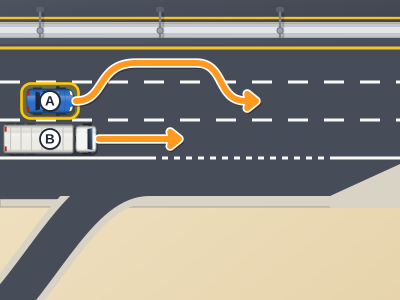
- ANo; overtaking on the left is always prohibited in Oman under any circumstances
- BNo; you must wait behind the turning vehicle until it exits the road
- CYes, but only after sounding the horn twice as a warning
- DYes, you may pass on the left if the lane is clear and it is safe to do so
Answer and explanation in the bank
- Q12Right of way
At a busy T-junction with no signals or signs, you are on the road that ends (the top of the T). Which drivers have priority over you?
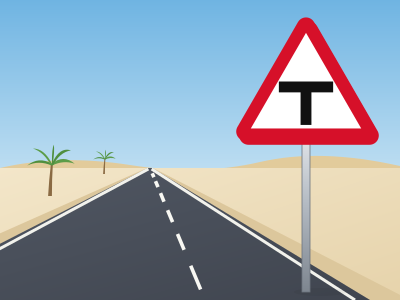
- AOnly traffic approaching from your right on the through road has priority
- BYou have priority because you arrived at the junction first
- CAll traffic travelling along the through road (the base of the T) has priority over you
- DTraffic from the left only has priority if it is travelling faster than you
Answer and explanation in the bank
- Q13Right of way
You are driving at 120 km/h on a motorway and need to exit via a slip road on the right. You are currently in the middle lane. What is the correct procedure?
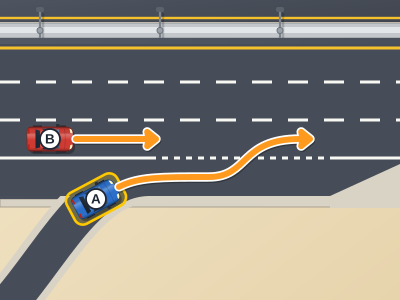
- AMove to the left lane and cross the motorway at the last moment to reach the right-side exit
- BBrake sharply in the middle lane and turn directly across to the slip road
- CDrive past the exit and turn around at the next legal U-turn point
- DMove to the right lane well in advance, then use the slip road, reducing speed after entering it
Answer and explanation in the bank
- Q14Right of way
At an unmarked crossroads you want to go straight on. A vehicle on your right also wants to go straight on. A vehicle on your left wants to turn right across your path. In what order do they proceed?
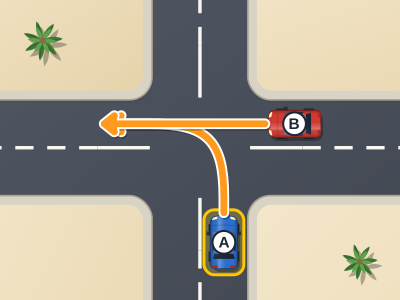
- AThe vehicle on your right goes first, then you, then the vehicle on the left turns when clear
- BThe vehicle turning right has priority because it has the most complex manoeuvre
- CAll three vehicles have equal priority and may proceed simultaneously
- DYou have priority because you are going straight on rather than turning
Answer and explanation in the bank
- Q15Right of way
You are on a minor road approaching a T-junction where you must turn onto the main road. Who has priority?
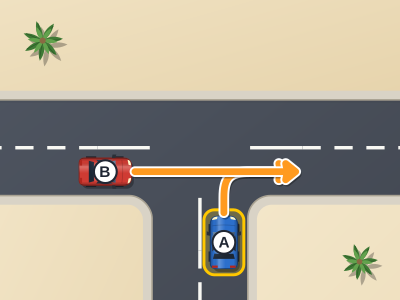
- AYou have priority because you arrived at the junction first
- BTraffic turning in the same direction as you has priority
- CThe vehicle on your right has priority; the main road does not matter
- DTraffic already travelling on the main road has priority
Answer and explanation in the bank
- Q16Right of way
A bus has stopped at a bus stop and its indicator shows it intends to pull back onto the road. What should drivers behind do?
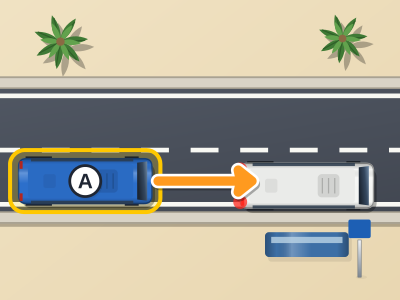
- ASound the horn and overtake on the right before the bus moves
- BGive way only if it is a school bus
- CGive way to the bus where it is safe to do so
- DThe bus must wait for all traffic to clear before it can move
Answer and explanation in the bank
- Q17Right of way
You are joining a motorway from a slip road (on-ramp). Who has priority?
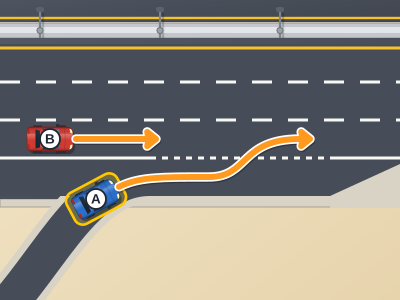
- AVehicles on the slip road have priority because they are accelerating
- BTraffic already on the motorway has priority
- CThe vehicle that has been waiting the longest has priority
- DPriority is shared equally between both streams of traffic
Answer and explanation in the bank
- Q18Right of way
You are driving up a narrow mountain road and you meet a vehicle coming downhill. There is only room for one vehicle to pass. Who should give way?
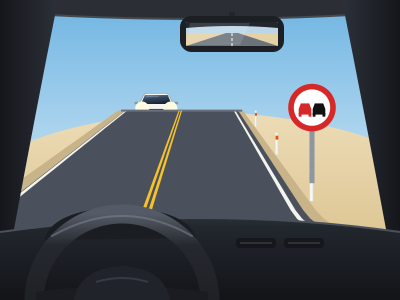
- AThe vehicle travelling downhill should give way to the vehicle going uphill
- BThe vehicle going uphill should reverse to let the downhill vehicle pass
- CThe larger vehicle should reverse regardless of direction
- DBoth vehicles stop and wait for a third party to direct them
Answer and explanation in the bank
- Q19Right of way
You are driving on a one-way street and approaching a junction with a two-way road. You want to turn right. Who has priority?
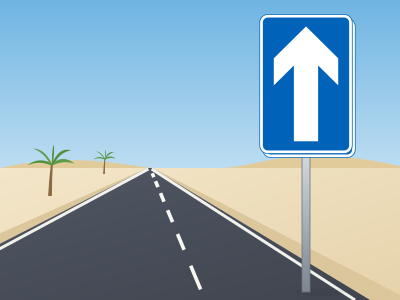
- AYou have priority because you are exiting a one-way street
- BTraffic on the two-way road has priority; you must give way before turning
- COnly traffic approaching from the left on the two-way road has priority
- DOne-way street traffic always has right of way at any junction
Answer and explanation in the bank
- Q20Right of way
A cyclist is travelling straight on at a junction where you want to turn right. Who has priority?
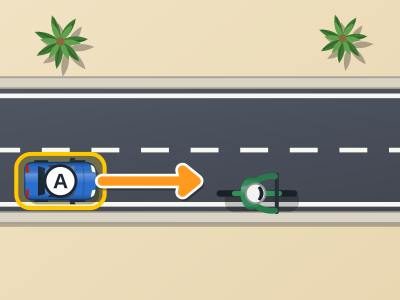
- AYou have priority because you are in a motor vehicle
- BYou both have equal priority; whoever moves first goes first
- CThe cyclist must stop and let you complete your right turn
- DThe cyclist going straight on has priority over you turning right
Answer and explanation in the bank
- Q21Right of way
You are reversing out of a private driveway onto a public road. Who has priority?
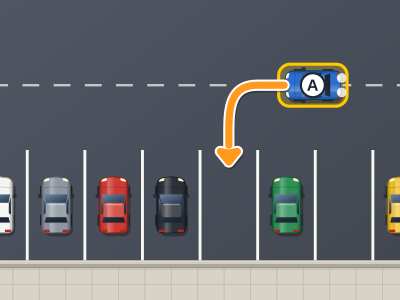
- AYou have priority because you were in the driveway first
- BPriority is equal; sound your horn and reverse slowly
- CPedestrians must give way to you while you reverse
- DTraffic on the public road has priority; you must give way
Answer and explanation in the bank
- Q22Right of way
Two lanes merge into one ahead. How should drivers handle the merge correctly?
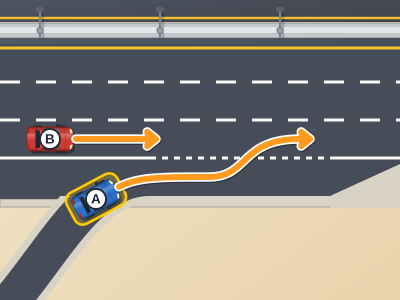
- AThe right lane has absolute priority and the left lane must stop
- BThe vehicle that was furthest ahead in its lane always has full priority
- CUse a zip-merge: each lane takes turns alternately at the merge point
- DDrivers in the closing lane must stop and wait until the road is completely clear
Answer and explanation in the bank
Every answer above, with the rule it comes from, plus the full 22-question timed test.
Get the Oman Driving Test Questions PDF (ROP) - OMR 3What this test covers
Topics include road signs, traffic signals, right of way, roundabouts, speed limits, seat belts, fines and penalties, and the safe-driving rules specific to your vehicle category. Full question-by-question feedback with explanations is shown immediately after you finish the test above.
Frequently asked questions
How many questions is the Al Buraimi Royal Oman Police light vehicle theory test?
The official Royal Oman Police light vehicle theory test in Al Buraimi has 30 questions and you need 23 correct (75%) to pass. This practice test has 22 questions.
Is this the real exam?
These are practice questions to help you revise, written to the published rules and to what candidates report from the real test. They are not the official Oman exam and the real question bank, format, fees and pass mark are set by the Royal Oman Police, and can change. Always confirm the current requirements with your driving school or the Royal Oman Police.
Is this practice test free?
The first 10 questions are free, with no signup, and each shows the answer and the reason. The full 22-question test, timed, is in the Oman Driving Test Questions PDF (ROP) (OMR 3, one payment), with every question in the bank.
What does the Al Buraimi light vehicle theory test cover?
Road signs, traffic signals, right of way, roundabouts, speed limits, seat belts, penalties and safe-driving rules, plus the handling and safety topics specific to your vehicle.