

Al Buraimi Royal Oman Police Motorcycle
Timed mock exam· Full mock examsAl Buraimi Royal Oman Police - Oman Motorcycle Theory Mock Test 1
A full 30-question timed practice exam for the Oman motorcycle (bike) theory test. Covers shared road rules and signs plus motorcycle-specific control and safety. Aim for 23/30 (75%) to pass.
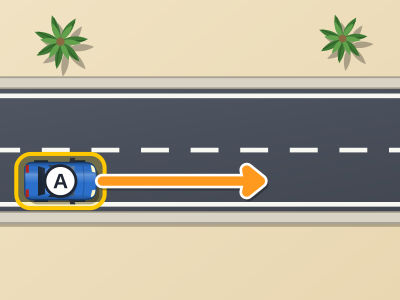
On a multi-lane road in Oman, which lane should you normally drive in?
The other 20 questions in this test
Read them all. The answer and the reason for each, and the timed 30-question run, are in the Oman Driving Test Questions PDF (ROP).
- Q11Motorcycle safety
Why are camels on the road an especially serious hazard for motorcyclists riding at night in Oman?
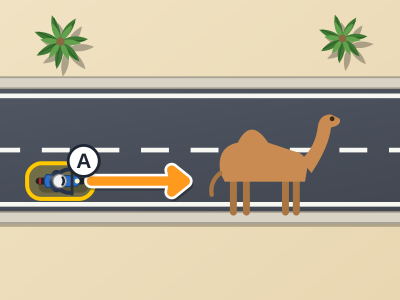
- ACamels are very dark in colour, stand at bonnet height so headlights can pass under them, and their eyes may not reflect light clearly
- BCamels are aggressive at night and will charge motorcycles
- CCamels always stand in the centre of the road at night
- DNight vision goggles are required to see camels; standard headlights are ineffective against any animal
Answer and explanation in the bank
- Q12Road signs and signals
This sign is posted at a junction. What does it mean?
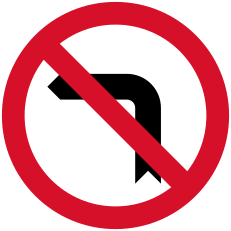
- AYou must not turn right
- BNo entry for left-hand-drive vehicles
- CYou must not turn left
- DThe left lane is closed ahead
Answer and explanation in the bank
- Q13Traffic rules
Where are U-turns permitted in Oman?
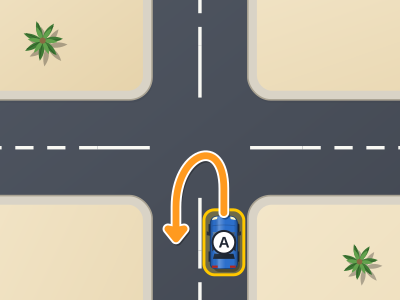
- AAnywhere on a road as long as no vehicle is coming
- BOnly where a U-turn sign or designated median opening specifically allows it
- CAt every intersection unless a sign says otherwise
- DU-turns are always illegal throughout Oman
Answer and explanation in the bank
- Q14Right of way
A traffic light is showing a flashing amber signal. What does this mean for right of way?
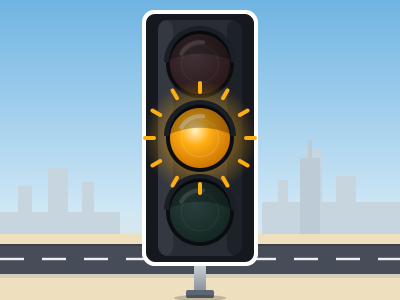
- AStop immediately and wait for a green signal before moving
- BProceed with caution, giving way to pedestrians and other vehicles as needed
- CYou have priority; other traffic must stop for you
- DThe junction is closed; turn around
Answer and explanation in the bank
- Q15Safe driving
When changing to the right lane on an Omani highway, what is the correct sequence of checks?
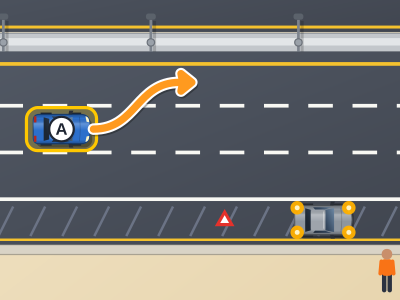
- ACheck interior mirror, check right door mirror, shoulder check right, signal, then move
- BSignal first, then check the interior mirror only
- CCheck the right door mirror only, then move immediately
- DCheck mirrors, move, then signal to inform others
Answer and explanation in the bank
- Q16Penalties and fines
Under Oman's traffic regulations, which children are generally prohibited from travelling in the front passenger seat of a private car?
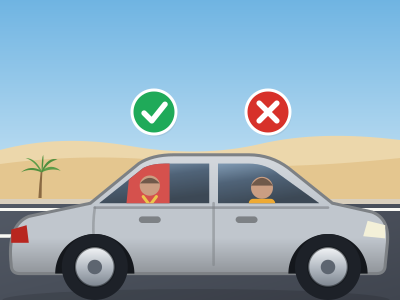
- AChildren under the age of 5 only
- BAll children under 18 regardless of any other factor
- CChildren under the age of 10
- DChildren who weigh less than 36 kg
Answer and explanation in the bank
- Q17Motorcycle control
What is the danger of suddenly rolling on the throttle while leaning in a tight corner?
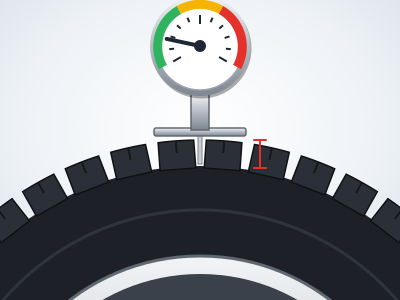
- AIt causes the front wheel to lift off the ground
- BIt can cause the rear tyre to lose grip and spin, leading to a high-side or low-side crash
- CIt has no effect as long as the road is dry
- DIt reduces lean angle automatically
Answer and explanation in the bank
- Q18Motorcycle safety
How does rain affect grip on an Oman road that has been dry for several weeks?
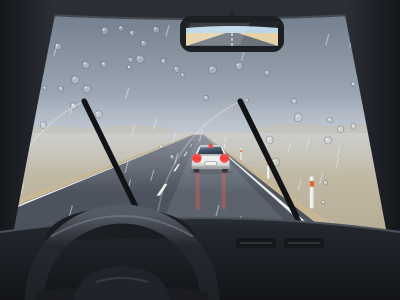
- ARain always improves grip by cleaning the surface
- BThe first rain brings up oil and rubber deposits from the surface, making it extremely slippery before the rain washes them away
- CRoads in Oman are impervious to rain and grip is unaffected
- DRain only reduces grip on gravel roads, not tarmac
Answer and explanation in the bank
- Q19Road signs and signals
What action does this sign prevent at the junction?
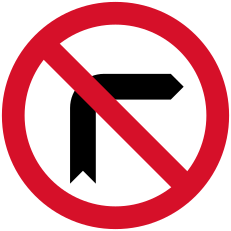
- ATurning left
- BGoing straight ahead
- CMaking a U-turn
- DTurning right
Answer and explanation in the bank
- Q20Traffic rules
You are about to make a U-turn at a permitted point in Oman. Which lane should you position yourself in beforehand?
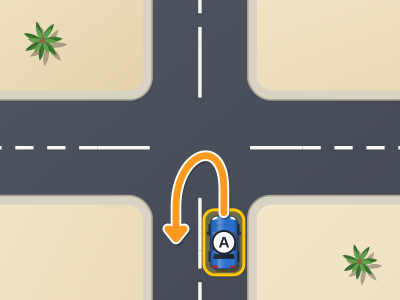
- AThe rightmost lane, as close to the right edge as possible
- BAny lane; position does not matter for a U-turn
- CThe centre lane on a three-lane road
- DThe leftmost lane, as close to the centre line as possible
Answer and explanation in the bank
- Q21Right of way
You are driving on a one-way street and approaching a junction with a two-way road. You want to turn right. Who has priority?
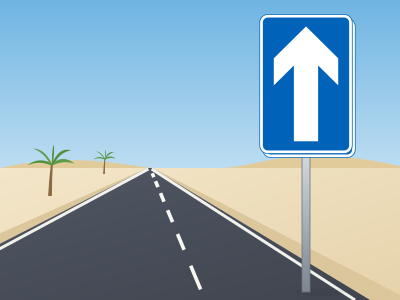
- AYou have priority because you are exiting a one-way street
- BTraffic on the two-way road has priority; you must give way before turning
- COnly traffic approaching from the left on the two-way road has priority
- DOne-way street traffic always has right of way at any junction
Answer and explanation in the bank
- Q22Safe driving
Who must wear a seat belt in a vehicle being driven in Oman?
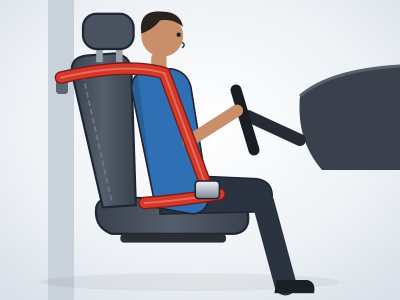
- AOnly the driver
- BOnly the driver and front passenger
- CThe driver and all passengers in every occupied seat
- DOnly passengers under the age of 18
Answer and explanation in the bank
- Q23Penalties and fines
A driver is caught by a radar camera in Oman travelling at 140 km/h in a zone where the limit is 120 km/h. What consequence can they expect?
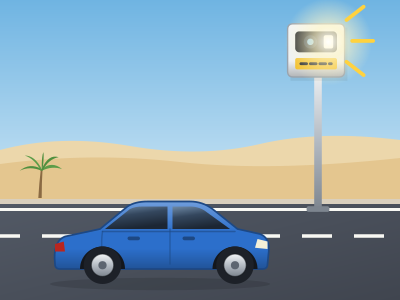
- ANo action because the standard tolerance margin covers 20 km/h above the limit
- BA speeding fine and black points on their driving record
- CImmediate licence confiscation for one year
- DA verbal caution sent by post
Answer and explanation in the bank
- Q24Motorcycle control
What is the main advantage of using the rear brake on a motorcycle?
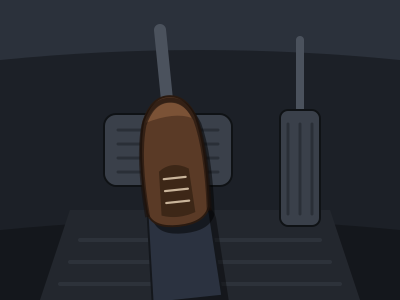
- AIt provides more stopping power than the front brake on dry roads
- BIt is the only brake that is safe to use in corners
- CIt helps stabilise the motorcycle during slow manoeuvres and supplements front braking without pitching the bike forward
- DIt prevents the front wheel from locking
Answer and explanation in the bank
- Q25Motorcycle safety
You approach a wadi crossing and the road surface is wet following recent rainfall. What should you do?
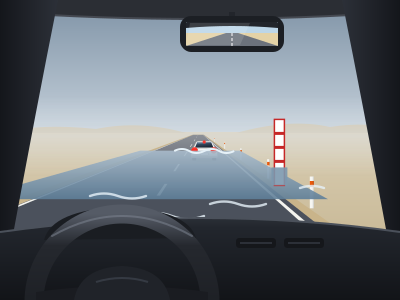
- ACross quickly at speed to minimise contact time with the water
- BFollow any vehicles already crossing as they will show the safe route
- CStop and assess the depth and flow of water; do not attempt to cross moving flood water regardless of its apparent depth
- DCross if the water is less than 30 cm deep
Answer and explanation in the bank
- Q26Road signs and signals
You are approaching a roundabout. Traffic is already circulating inside. Who has priority?
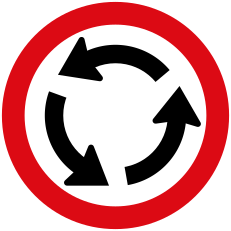
- AVehicles already circulating inside the roundabout
- BVehicles entering from the right
- CVehicles entering from the left
- DThe first vehicle to reach the roundabout entry
Answer and explanation in the bank
- Q27Traffic rules
At which of these locations is a U-turn always forbidden in Oman?
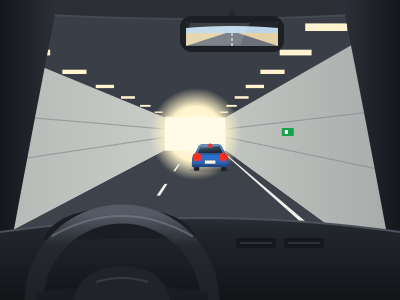
- AOnly on highways with a speed limit above 100 km/h
- BOnly in school zones during school hours
- CU-turns are not forbidden at any specific location type
- DOn a bridge, inside a tunnel, at a pedestrian crossing, or where a bend restricts vision
Answer and explanation in the bank
- Q28Right of way
A cyclist is travelling straight on at a junction where you want to turn right. Who has priority?
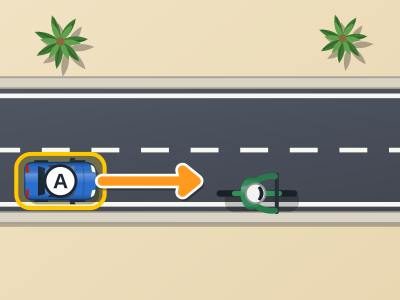
- AYou have priority because you are in a motor vehicle
- BYou both have equal priority; whoever moves first goes first
- CThe cyclist must stop and let you complete your right turn
- DThe cyclist going straight on has priority over you turning right
Answer and explanation in the bank
- Q29Safe driving
A seat belt is positioned incorrectly and the shoulder strap runs behind the wearer's back. How does this affect safety in a crash?
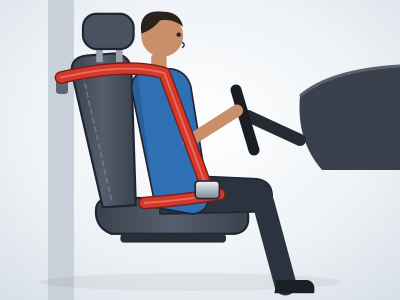
- AIt is extremely dangerous: the wearer will not be restrained and may be thrown forward or out of the vehicle
- BIt is slightly less effective but still provides most of the protection
- CIt is safer because it prevents chest injury from the belt
- DIt makes no difference; the lap belt alone provides sufficient restraint
Answer and explanation in the bank
- Q30Penalties and fines
Many drivers in Oman believe there is a guaranteed tolerance margin above the posted speed limit before a radar camera issues a fine. What should you understand about this?
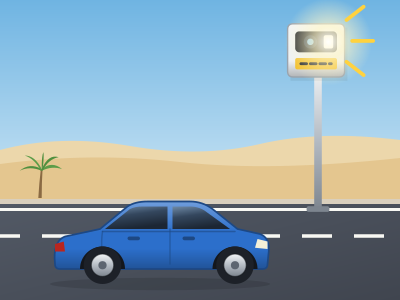
- AAny operational tolerance can be changed or removed at any time; obeying the posted limit is the only safe approach
- BA tolerance of 20 km/h above the limit is officially guaranteed by law
- CRadar cameras only activate if you exceed the limit by 30 km/h
- DThere is no radar enforcement on roads with limits below 80 km/h
Answer and explanation in the bank
Every answer above, with the rule it comes from, plus the full 30-question timed test.
Get the Oman Driving Test Questions PDF (ROP) - OMR 3What this test covers
Topics include road signs, traffic signals, right of way, roundabouts, speed limits, seat belts, fines and penalties, and the safe-driving rules specific to your vehicle category. Full question-by-question feedback with explanations is shown immediately after you finish the test above.
Frequently asked questions
How many questions is the Al Buraimi Royal Oman Police motorcycle theory test?
The official Royal Oman Police motorcycle theory test in Al Buraimi has 30 questions and you need 23 correct (75%) to pass. This practice test has 30 questions.
Is this the real exam?
These are practice questions to help you revise, written to the published rules and to what candidates report from the real test. They are not the official Oman exam and the real question bank, format, fees and pass mark are set by the Royal Oman Police, and can change. Always confirm the current requirements with your driving school or the Royal Oman Police.
Is this practice test free?
The first 10 questions are free, with no signup, and each shows the answer and the reason. The full 30-question test, timed, is in the Oman Driving Test Questions PDF (ROP) (OMR 3, one payment), with every question in the bank.
What does the Al Buraimi motorcycle theory test cover?
Road signs, traffic signals, right of way, roundabouts, speed limits, seat belts, penalties and safe-driving rules, plus the handling and safety topics specific to your vehicle.