

Al Dakhiliyah Royal Oman Police Light vehicle
Practice mode· Right of way & safetyAl Dakhiliyah Royal Oman Police - Oman Right of Way Practice Test
Tests your understanding of priority rules: unmarked junctions, roundabouts, emergency vehicles, merging lanes and more. Getting right of way right can prevent serious accidents.
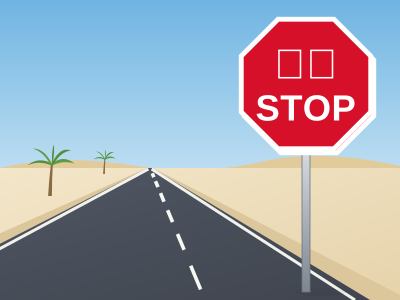
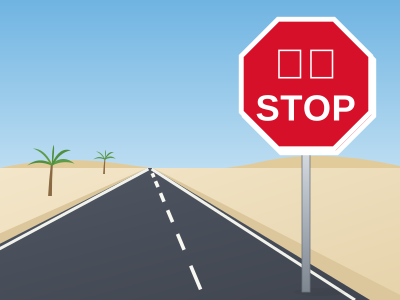
You reach a junction controlled by a STOP sign and white stop line. What are you required to do?
The other 12 questions in this test
Read them all. The answer and the reason for each, and the timed 22-question run, are in the Oman Driving Test Questions PDF (ROP).
- Q11Right of way
A police officer at a junction is facing you with their arm raised towards you. What must you do?
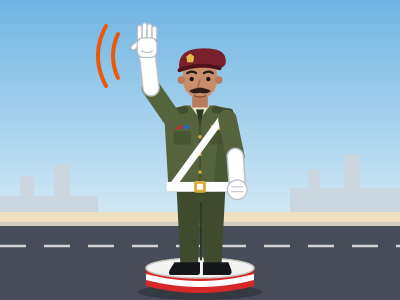
- ASlow down but continue if the traffic light shows green
- BSound the horn to alert the officer and continue through
- CStop only if the officer is waving you down specifically
- DStop immediately; the officer's signal overrides all signs and signals
Answer and explanation in the bank
- Q12Right of way
You are about to pull out of a parking space on the side of the road. Who has priority?
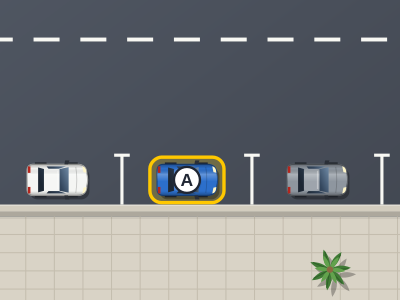
- AYou have priority because your vehicle is in front of the other vehicles
- BMoving traffic on the road has priority over you
- CPriority is equal if you have been signalling for more than three seconds
- DPedestrians must give way to you; other vehicles have equal priority
Answer and explanation in the bank
- Q13Right of way
At an unmarked Y-junction (fork in the road) you arrive at the same time as a vehicle coming from the road that merges in from your right. Who gives way?
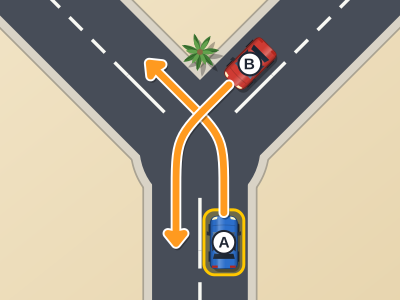
- AYou give way to the vehicle coming from the right
- BThe vehicle on the right gives way because it is merging into your road
- CThe vehicle travelling faster has priority
- DBoth vehicles stop until one driver waves the other through
Answer and explanation in the bank
- Q14Right of way
You want to take the second exit at a two-lane roundabout. Which lane should you normally use to enter?
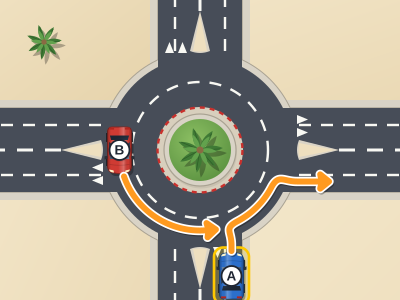
- AAlways use the right lane regardless of which exit you take
- BUse the right lane for the first exit and the left lane for exits beyond the first, unless signs say otherwise
- CAlways use the left lane regardless of which exit you take
- DLane choice on a roundabout does not matter as long as you signal
Answer and explanation in the bank
- Q15Right of way
You are on a roundabout in the right (outer) lane. A driver in the left (inner) lane tries to cross into your lane to exit. Who should give way?
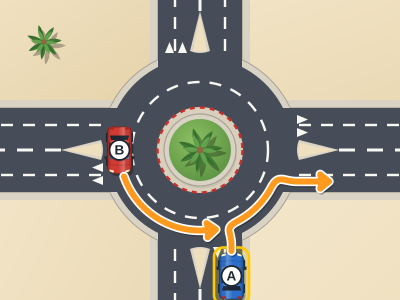
- AThe driver moving from the inner lane to the outer lane must give way to you
- BYou must give way because the inner lane driver is closer to the exit
- CWhoever signals first has priority
- DBoth drivers have equal priority on a roundabout at all times
Answer and explanation in the bank
- Q16Right of way
You want to turn right from a major road into a side street. Oncoming traffic is continuous. What should you do?
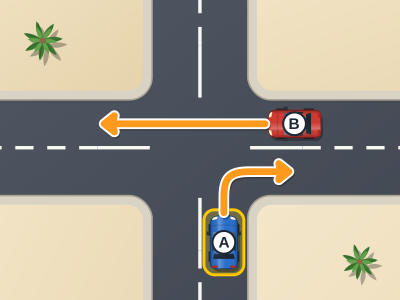
- ATurn right quickly between vehicles and let oncoming traffic adjust
- BFlash your headlights to ask oncoming drivers to slow down for you
- CSound the horn and turn right; you have priority because you are on the major road
- DWait near the centre of the road until there is a safe gap in oncoming traffic
Answer and explanation in the bank
- Q17Right of way
A dedicated filter lane with its own green arrow signal is active at a signalised junction. Vehicles in the filter lane want to turn right. Must they wait for the main green light?
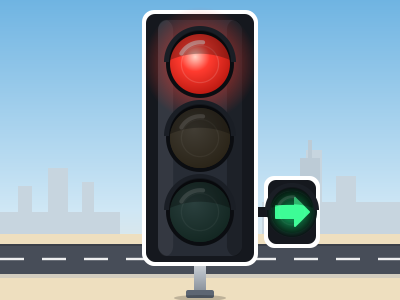
- ANo; the green filter arrow gives permission to proceed in that indicated direction only
- BYes; a green arrow means proceed with caution, not full permission to go
- CYes; filter arrows only apply to buses and taxis
- DNo; any green signal allows movement in all directions simultaneously
Answer and explanation in the bank
- Q18Right of way
You are on a narrow road and meet an oncoming vehicle. There is a passing place on your left. Who should use it?
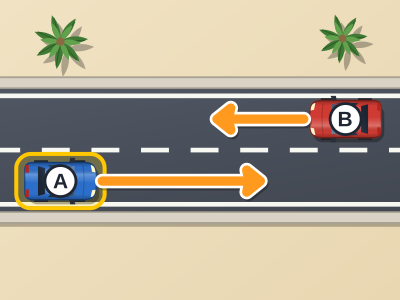
- AYou should pull into the passing place on your left to let the oncoming vehicle pass
- BThe oncoming vehicle must reverse to the nearest passing place behind it
- CNeither vehicle moves; both wait and sound the horn
- DThe larger vehicle must always use the passing place
Answer and explanation in the bank
- Q19Right of way
You are travelling on a priority road (marked by the yellow diamond sign). You approach a side junction. Who has right of way?
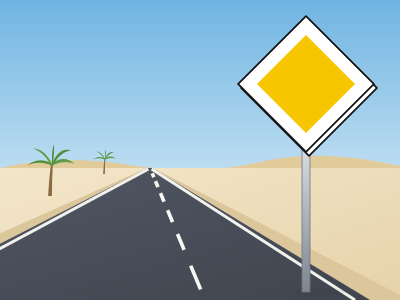
- AThe vehicle on your right always has priority regardless of any signs
- BYou have right of way as the driver on the priority road
- CThe vehicle on the left has priority on a priority road
- DPriority ends at every junction; all vehicles give way equally
Answer and explanation in the bank
- Q20Right of way
Traffic lights at a crossroads are showing a steady red for your direction. A police officer waves you through. What do you do?
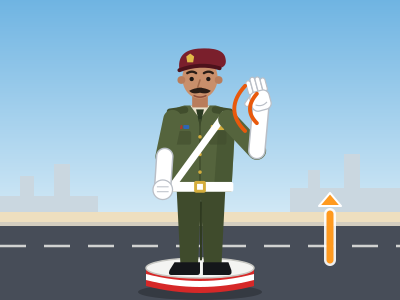
- AStay stopped because the red light overrides the officer's instruction
- BObey the police officer and proceed through the red light
- CProceed only after the light changes to green
- DSound the horn to alert other road users and then proceed cautiously
Answer and explanation in the bank
- Q21Right of way
You are in the right lane of a dual carriageway. A vehicle is entering from a slip road on the right. What is the best course of action?
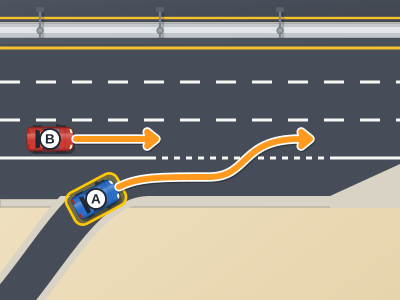
- AWhere safe, move to the left lane to help the merging vehicle, but you have priority
- BSpeed up so the merging vehicle falls behind you and cannot enter
- CStop on the carriageway until the merging vehicle is safely ahead
- DThe merging vehicle has priority and you must brake to let it in
Answer and explanation in the bank
- Q22Right of way
A school crossing patrol officer holding a stop sign steps into the road. What must you do?
- ASlow down to 20 km/h and proceed carefully past the officer
- BStop immediately and stay stopped until the officer signals it is safe to go
- CStop only if children are actually in the road at that moment
- DSound the horn and continue if no children are in view
Answer and explanation in the bank
Every answer above, with the rule it comes from, plus the full 22-question timed test.
Get the Oman Driving Test Questions PDF (ROP) - OMR 3What this test covers
Topics include road signs, traffic signals, right of way, roundabouts, speed limits, seat belts, fines and penalties, and the safe-driving rules specific to your vehicle category. Full question-by-question feedback with explanations is shown immediately after you finish the test above.
Frequently asked questions
How many questions is the Al Dakhiliyah Royal Oman Police light vehicle theory test?
The official Royal Oman Police light vehicle theory test in Al Dakhiliyah has 30 questions and you need 23 correct (75%) to pass. This practice test has 22 questions.
Is this the real exam?
These are practice questions to help you revise, written to the published rules and to what candidates report from the real test. They are not the official Oman exam and the real question bank, format, fees and pass mark are set by the Royal Oman Police, and can change. Always confirm the current requirements with your driving school or the Royal Oman Police.
Is this practice test free?
The first 10 questions are free, with no signup, and each shows the answer and the reason. The full 22-question test, timed, is in the Oman Driving Test Questions PDF (ROP) (OMR 3, one payment), with every question in the bank.
What does the Al Dakhiliyah light vehicle theory test cover?
Road signs, traffic signals, right of way, roundabouts, speed limits, seat belts, penalties and safe-driving rules, plus the handling and safety topics specific to your vehicle.