

Al Dakhiliyah Royal Oman Police Light vehicle
Practice mode· Road rulesAl Dakhiliyah Royal Oman Police - Oman Road Rules Test 2
Second set of 20 road rules questions covering overtaking, parking, motorway driving, pedestrian crossings and more. Complete both tests for full rules coverage.
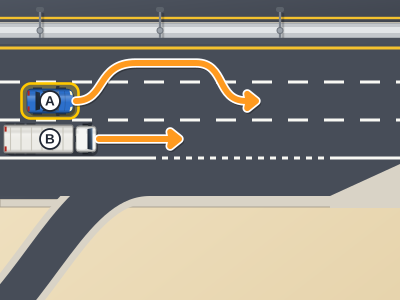
Which lane is the fast or overtaking lane on an Oman dual carriageway?
The other 10 questions in this test
Read them all. The answer and the reason for each, and the timed 20-question run, are in the Oman Driving Test Questions PDF (ROP).
- Q11Traffic rules
When joining a highway from an on-ramp in Oman, what must you do?
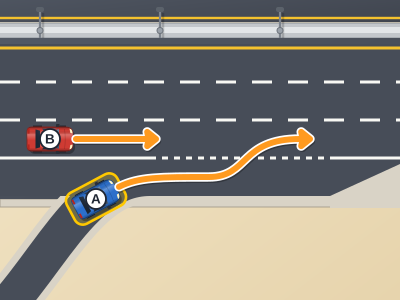
- AStop at the end of the ramp and wait for a gap
- BPull directly into the fastest lane to match highway speed
- CSound the horn to warn highway traffic you are joining
- DBuild speed in the acceleration lane and merge into the right lane when a safe gap exists
Answer and explanation in the bank
- Q12Traffic rules
On which side are highway exits located in Oman?
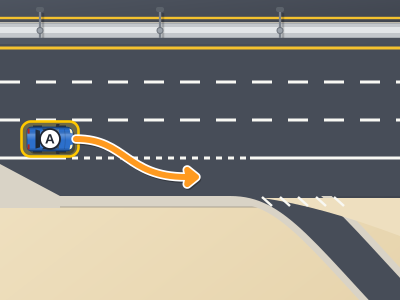
- AOn the left side
- BAlternately left and right depending on the interchange
- COn the right side
- DOnly at designated interchange bridges
Answer and explanation in the bank
- Q13Traffic rules
When should you start reducing speed after taking an Oman highway exit?
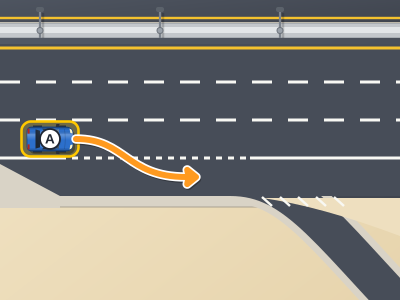
- AAfter moving onto the deceleration lane, not while still on the main carriageway
- BWhile still in the right lane of the main carriageway
- COnly once you see the roundabout or stop line at the bottom
- DSpeed reduction is not necessary on exit ramps
Answer and explanation in the bank
- Q14Traffic rules
True or false: a vehicle merging onto an Oman highway from an on-ramp has right of way over highway traffic.
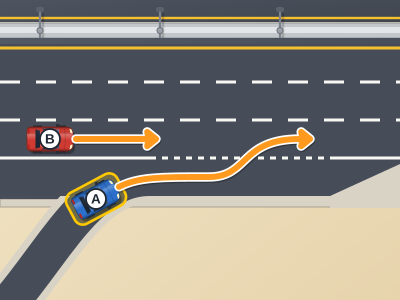
- ATrue - merging traffic always has priority
- BTrue, but only when using the acceleration lane at full speed
- CIt depends on the relative speed of the two vehicles
- DFalse - merging traffic must yield to vehicles already on the highway
Answer and explanation in the bank
- Q15Traffic rules
You are on a narrow mountain road in Oman and meet an oncoming vehicle with no room to pass. Who should give way?
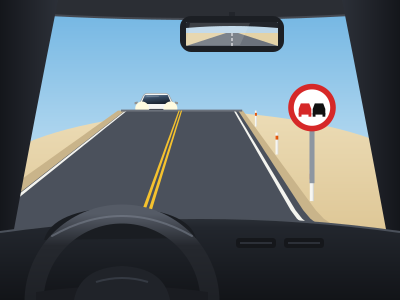
- AThe vehicle travelling downhill gives way to the vehicle going uphill
- BThe vehicle going uphill must give way to the one coming down
- CThe smaller vehicle always gives way regardless of direction
- DThe first driver to sound the horn has priority
Answer and explanation in the bank
- Q16Traffic rules
When should you sound the horn on a mountain or winding road in Oman?
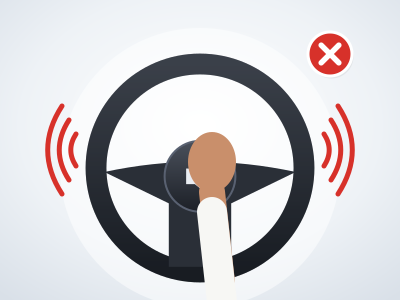
- AOnly when you can already see another vehicle
- BContinuously while driving on any mountain road
- CBefore approaching a sharp blind bend to warn oncoming traffic of your presence
- DHorn use is prohibited on mountain roads in Oman
Answer and explanation in the bank
- Q17Traffic rules
You are driving through an Oman wadi after heavy rain and see fast-flowing water across the road. What should you do?
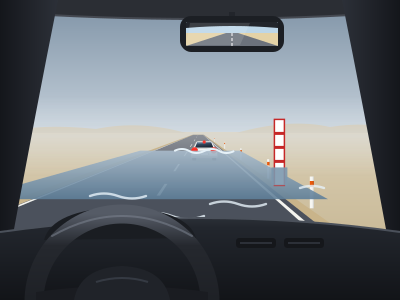
- AStop before the water and wait for it to subside; do not attempt to cross a flooded wadi
- BCross quickly at high speed to minimise time in the water
- CCross slowly in first gear if the water looks shallow
- DFollow whatever the vehicle ahead does
Answer and explanation in the bank
- Q18Traffic rules
After driving through a shallow water crossing in Oman, what should you check immediately?
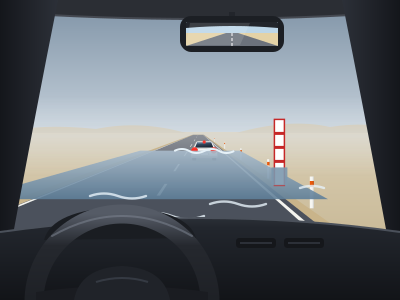
- ARev the engine hard to clear water from the exhaust
- BAccelerate immediately to dry the road surface ahead
- CNo additional check is needed if the depth was less than 10 cm
- DTest the brakes gently to dry them and confirm they are working properly
Answer and explanation in the bank
- Q19Traffic rules
The posted limit on an Oman road is 120 km/h. Heavy fog has reduced visibility to under 50 metres. How fast should you drive?
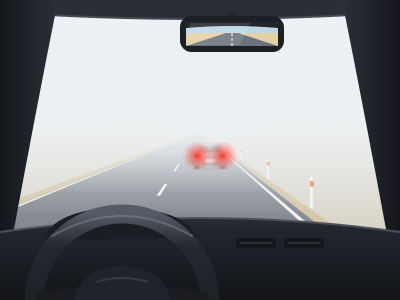
- AThe full 120 km/h; the posted limit applies in all conditions
- BExactly 60 km/h regardless of actual conditions
- CSpeed is irrelevant in fog; focus only on keeping the lane markings visible
- DSlow down to a speed at which you can stop safely within your visible distance
Answer and explanation in the bank
- Q20Traffic rules
What is the typical maximum speed limit on Oman's inter-city dual carriageways?
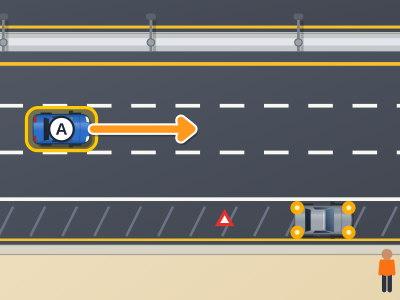
- A120 km/h
- B100 km/h
- C140 km/h
- D80 km/h
Answer and explanation in the bank
Every answer above, with the rule it comes from, plus the full 20-question timed test.
Get the Oman Driving Test Questions PDF (ROP) - OMR 3What this test covers
Topics include road signs, traffic signals, right of way, roundabouts, speed limits, seat belts, fines and penalties, and the safe-driving rules specific to your vehicle category. Full question-by-question feedback with explanations is shown immediately after you finish the test above.
Frequently asked questions
How many questions is the Al Dakhiliyah Royal Oman Police light vehicle theory test?
The official Royal Oman Police light vehicle theory test in Al Dakhiliyah has 30 questions and you need 23 correct (75%) to pass. This practice test has 20 questions.
Is this the real exam?
These are practice questions to help you revise, written to the published rules and to what candidates report from the real test. They are not the official Oman exam and the real question bank, format, fees and pass mark are set by the Royal Oman Police, and can change. Always confirm the current requirements with your driving school or the Royal Oman Police.
Is this practice test free?
The first 10 questions are free, with no signup, and each shows the answer and the reason. The full 20-question test, timed, is in the Oman Driving Test Questions PDF (ROP) (OMR 3, one payment), with every question in the bank.
What does the Al Dakhiliyah light vehicle theory test cover?
Road signs, traffic signals, right of way, roundabouts, speed limits, seat belts, penalties and safe-driving rules, plus the handling and safety topics specific to your vehicle.