

Al Dakhiliyah Royal Oman Police Motorcycle
Timed mock exam· Full mock examsAl Dakhiliyah Royal Oman Police - Oman Motorcycle Theory Mock Test 3
Third full motorcycle mock exam and a great final readiness check before your real bike theory test. Another distinct set of 30 timed questions.
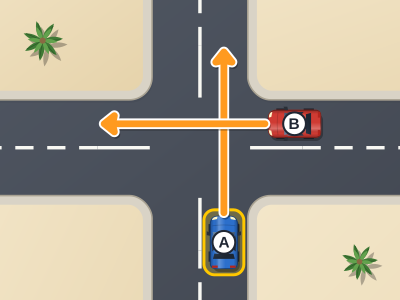
You arrive at an unmarked crossroads at the same time as a vehicle approaching from your right. Who has priority?
The other 20 questions in this test
Read them all. The answer and the reason for each, and the timed 30-question run, are in the Oman Driving Test Questions PDF (ROP).
- Q11Motorcycle control
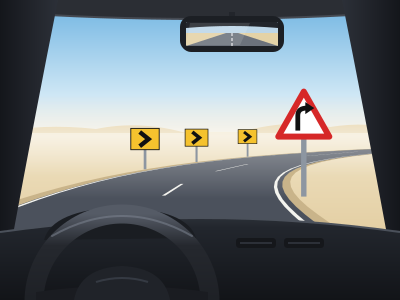
When is the best moment to downshift to a lower gear on a motorcycle?
- AAfter the motorcycle has already come to a complete stop
- BWhile braking before a corner or junction, matching engine speed to road speed
- CWhile leaning at maximum angle in a corner
- DOnly when the engine warning light comes on
Answer and explanation in the bank
- Q12Motorcycle safety
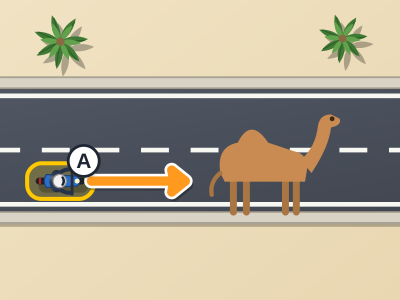
You are riding at 100 km/h on a rural Oman highway at night and suddenly see a camel standing in your lane ahead. What is the correct action?
- ASwerve sharply to the right into the oncoming lane to avoid the animal
- BApply both brakes firmly and progressively, reduce speed as fast as safely possible, and if collision cannot be avoided aim for the legs rather than the body
- CAccelerate to pass the animal at speed before it moves
- DSound the horn and flash lights to scare the animal off the road
Answer and explanation in the bank
- Q13Road signs and signals
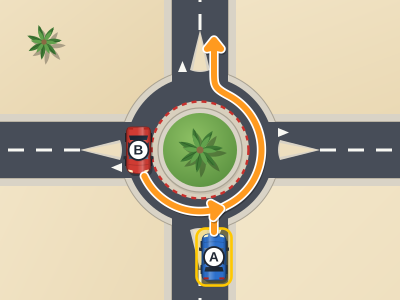
When entering a roundabout in Oman, traffic from which direction do you give way to?
- AVehicles approaching from your right
- BVehicles entering from any direction simultaneously
- CVehicles approaching from your left (already on the roundabout)
- DPedestrians on the roundabout only; all vehicles may enter freely
Answer and explanation in the bank
- Q14Traffic rules
What is the minimum distance you should leave between your parked vehicle and a junction in Oman?
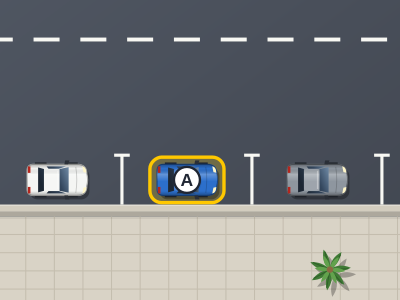
- AAt least 20 metres from the junction, and never where you block other drivers' view
- BThere is no minimum distance rule near junctions
- CAt least 50 metres on all roads
- DAt least 5 metres on main roads only
Answer and explanation in the bank
- Q15Right of way
You are travelling on a priority road (marked by the yellow diamond sign). You approach a side junction. Who has right of way?
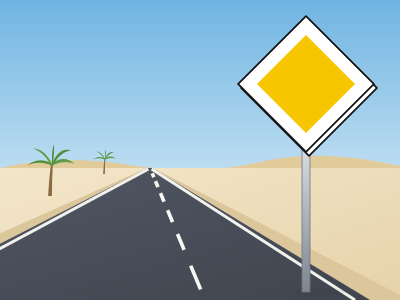
- AThe vehicle on your right always has priority regardless of any signs
- BYou have right of way as the driver on the priority road
- CThe vehicle on the left has priority on a priority road
- DPriority ends at every junction; all vehicles give way equally
Answer and explanation in the bank
- Q16Safe driving
An oncoming vehicle's headlights are causing you glare on a dark Omani road. What is the correct action?
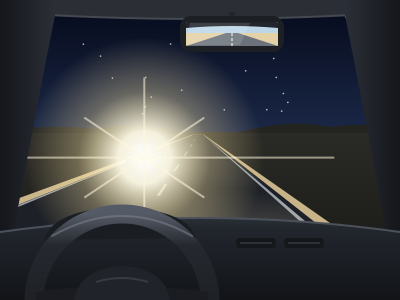
- AFlash your full beam to warn the other driver to dip their lights
- BClose one eye to protect your night vision and keep driving at the same speed
- CLook toward the left edge of the road (your lane) to avoid direct glare, ease off the accelerator, and do not flash your full beam in retaliation
- DSteer slightly right toward the oncoming vehicle to pass faster
Answer and explanation in the bank
- Q17Penalties and fines
A driver in Oman was tailgating when the car ahead braked suddenly and a collision resulted. How is liability most likely to be determined?
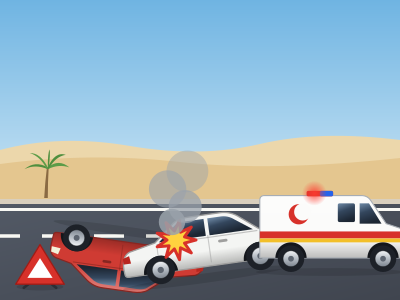
- AThe tailgating driver bears primary liability for not maintaining a safe distance
- BEqually between both drivers because the front driver braked suddenly
- CThe front driver is primarily at fault for braking without sufficient warning
- DLiability is determined randomly by a court coin toss
Answer and explanation in the bank
- Q18Motorcycle control
When exiting a corner, how should you apply the throttle?
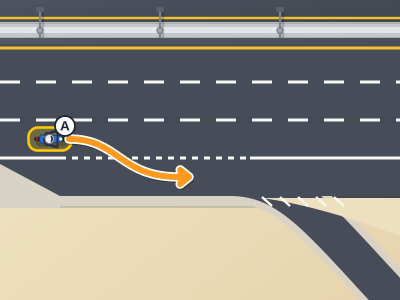
- AApply full throttle at the apex of the corner to maximise acceleration
- BKeep the throttle closed until fully upright, then open fully
- CRoll on the throttle gradually and progressively as you begin to straighten the bike
- DApply throttle and then brake simultaneously to control speed
Answer and explanation in the bank
- Q19Motorcycle safety
When riding on wet roads in Oman rain, how should braking technique be adjusted?
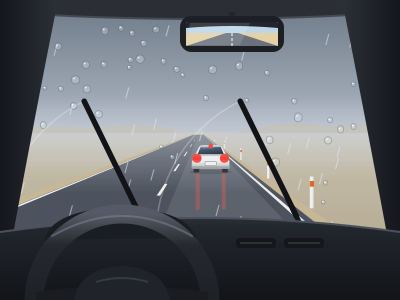
- AUse only the rear brake on wet roads to avoid a front-wheel skid
- BBrake harder than normal because wet roads cool the brakes and improve stopping power
- CWet-road braking technique is identical to dry-road technique
- DApply both brakes earlier and more gently than on dry roads, allowing more time and distance to stop
Answer and explanation in the bank
- Q20Road signs and signals
What is the general maximum speed limit on urban main roads in Oman where no other limit is posted?
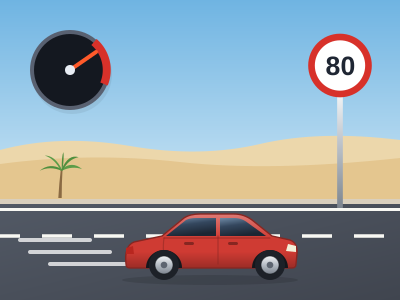
- A80 km/h
- B60 km/h
- C40 km/h
- D100 km/h
Answer and explanation in the bank
- Q21Traffic rules
You are driving on a one-way street in Oman and need to park. On which side may you park?
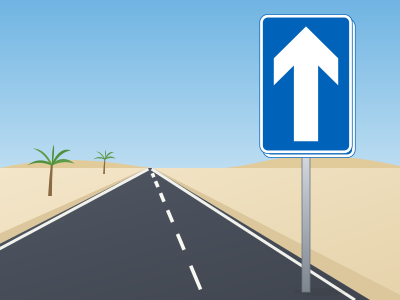
- AOnly on the right side
- BOn either side, unless a sign or yellow kerb marking prohibits it
- COnly on the left side
- DParking is never allowed on one-way streets
Answer and explanation in the bank
- Q22Right of way
Traffic lights at a crossroads are showing a steady red for your direction. A police officer waves you through. What do you do?
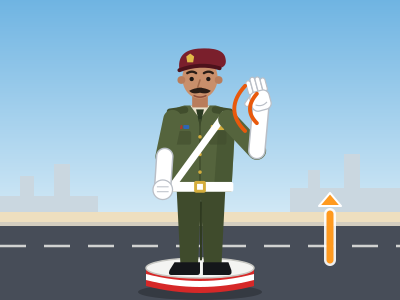
- AStay stopped because the red light overrides the officer's instruction
- BObey the police officer and proceed through the red light
- CProceed only after the light changes to green
- DSound the horn to alert other road users and then proceed cautiously
Answer and explanation in the bank
- Q23Safe driving
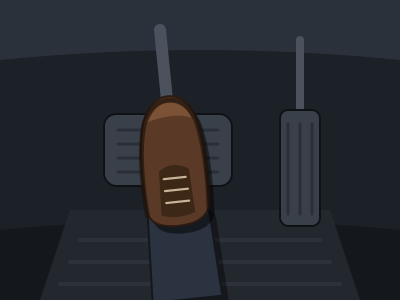
You are descending a steep mountain road in the Hajar Mountains. The recommended technique to avoid brake fade is:
- AUse the brakes firmly and continuously the whole way down
- BSwitch off the engine to use engine braking more effectively
- CSelect a lower gear to use engine braking, and apply the brakes gently and intermittently rather than holding them continuously
- DStay in a high gear to prevent the engine from over-revving
Answer and explanation in the bank
- Q24Penalties and fines
A driver in Oman is stopped and found to be driving without any valid driving licence. What happens?
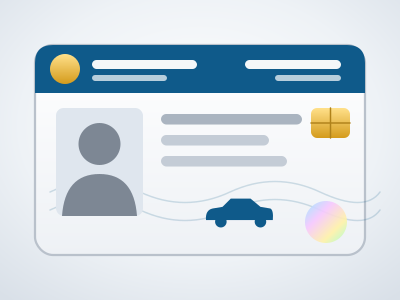
- AThey are fined and the vehicle may be impounded
- BThey receive a verbal warning to obtain a licence as soon as possible
- CNo penalty applies if the driver demonstrates adequate road skill during the stop
- DOnly foreign nationals are penalised for driving without a licence in Oman
Answer and explanation in the bank
- Q25Motorcycle control
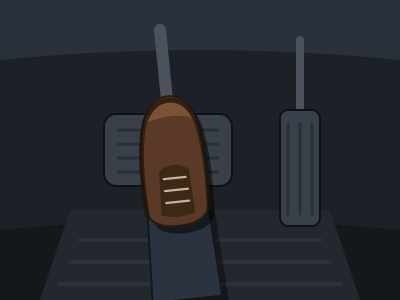
How should the front brake be applied to achieve maximum stopping power without locking the wheel?
- AGrab the lever as hard as possible immediately
- BApply the front brake in rapid on-off pulses
- CApply it gently at constant pressure regardless of speed
- DSqueeze progressively and firmly, ramping up pressure as weight transfers to the front
Answer and explanation in the bank
- Q26Motorcycle safety
In a staggered group formation, what minimum time gap should each rider maintain to the rider directly ahead of them?
- AHalf a second, because the stagger means there is no direct collision risk
- BOne second for experienced riders in good conditions
- CNo gap is needed if riders are in visual contact
- DAt least 2 seconds, giving a full stopping distance to the rider in front
Answer and explanation in the bank
- Q27Road signs and signals
What is the general maximum speed limit on Omani expressways where no lower limit is signed?
- A100 km/h
- B140 km/h
- C110 km/h
- D120 km/h
Answer and explanation in the bank
- Q28Traffic rules
You realise you have entered a one-way street the wrong way in Oman. What should you do?
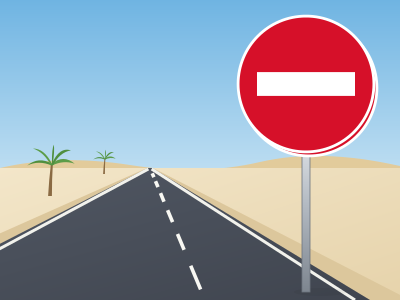
- AContinue to the next junction and turn around there
- BReverse out carefully if it is safe, or stop and seek assistance
- CSwitch on hazard lights and drive slowly against the flow
- DSound the horn repeatedly and wait for other vehicles to clear
Answer and explanation in the bank
- Q29Right of way
You are in the right lane of a dual carriageway. A vehicle is entering from a slip road on the right. What is the best course of action?
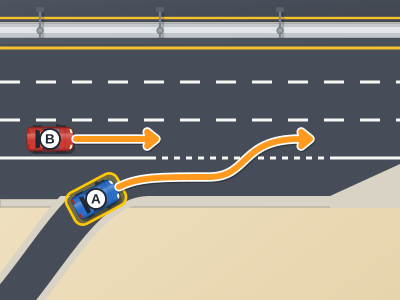
- AWhere safe, move to the left lane to help the merging vehicle, but you have priority
- BSpeed up so the merging vehicle falls behind you and cannot enter
- CStop on the carriageway until the merging vehicle is safely ahead
- DThe merging vehicle has priority and you must brake to let it in
Answer and explanation in the bank
- Q30Safe driving
You notice that after prolonged braking on a Hajar Mountains descent your brake pedal feels softer and the car slows less effectively. This is most likely:
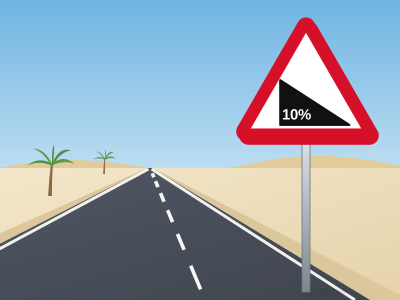
- AA tyre blowout on the front axle
- BABS activating normally on the steep gradient
- CThe automatic transmission shifting to a higher gear
- DBrake fade caused by overheating brakes from continuous use
Answer and explanation in the bank
Every answer above, with the rule it comes from, plus the full 30-question timed test.
Get the Oman Driving Test Questions PDF (ROP) - OMR 3What this test covers
Topics include road signs, traffic signals, right of way, roundabouts, speed limits, seat belts, fines and penalties, and the safe-driving rules specific to your vehicle category. Full question-by-question feedback with explanations is shown immediately after you finish the test above.
Frequently asked questions
How many questions is the Al Dakhiliyah Royal Oman Police motorcycle theory test?
The official Royal Oman Police motorcycle theory test in Al Dakhiliyah has 30 questions and you need 23 correct (75%) to pass. This practice test has 30 questions.
Is this the real exam?
These are practice questions to help you revise, written to the published rules and to what candidates report from the real test. They are not the official Oman exam and the real question bank, format, fees and pass mark are set by the Royal Oman Police, and can change. Always confirm the current requirements with your driving school or the Royal Oman Police.
Is this practice test free?
The first 10 questions are free, with no signup, and each shows the answer and the reason. The full 30-question test, timed, is in the Oman Driving Test Questions PDF (ROP) (OMR 3, one payment), with every question in the bank.
What does the Al Dakhiliyah motorcycle theory test cover?
Road signs, traffic signals, right of way, roundabouts, speed limits, seat belts, penalties and safe-driving rules, plus the handling and safety topics specific to your vehicle.