

Al Sharqiyah North Royal Oman Police Motorcycle
Practice mode· Motorcycle skillsAl Sharqiyah North Royal Oman Police - Oman Motorcycle Safety Practice Test
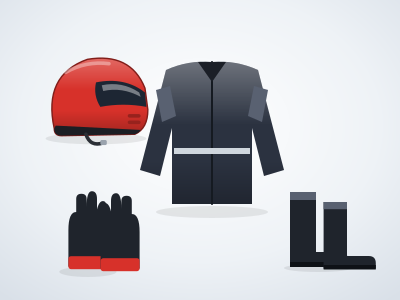
Rider safety essentials: protective gear, visibility, safe following distances, hazard awareness, lane position and sharing the road with larger vehicles.
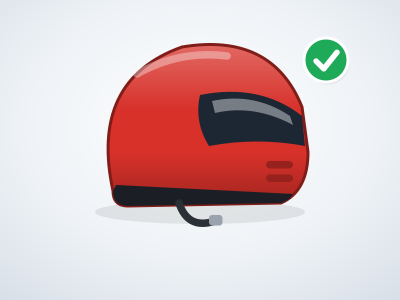
Which helmet standard is commonly accepted for motorcycle road use in Oman?
The other 10 questions in this test
Read them all. The answer and the reason for each, and the timed 20-question run, are in the Oman Driving Test Questions PDF (ROP).
- Q11Motorcycle safety
You see gravel scattered across a bend ahead. What is the safest course of action?
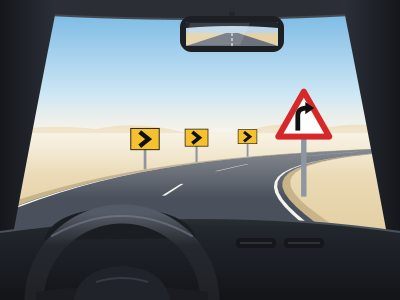
- AMaintain speed and lean hard to clear the gravel quickly
- BApply the rear brake only through the gravel
- CAccelerate to keep the bike stable through the gravel
- DReduce speed significantly before the bend, straighten the bike as much as possible through the gravel section, and avoid any sudden inputs
Answer and explanation in the bank
- Q12Motorcycle safety
When overtaking a large truck on an Oman highway, which wind-related hazard should a motorcyclist anticipate?
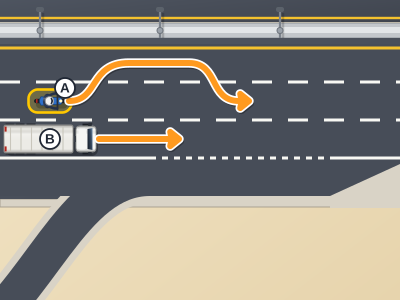
- AA tailwind that accelerates the motorcycle uncontrollably
- BA reduction in wind that makes the steering feel very heavy
- CA sudden crosswind gust as the motorcycle exits the truck's wind shadow, which can push the bike sideways
- DWind turbulence only affects riders when travelling at less than 60 km/h
Answer and explanation in the bank
- Q13Motorcycle safety
Why are camels on the road an especially serious hazard for motorcyclists riding at night in Oman?
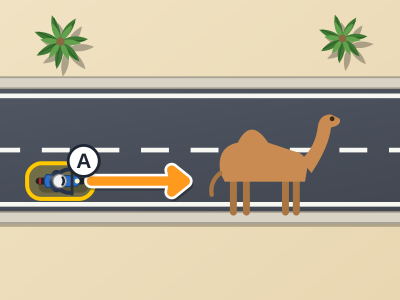
- ACamels are very dark in colour, stand at bonnet height so headlights can pass under them, and their eyes may not reflect light clearly
- BCamels are aggressive at night and will charge motorcycles
- CCamels always stand in the centre of the road at night
- DNight vision goggles are required to see camels; standard headlights are ineffective against any animal
Answer and explanation in the bank
- Q14Motorcycle safety
How does rain affect grip on an Oman road that has been dry for several weeks?
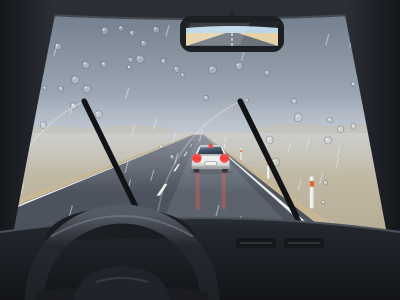
- ARain always improves grip by cleaning the surface
- BThe first rain brings up oil and rubber deposits from the surface, making it extremely slippery before the rain washes them away
- CRoads in Oman are impervious to rain and grip is unaffected
- DRain only reduces grip on gravel roads, not tarmac
Answer and explanation in the bank
- Q15Motorcycle safety
You approach a wadi crossing and the road surface is wet following recent rainfall. What should you do?
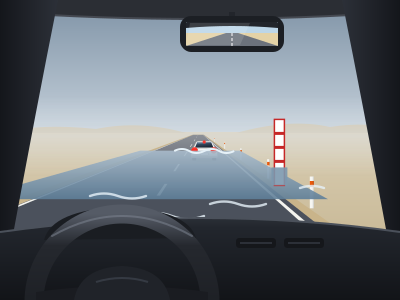
- ACross quickly at speed to minimise contact time with the water
- BFollow any vehicles already crossing as they will show the safe route
- CStop and assess the depth and flow of water; do not attempt to cross moving flood water regardless of its apparent depth
- DCross if the water is less than 30 cm deep
Answer and explanation in the bank
- Q16Motorcycle safety
What is the key principle of defensive riding on a motorcycle?
- AAlways ride faster than surrounding traffic to reduce time spent near other vehicles
- BAssume other road users may not see you and plan your ride to have an escape route available at all times
- CTrust other drivers to follow the rules and focus only on your own speed
- DStay as close to the vehicle in front as possible to reduce drag
Answer and explanation in the bank
- Q17Motorcycle safety
What is the safest formation for a group of motorcyclists riding on an open Oman highway?
- ARiding side by side in pairs to occupy the full lane width
- BA staggered formation with each rider offset from the one directly ahead, maintaining the full following distance to the rider ahead
- CSingle file with each rider directly behind the one ahead at a 1-second gap
- DAll riders in a cluster so they appear as one large vehicle to other road users
Answer and explanation in the bank
- Q18Motorcycle safety
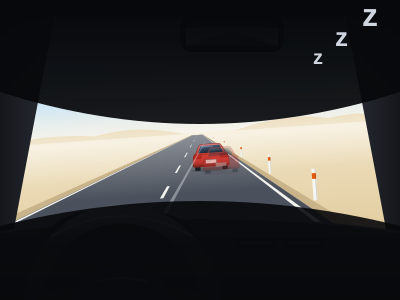
At what point should a motorcyclist stop to rest on a long ride in Oman?
- AOnly when the fuel tank is empty
- BAt least every 2 hours, or earlier if any signs of fatigue or difficulty concentrating appear
- COnly when physical pain from the riding position becomes severe
- DEvery 6 hours is sufficient for experienced riders
Answer and explanation in the bank
- Q19Motorcycle safety
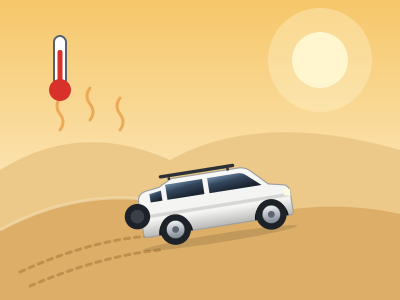
Why is dehydration a particular risk for motorcyclists riding in Oman?
- AMotorcyclists cannot carry water bottles, so they have no opportunity to drink
- BWind at speed accelerates sweat evaporation, masking how much fluid is being lost, while heat and protective gear increase perspiration
- CHelmets prevent drinking and this is the only cause of dehydration
- DDehydration is not a significant risk if the rider feels comfortable
Answer and explanation in the bank
- Q20Motorcycle safety
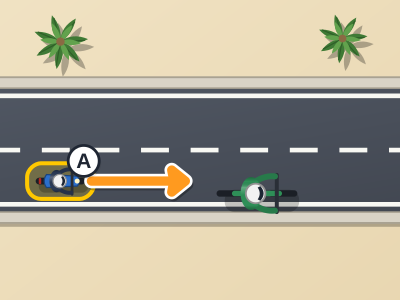
To increase daytime visibility to other road users, a motorcyclist should...
- AFlash the headlight on and off repeatedly to attract attention
- BSound the horn regularly to alert other road users
- CRide in the centre of the road to take up more space
- DRide with the headlight on at all times and wear fluorescent or brightly coloured clothing
Answer and explanation in the bank
Every answer above, with the rule it comes from, plus the full 20-question timed test.
Get the Oman Driving Test Questions PDF (ROP) - OMR 3What this test covers
Topics include road signs, traffic signals, right of way, roundabouts, speed limits, seat belts, fines and penalties, and the safe-driving rules specific to your vehicle category. Full question-by-question feedback with explanations is shown immediately after you finish the test above.
Frequently asked questions
How many questions is the Al Sharqiyah North Royal Oman Police motorcycle theory test?
The official Royal Oman Police motorcycle theory test in Al Sharqiyah North has 30 questions and you need 23 correct (75%) to pass. This practice test has 20 questions.
Is this the real exam?
These are practice questions to help you revise, written to the published rules and to what candidates report from the real test. They are not the official Oman exam and the real question bank, format, fees and pass mark are set by the Royal Oman Police, and can change. Always confirm the current requirements with your driving school or the Royal Oman Police.
Is this practice test free?
The first 10 questions are free, with no signup, and each shows the answer and the reason. The full 20-question test, timed, is in the Oman Driving Test Questions PDF (ROP) (OMR 3, one payment), with every question in the bank.
What does the Al Sharqiyah North motorcycle theory test cover?
Road signs, traffic signals, right of way, roundabouts, speed limits, seat belts, penalties and safe-driving rules, plus the handling and safety topics specific to your vehicle.