

Al Sharqiyah South Royal Oman Police Light vehicle
Practice mode· Right of way & safetyAl Sharqiyah South Royal Oman Police - Oman Right of Way Practice Test
Tests your understanding of priority rules: unmarked junctions, roundabouts, emergency vehicles, merging lanes and more. Getting right of way right can prevent serious accidents.
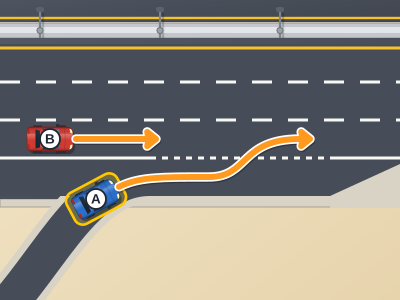
You are joining a motorway from a slip road (on-ramp). Who has priority?
The other 12 questions in this test
Read them all. The answer and the reason for each, and the timed 22-question run, are in the Oman Driving Test Questions PDF (ROP).
- Q11Right of way
Two vehicles reach an unmarked crossroads at the same time from opposite directions, both wanting to turn right. What is the safest approach?
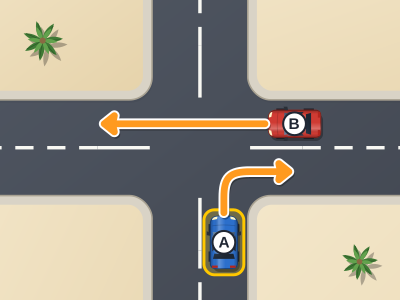
- ABoth vehicles pass right side to right side and complete the turn simultaneously
- BOne vehicle must stop completely and let the other go first
- CBoth must give way to each other indefinitely and neither can proceed
- DThe vehicle on the right has priority and goes first
Answer and explanation in the bank
- Q12Right of way
You are driving on a narrow road. There is a passing place ahead on your right. An oncoming vehicle is approaching. What should you do?
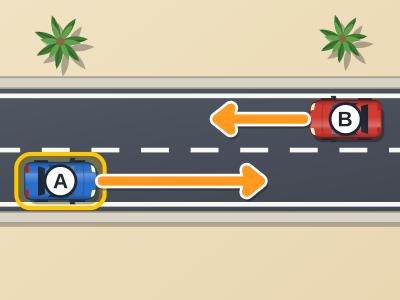
- ADrive to the passing place on the right and wait in it for the oncoming vehicle to pass
- BReverse until you find a passing place somewhere behind you
- CThe oncoming vehicle must use the passing place since it is on their left
- DBoth vehicles stop where they are and wait for someone to direct them
Answer and explanation in the bank
- Q13Right of way
You are approaching a pedestrian crossing. A pedestrian is standing on the pavement waiting to cross but has not yet stepped onto the road. Must you stop?
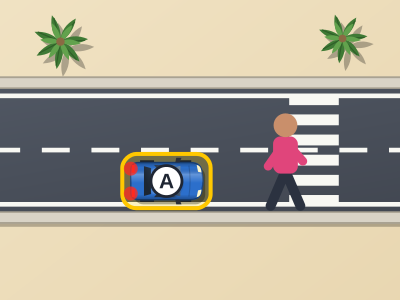
- AYou must stop the moment you see anyone standing near a pedestrian crossing
- BYou must stop only if the pedestrian is already more than halfway across the road
- CPedestrians must find a gap in traffic themselves; you have no obligation to stop
- DYou are not required to stop, but should slow down and be prepared to stop
Answer and explanation in the bank
- Q14Right of way
You are first in a queue at a red light. The light changes to green. A pedestrian is still crossing in front of you. What should you do?
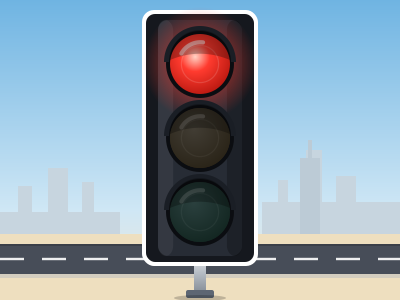
- AProceed slowly; the green light gives you priority over pedestrians
- BSound the horn to alert the pedestrian and proceed
- CFlash your headlights and move forward slowly to encourage the pedestrian to hurry
- DWait for the pedestrian to finish crossing before moving
Answer and explanation in the bank
- Q15Right of way
You are overtaking in the left lane of a dual carriageway when a faster vehicle approaches rapidly from behind in the same lane. What should you do?
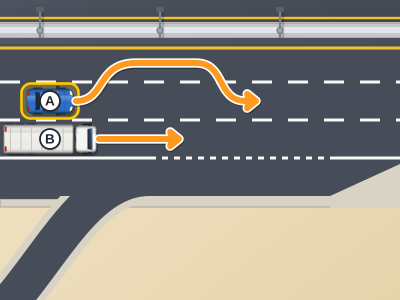
- ASpeed up immediately to match the speed of the approaching vehicle
- BBrake to let the vehicle behind overtake you on the right
- CStay in the left lane; the vehicle behind must slow down because you are overtaking
- DComplete your overtake safely, then move back to the right lane once clear
Answer and explanation in the bank
- Q16Right of way
You are on a narrow mountain road. A passing place is ahead on your right. An oncoming vehicle is larger than yours. Does the larger vehicle have automatic priority?
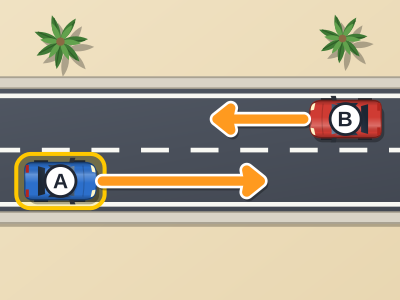
- AYes; larger vehicles always have priority on narrow mountain roads
- BYes; the driver of the larger vehicle can demand that you reverse
- CNo; vehicle size does not automatically determine priority on narrow roads
- DYes; but only if the larger vehicle sounds its horn first
Answer and explanation in the bank
- Q17Right of way
An oncoming emergency vehicle is travelling in the opposite lane on a divided dual carriageway with a central barrier. Do you need to stop?
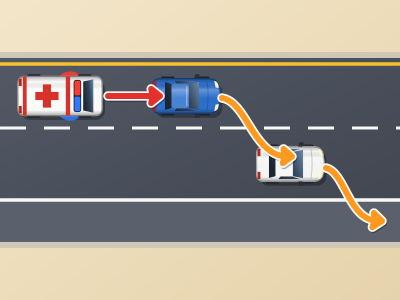
- ANo; the central barrier separates you from it, but slow down and stay alert
- BYes; all traffic must stop for any emergency vehicle regardless of road layout
- CYes; you must stop and switch off your engine until it passes
- DNo; dual carriageway drivers never need to give way to emergency vehicles
Answer and explanation in the bank
- Q18Right of way
You want to turn right at a junction where there are two lanes in your direction. Which lane should you normally be in?
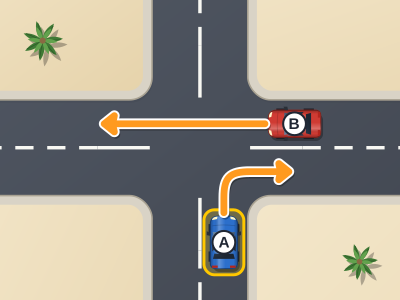
- AThe left-hand lane, to leave the right lane free for straight-on traffic
- BEither lane; drivers turning right can choose any lane freely
- CThe right-hand lane, unless road markings or signs indicate otherwise
- DThe left-hand lane only if you are turning into a minor road
Answer and explanation in the bank
- Q19Right of way
You are at a crossroads on a green light. A vehicle from the right runs the red light and is crossing your path. What is the correct response?
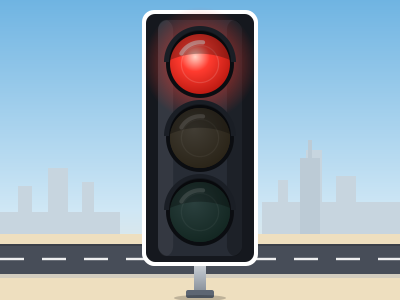
- AContinue; you have right of way on green so the other driver must stop
- BSound your horn and proceed; the other driver is clearly in the wrong
- CAccelerate through to assert your priority before the other vehicle reaches you
- DStop or brake to avoid a collision, even though you have right of way
Answer and explanation in the bank
- Q20Right of way
You are in a slow-moving traffic queue on a main road. A vehicle from a side road wants to join the queue. What is the safe and courteous action?
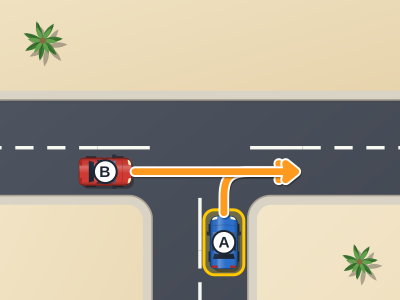
- AClose the gap so the vehicle cannot enter; you have priority on the main road
- BAllow a gap for the vehicle to join if it is safe to do so
- CThe side road vehicle must wait indefinitely; main road traffic always has absolute priority
- DFlash your headlights to tell the driver they cannot join the queue
Answer and explanation in the bank
- Q21Right of way
You are turning right from a major road. Another vehicle approaches from the opposite direction and also wants to turn right. How should the two vehicles pass each other?
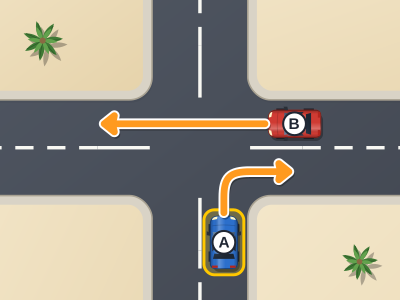
- APass the approaching vehicle left side to left side before turning
- BPass the approaching vehicle right side to right side before completing the turn
- CStop on the right side of the road and wait for the other vehicle to turn first
- DTurn immediately; you have priority because you are on the major road
Answer and explanation in the bank
- Q22Right of way
You are approaching a level (railway) crossing without barriers or signals. What must you do?
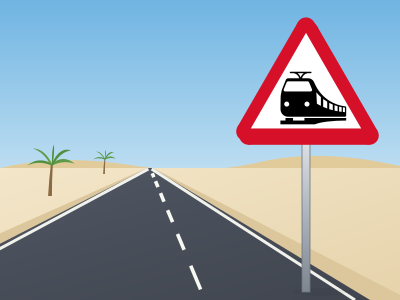
- ASlow to 20 km/h and cross without stopping
- BStop, look both ways for trains, listen, and cross only when certain it is safe
- CTreat it as a normal road junction and apply the give-way-to-the-right rule
- DSound the horn to warn any approaching train and proceed at normal speed
Answer and explanation in the bank
Every answer above, with the rule it comes from, plus the full 22-question timed test.
Get the Oman Driving Test Questions PDF (ROP) - OMR 3What this test covers
Topics include road signs, traffic signals, right of way, roundabouts, speed limits, seat belts, fines and penalties, and the safe-driving rules specific to your vehicle category. Full question-by-question feedback with explanations is shown immediately after you finish the test above.
Frequently asked questions
How many questions is the Al Sharqiyah South Royal Oman Police light vehicle theory test?
The official Royal Oman Police light vehicle theory test in Al Sharqiyah South has 30 questions and you need 23 correct (75%) to pass. This practice test has 22 questions.
Is this the real exam?
These are practice questions to help you revise, written to the published rules and to what candidates report from the real test. They are not the official Oman exam and the real question bank, format, fees and pass mark are set by the Royal Oman Police, and can change. Always confirm the current requirements with your driving school or the Royal Oman Police.
Is this practice test free?
The first 10 questions are free, with no signup, and each shows the answer and the reason. The full 22-question test, timed, is in the Oman Driving Test Questions PDF (ROP) (OMR 3, one payment), with every question in the bank.
What does the Al Sharqiyah South light vehicle theory test cover?
Road signs, traffic signals, right of way, roundabouts, speed limits, seat belts, penalties and safe-driving rules, plus the handling and safety topics specific to your vehicle.