

Al Sharqiyah South Royal Oman Police Light vehicle
Practice mode· Right of way & safetyAl Sharqiyah South Royal Oman Police - Oman Safe Driving Practice Test
Covers defensive driving, following distances, fatigue, visibility, adverse weather and hazard awareness. Safe driving habits save lives and keep your licence clean.
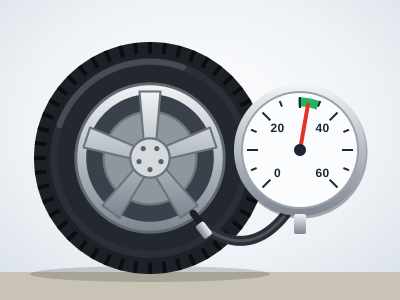
Which of the following tyre conditions significantly increases the risk of a blowout on Oman's hot roads?
The other 12 questions in this test
Read them all. The answer and the reason for each, and the timed 22-question run, are in the Oman Driving Test Questions PDF (ROP).
- Q11Safe driving
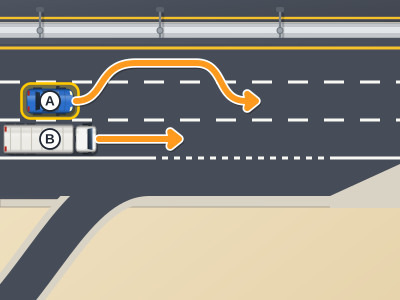
Before overtaking a vehicle on a two-lane Omani highway, what gap do you need to see ahead to overtake safely?
- AAny gap in oncoming traffic; accelerate hard and the gap will be sufficient
- BA clear gap large enough to accelerate past, complete the manoeuvre, and return to your lane before meeting any oncoming traffic
- CA 50-metre gap is always enough at any speed
- DOnly the gap between you and the vehicle ahead in your lane
Answer and explanation in the bank
- Q12Safe driving
You are driving in summer in Oman. What are the symptoms of heat exhaustion that can impair your ability to drive safely?
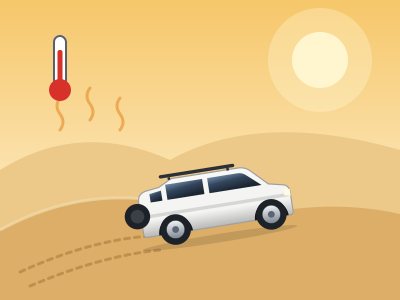
- AHeavy sweating, weakness, dizziness, headache, nausea, and impaired concentration
- BIncreased alertness and faster reflexes due to the heat
- COnly physical symptoms with no effect on mental driving performance
- DSymptoms only occur when the vehicle's air conditioning fails
Answer and explanation in the bank
- Q13Safe driving
How much water should an adult aim to drink per hour when driving in Oman's summer heat to stay safely hydrated?
- ARoughly 250 to 500 ml per hour in hot conditions, adjusting for personal needs and physical exertion
- BThirst is a reliable guide; drink only when you feel thirsty
- COne large bottle at the start of the journey is sufficient for a 3-hour drive
- DAvoid drinking while driving to prevent needing to stop
Answer and explanation in the bank
- Q14Safe driving
How should you adjust your driving seat position to maximise safety and control?
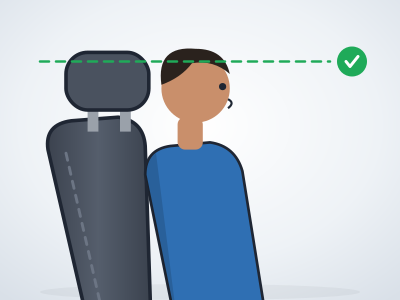
- ASit upright with a slight recline, both hands able to reach the steering wheel comfortably, and your feet able to press the pedals fully without straightening your legs completely
- BRecline the seat as far back as possible for comfort on long journeys
- CSit as close to the steering wheel as possible so you have maximum leverage
- DSeat position does not affect driving safety, only comfort
Answer and explanation in the bank
- Q15Safe driving
How should you adjust your interior rear-view mirror before driving?
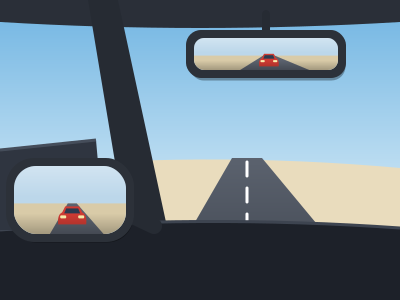
- AAngle it downward so you can see the rear bumper clearly
- BPosition it so you can see the full rear window with a slight view of each rear corner of the vehicle, without moving your head significantly
- CSet it to show as much of the left lane as possible
- DMirror adjustment is a personal preference and does not affect safety
Answer and explanation in the bank
- Q16Safe driving
How should you adjust your door mirrors to minimise blind spots on a left-hand-drive vehicle in Oman?
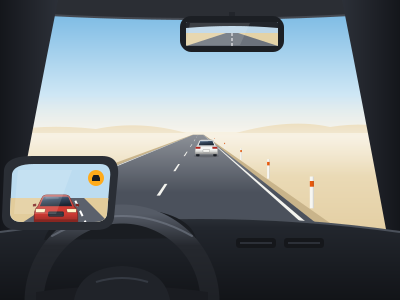
- APoint each mirror straight back to give the widest view directly behind
- BAngle the mirrors so the road surface immediately beside the vehicle is visible
- CSet both door mirrors to show the same view as the interior mirror
- DAngle each mirror so the side of your vehicle is just visible at the inner edge, maximising the view of the lane alongside and behind
Answer and explanation in the bank
- Q17Safe driving
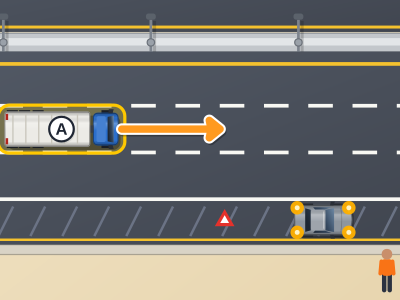
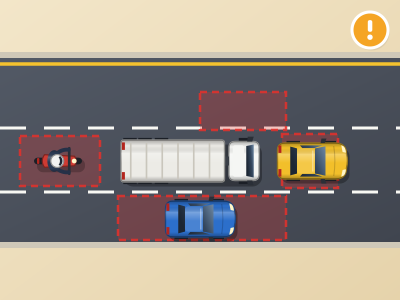
You are driving a small car alongside a large truck on an Omani highway. Which blind-spot zones should you be aware of?
- AOnly directly behind the truck
- BLarge trucks have mirrors that eliminate all blind spots
- COnly the area immediately beside the truck's cab on the driver's side
- DDirectly behind the truck, directly in front of the cab, and along both sides roughly level with the trailer
Answer and explanation in the bank
- Q18Safe driving
A large truck signals to change into your lane on an Omani highway and you are alongside its trailer. What should you do?
- ASound your horn and maintain your position so the truck driver knows you are there
- BFlash your headlights repeatedly and accelerate past as fast as possible
- CSlow down or speed up to move out of the truck's blind spot immediately, then maintain a safe following distance
- DMove to the left edge of your lane and continue at the same speed
Answer and explanation in the bank
- Q19Safe driving
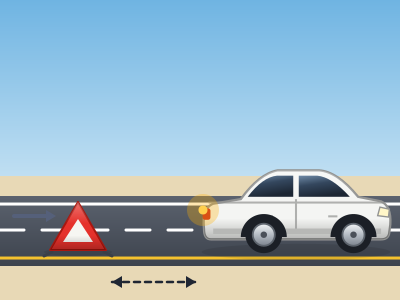
Your vehicle breaks down on an Omani highway. What is the correct procedure?
- AStop in the lane where the breakdown occurred and raise the bonnet to signal distress
- BTry to continue driving slowly to the next town rather than stopping on the highway
- CStand behind the vehicle to direct traffic around it until help arrives
- DSwitch on hazard lights immediately, coast to the hard shoulder if possible, exit from the side away from traffic, place a warning triangle 50 to 100 metres behind the vehicle, and call for assistance
Answer and explanation in the bank
- Q20Safe driving
How far behind your broken-down vehicle should you place a warning triangle on an Omani highway?
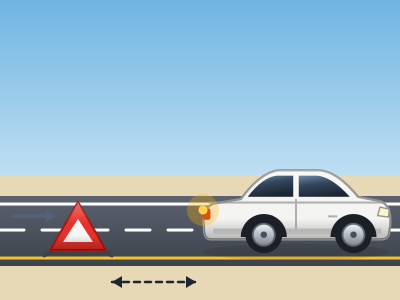
- AAt least 50 to 100 metres, or further if speed limit is high, to give approaching drivers enough warning
- BDirectly behind the vehicle so it is clearly seen
- CExactly 10 metres; any further and drivers may not associate it with your vehicle
- DWarning triangles are not required in Oman
Answer and explanation in the bank
- Q21Safe driving
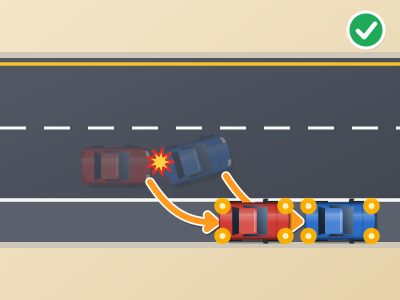
You are involved in a minor road crash in Oman with no serious injuries. What are the correct first steps?
- ALeave the vehicles exactly where they are, take photos, and exchange details with the other driver without calling police
- BMove vehicles to a safe position off the road if possible, switch on hazard lights, ensure everyone is safe, and contact the Royal Oman Police to report the incident
- CDrive away if damage appears minor to avoid traffic disruption
- DArgue with the other driver to establish fault before calling anyone
Answer and explanation in the bank
- Q22Safe driving
You arrive at a crash on an Omani road. One person is trapped and unconscious. What is your immediate priority before any first aid?
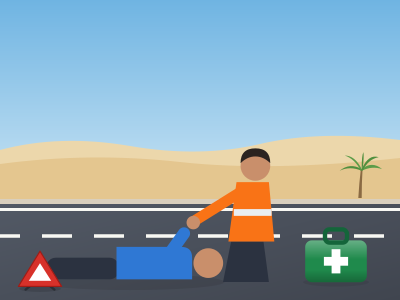
- AMake the scene safe (hazard lights, warning triangle, prevent fire or secondary crashes) and call emergency services immediately
- BDrag the unconscious person clear of the vehicle as quickly as possible
- CBegin CPR immediately without assessing the scene
- DWait for emergency services to arrive before doing anything
Answer and explanation in the bank
Every answer above, with the rule it comes from, plus the full 22-question timed test.
Get the Oman Driving Test Questions PDF (ROP) - OMR 3What this test covers
Topics include road signs, traffic signals, right of way, roundabouts, speed limits, seat belts, fines and penalties, and the safe-driving rules specific to your vehicle category. Full question-by-question feedback with explanations is shown immediately after you finish the test above.
Frequently asked questions
How many questions is the Al Sharqiyah South Royal Oman Police light vehicle theory test?
The official Royal Oman Police light vehicle theory test in Al Sharqiyah South has 30 questions and you need 23 correct (75%) to pass. This practice test has 22 questions.
Is this the real exam?
These are practice questions to help you revise, written to the published rules and to what candidates report from the real test. They are not the official Oman exam and the real question bank, format, fees and pass mark are set by the Royal Oman Police, and can change. Always confirm the current requirements with your driving school or the Royal Oman Police.
Is this practice test free?
The first 10 questions are free, with no signup, and each shows the answer and the reason. The full 22-question test, timed, is in the Oman Driving Test Questions PDF (ROP) (OMR 3, one payment), with every question in the bank.
What does the Al Sharqiyah South light vehicle theory test cover?
Road signs, traffic signals, right of way, roundabouts, speed limits, seat belts, penalties and safe-driving rules, plus the handling and safety topics specific to your vehicle.