

Al Sharqiyah South Royal Oman Police Motorcycle
Practice mode· Motorcycle skillsAl Sharqiyah South Royal Oman Police - Oman Motorcycle Safety Practice Test
Rider safety essentials: protective gear, visibility, safe following distances, hazard awareness, lane position and sharing the road with larger vehicles.
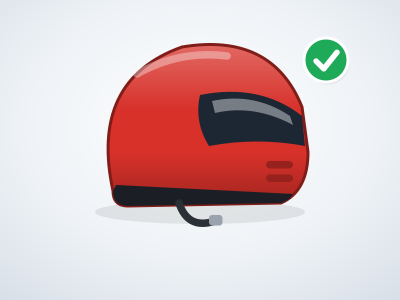
Which helmet standard is commonly accepted for motorcycle road use in Oman?
The other 10 questions in this test
Read them all. The answer and the reason for each, and the timed 20-question run, are in the Oman Driving Test Questions PDF (ROP).
- Q11Motorcycle safety
What advantage does a full-face helmet provide over an open-face helmet in a crash?
- AIt provides better ventilation in Oman's heat
- BIt is lighter and so reduces neck fatigue on long rides
- CIt provides better peripheral vision for junction checking
- DIt protects the chin, jaw, and face, which are common impact points in forward crashes
Answer and explanation in the bank
- Q12Motorcycle safety
How does a road's adverse camber (sloping away from the corner) affect a motorcycle on a bend?
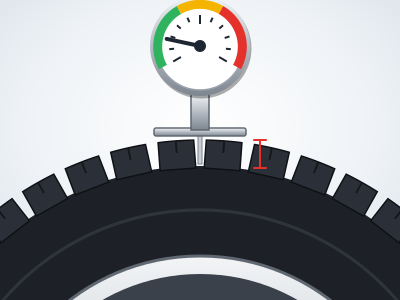
- AIt effectively reduces the available tyre grip by working against the lean, requiring lower cornering speed
- BIt improves grip by pressing the tyres harder into the road
- CIt has no effect on grip as long as the road is dry
- DIt only affects cornering if the tyres are under-inflated
Answer and explanation in the bank
- Q13Motorcycle safety
What following distance is recommended for motorcyclists riding in good, dry conditions?
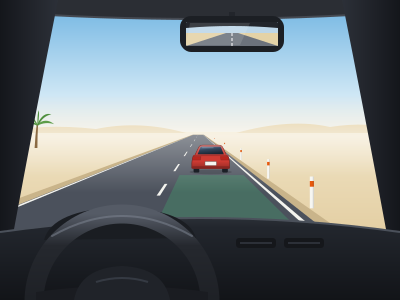
- AAt least a 2-second gap to the vehicle ahead, increased to 4 seconds or more in poor conditions
- BHalf a second, as motorcycles can brake faster than cars
- COne car-length regardless of speed
- DNo minimum gap is specified; it depends on the rider's experience
Answer and explanation in the bank
- Q14Motorcycle safety
When riding behind a large truck on a motorway, what should the motorcyclist consider before following closely?
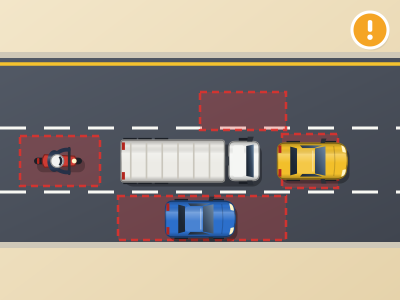
- AThe truck creates a large blind spot; the driver cannot see you, and debris may fall from the load
- BDrafting close behind a truck reduces wind resistance and saves fuel significantly
- CBeing close behind a truck keeps you visible in its wide mirrors
- DA truck's greater height shields the rider from crosswinds, making it safer to follow closely
Answer and explanation in the bank
- Q15Motorcycle safety
Why should motorcyclists wear protective gloves even in Oman's hot climate?
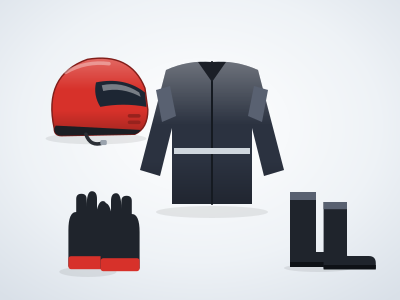
- ABecause gloves improve grip on the handlebars in normal riding only
- BBecause gloves are legally required at all times under Oman law
- CBecause hands and wrists are instinctively used to break a fall and are severely injured in a slide without gloves
- DBecause gloves prevent blisters from long-distance riding only
Answer and explanation in the bank
- Q16Motorcycle safety
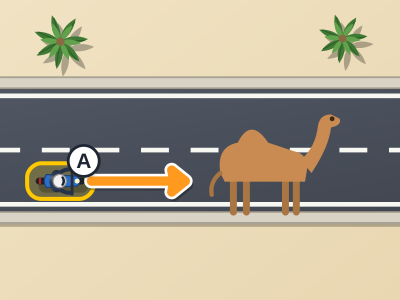
You are riding at 100 km/h on a rural Oman highway at night and suddenly see a camel standing in your lane ahead. What is the correct action?
- ASwerve sharply to the right into the oncoming lane to avoid the animal
- BApply both brakes firmly and progressively, reduce speed as fast as safely possible, and if collision cannot be avoided aim for the legs rather than the body
- CAccelerate to pass the animal at speed before it moves
- DSound the horn and flash lights to scare the animal off the road
Answer and explanation in the bank
- Q17Motorcycle safety
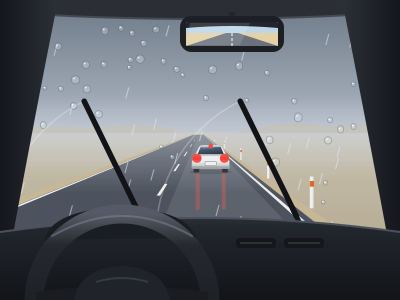
When riding on wet roads in Oman rain, how should braking technique be adjusted?
- AUse only the rear brake on wet roads to avoid a front-wheel skid
- BBrake harder than normal because wet roads cool the brakes and improve stopping power
- CWet-road braking technique is identical to dry-road technique
- DApply both brakes earlier and more gently than on dry roads, allowing more time and distance to stop
Answer and explanation in the bank
- Q18Motorcycle safety
In a staggered group formation, what minimum time gap should each rider maintain to the rider directly ahead of them?
- AHalf a second, because the stagger means there is no direct collision risk
- BOne second for experienced riders in good conditions
- CNo gap is needed if riders are in visual contact
- DAt least 2 seconds, giving a full stopping distance to the rider in front
Answer and explanation in the bank
- Q19Motorcycle safety
Why are reflective strips on a motorcyclist's jacket especially important when riding in Oman at night?
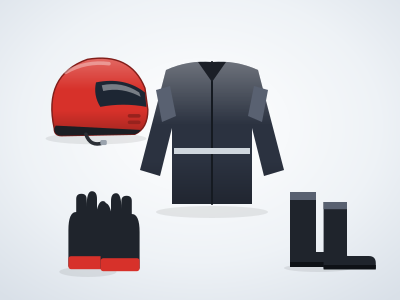
- AThey reflect vehicle headlights back toward the driver, making the rider visible at much greater distances in the dark
- BThey reduce glare from oncoming headlights for the rider
- CThey are a legal requirement that must be worn to avoid a fine at all night-time checkpoints
- DThey are effective only in rain; in dry conditions they do not improve visibility
Answer and explanation in the bank
- Q20Motorcycle safety
Which of the following is an early sign that a motorcyclist is becoming fatigued?
- AFeeling hungry for a meal
- BMissing junctions or exits you intended to take, or finding you cannot recall the last few kilometres ridden
- CSlight soreness in the wrists from handlebar vibration
- DThe speedometer showing a slight drop in average speed
Answer and explanation in the bank
Every answer above, with the rule it comes from, plus the full 20-question timed test.
Get the Oman Driving Test Questions PDF (ROP) - OMR 3What this test covers
Topics include road signs, traffic signals, right of way, roundabouts, speed limits, seat belts, fines and penalties, and the safe-driving rules specific to your vehicle category. Full question-by-question feedback with explanations is shown immediately after you finish the test above.
Frequently asked questions
How many questions is the Al Sharqiyah South Royal Oman Police motorcycle theory test?
The official Royal Oman Police motorcycle theory test in Al Sharqiyah South has 30 questions and you need 23 correct (75%) to pass. This practice test has 20 questions.
Is this the real exam?
These are practice questions to help you revise, written to the published rules and to what candidates report from the real test. They are not the official Oman exam and the real question bank, format, fees and pass mark are set by the Royal Oman Police, and can change. Always confirm the current requirements with your driving school or the Royal Oman Police.
Is this practice test free?
The first 10 questions are free, with no signup, and each shows the answer and the reason. The full 20-question test, timed, is in the Oman Driving Test Questions PDF (ROP) (OMR 3, one payment), with every question in the bank.
What does the Al Sharqiyah South motorcycle theory test cover?
Road signs, traffic signals, right of way, roundabouts, speed limits, seat belts, penalties and safe-driving rules, plus the handling and safety topics specific to your vehicle.