

Al Wusta Royal Oman Police Light vehicle
Practice mode· Road signsAl Wusta Royal Oman Police - Oman Road Signs Practice Test 2
Covers the second set of 22 road signs - informational signs, direction signs, road markings and more. Complete both tests to master the full GCC sign vocabulary used in Oman.
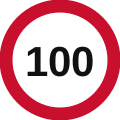
What does this sign tell you about the road you are on?
The other 12 questions in this test
Read them all. The answer and the reason for each, and the timed 22-question run, are in the Oman Driving Test Questions PDF (ROP).
- Q11Road signs and signals
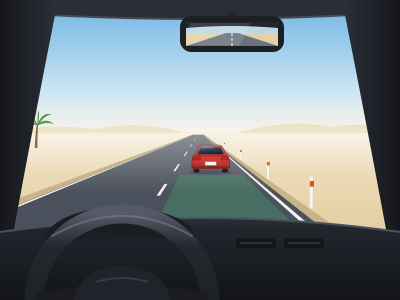
What is the recommended safe following distance from the vehicle ahead on a high-speed road in Oman?
- AOne car length for every 20 km/h of speed
- BA fixed 5 metres at all speeds
- CAt least a 3-second gap between you and the vehicle ahead
- D2 seconds on dry roads and 1 second on wet roads
Answer and explanation in the bank
- Q12Road signs and signals
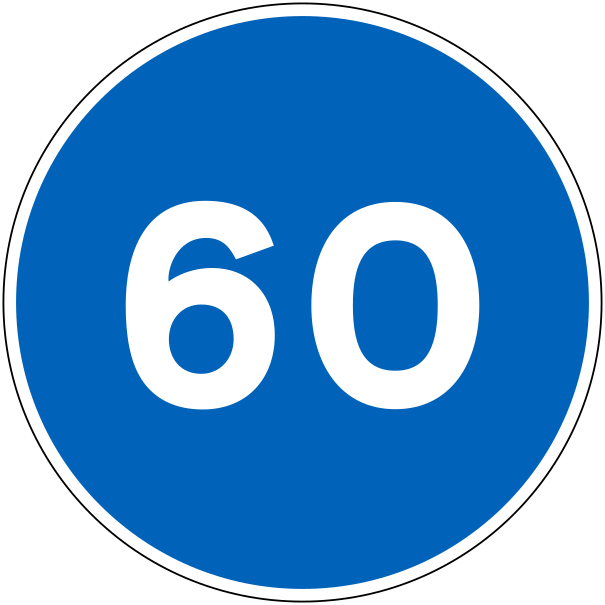
A blue circular sign displays the number 60. What does this sign mean?
- AThe maximum speed is 60 km/h
- BThe speed limit resumes at 60 km/h
- CThe minimum speed is 60 km/h
- DThe recommended speed is 60 km/h in adverse conditions
Answer and explanation in the bank
- Q13Road signs and signals
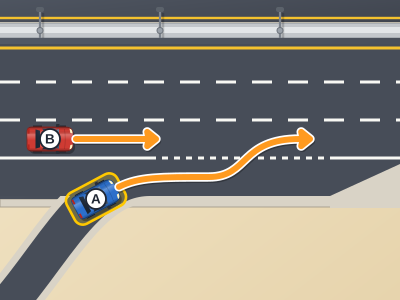
You are joining a motorway via an on-ramp. Who has priority?
- AThe vehicle on the on-ramp, which has right of way
- BTraffic already travelling on the motorway
- CThe faster vehicle in each situation
- DWhoever reaches the merge point first
Answer and explanation in the bank
- Q14Road signs and signals
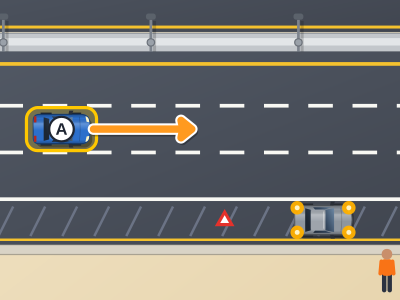
On an Omani expressway, when may you use the hard shoulder (emergency lane)?
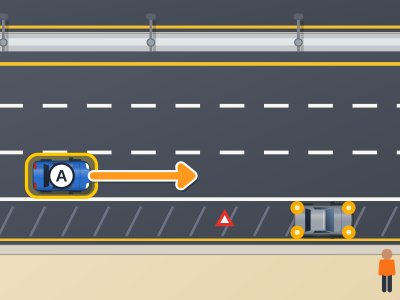
- AAs a free lane during heavy traffic
- BFor overtaking slow-moving vehicles
- CFor stopping briefly to make a phone call
- DOnly in a genuine emergency or when directed by police
Answer and explanation in the bank
- Q15Road signs and signals
A driver is travelling in the left (fast) lane on a clear motorway and refuses to move back to the right when a faster vehicle approaches from behind. Is this an offence in Oman?
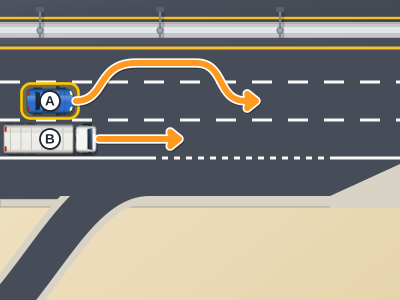
- ANo - any driver may stay in any lane at any speed
- BYes - drivers must vacate the left lane when not actively overtaking
- COnly an offence if the vehicle behind sounds its horn three times
- DNo - the left lane is a priority lane for high-speed drivers
Answer and explanation in the bank
- Q16Road signs and signals
White arrows are painted on the road surface in your lane. What do they indicate?
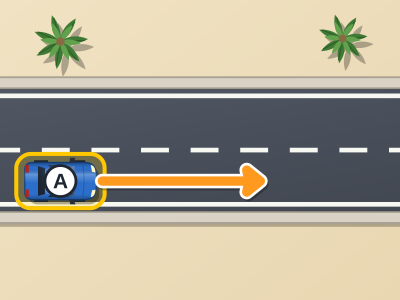
- AA recommended tourist route
- BThe edge of the paved road surface
- CThat overtaking is permitted in this lane
- DThe direction you must travel from that lane
Answer and explanation in the bank
- Q17Road signs and signals
Red or orange zigzag lines are painted at the edge of the road near a school crossing. What do they mean?
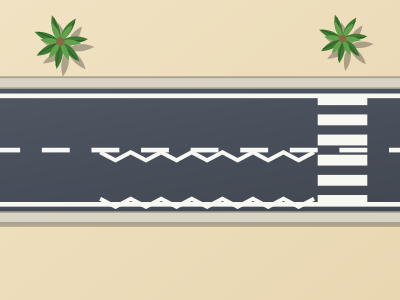
- AParking permitted for school buses only
- BThis is a cycle lane
- CStop here to wait for the school bus
- DNo stopping or parking in this area
Answer and explanation in the bank
- Q18Road signs and signals
A sign shows a lorry with a downward arrow and the number 3.5. What does this tell a car driver?
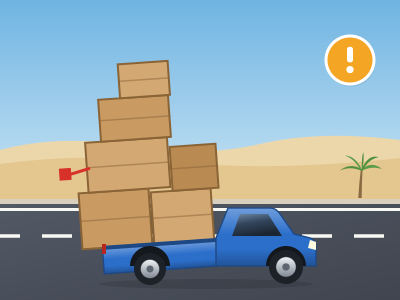
- AVehicles over 3.5 tonnes are prohibited on this road
- BThe road has a gradient of 3.5 percent ahead
- CThe speed limit for lorries is 3.5 times the posted speed
- DThe maximum overhead clearance is 3.5 metres
Answer and explanation in the bank
- Q19Road signs and signals
In the GCC uniform road sign system, a sign with a blue rectangular background most commonly indicates:
- AA mandatory instruction sign
- BMotorway or expressway route information
- CA prohibition order
- DA hazard warning
Answer and explanation in the bank
- Q20Road signs and signals
At an unmarked junction in Oman where no signs or road markings are present, how should you approach it?
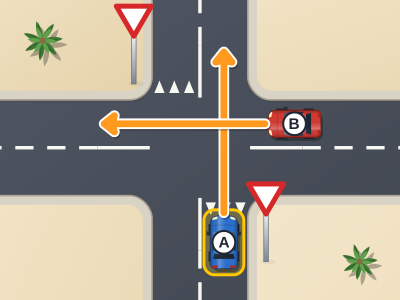
- ASlow down, give way to traffic on the wider road, and yield when in doubt
- BThe vehicle on the right always has automatic priority
- CThe vehicle on the left always has automatic priority
- DThe fastest vehicle has priority
Answer and explanation in the bank
- Q21Road signs and signals
Where in Oman are U-turns generally permitted if no sign specifically prohibits them?
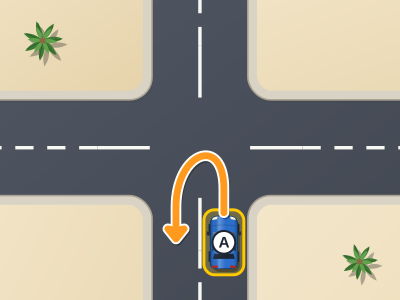
- AAt any junction that has no traffic signals
- BWherever the road is physically wide enough to complete the turn
- CAt designated U-turn gaps in the central reservation of divided roads
- DOnly at traffic lights during a green phase
Answer and explanation in the bank
- Q22Road signs and signals
What is required when parking near a fire hydrant in Oman?
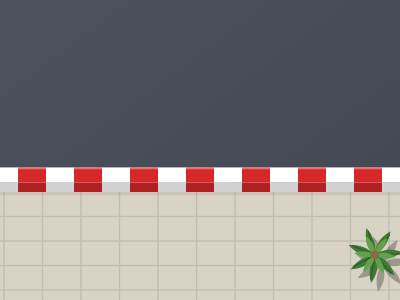
- AYou may park up to 1 metre from the hydrant
- BYou must not park within the restricted zone - the hydrant must remain freely accessible
- CYou may park up to 3 metres from the hydrant
- DParking is permitted as long as the hydrant cover is visible
Answer and explanation in the bank
Every answer above, with the rule it comes from, plus the full 22-question timed test.
Get the Oman Driving Test Questions PDF (ROP) - OMR 3What this test covers
Topics include road signs, traffic signals, right of way, roundabouts, speed limits, seat belts, fines and penalties, and the safe-driving rules specific to your vehicle category. Full question-by-question feedback with explanations is shown immediately after you finish the test above.
Frequently asked questions
How many questions is the Al Wusta Royal Oman Police light vehicle theory test?
The official Royal Oman Police light vehicle theory test in Al Wusta has 30 questions and you need 23 correct (75%) to pass. This practice test has 22 questions.
Is this the real exam?
These are practice questions to help you revise, written to the published rules and to what candidates report from the real test. They are not the official Oman exam and the real question bank, format, fees and pass mark are set by the Royal Oman Police, and can change. Always confirm the current requirements with your driving school or the Royal Oman Police.
Is this practice test free?
The first 10 questions are free, with no signup, and each shows the answer and the reason. The full 22-question test, timed, is in the Oman Driving Test Questions PDF (ROP) (OMR 3, one payment), with every question in the bank.
What does the Al Wusta light vehicle theory test cover?
Road signs, traffic signals, right of way, roundabouts, speed limits, seat belts, penalties and safe-driving rules, plus the handling and safety topics specific to your vehicle.