

Al Wusta Royal Oman Police Motorcycle
Timed mock exam· Full mock examsAl Wusta Royal Oman Police - Oman Motorcycle Theory Mock Test 3
Third full motorcycle mock exam and a great final readiness check before your real bike theory test. Another distinct set of 30 timed questions.
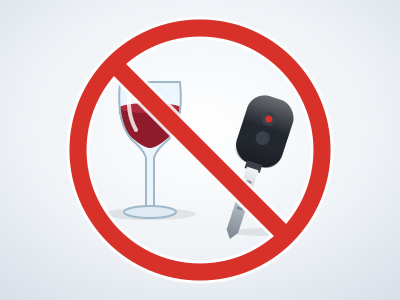
Under Oman's traffic law, what is the legal blood alcohol limit for drivers?
The other 20 questions in this test
Read them all. The answer and the reason for each, and the timed 30-question run, are in the Oman Driving Test Questions PDF (ROP).
- Q11Road signs and signals
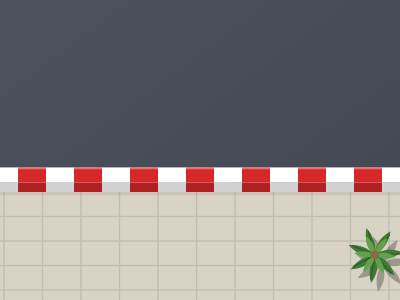
What is required when parking near a fire hydrant in Oman?
- AYou may park up to 1 metre from the hydrant
- BYou must not park within the restricted zone - the hydrant must remain freely accessible
- CYou may park up to 3 metres from the hydrant
- DParking is permitted as long as the hydrant cover is visible
Answer and explanation in the bank
- Q12Traffic rules
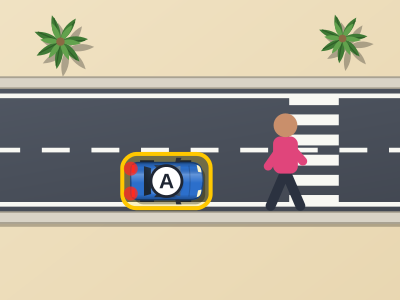
A pedestrian is waiting at a marked crossing in Oman. What must you do?
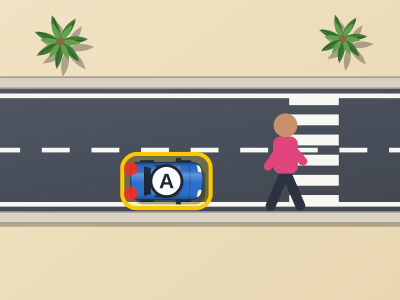
- AGive way to the pedestrian and allow them to cross safely
- BSound the horn and proceed if there is room to pass
- CStop only if the pedestrian has already stepped onto the road
- DFlash your headlights to signal the pedestrian to wait
Answer and explanation in the bank
- Q13Right of way
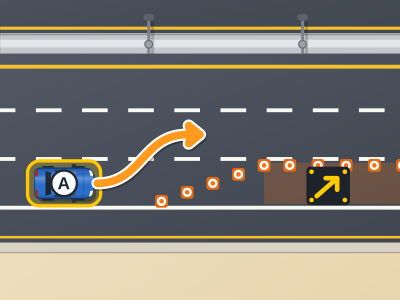
You are in the right lane of a two-lane road. The right lane is closing ahead due to roadworks and you need to merge left. A driver in the left lane is deliberately blocking you. Are they correct to do so?
- AYes; left lane traffic always has absolute priority when a lane closes
- BYes; you should have merged earlier when the warning signs first appeared
- CNo; but you must stop at the closure point and wait for a police officer to direct you in
- DNo; deliberately blocking a merging vehicle is dangerous and drivers should allow a zip-merge
Answer and explanation in the bank
- Q14Safe driving
You are about to start a long drive from Sur to Muscat on a hot afternoon. What should you do before setting off to reduce fatigue and safety risk?
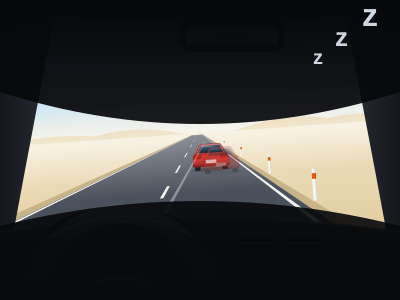
- AEnsure you are well rested, hydrated, have planned rest stops, and that the vehicle is roadworthy with correct tyre pressures
- BDrink a large amount of coffee just before leaving to ensure maximum alertness
- CLeave as late as possible so you drive in the cool night air, even if very tired
- DLoad the vehicle as full as possible to reduce the number of journeys needed
Answer and explanation in the bank
- Q15Penalties and fines
At an ROP checkpoint in Oman, which documents should a driver be able to produce on request?
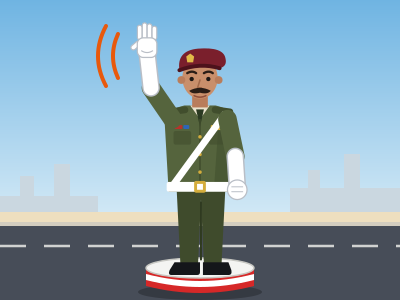
- AOnly the driving licence
- BDriving licence, vehicle registration (Mulkiya) and valid insurance certificate
- COnly the insurance certificate and a passport
- DA national identity card is sufficient as a substitute for all other documents
Answer and explanation in the bank
- Q16Road signs and signals
A driver fails to stop for a pedestrian on a marked crossing in Oman. Which statement is correct?
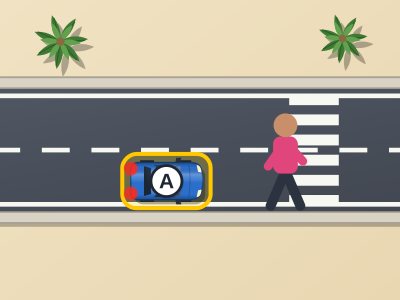
- AThe pedestrian should have waited for the vehicle to pass
- BThe driver is only at fault if the pedestrian was physically injured
- CThe driver has committed an offence; pedestrians have right of way on marked crossings
- DNo offence occurs if the driver sounded the horn before passing
Answer and explanation in the bank
- Q17Traffic rules
You stop to let a pedestrian use a zebra crossing in Oman. A vehicle behind overtakes you while the pedestrian is still on the crossing. What has that driver done?
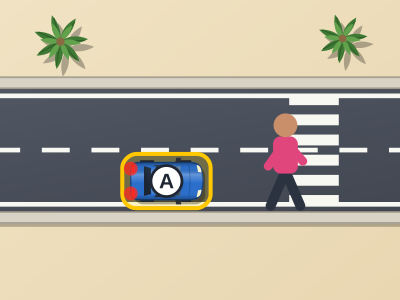
- AActed legally as long as they gave the pedestrian enough room
- BDone nothing wrong if no signs are posted near the crossing
- CActed legally because they did not make contact with the pedestrian
- DCommitted a serious traffic offence by overtaking at an active pedestrian crossing
Answer and explanation in the bank
- Q18Right of way
You are driving at night on an unlit road and approach a pedestrian crossing where the signals are not working. A pedestrian steps onto the crossing. What is your legal obligation?
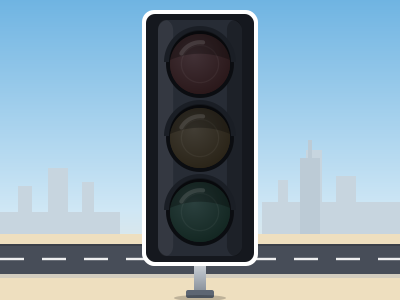
- AThe pedestrian has no right of way because the signals are not working
- BSlow to 30 km/h and proceed carefully past the pedestrian
- CStop and give way to the pedestrian who has stepped onto the crossing
- DSound the horn three times as a warning and continue at reduced speed
Answer and explanation in the bank
- Q19Safe driving
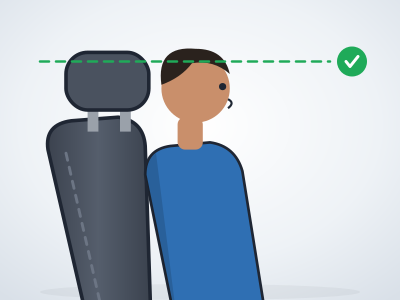
What is the purpose of the headrest in a vehicle seat?
- ATo improve driver comfort on long journeys only
- BTo limit rearward head movement in a rear-end collision and reduce the risk of whiplash injury
- CTo support the driver's head when they are tired
- DHeadrests are a comfort feature with no safety function
Answer and explanation in the bank
- Q20Penalties and fines
A driver in Oman accelerates away from a police checkpoint at high speed without stopping. How is this likely to be treated legally?
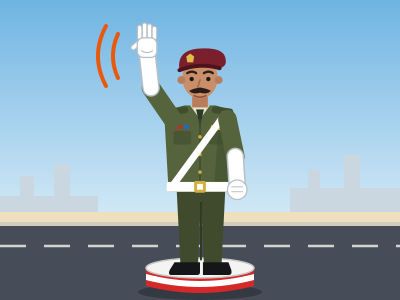
- AAs a criminal offence potentially including dangerous driving and failing to comply with police instructions
- BAs a minor speeding offence only
- COnly as a failure-to-stop fine, equivalent to running a red light
- DNo offence if the driver stops voluntarily at the next junction and explains the situation
Answer and explanation in the bank
- Q21Road signs and signals
You are on a dual carriageway doing 100 km/h. A vehicle in the left lane is overtaking a lorry at 98 km/h and blocking your path. What is the correct action?
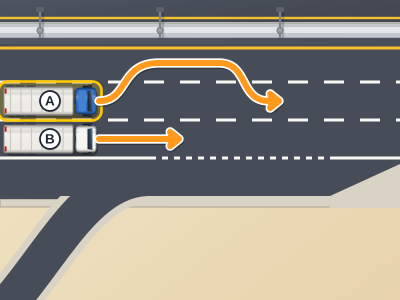
- AOvertake the overtaking vehicle using the hard shoulder
- BFlash headlights and sound horn repeatedly to force the vehicle to speed up
- CCross the central reservation to use the opposite carriageway
- DWait patiently behind in the left lane until it is safe to proceed
Answer and explanation in the bank
- Q22Traffic rules
At a signalised pedestrian crossing in Oman, pedestrians have a green signal and are crossing. You have a green light for your direction. Who has priority?
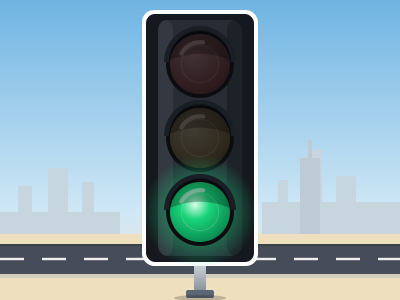
- AYou do, because your traffic light is green
- BThe pedestrians - you must wait until the crossing is completely clear
- CWhoever entered the crossing area first
- DDrivers always have priority over pedestrians at signalised junctions
Answer and explanation in the bank
- Q23Right of way
A school bus has stopped on the opposite side of a divided dual carriageway and is displaying flashing amber lights. Are you required to stop?
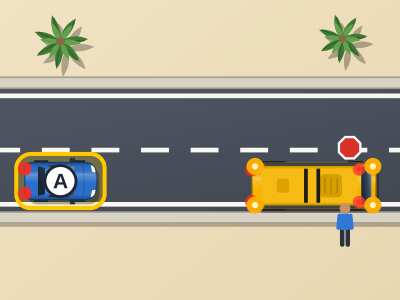
- AYes; school buses require all traffic on all roads in both directions to stop
- BYes; slow to 10 km/h and proceed cautiously past the school bus
- CNo; on a divided dual carriageway the central barrier separates traffic and you do not need to stop
- DNo; amber lights on a school bus are only advisory and never require stopping
Answer and explanation in the bank
- Q24Safe driving
Rain begins to fall on Omani roads that have been dry for several weeks. Why is this particularly hazardous?
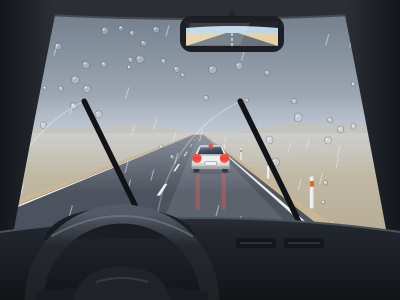
- AAccumulated oil and dust on the road surface mixes with the first rain to create an especially slippery film
- BFresh rain always improves grip by washing dust off the road
- CRain only becomes dangerous after it has been falling for more than one hour
- DThe hazard is the same as rain falling on a regularly wet road
Answer and explanation in the bank
- Q25Penalties and fines
How can drivers in Oman pay outstanding traffic fines issued by the Royal Oman Police?

- AOnly in cash at a police station during standard business hours
- BThrough the ROP website, mobile app, authorised service centres and at police stations
- COnly through the driver's vehicle insurance company
- DTraffic fines in Oman cannot be paid online under any circumstances
Answer and explanation in the bank
- Q26Road signs and signals
When driving at night on a rural road in Oman and an oncoming vehicle approaches, what should you do with your headlights?
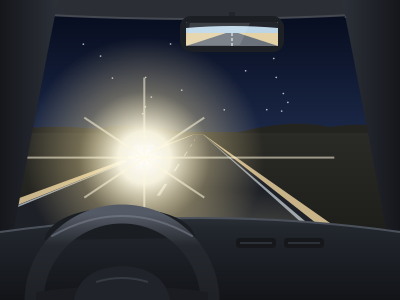
- AKeep high beam on so you can see the road ahead
- BSwitch from high beam to low beam to avoid dazzling the other driver
- CFlash high beam twice and then return to high beam
- DTurn off headlights briefly as a courtesy gesture
Answer and explanation in the bank
- Q27Traffic rules
Where in Oman are pedestrians most likely to appear unexpectedly on or near the road?
- AOnly on marked pedestrian crossings
- BOnly on rural roads with no street lighting
- COnly in designated school zones
- DNear souqs, mosques, shopping centres, and residential areas with no footpaths
Answer and explanation in the bank
- Q28Right of way
You are emerging from a car park onto a one-way street where traffic flows from right to left. Which direction do you check first before pulling out?
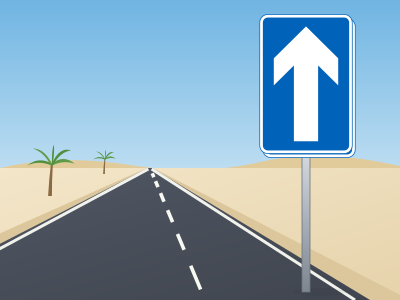
- ACheck to the right, because that is where traffic is coming from
- BCheck to the left first, as that is the nearest lane you are entering
- CCheck both directions because the street may have vehicles going both ways
- DNo check is needed; vehicles exiting a car park have priority
Answer and explanation in the bank
- Q29Safe driving
You are driving on a rural Omani road at night and an animal steps into your headlights. What should you do?
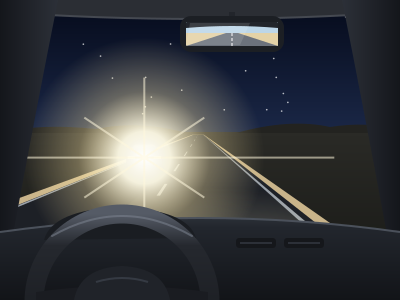
- ASwerve sharply into the oncoming lane to avoid the animal
- BBrake progressively to slow the vehicle; do not swerve violently as this risks losing control or a rollover
- CAccelerate to pass the animal before it moves further into the road
- DFlash your headlights only; animals always move off the road when blinded
Answer and explanation in the bank
- Q30Penalties and fines
A driver in Oman has unpaid outstanding traffic fines. They attempt to renew their Mulkiya (vehicle registration). What happens?
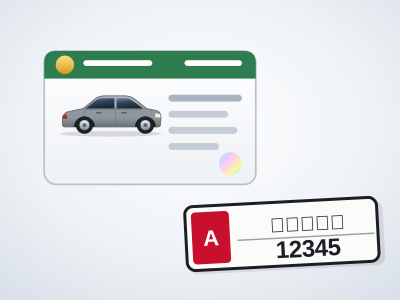
- AThe Mulkiya is renewed without any reference to outstanding fines
- BThe driver can pay half the fines and still complete the renewal
- CThe Mulkiya renewal is blocked until all outstanding fines are settled
- DOutstanding fines older than one year are automatically waived during renewal
Answer and explanation in the bank
Every answer above, with the rule it comes from, plus the full 30-question timed test.
Get the Oman Driving Test Questions PDF (ROP) - OMR 3What this test covers
Topics include road signs, traffic signals, right of way, roundabouts, speed limits, seat belts, fines and penalties, and the safe-driving rules specific to your vehicle category. Full question-by-question feedback with explanations is shown immediately after you finish the test above.
Frequently asked questions
How many questions is the Al Wusta Royal Oman Police motorcycle theory test?
The official Royal Oman Police motorcycle theory test in Al Wusta has 30 questions and you need 23 correct (75%) to pass. This practice test has 30 questions.
Is this the real exam?
These are practice questions to help you revise, written to the published rules and to what candidates report from the real test. They are not the official Oman exam and the real question bank, format, fees and pass mark are set by the Royal Oman Police, and can change. Always confirm the current requirements with your driving school or the Royal Oman Police.
Is this practice test free?
The first 10 questions are free, with no signup, and each shows the answer and the reason. The full 30-question test, timed, is in the Oman Driving Test Questions PDF (ROP) (OMR 3, one payment), with every question in the bank.
What does the Al Wusta motorcycle theory test cover?
Road signs, traffic signals, right of way, roundabouts, speed limits, seat belts, penalties and safe-driving rules, plus the handling and safety topics specific to your vehicle.