

Al Wusta Royal Oman Police Truck & Bus
Timed mock exam· Full mock examsAl Wusta Royal Oman Police - Oman Truck & Bus Theory Mock Test 3
Third full heavy-vehicle mock exam and a strong final readiness check before your real truck or bus theory test. Another distinct set of 30 timed questions.
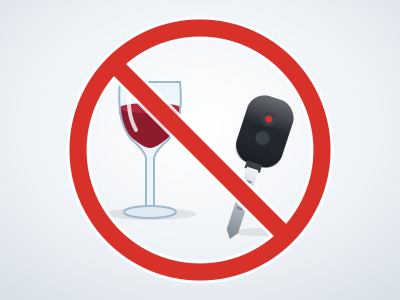
A friend claims that one drink before driving is safe in Oman because the limit is similar to Europe. Is this correct?
The other 20 questions in this test
Read them all. The answer and the reason for each, and the timed 30-question run, are in the Oman Driving Test Questions PDF (ROP).
- Q11Road signs and signals
You are on a dual carriageway doing 100 km/h. A vehicle in the left lane is overtaking a lorry at 98 km/h and blocking your path. What is the correct action?
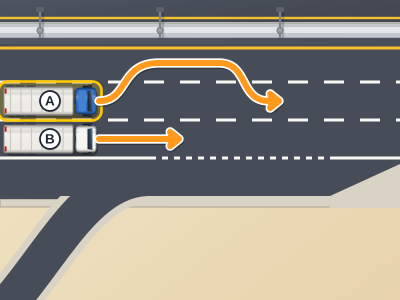
- AOvertake the overtaking vehicle using the hard shoulder
- BFlash headlights and sound horn repeatedly to force the vehicle to speed up
- CCross the central reservation to use the opposite carriageway
- DWait patiently behind in the left lane until it is safe to proceed
Answer and explanation in the bank
- Q12Traffic rules
At a signalised pedestrian crossing in Oman, pedestrians have a green signal and are crossing. You have a green light for your direction. Who has priority?
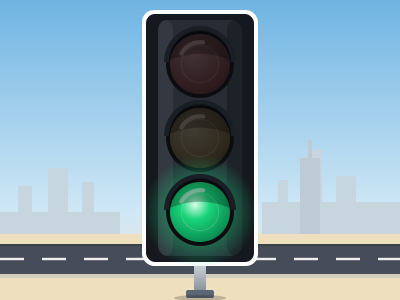
- AYou do, because your traffic light is green
- BThe pedestrians - you must wait until the crossing is completely clear
- CWhoever entered the crossing area first
- DDrivers always have priority over pedestrians at signalised junctions
Answer and explanation in the bank
- Q13Right of way
A school bus has stopped on the opposite side of a divided dual carriageway and is displaying flashing amber lights. Are you required to stop?
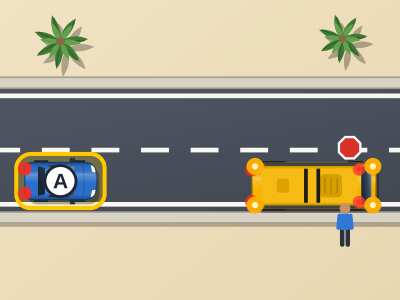
- AYes; school buses require all traffic on all roads in both directions to stop
- BYes; slow to 10 km/h and proceed cautiously past the school bus
- CNo; on a divided dual carriageway the central barrier separates traffic and you do not need to stop
- DNo; amber lights on a school bus are only advisory and never require stopping
Answer and explanation in the bank
- Q14Safe driving
Rain begins to fall on Omani roads that have been dry for several weeks. Why is this particularly hazardous?
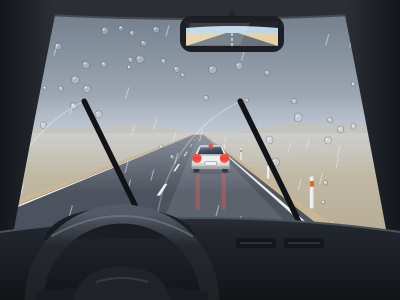
- AAccumulated oil and dust on the road surface mixes with the first rain to create an especially slippery film
- BFresh rain always improves grip by washing dust off the road
- CRain only becomes dangerous after it has been falling for more than one hour
- DThe hazard is the same as rain falling on a regularly wet road
Answer and explanation in the bank
- Q15Penalties and fines
How can drivers in Oman pay outstanding traffic fines issued by the Royal Oman Police?

- AOnly in cash at a police station during standard business hours
- BThrough the ROP website, mobile app, authorised service centres and at police stations
- COnly through the driver's vehicle insurance company
- DTraffic fines in Oman cannot be paid online under any circumstances
Answer and explanation in the bank
- Q16Heavy vehicle
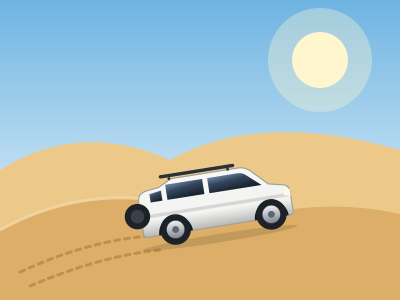
Why is it important to check the truck's engine oil, coolant, and power-steering fluid levels before a long journey across Oman's desert interior?
- ADesert dust enters the engine more quickly and dilutes these fluids within a few hours of driving
- BFluid checks are only needed before journeys over 1000 kilometres
- CThese checks are only necessary for new vehicles; established fleets are checked by mechanics weekly
- DHigh ambient temperatures increase fluid consumption and the risk of overheating; a breakdown in a remote desert location is life-threatening
Answer and explanation in the bank
- Q17Road signs and signals
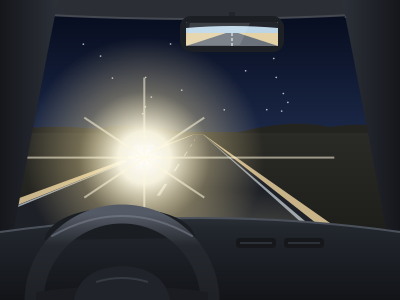
When driving at night on a rural road in Oman and an oncoming vehicle approaches, what should you do with your headlights?
- AKeep high beam on so you can see the road ahead
- BSwitch from high beam to low beam to avoid dazzling the other driver
- CFlash high beam twice and then return to high beam
- DTurn off headlights briefly as a courtesy gesture
Answer and explanation in the bank
- Q18Traffic rules
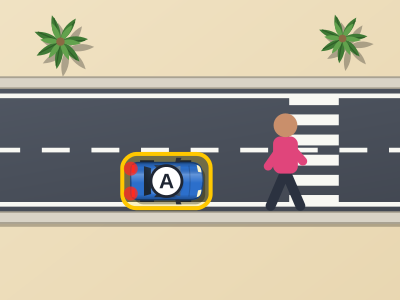
Where in Oman are pedestrians most likely to appear unexpectedly on or near the road?
- AOnly on marked pedestrian crossings
- BOnly on rural roads with no street lighting
- COnly in designated school zones
- DNear souqs, mosques, shopping centres, and residential areas with no footpaths
Answer and explanation in the bank
- Q19Right of way
You are emerging from a car park onto a one-way street where traffic flows from right to left. Which direction do you check first before pulling out?
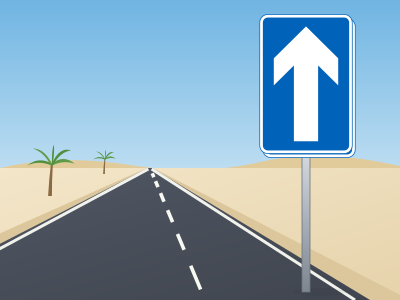
- ACheck to the right, because that is where traffic is coming from
- BCheck to the left first, as that is the nearest lane you are entering
- CCheck both directions because the street may have vehicles going both ways
- DNo check is needed; vehicles exiting a car park have priority
Answer and explanation in the bank
- Q20Safe driving
You are driving on a rural Omani road at night and an animal steps into your headlights. What should you do?
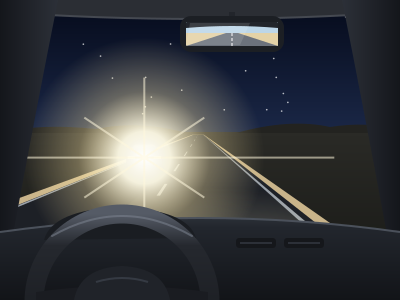
- ASwerve sharply into the oncoming lane to avoid the animal
- BBrake progressively to slow the vehicle; do not swerve violently as this risks losing control or a rollover
- CAccelerate to pass the animal before it moves further into the road
- DFlash your headlights only; animals always move off the road when blinded
Answer and explanation in the bank
- Q21Penalties and fines
A driver in Oman has unpaid outstanding traffic fines. They attempt to renew their Mulkiya (vehicle registration). What happens?
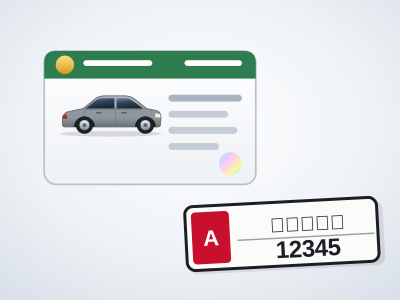
- AThe Mulkiya is renewed without any reference to outstanding fines
- BThe driver can pay half the fines and still complete the renewal
- CThe Mulkiya renewal is blocked until all outstanding fines are settled
- DOutstanding fines older than one year are automatically waived during renewal
Answer and explanation in the bank
- Q22Heavy vehicle
A driver of a multi-axle heavy vehicle approaches a weak-bridge sign showing '16.5t'. The vehicle's front axle is 7t, drive axle is 10t, and the rear trailer axle group is 18t. What should the driver do?
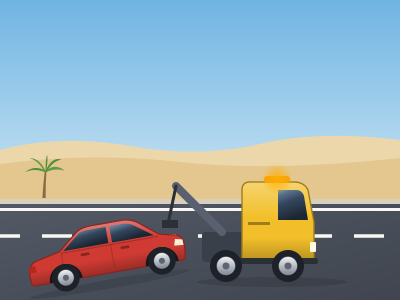
- ANot cross the bridge; the trailer axle group alone exceeds the 16.5t limit and the total GVW is also above the limit
- BCross slowly because the weight limit only applies if all axles are on the bridge simultaneously
- CCross because only the gross vehicle weight matters and the front axle at 7t is below the limit
- DCross because the weight limit applies to the heaviest single axle, and no single axle exceeds 18t
Answer and explanation in the bank
- Q23Road signs and signals
Who must wear a seatbelt in a vehicle in Oman?
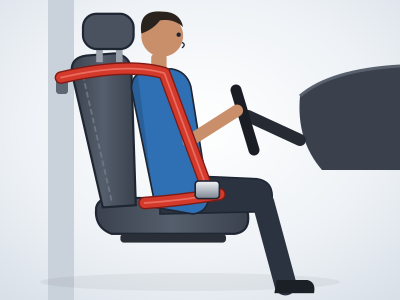
- AOnly the driver and the front-seat passenger
- BThe driver and all passengers
- COnly the driver
- DOnly passengers under the age of 12
Answer and explanation in the bank
- Q24Traffic rules
When reversing a vehicle in Oman, what is the primary rule?
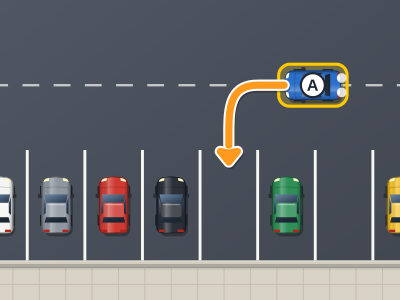
- AOnly reverse when necessary, over the shortest safe distance, and with full checks for pedestrians and other vehicles
- BReversing always gives you right of way over other vehicles
- CYou must always have a second person outside guiding you
- DReversing is only permitted in car parks
Answer and explanation in the bank
- Q25Right of way
You are on a main road displaying the yellow diamond priority road sign. You reach a crossroads. A vehicle approaches on your right from a minor road that has a Give Way sign. Who has priority?
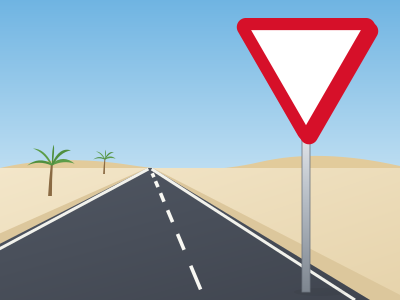
- AYou have priority because you are on the priority road
- BThe vehicle on your right has priority under the give-way-to-the-right rule
- CThe yellow diamond only applies between junctions, not at the junction itself
- DBoth vehicles have equal priority at this crossroads
Answer and explanation in the bank
- Q26Safe driving
On a mountain descent in Oman your vehicle begins to pick up speed despite you holding the brake pedal. The most likely cause and correct action is:
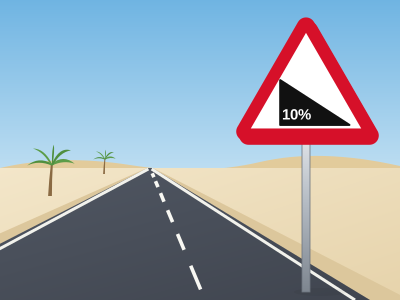
- ABrake fade from overheating; select a lower gear immediately to use engine braking and reduce reliance on the brakes
- BABS has activated and released the brakes; pump the pedal harder
- CThe accelerator pedal has stuck; push the brake harder and continue downhill
- DThe tyres have overheated; continue braking until they cool down
Answer and explanation in the bank
- Q27Penalties and fines
A driver believes a traffic fine issued by the ROP in Oman is incorrect. What is the legitimate way to challenge it?

- AIgnore the fine; incorrect fines are automatically cancelled after 90 days
- BSubmit a formal complaint or appeal through the ROP's official complaint channel or the relevant court
- CPay the fine and then claim a refund from the driver's insurer
- DContest it verbally with any police officer encountered while driving
Answer and explanation in the bank
- Q28Heavy vehicle
What is the minimum legal tread depth for heavy vehicle tyres in Oman?
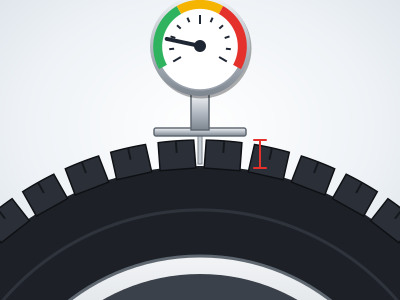
- AApproximately 1 mm across the central three-quarters of the tread width
- BNo legal minimum exists for truck tyres; drivers judge condition visually
- C5 mm is required for all vehicles including cars and trucks
- DTread depth does not matter for truck tyres because they use rib-pattern tyres with no directional grooves
Answer and explanation in the bank
- Q29Road signs and signals
A driver is caught using a hand-held mobile phone while driving in Oman. What is the likely consequence?
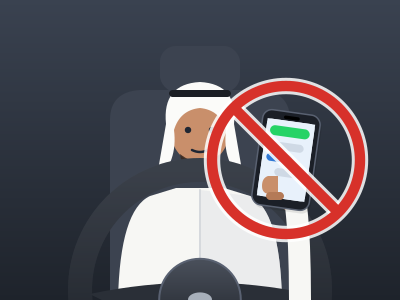
- AA verbal warning for a first offence only
- BNo penalty if driving on a straight, clear road
- CA fine only if an accident results from the distraction
- DA fine and possible licence points
Answer and explanation in the bank
- Q30Traffic rules
Is it legal to reverse from a side street or driveway onto a main road in Oman?
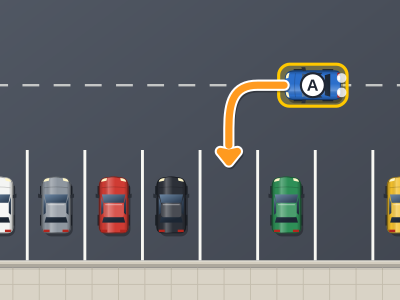
- AYes, if you check your mirrors carefully beforehand
- BYes, on roads with a posted limit below 60 km/h
- CNo - you must exit a side street or driveway by driving forward, not by reversing onto a main road
- DYes, as long as you activate hazard lights during the manoeuvre
Answer and explanation in the bank
Every answer above, with the rule it comes from, plus the full 30-question timed test.
Get the Oman Driving Test Questions PDF (ROP) - OMR 3What this test covers
Topics include road signs, traffic signals, right of way, roundabouts, speed limits, seat belts, fines and penalties, and the safe-driving rules specific to your vehicle category. Full question-by-question feedback with explanations is shown immediately after you finish the test above.
Frequently asked questions
How many questions is the Al Wusta Royal Oman Police truck & bus theory test?
The official Royal Oman Police truck & bus theory test in Al Wusta has 30 questions and you need 23 correct (75%) to pass. This practice test has 30 questions.
Is this the real exam?
These are practice questions to help you revise, written to the published rules and to what candidates report from the real test. They are not the official Oman exam and the real question bank, format, fees and pass mark are set by the Royal Oman Police, and can change. Always confirm the current requirements with your driving school or the Royal Oman Police.
Is this practice test free?
The first 10 questions are free, with no signup, and each shows the answer and the reason. The full 30-question test, timed, is in the Oman Driving Test Questions PDF (ROP) (OMR 3, one payment), with every question in the bank.
What does the Al Wusta truck & bus theory test cover?
Road signs, traffic signals, right of way, roundabouts, speed limits, seat belts, penalties and safe-driving rules, plus the handling and safety topics specific to your vehicle.