

Dhofar Royal Oman Police Motorcycle
Timed mock exam· Full mock examsDhofar Royal Oman Police - Oman Motorcycle Theory Mock Test 1
A full 30-question timed practice exam for the Oman motorcycle (bike) theory test. Covers shared road rules and signs plus motorcycle-specific control and safety. Aim for 23/30 (75%) to pass.
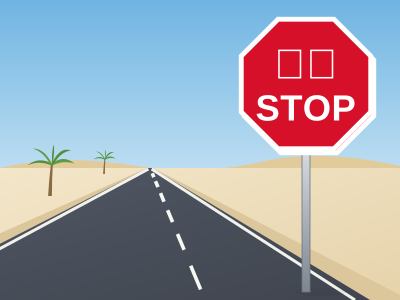
You reach a junction controlled by a STOP sign and white stop line. What are you required to do?
The other 20 questions in this test
Read them all. The answer and the reason for each, and the timed 30-question run, are in the Oman Driving Test Questions PDF (ROP).
- Q11Motorcycle control
What is the correct body position when cornering a motorcycle at normal road speeds?
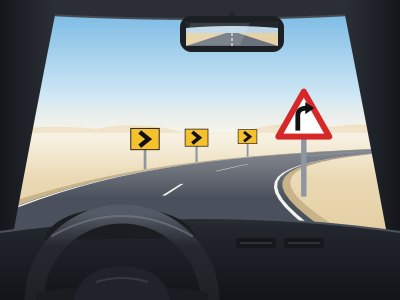
- ALean the head and shoulders toward the outside of the corner
- BStand on the pegs with the body upright
- CMove body weight to the rear of the seat
- DLook through the corner, sit smoothly with weight on the inside peg, and keep your head level
Answer and explanation in the bank
- Q12Motorcycle safety
Is lane filtering (riding between lanes of slow or stationary traffic) permitted in Oman?
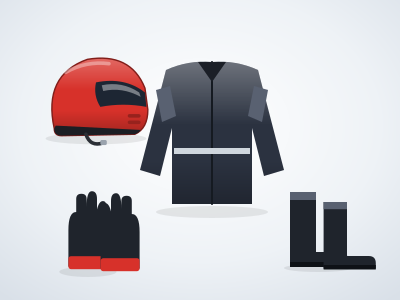
- AIt is fully permitted at speeds below 30 km/h
- BIt is permitted only on highways, not in urban areas
- CIt is permitted only for licensed delivery riders
- DIt is not permitted; riders must stay within their lane
Answer and explanation in the bank
- Q13Road signs and signals
What does this sign tell you?
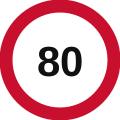
- AThe minimum speed is 80 km/h
- BA speed camera is 80 metres ahead
- CYou are 80 km from the next city
- DThe maximum speed is 80 km/h
Answer and explanation in the bank
- Q14Traffic rules
You want to take the third exit at a roundabout in Oman. Which lane should you generally use on entry?
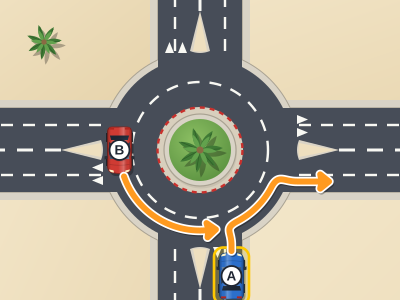
- AThe left (inner) lane, signalling left on approach
- BThe right (outer) lane only
- CEither lane; it makes no difference for a third exit
- DThe hard shoulder to gain space
Answer and explanation in the bank
- Q15Right of way
You are on a minor road approaching a T-junction where you must turn onto the main road. Who has priority?
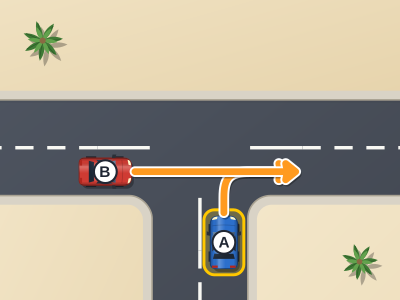
- AYou have priority because you arrived at the junction first
- BTraffic turning in the same direction as you has priority
- CThe vehicle on your right has priority; the main road does not matter
- DTraffic already travelling on the main road has priority
Answer and explanation in the bank
- Q16Safe driving
When is the best time to check your tyre pressure in Oman's summer heat?
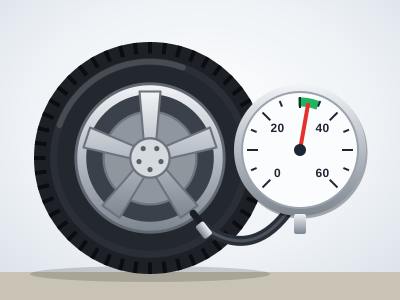
- AAfter a long highway drive when the tyres are fully warmed up
- BAny time, as pressure does not change with temperature
- COnly after the vehicle has been parked in the shade for an hour
- DBefore driving, when the tyres are cold
Answer and explanation in the bank
- Q17Penalties and fines
Which of the following actions is illegal for a driver in Oman?
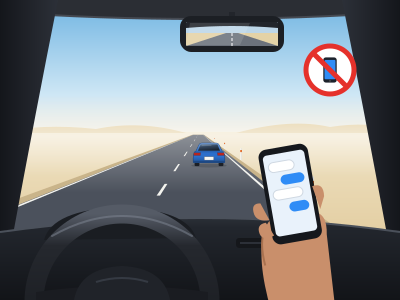
- AReading or sending a text message while the vehicle is moving
- BAdjusting the volume on a built-in stereo at a red light
- CChecking mirrors before changing lanes
- DUsing a dashboard-mounted GPS navigation device
Answer and explanation in the bank
- Q18Motorcycle control
When performing a slow U-turn on a narrow road, which combination of controls is most effective?
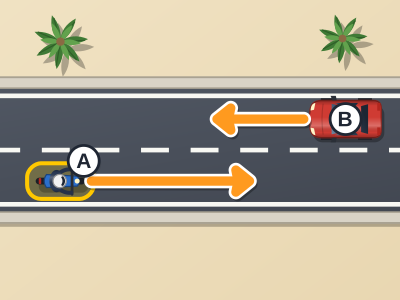
- AClutch in the friction zone, light rear brake, throttle steady, head turned toward exit
- BFull throttle, front brake, and handlebars turned to maximum lock
- CClutch fully released, no brakes, and lean heavily to one side
- DEngine off and push the bike around with both feet on the ground
Answer and explanation in the bank
- Q19Motorcycle safety
What is the purpose of a motorcyclist maintaining a buffer zone (gap) around themselves in traffic?
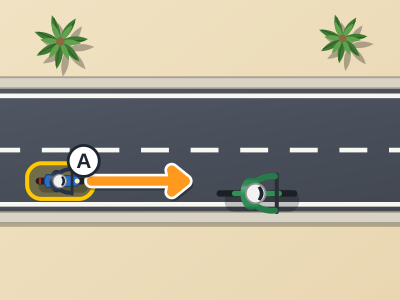
- ATo allow other vehicles to overtake more easily
- BTo give enough time and space to react and brake if the vehicle ahead stops suddenly
- CTo reduce wind turbulence from vehicles ahead
- DTo comply with a legal minimum separation distance at all times
Answer and explanation in the bank
- Q20Road signs and signals
You passed an 80 km/h sign 1.5 km ago and no new sign has appeared. Does the limit still apply?
- ANo - limits only apply for 1 km from the sign
- BNo - the limit expires at the next junction
- CYes - it remains in force until a new speed sign or end-of-restriction sign is passed
- DNo - the limit only applies while the sign is visible in your mirrors
Answer and explanation in the bank
- Q21Traffic rules
Traffic at an Oman roundabout is being controlled by temporary signals. Which rule applies?
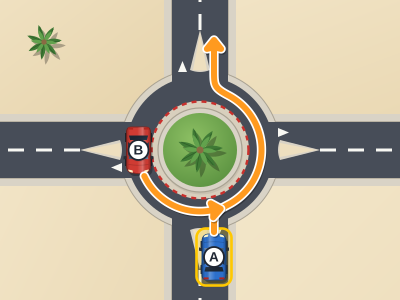
- AGive way to traffic from the left as normal, ignoring the signals
- BSound the horn and proceed with caution past the signals
- CTreat it as an uncontrolled junction and give way to the right
- DObey the signals; the normal roundabout give-way rule is suspended
Answer and explanation in the bank
- Q22Right of way
A bus has stopped at a bus stop and its indicator shows it intends to pull back onto the road. What should drivers behind do?
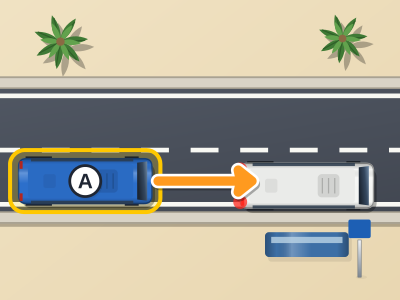
- ASound the horn and overtake on the right before the bus moves
- BGive way only if it is a school bus
- CGive way to the bus where it is safe to do so
- DThe bus must wait for all traffic to clear before it can move
Answer and explanation in the bank
- Q23Safe driving
A rear tyre suddenly blows out while you are driving on an Omani highway at 110 km/h. What is the correct immediate response?
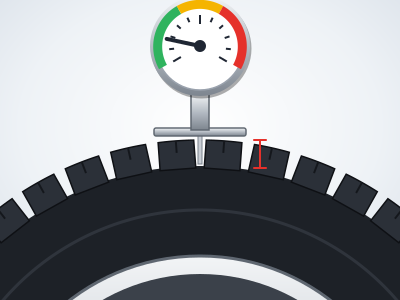
- ABrake hard immediately and steer toward the shoulder
- BAccelerate briefly to stabilise the vehicle before braking
- CSteer sharply away from the blown tyre to compensate for the pull
- DGrip the steering wheel firmly, ease off the accelerator gradually, keep the vehicle straight, and coast to a controlled stop off the road
Answer and explanation in the bank
- Q24Penalties and fines
A driver in Oman wants to make a call while the vehicle is moving. What is the legal way to do so?
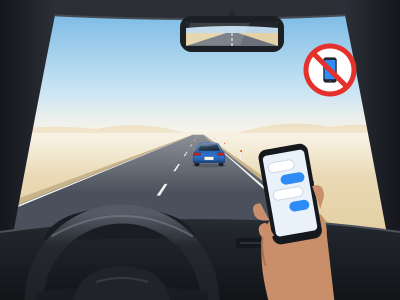
- AUse a properly fitted hands-free system or Bluetooth device
- BHold the phone with one hand and steer with the other
- CPull onto the hard shoulder and make the call quickly
- DAsk a passenger to hold the phone near the driver's ear
Answer and explanation in the bank
- Q25Motorcycle control
How does carrying a pillion passenger affect the motorcycle's stopping distance?
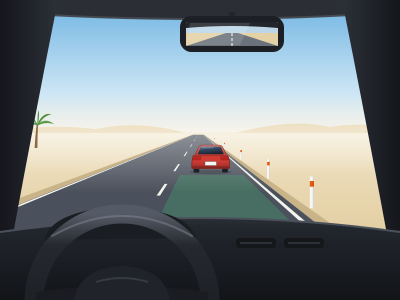
- AIt reduces stopping distance because the extra weight improves tyre grip
- BIt has no effect on stopping distance
- CIt increases stopping distance because the combined weight requires more braking force
- DIt reduces stopping distance only if the pillion leans forward
Answer and explanation in the bank
- Q26Motorcycle safety
In which position alongside a car should a motorcyclist avoid riding for an extended period?
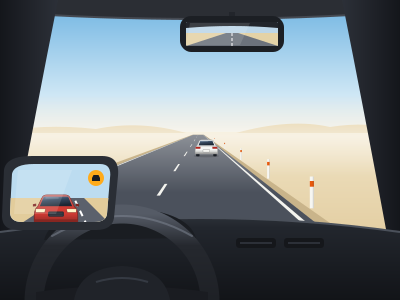
- ASlightly ahead of the car, visible in the driver's front view
- BWell behind the car, visible in the rear-view mirror
- CDirectly alongside the car's B-pillar (between the front and rear doors), which is a blind spot for the driver
- DPosition relative to a car does not create a blind spot risk
Answer and explanation in the bank
- Q27Road signs and signals
What does this sign tell you about the road you are on?
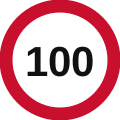
- AYou must maintain at least 100 km/h
- BThe maximum speed here is 100 km/h
- CYou are entering a 100-metre speed-camera zone
- DThe road ahead has a 100-metre visibility limit
Answer and explanation in the bank
- Q28Traffic rules
On which side do you overtake another vehicle in Oman?
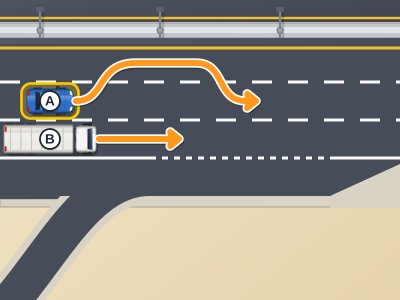
- AOn the right (you pass on their right side)
- BOn the left (you move into the left lane and pass on their left side)
- CEither side, whichever is clearer
- DOnly on dual carriageways; no rule applies on single-lane roads
Answer and explanation in the bank
- Q29Right of way
You are joining a motorway from a slip road (on-ramp). Who has priority?
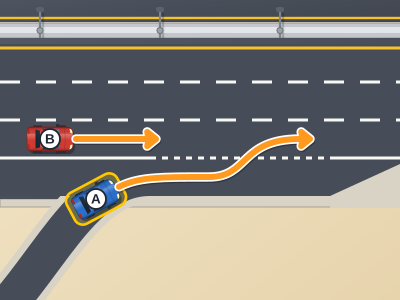
- AVehicles on the slip road have priority because they are accelerating
- BTraffic already on the motorway has priority
- CThe vehicle that has been waiting the longest has priority
- DPriority is shared equally between both streams of traffic
Answer and explanation in the bank
- Q30Safe driving
Which of the following tyre conditions significantly increases the risk of a blowout on Oman's hot roads?
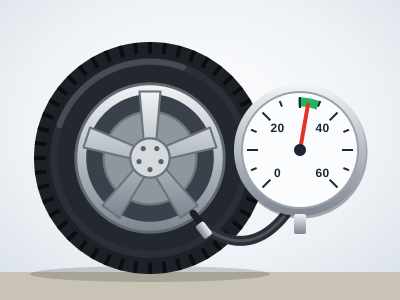
- ASlightly over-inflated tyres that reduce rolling resistance
- BTyres inflated to the manufacturer's recommended pressure
- CSeverely under-inflated tyres that flex excessively and build up heat
- DNew tyres that have not yet been run in for 100 km
Answer and explanation in the bank
Every answer above, with the rule it comes from, plus the full 30-question timed test.
Get the Oman Driving Test Questions PDF (ROP) - OMR 3What this test covers
Topics include road signs, traffic signals, right of way, roundabouts, speed limits, seat belts, fines and penalties, and the safe-driving rules specific to your vehicle category. Full question-by-question feedback with explanations is shown immediately after you finish the test above.
Frequently asked questions
How many questions is the Dhofar Royal Oman Police motorcycle theory test?
The official Royal Oman Police motorcycle theory test in Dhofar has 30 questions and you need 23 correct (75%) to pass. This practice test has 30 questions.
Is this the real exam?
These are practice questions to help you revise, written to the published rules and to what candidates report from the real test. They are not the official Oman exam and the real question bank, format, fees and pass mark are set by the Royal Oman Police, and can change. Always confirm the current requirements with your driving school or the Royal Oman Police.
Is this practice test free?
The first 10 questions are free, with no signup, and each shows the answer and the reason. The full 30-question test, timed, is in the Oman Driving Test Questions PDF (ROP) (OMR 3, one payment), with every question in the bank.
What does the Dhofar motorcycle theory test cover?
Road signs, traffic signals, right of way, roundabouts, speed limits, seat belts, penalties and safe-driving rules, plus the handling and safety topics specific to your vehicle.