

Dhofar Royal Oman Police Motorcycle
Practice mode· Motorcycle skillsDhofar Royal Oman Police - Oman Motorcycle Control Practice Test
Focused practice on motorcycle handling: balance, braking, cornering, gear use, positioning and low-speed control. Build the machine skills the theory test expects.
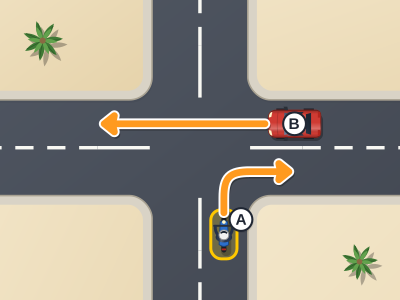
You are riding at 60 km/h and want to turn right. Which handlebar should you push forward to initiate the turn?
The other 10 questions in this test
Read them all. The answer and the reason for each, and the timed 20-question run, are in the Oman Driving Test Questions PDF (ROP).
- Q11Motorcycle control
What commonly causes a motorcycle to wobble or weave at very low speeds?
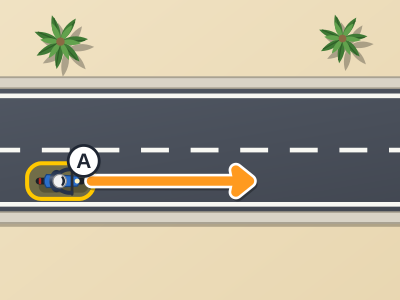
- AInsufficient forward momentum making gyroscopic stabilisation weak, requiring active balance input
- BEngine vibration at low rpm
- COver-inflation of the front tyre
- DIncorrect helmet fit affecting the rider's head position
Answer and explanation in the bank
- Q12Motorcycle control
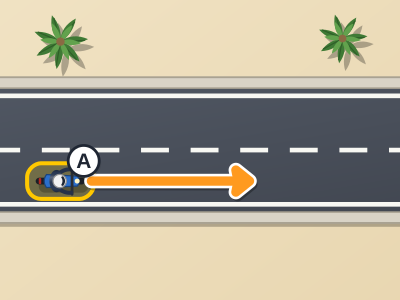
Where is the ideal seating position for a pillion passenger on a motorcycle?
- ASitting as far back as possible to reduce weight on the front
- BSitting centrally on the pillion seat, holding the rider's waist or grab rail, with feet on the pillion footpegs
- CSitting sidesaddle with one foot on the road for balance
- DStanding on the footpegs for better visibility
Answer and explanation in the bank
- Q13Motorcycle control
On a hill start, which control should you use to hold the motorcycle stationary before moving off?
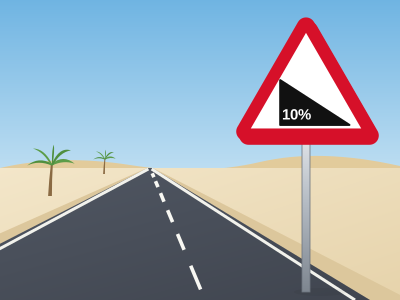
- AThe rear brake, applied with the foot while bringing the clutch to the friction point
- BThe front brake lever, held with the right hand
- CThe engine in gear with the clutch fully released
- DBoth feet flat on the ground
Answer and explanation in the bank
- Q14Motorcycle control
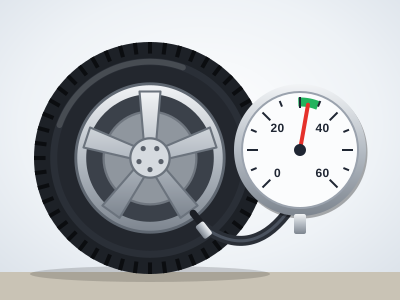
How does an under-inflated tyre affect a motorcycle's handling in corners?
- AIt increases grip by creating a larger contact patch and improves cornering
- BIt has no effect in corners if the speed is kept low
- CIt only affects the ride comfort, not the handling
- DIt makes the tyre squirm and reduces cornering stability, increasing the risk of a sudden loss of grip
Answer and explanation in the bank
- Q15Motorcycle control
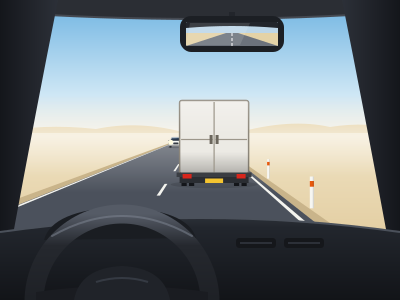
Before overtaking another vehicle, what should a motorcyclist do regarding gear selection?
- ASelect the highest gear to maintain a safe top speed
- BStay in the same gear and use maximum throttle
- CSelect neutral and coast past the vehicle
- DSelect a lower gear to ensure strong acceleration throughout the overtake
Answer and explanation in the bank
- Q16Motorcycle control
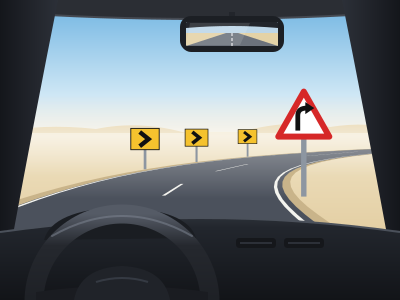
When is the best moment to downshift to a lower gear on a motorcycle?
- AAfter the motorcycle has already come to a complete stop
- BWhile braking before a corner or junction, matching engine speed to road speed
- CWhile leaning at maximum angle in a corner
- DOnly when the engine warning light comes on
Answer and explanation in the bank
- Q17Motorcycle control
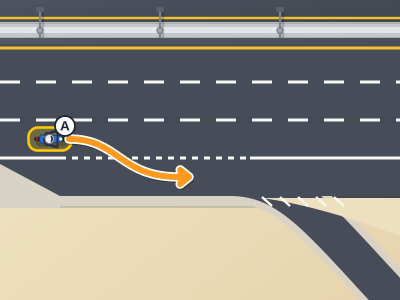
When exiting a corner, how should you apply the throttle?
- AApply full throttle at the apex of the corner to maximise acceleration
- BKeep the throttle closed until fully upright, then open fully
- CRoll on the throttle gradually and progressively as you begin to straighten the bike
- DApply throttle and then brake simultaneously to control speed
Answer and explanation in the bank
- Q18Motorcycle control
How should the front brake be applied to achieve maximum stopping power without locking the wheel?
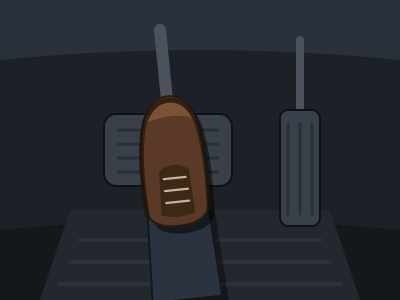
- AGrab the lever as hard as possible immediately
- BApply the front brake in rapid on-off pulses
- CApply it gently at constant pressure regardless of speed
- DSqueeze progressively and firmly, ramping up pressure as weight transfers to the front
Answer and explanation in the bank
- Q19Motorcycle control
Compared to a car of similar mass, a motorcycle's braking distance on a dry road is generally...
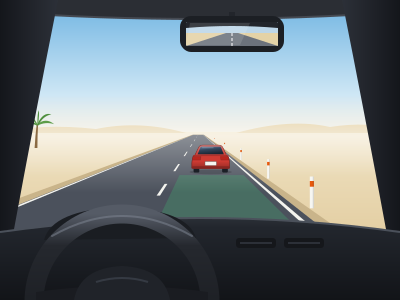
- AShorter, because motorcycles are lighter and more agile
- BIdentical to a car under all conditions
- CLonger, because a motorcycle has only two tyres with a smaller combined contact patch and less stability under hard braking
- DShorter only when the front brake alone is used
Answer and explanation in the bank
- Q20Motorcycle control
To maintain balance while riding at walking pace through a car park, a motorcyclist should...
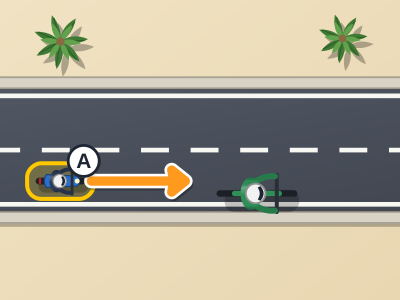
- ALook well ahead toward the exit, not down at the ground immediately in front
- BKeep both feet hovering just above the ground
- CKeep the throttle fully closed and coast
- DSteer with body-weight shifts only
Answer and explanation in the bank
Every answer above, with the rule it comes from, plus the full 20-question timed test.
Get the Oman Driving Test Questions PDF (ROP) - OMR 1.5What this test covers
Topics include road signs, traffic signals, right of way, roundabouts, speed limits, seat belts, fines and penalties, and the safe-driving rules specific to your vehicle category. Full question-by-question feedback with explanations is shown immediately after you finish the test above.
Frequently asked questions
How many questions is the Dhofar Royal Oman Police motorcycle theory test?
The official Royal Oman Police motorcycle theory test in Dhofar has 30 questions and you need 23 correct (75%) to pass. This practice test has 20 questions.
Is this the real exam?
These are practice questions to help you revise, written to the published rules and to what candidates report from the real test. They are not the official Oman exam and the real question bank, format, fees and pass mark are set by the Royal Oman Police, and can change. Always confirm the current requirements with your driving school or the Royal Oman Police.
Is this practice test free?
The first 10 questions are free, with no signup, and each shows the answer and the reason. The full 20-question test, timed, is in the Oman Driving Test Questions PDF (ROP) (OMR 1.5, one payment), with every question in the bank.
What does the Dhofar motorcycle theory test cover?
Road signs, traffic signals, right of way, roundabouts, speed limits, seat belts, penalties and safe-driving rules, plus the handling and safety topics specific to your vehicle.