

Musandam Royal Oman Police Light vehicle
Practice mode· Right of way & safetyMusandam Royal Oman Police - Oman Safe Driving Practice Test
Covers defensive driving, following distances, fatigue, visibility, adverse weather and hazard awareness. Safe driving habits save lives and keep your licence clean.
You are driving at 100 km/h on a dry Omani highway. Roughly how much total distance do you need to stop completely, including reaction time?
The other 12 questions in this test
Read them all. The answer and the reason for each, and the timed 22-question run, are in the Oman Driving Test Questions PDF (ROP).
- Q11Safe driving
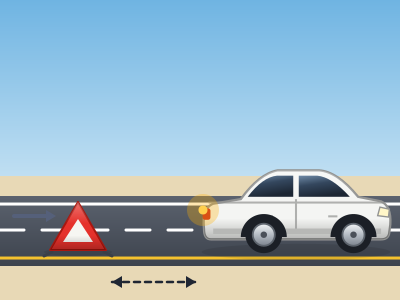
Your vehicle breaks down on an Omani highway. What is the correct procedure?
- AStop in the lane where the breakdown occurred and raise the bonnet to signal distress
- BTry to continue driving slowly to the next town rather than stopping on the highway
- CStand behind the vehicle to direct traffic around it until help arrives
- DSwitch on hazard lights immediately, coast to the hard shoulder if possible, exit from the side away from traffic, place a warning triangle 50 to 100 metres behind the vehicle, and call for assistance
Answer and explanation in the bank
- Q12Safe driving
How far behind your broken-down vehicle should you place a warning triangle on an Omani highway?
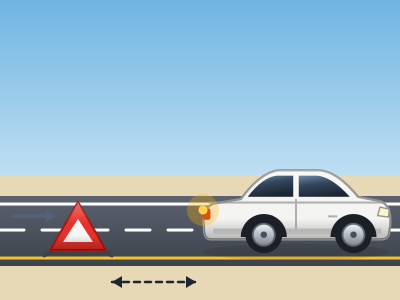
- AAt least 50 to 100 metres, or further if speed limit is high, to give approaching drivers enough warning
- BDirectly behind the vehicle so it is clearly seen
- CExactly 10 metres; any further and drivers may not associate it with your vehicle
- DWarning triangles are not required in Oman
Answer and explanation in the bank
- Q13Safe driving
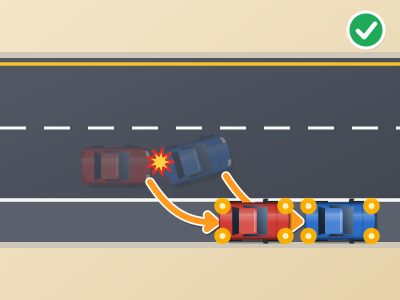
You are involved in a minor road crash in Oman with no serious injuries. What are the correct first steps?
- ALeave the vehicles exactly where they are, take photos, and exchange details with the other driver without calling police
- BMove vehicles to a safe position off the road if possible, switch on hazard lights, ensure everyone is safe, and contact the Royal Oman Police to report the incident
- CDrive away if damage appears minor to avoid traffic disruption
- DArgue with the other driver to establish fault before calling anyone
Answer and explanation in the bank
- Q14Safe driving
You arrive at a crash on an Omani road. One person is trapped and unconscious. What is your immediate priority before any first aid?
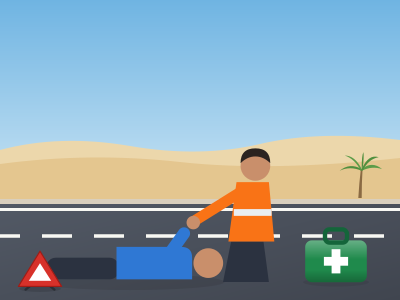
- AMake the scene safe (hazard lights, warning triangle, prevent fire or secondary crashes) and call emergency services immediately
- BDrag the unconscious person clear of the vehicle as quickly as possible
- CBegin CPR immediately without assessing the scene
- DWait for emergency services to arrive before doing anything
Answer and explanation in the bank
- Q15Safe driving
Your vehicle begins to aquaplane (hydroplane) on a wet Omani road. What is the correct response?
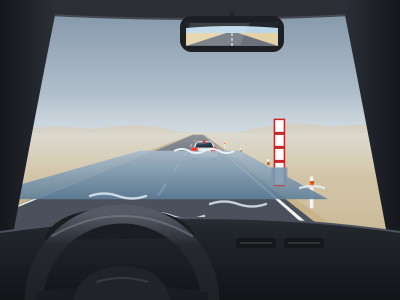
- ABrake firmly and steer in the direction of the slide
- BEase off the accelerator gently and hold the steering straight; do not brake hard until the tyres regain contact with the road
- CAccelerate to push through the water film more quickly
- DSteer sharply left to exit the deep water
Answer and explanation in the bank
- Q16Safe driving
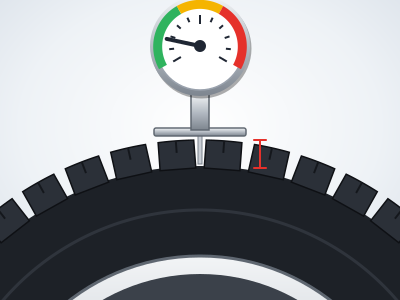
Which tyre condition most increases the risk of aquaplaning on wet Omani roads after rain?
- ASlightly over-inflated tyres that improve wet-weather grip
- BNew tyres with deep tread channels
- CWorn tyres with shallow tread that cannot channel water away from the contact patch
- DTyres inflated to the manufacturer's specification
Answer and explanation in the bank
- Q17Safe driving
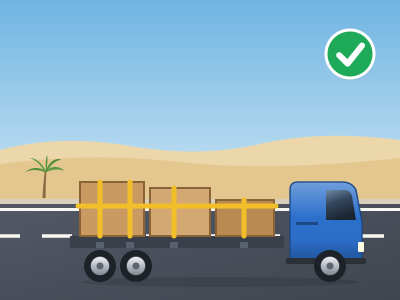
You are loading a roof rack on your vehicle for a trip across Oman. What is the key safety requirement for the load?
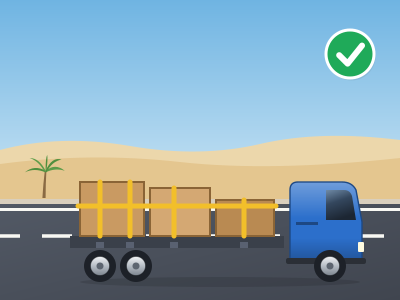
- AThe load must be securely fastened so it cannot shift, slide, or fall from the vehicle in any driving condition
- BThe load is safe as long as it does not exceed the width of the vehicle
- COnly loads over 100 kg need to be secured
- DLoads on roof racks do not need to be secured if you drive under 80 km/h
Answer and explanation in the bank
- Q18Safe driving
How does a heavy roof-rack load affect vehicle handling on Omani highways?
- AIt lowers the centre of gravity, improving stability at high speeds
- BIt has no significant effect on handling if the load is centred
- CIt raises the centre of gravity, making the vehicle more prone to rolling over in sharp corners or sudden lane changes
- DIt only affects fuel consumption, not safety
Answer and explanation in the bank
- Q19Safe driving
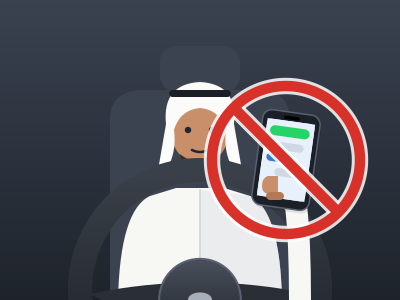
Using a hand-held mobile phone while driving in Oman is:
- APermitted if you hold the phone at the bottom of the steering wheel where it is out of sight
- BPermitted at speeds under 60 km/h in urban areas
- COnly prohibited on highways, not on city roads
- DIllegal and significantly increases crash risk by distracting the driver from the road
Answer and explanation in the bank
- Q20Safe driving
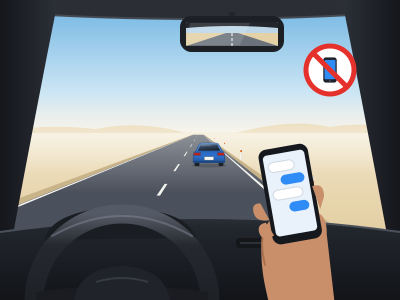
Apart from mobile phones, which of the following distractions represents a serious risk for drivers on Omani roads?
- AListening to music through the car's own speakers at a moderate volume
- BUsing cruise control on a motorway
- CEating or drinking, adjusting the radio or GPS, or turning to talk to rear passengers
- DChecking wing mirrors during normal driving
Answer and explanation in the bank
- Q21Safe driving
Which of the following eco-driving techniques also improves safety on Omani roads?
- ASwitching off the engine at high speed to save fuel on downhill sections
- BInflating tyres well above the maximum recommended pressure to reduce rolling resistance
- CAnticipating traffic flow to avoid harsh braking and accelerating smoothly
- DDrafting directly behind large trucks to reduce aerodynamic drag
Answer and explanation in the bank
- Q22Safe driving
What is the eco-driving benefit of maintaining correct tyre pressure on an Omani vehicle?
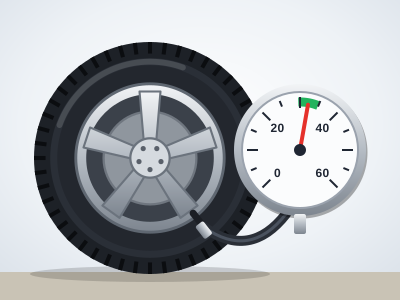
- AHigher pressure always saves more fuel regardless of the manufacturer's recommendation
- BCorrect pressure reduces rolling resistance and improves fuel efficiency, while also improving safety and tyre life
- CTyre pressure only affects tyre wear, not fuel consumption
- DLower pressure improves fuel economy on desert sand tracks
Answer and explanation in the bank
Every answer above, with the rule it comes from, plus the full 22-question timed test.
Get the Oman Driving Test Questions PDF (ROP) - OMR 3What this test covers
Topics include road signs, traffic signals, right of way, roundabouts, speed limits, seat belts, fines and penalties, and the safe-driving rules specific to your vehicle category. Full question-by-question feedback with explanations is shown immediately after you finish the test above.
Frequently asked questions
How many questions is the Musandam Royal Oman Police light vehicle theory test?
The official Royal Oman Police light vehicle theory test in Musandam has 30 questions and you need 23 correct (75%) to pass. This practice test has 22 questions.
Is this the real exam?
These are practice questions to help you revise, written to the published rules and to what candidates report from the real test. They are not the official Oman exam and the real question bank, format, fees and pass mark are set by the Royal Oman Police, and can change. Always confirm the current requirements with your driving school or the Royal Oman Police.
Is this practice test free?
The first 10 questions are free, with no signup, and each shows the answer and the reason. The full 22-question test, timed, is in the Oman Driving Test Questions PDF (ROP) (OMR 3, one payment), with every question in the bank.
What does the Musandam light vehicle theory test cover?
Road signs, traffic signals, right of way, roundabouts, speed limits, seat belts, penalties and safe-driving rules, plus the handling and safety topics specific to your vehicle.