

Muscat Royal Oman Police Truck & Bus
Timed mock exam· Full mock examsMuscat Royal Oman Police - Oman Truck & Bus Theory Mock Test 1
A full 30-question timed practice exam for the Oman heavy-vehicle (truck and bus) theory test. Covers shared road rules and signs plus heavy-vehicle handling and safety. Aim for 23/30 (75%) to pass.
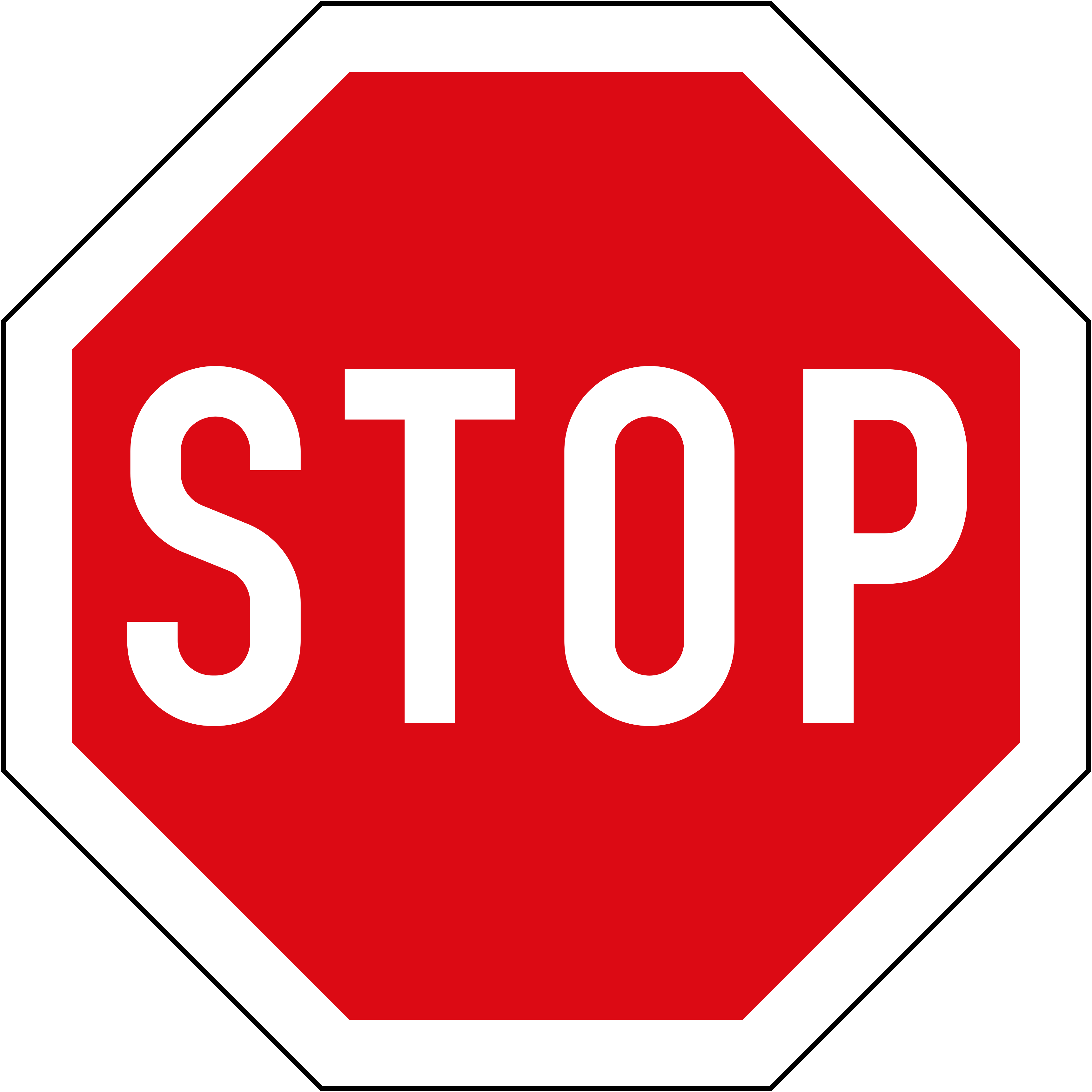
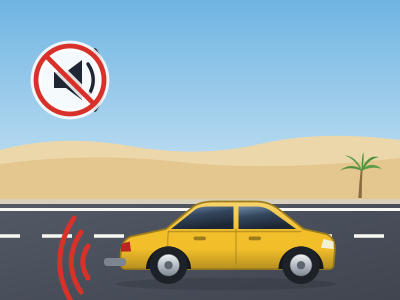
What does this sign mean and what must you do?
The other 20 questions in this test
Read them all. The answer and the reason for each, and the timed 30-question run, are in the Oman Driving Test Questions PDF (ROP).
- Q11Penalties and fines
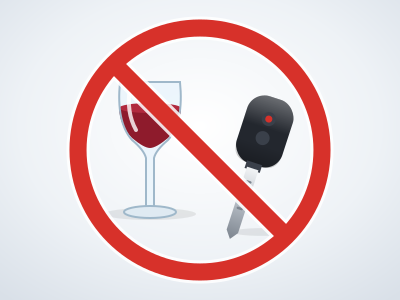
A driver is found to have consumed any amount of alcohol before driving in Oman. What is the most likely outcome?
- AA verbal warning if it is a first offence
- BA fixed penalty notice with no court appearance needed
- CCriminal prosecution, a heavy fine, vehicle impoundment and possible imprisonment
- DA compulsory driving awareness course and a small fine
Answer and explanation in the bank
- Q12Heavy vehicle
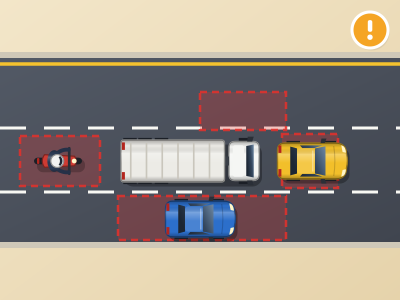
On which side of a left-hand-drive truck driving in Oman is the largest blind spot located?
- AThe left (driver) side
- BThe right (passenger) side
- CDirectly behind the trailer
- DDirectly in front of the cab
Answer and explanation in the bank
- Q13Road signs and signals
What does this sign mean?
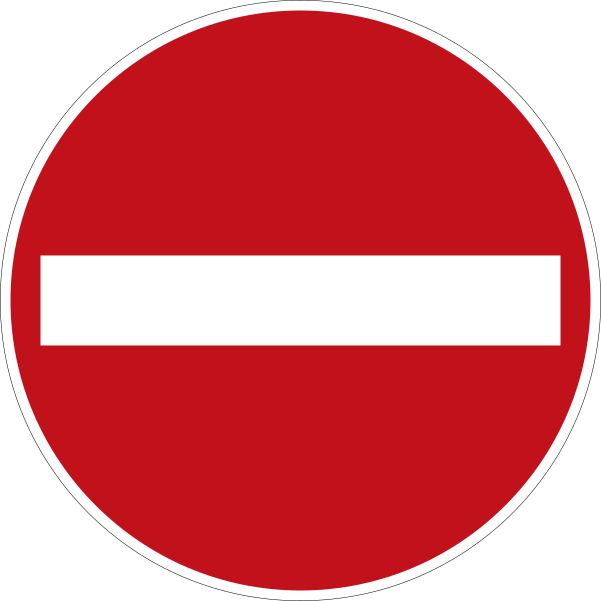
- ANo entry for heavy vehicles only
- BRoad closed for repairs
- CNo entry for all vehicles
- DOne-way road ahead
Answer and explanation in the bank
- Q14Traffic rules
Which lane is the fast or overtaking lane on an Oman dual carriageway?
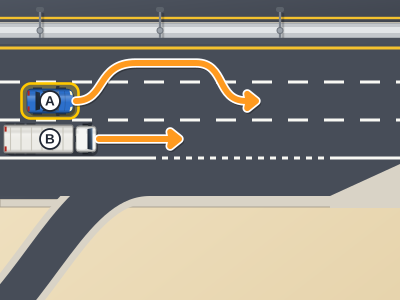
- AThe left lane
- BThe right lane
- CThe hard shoulder
- DBoth lanes are equally for cruising
Answer and explanation in the bank
- Q15Right of way
An ambulance with blue lights flashing and siren sounding is approaching from behind you. What should you do?
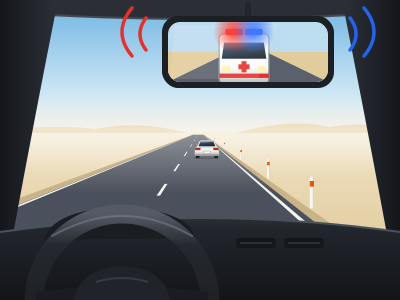
- ASpeed up to stay ahead of the ambulance
- BContinue at your current speed; the ambulance will go around you
- CMove to the right, slow down and stop safely to let it pass
- DMove to the left and stop immediately
Answer and explanation in the bank
- Q16Safe driving
You are driving at 100 km/h on a dry Omani highway. Roughly how much total distance do you need to stop completely, including reaction time?
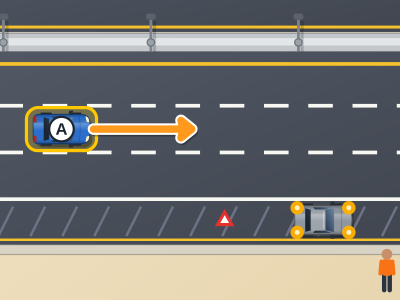
- AAround 140 metres (about 35 car lengths)
- BAround 40 metres
- CAround 80 metres
- DAround 200 metres
Answer and explanation in the bank
- Q17Penalties and fines
An expatriate living in Oman is convicted of driving under the influence of alcohol. Which additional consequence is most likely to follow?
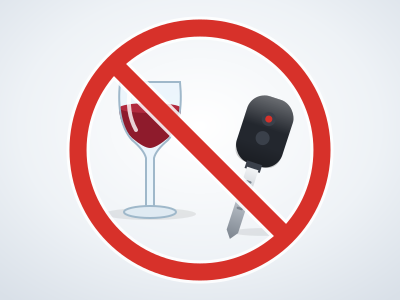
- AOnly a fine, as expats are treated identically to Omani nationals with no immigration consequences
- BA driving ban for six months and no further action
- CCommunity service in lieu of imprisonment
- DDeportation after serving any prison sentence or paying any fine
Answer and explanation in the bank
- Q18Heavy vehicle
What is brake fade and when is it most likely to occur on a heavy vehicle?
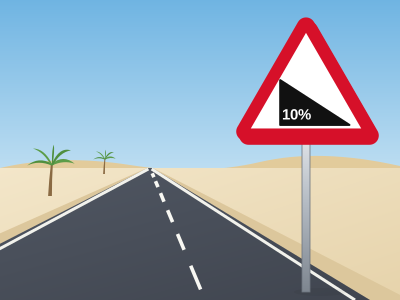
- AAir leaking from the brake chambers, most likely in cold weather
- BA reduction in braking power caused by overheated brake drums or discs, most likely on long descents
- CA gradual increase in brake pedal travel caused by worn brake shoes
- DThe ABS cutting in repeatedly on a wet road
Answer and explanation in the bank
- Q19Road signs and signals
You reach a junction marked with this sign and no traffic is visible. What is the correct action?
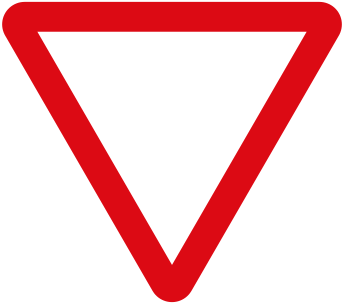
- AStop for at least 5 seconds then go
- BSlow down, check carefully in all directions, then proceed when safe
- CMaintain normal speed as the road is clear
- DSound the horn to warn any hidden traffic then proceed
Answer and explanation in the bank
- Q20Traffic rules
A driver is in the right lane at the posted speed limit on an Oman highway. A faster vehicle comes up close behind them. What should the slower driver do?
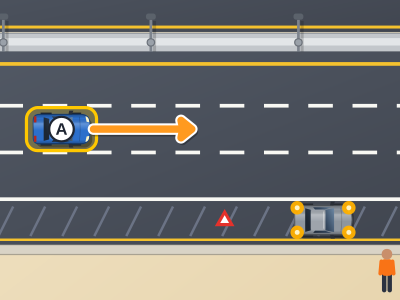
- ASpeed up to match the faster vehicle
- BStay in the right lane; it is the other driver's problem
- CMove briefly to the left lane to allow the faster vehicle to pass, then return right
- DBrake suddenly to signal dissatisfaction
Answer and explanation in the bank
- Q21Right of way
A pedestrian is already crossing on a marked zebra crossing. What must you do?
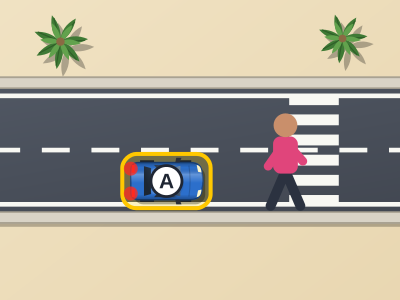
- ASound the horn and continue if the pedestrian is walking slowly
- BDrive around the pedestrian if there is enough space
- CStop and wait until the pedestrian has fully crossed
- DFlash your headlights to warn the pedestrian to hurry
Answer and explanation in the bank
- Q22Safe driving
Why are stopping distances longer on wet roads than on dry roads?
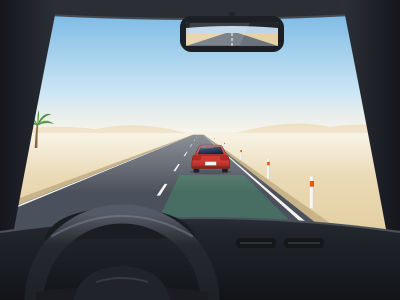
- AWater reduces friction between the tyres and road surface, so brakes take longer to slow the vehicle
- BRain makes drivers press the brake pedal more gently
- CWet roads make ABS switch off automatically
- DHeavy rain increases the weight of the vehicle
Answer and explanation in the bank
- Q23Penalties and fines
Police stop a driver in Oman and confirm the presence of alcohol. What typically happens to the vehicle?
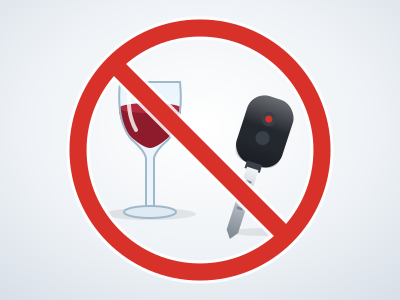
- AIt is escorted to the driver's home by a police officer
- BThe driver's passenger is allowed to drive it away immediately
- CIt is released after the driver pays an on-the-spot fine
- DIt is impounded by authorities pending legal proceedings
Answer and explanation in the bank
- Q24Heavy vehicle
When descending a steep mountain pass such as the Jebel Akhdar road in a loaded truck, what is the correct technique to control speed?
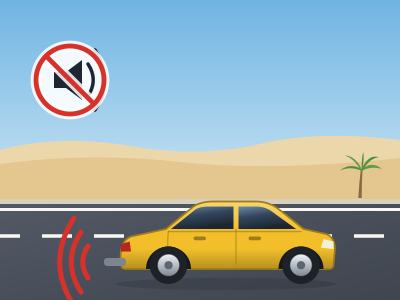
- ASelect a low gear before the descent and use the engine or exhaust brake as the primary speed control, applying service brakes briefly and sparingly if needed
- BSelect a high gear to reduce engine braking and use the service brakes continuously to maintain a steady speed
- CDisengage the clutch and coast in neutral, braking gently to keep the speed constant
- DSelect the highest gear available to keep engine speed low and reduce fuel consumption
Answer and explanation in the bank
- Q25Road signs and signals
What is the maximum speed you may drive where this sign is displayed?
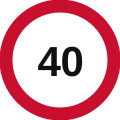
- A40 mph
- B40 km/h
- C30 km/h
- D50 km/h
Answer and explanation in the bank
- Q26Traffic rules
At a roundabout in Oman, who has priority?
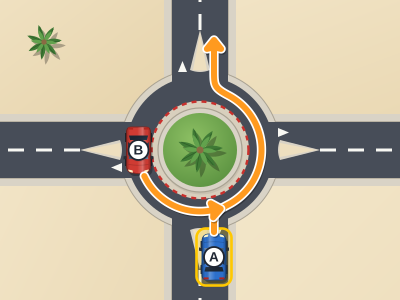
- ATraffic already on the roundabout, which approaches from your left
- BTraffic entering the roundabout
- CThe vehicle that arrives at the junction first
- DVehicles approaching from the right of the roundabout
Answer and explanation in the bank
- Q27Right of way
You reach a junction controlled by a STOP sign and white stop line. What are you required to do?
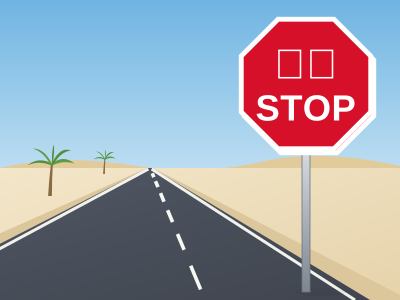
- AStop completely at the line, check for traffic, and move only when safe
- BSlow down and proceed if no vehicle is visible
- CGive way to traffic on the right only, then proceed without stopping
- DStop only if another vehicle is actually approaching
Answer and explanation in the bank
- Q28Safe driving
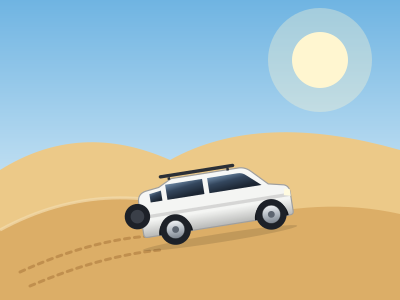
You turn onto a gravel track on the edge of a desert in Oman. How should your braking technique change compared to driving on tarmac?
- ABrake harder and faster to compensate for the loose surface
- BUse the handbrake instead of the footbrake on gravel
- CBrake earlier and more gently, as gravel provides far less grip and the vehicle can slide sideways
- DNo change is needed; modern ABS handles gravel automatically
Answer and explanation in the bank
- Q29Penalties and fines
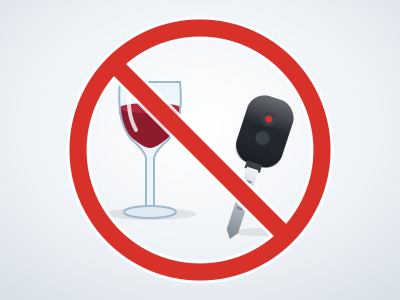
A friend claims that one drink before driving is safe in Oman because the limit is similar to Europe. Is this correct?
- AYes, Oman allows a small amount of alcohol before driving
- BYes, but only for drivers over 25 years old
- CNo, but only spirits are prohibited, not beer or wine
- DNo, Oman has zero tolerance and any alcohol detected is illegal
Answer and explanation in the bank
- Q30Heavy vehicle
What is an exhaust brake (also called a Jake brake or engine retarder) used for on a heavy truck?
- ATo increase engine power when climbing steep hills with a heavy load
- BTo slow the vehicle using engine compression resistance, reducing reliance on the service brakes during descents
- CTo lock the rear wheels for controlled emergency stops
- DTo release the parking brake automatically when the driver selects a drive gear
Answer and explanation in the bank
Every answer above, with the rule it comes from, plus the full 30-question timed test.
Get the Oman Driving Test Questions PDF (ROP) - OMR 3What this test covers
Topics include road signs, traffic signals, right of way, roundabouts, speed limits, seat belts, fines and penalties, and the safe-driving rules specific to your vehicle category. Full question-by-question feedback with explanations is shown immediately after you finish the test above.
Frequently asked questions
How many questions is the Muscat Royal Oman Police truck & bus theory test?
The official Royal Oman Police truck & bus theory test in Muscat has 30 questions and you need 23 correct (75%) to pass. This practice test has 30 questions.
Is this the real exam?
These are practice questions to help you revise, written to the published rules and to what candidates report from the real test. They are not the official Oman exam and the real question bank, format, fees and pass mark are set by the Royal Oman Police, and can change. Always confirm the current requirements with your driving school or the Royal Oman Police.
Is this practice test free?
The first 10 questions are free, with no signup, and each shows the answer and the reason. The full 30-question test, timed, is in the Oman Driving Test Questions PDF (ROP) (OMR 3, one payment), with every question in the bank.
What does the Muscat truck & bus theory test cover?
Road signs, traffic signals, right of way, roundabouts, speed limits, seat belts, penalties and safe-driving rules, plus the handling and safety topics specific to your vehicle.