

Muscat Royal Oman Police Truck & Bus
Practice mode· Heavy vehicle skillsMuscat Royal Oman Police - Oman Heavy Vehicle Skills Test 1
First set of questions on truck and bus operation: braking distances, load stability, blind spots, turning space and vehicle checks. Master the skills unique to heavy vehicles.
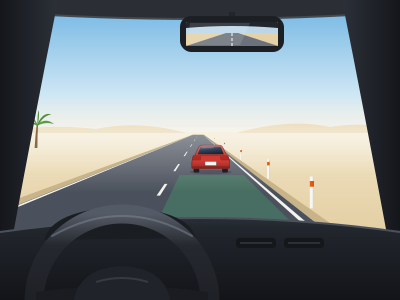
A fully loaded truck requires a much longer stopping distance than a car at the same speed. What is the primary reason for this?
The other 12 questions in this test
Read them all. The answer and the reason for each, and the timed 22-question run, are in the Oman Driving Test Questions PDF (ROP).
- Q11Heavy vehicle
What is the maximum permitted vehicle height generally applied to trucks in Oman before a special permit is required?
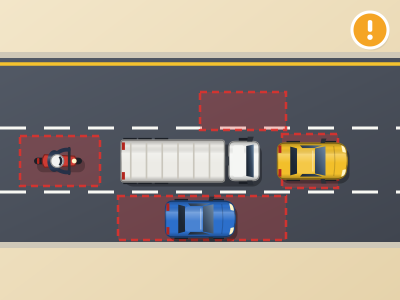
- A3.5 metres with no permit option available
- B5.0 metres with a standard load permit
- C4.8 metres for any flatbed truck regardless of load
- D4.2 metres
Answer and explanation in the bank
- Q12Heavy vehicle
What is the maximum permitted vehicle width generally applied in Oman without a special permit?
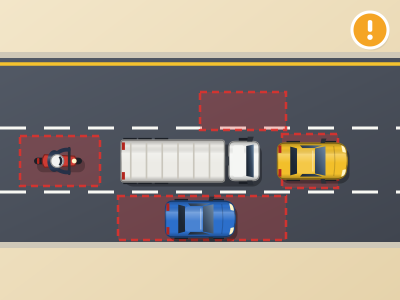
- A2.5 metres
- B3.0 metres for all commercial vehicles
- C2.0 metres, the same as a standard car
- DWidth limits do not exist in Oman; only length is regulated
Answer and explanation in the bank
- Q13Heavy vehicle
Why does a long articulated truck need to swing wide before turning right at an intersection in Oman?

- AThe steering is located on the right side of the cab, requiring extra space to operate
- BThe length of the trailer increases the turning radius of the front wheels
- CSwinging wide reduces tail swing on the left side of the vehicle
- DThe trailer wheels cut the corner and follow a tighter path than the cab, so the driver must position the cab wide to allow the trailer to clear the kerb
Answer and explanation in the bank
- Q14Heavy vehicle
What is tail swing and when is it most dangerous for pedestrians?
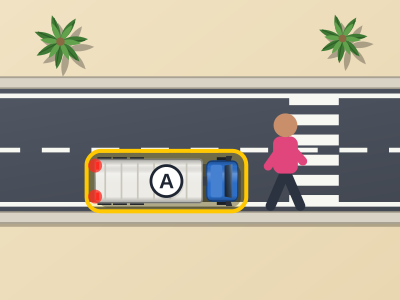
- AThe trailer swings toward the outside of a bend at high speed; most dangerous on motorways
- BThe rear of the cab swings outward in the opposite direction to the turn; it is most dangerous during slow tight turns such as when entering or leaving a depot
- CThe drive axle shifts sideways during heavy braking; most dangerous on wet roads
- DThe fifth wheel slides forward during cornering; most dangerous when unladen
Answer and explanation in the bank
- Q15Heavy vehicle
What should a truck driver do before reversing in a restricted area such as a loading bay?
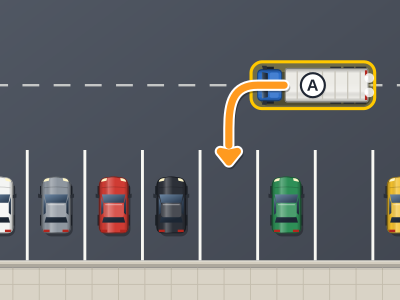
- ASound the horn three times and then reverse without assistance
- BReverse quickly to minimise the time the vehicle is in the way of other traffic
- CRely on the reversing camera alone, as this provides a full view of all hazards
- DUse a trained banksman (guide person) who has a clear view of the rear of the vehicle and direct radio or hand-signal contact with the driver
Answer and explanation in the bank
- Q16Heavy vehicle
A heavy vehicle's load shifts toward the right during a left-hand curve. What is the greatest risk?
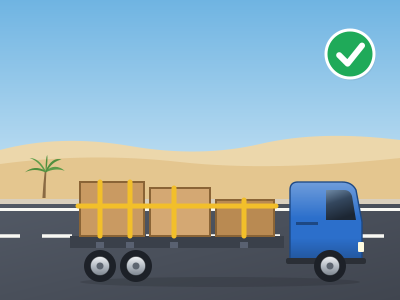
- AThe right-side tyres bursting from the sudden weight transfer
- BSteering lock due to the shift overloading the front axle
- CRollover due to a raised centre of gravity combined with centrifugal force pushing the vehicle outward
- DThe trailer uncoupling from the fifth wheel because of side load
Answer and explanation in the bank
- Q17Heavy vehicle
Which condition most increases the rollover risk of a high-sided heavy vehicle?
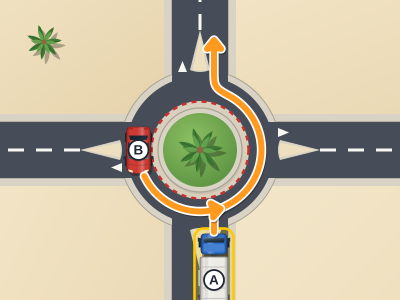
- ATaking a roundabout or bend at excessive speed with a high centre of gravity load
- BDriving in a straight line on a level road while fully loaded
- CAscending a steep hill in a low gear with a partial load
- DOperating the air-suspension system on an uneven surface
Answer and explanation in the bank
- Q18Heavy vehicle
Strong cross-winds pose a particular risk to which type of heavy vehicle?
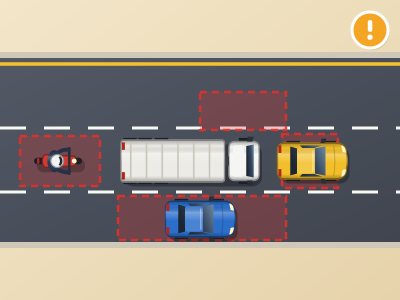
- ALow-loader trailers carrying construction machinery, because of their wide stance
- BHigh-sided vehicles such as curtainsiders, box trailers, and car transporters, especially when unladen
- CTanker trucks carrying liquids, because the liquid increases the sail area
- DFlatbed trucks, because the load is not enclosed and catches wind from below
Answer and explanation in the bank
- Q19Heavy vehicle
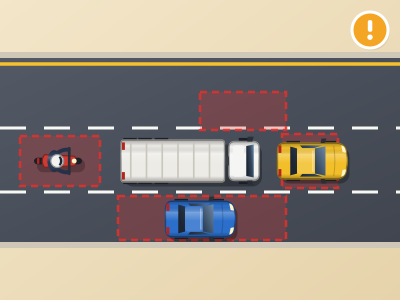
What is the function of the fifth wheel on an articulated truck?
- AIt is a spare wheel mounted under the chassis for use in a tyre blowout
- BIt is an additional steering axle fitted behind the drive axle to aid tight turns
- CIt is the air-pressure governor that limits maximum brake force on the trailer
- DIt is the coupling plate on the tractor that connects to and supports the kingpin of the semi-trailer, allowing it to pivot
Answer and explanation in the bank
- Q20Heavy vehicle
What checks must a driver carry out after coupling a semi-trailer to the tractor unit?
- ACheck the tyre pressures on the trailer and adjust the fifth wheel height only
- BDrive forward slowly to feel whether the coupling is firm, then proceed to load
- CConfirm the trailer registration number matches the permit and then depart
- DConfirm the kingpin is locked in the fifth wheel, check all air and electrical lines are connected, and test trailer brakes before moving
Answer and explanation in the bank
- Q21Heavy vehicle
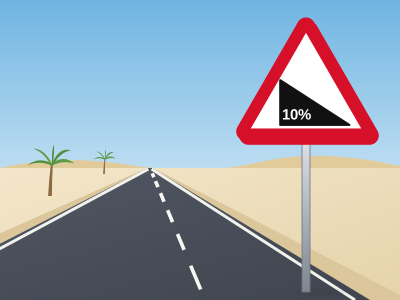
When uncoupling a semi-trailer on uneven ground, what is the greatest safety risk?
- AThe tractor moving forward and damaging the fifth wheel plate
- BThe air lines disconnecting and releasing the parking brakes on the tractor
- CThe kingpin jamming and preventing future coupling with a different tractor
- DThe trailer rolling away or toppling over once it is no longer supported by the tractor, especially if the landing legs are not fully extended on a slope
Answer and explanation in the bank
- Q22Heavy vehicle
What is the purpose of a split (range) gearbox on a heavy truck?
- AIt allows the truck to switch between front-wheel drive and rear-wheel drive depending on road conditions
- BIt doubles the number of available gear ratios, allowing the driver to match engine speed precisely to road speed and load conditions
- CIt provides a secondary braking system when the main air brakes overheat
- DIt divides engine torque equally between the drive axles to prevent wheel spin
Answer and explanation in the bank
Every answer above, with the rule it comes from, plus the full 22-question timed test.
Get the Oman Driving Test Questions PDF (ROP) - OMR 3What this test covers
Topics include road signs, traffic signals, right of way, roundabouts, speed limits, seat belts, fines and penalties, and the safe-driving rules specific to your vehicle category. Full question-by-question feedback with explanations is shown immediately after you finish the test above.
Frequently asked questions
How many questions is the Muscat Royal Oman Police truck & bus theory test?
The official Royal Oman Police truck & bus theory test in Muscat has 30 questions and you need 23 correct (75%) to pass. This practice test has 22 questions.
Is this the real exam?
These are practice questions to help you revise, written to the published rules and to what candidates report from the real test. They are not the official Oman exam and the real question bank, format, fees and pass mark are set by the Royal Oman Police, and can change. Always confirm the current requirements with your driving school or the Royal Oman Police.
Is this practice test free?
The first 10 questions are free, with no signup, and each shows the answer and the reason. The full 22-question test, timed, is in the Oman Driving Test Questions PDF (ROP) (OMR 3, one payment), with every question in the bank.
What does the Muscat truck & bus theory test cover?
Road signs, traffic signals, right of way, roundabouts, speed limits, seat belts, penalties and safe-driving rules, plus the handling and safety topics specific to your vehicle.