

Al Khor General Directorate of Traffic Motorcycle
Practice mode· Motorcycle skillsAl Khor General Directorate of Traffic - Qatar Motorcycle Control Practice Test
Focused practice on motorcycle handling: balance, braking, cornering, gear use, positioning and low-speed control. Build the machine skills the theory test expects.
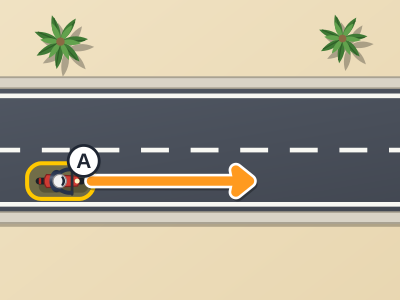
When riding very slowly in a car park, which technique best helps you maintain balance?
The other 10 questions in this test
Read them all. The answer and the reason for each, and the timed 20-question run, are in the Qatar Driving Theory Online Practice Bank.
- Q11Motorcycle control
At 80 km/h in dry conditions, what is a reasonable minimum following distance for a motorcycle?
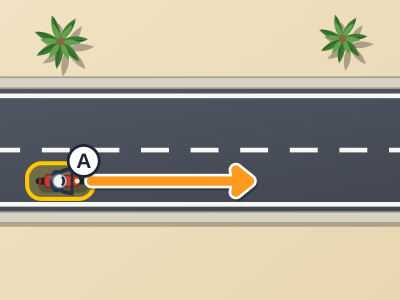
- AAt least 3 seconds of following time, increased further in poor conditions
- BOne car length (approximately 4 metres)
- CHalf a second of following time is sufficient because motorcycles stop quickly
- DFollowing distance only matters for cars; motorcycles can stop instantly
Answer and explanation in the bank
- Q12Motorcycle control
When is it appropriate to use engine braking on a motorcycle rather than the brakes alone?
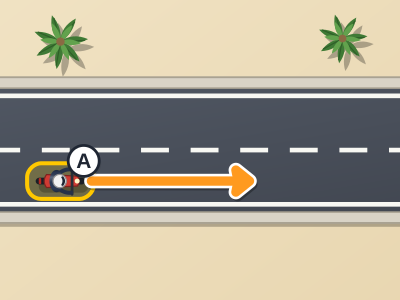
- AOnly in emergencies when the brakes have failed
- BEngine braking should never be used because it wears the drivetrain faster than brakes
- CWhen slowing progressively for junctions, on long downhills, or when you want to smooth speed reduction without pitching weight forward sharply
- DOnly when the motorcycle is in neutral
Answer and explanation in the bank
- Q13Motorcycle control
How does a rear-wheel skid differ from a front-wheel skid in terms of rider recovery?
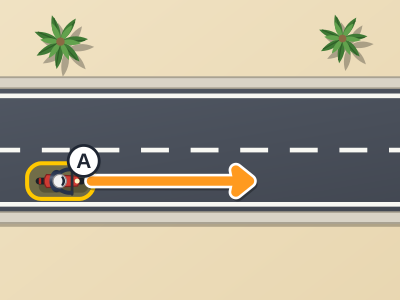
- AA rear skid can often be corrected by easing the brake gradually; a front skid is almost unrecoverable once it begins and usually results in a fall
- BA front skid is easy to correct by turning the bars into the skid; a rear skid cannot be corrected
- CBoth skids are equally recoverable if the rider steers into the slide
- DNeither skid can occur at speeds below 50 km/h
Answer and explanation in the bank
- Q14Motorcycle control
Approximately what proportion of a motorcycle's braking force comes from the front brake on a dry, flat road?
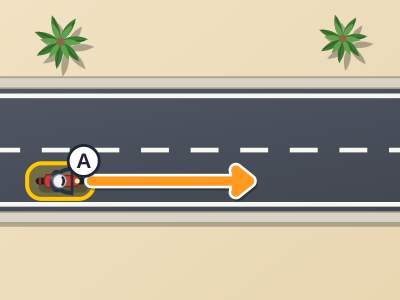
- AAround 20 percent; the rear brake does most of the work
- BExactly 50 percent split between front and rear
- CAround 70 percent, because forward weight transfer loads the front tyre
- DThe front brake provides no stopping force and is used only for balance
Answer and explanation in the bank
- Q15Motorcycle control
What effect does excessive speed have on the lean angle required for a given corner radius?
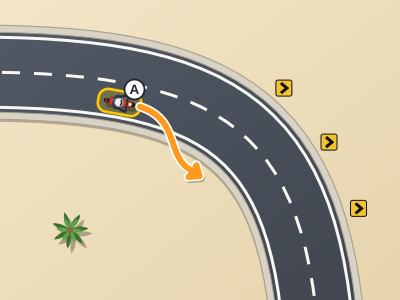
- AHigher speed requires greater lean angle to maintain the same radius, using more of the tyre's grip limit
- BHigher speed reduces the lean angle needed because aerodynamic forces push the bike upright
- CSpeed has no effect on the lean angle for a fixed corner radius
- DHigher speed allows a smaller radius with less lean due to gyroscopic stabilisation
Answer and explanation in the bank
- Q16Motorcycle control
What is the effect of riding over a loose surface (such as sand or gravel) while braking?
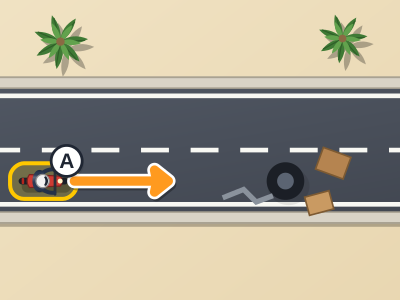
- AThe tyre loses contact with the road surface beneath the loose material, dramatically reducing grip and greatly increasing the risk of skidding
- BThe loose material increases friction and improves braking
- CBraking performance is unaffected if tyre pressure is correct
- DOnly the front brake is affected; the rear brake still works normally
Answer and explanation in the bank
- Q17Motorcycle control
What does it mean to 'feather' the front brake lever?
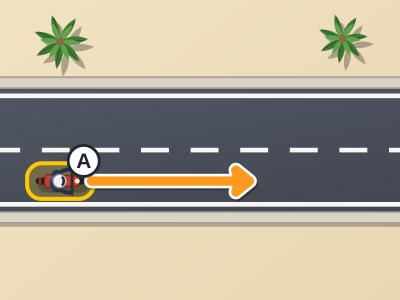
- ATo release the brake lever fully while still moving to cool the pads
- BTo apply the lever with a progressive, light squeeze that gradually increases pressure rather than grabbing it suddenly
- CTo use only the first 10 mm of lever travel and hold it there
- DTo pump the lever rapidly to prevent lockup on all motorcycles
Answer and explanation in the bank
- Q18Motorcycle control
A pillion passenger should move their body in which way when the motorcycle is cornering?
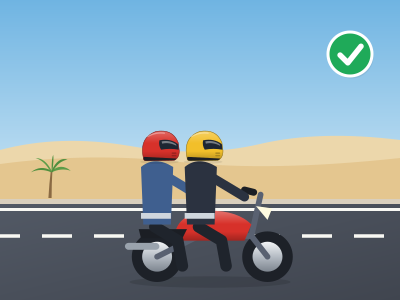
- ALean sharply to the outside to help counterbalance the motorcycle's lean
- BStay bolt upright to keep their weight centered regardless of the lean angle
- CMove with the rider, looking over the rider's shoulder in the direction of the corner, without independent leaning
- DLean independently toward the inside of the corner to help the bike turn tighter
Answer and explanation in the bank
- Q19Motorcycle control
When selecting a gear for a particular speed, what indicates you are in too high a gear?
- AThe engine sounds quiet and smooth at all throttle positions
- BThe engine feels laboured and unresponsive when you open the throttle; the bike accelerates slowly or vibrates at low rpm
- CThe speedometer reads higher than the gear indicator shows
- DThe rear brake requires more force than usual
Answer and explanation in the bank
- Q20Motorcycle control
On a steep uphill start with a pillion passenger, why is the risk of stalling higher than on a flat road?
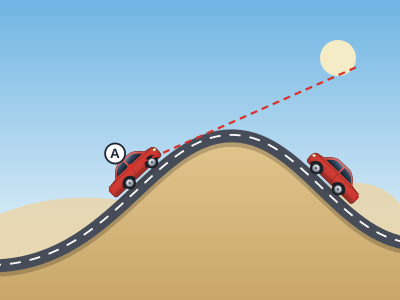
- AThe rear wheel receives less traction on uphill surfaces
- BGravity and the extra mass require significantly more engine torque and clutch slip to move the bike from rest, making calibration harder
- CThe fuel pump struggles to supply fuel when the bike is tilted uphill
- DHill starts do not actually increase the stalling risk compared to flat ground
Answer and explanation in the bank
Every answer above, with the rule it comes from, plus the full 20-question timed test.
Get the Qatar Driving Theory Online Practice Bank - QAR 39What this test covers
Topics include road signs, traffic signals, right of way, roundabouts, speed limits, seat belts, fines and penalties, and the safe-driving rules specific to your vehicle category. Full question-by-question feedback with explanations is shown immediately after you finish the test above.
Frequently asked questions
How many questions is the Al Khor General Directorate of Traffic motorcycle theory test?
The official General Directorate of Traffic motorcycle theory test in Al Khor has 40 questions and you need 37 correct (92.5%) to pass. This practice test has 20 questions.
Is this the real exam?
These are practice questions to help you revise, written to the published rules and to what candidates report from the real test. They are not the official Qatar exam and the real question bank, format, fees and pass mark are set by the General Directorate of Traffic (Ministry of Interior) and the driving schools, and can change. Always confirm the current requirements with your driving school or the traffic department (for example via the Metrash service).
Is this practice test free?
The first 10 questions are free, with no signup, and each shows the answer and the reason. The full 20-question test, timed, is in the Qatar Driving Theory Online Practice Bank (QAR 39, one payment), with every question in the bank.
What does the Al Khor motorcycle theory test cover?
Road signs, traffic signals, right of way, roundabouts, speed limits, seat belts, penalties and safe-driving rules, plus the handling and safety topics specific to your vehicle.