

Asir General Dept. of Traffic Light vehicle
Practice mode· Right of way & safetyAsir General Dept. of Traffic - Saudi Safe Driving Practice Test
Covers defensive driving, following distances, fatigue, visibility, adverse weather and hazard awareness. Safe driving habits save lives and keep your licence clean.
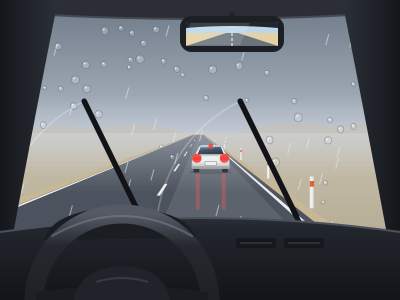
You are driving on a wet road after rain. What is the safest approach to braking?
The other 12 questions in this test
Read them all. The answer and the reason for each, and the timed 22-question run, are in the Saudi Driving Theory Online Practice Bank.
- Q11Safe driving
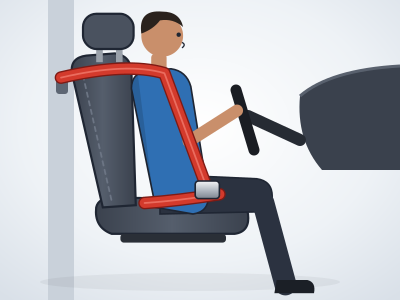
Airbags are designed to work alongside seat belts, not replace them. What happens if you do not wear a seat belt in a car fitted with airbags?
- AThe airbag will protect you just as well as with a seat belt
- BThe airbag will not deploy at all if no seat belt is worn
- CThe airbag only inflates for belted occupants
- DThe airbag may seriously injure an unbelted occupant who is thrown forward into it
Answer and explanation in the bank
- Q12Safe driving
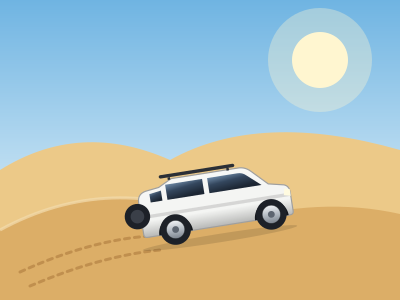
What is the safest approach to a long desert drive of 400 km or more in Saudi Arabia?
- ADrive non-stop to reach the destination as quickly as possible
- BIncrease speed to shorten time behind the wheel
- CDrive only at midday to make the most of daylight
- DPlan rest stops every 2 hours, carry sufficient water, and travel during cooler parts of the day if possible
Answer and explanation in the bank
- Q13Safe driving
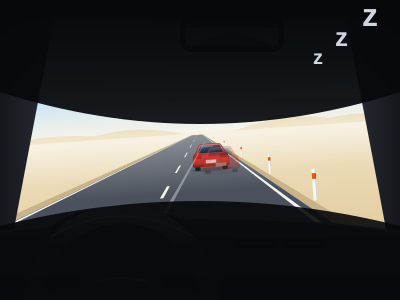
Which of the following is a reliable early warning sign that a driver is becoming dangerously fatigued?
- AFeeling thirsty
- BFeeling slightly warm inside the vehicle
- CNoticing the fuel gauge is low
- DRepeatedly blinking, micro-sleeps, or not remembering the last few kilometres driven
Answer and explanation in the bank
- Q14Safe driving
You are driving in dense fog on a Saudi highway. Which lights should you use?
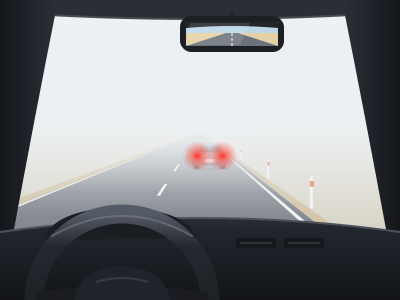
- AHigh beam headlights to see as far ahead as possible
- BHazard warning lights only
- CLow beam headlights and front fog lights if fitted
- DNo lights, as they reflect off the fog
Answer and explanation in the bank
- Q15Safe driving
A severe sandstorm reduces visibility to near zero while you are on the highway. What is the safest action?
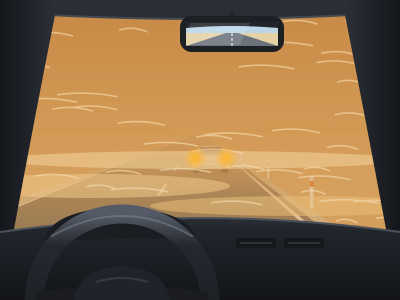
- APull completely off the road onto the hard shoulder, switch off your lights, and activate hazard lights
- BPull as far off the road as safely possible, switch off the engine and headlights, keep hazard lights on, and stay inside with seat belt on
- CKeep driving slowly with hazard lights on so you do not get hit from behind
- DIncrease speed to exit the sandstorm zone quickly
Answer and explanation in the bank
- Q16Safe driving
When driving in heavy rain at night, why should you avoid using full high beam headlights?
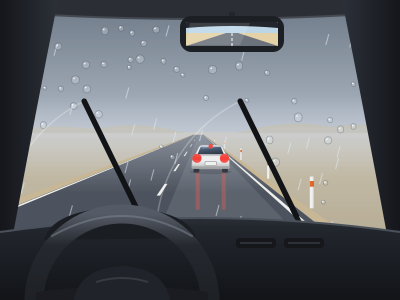
- AHigh beams use more fuel in wet conditions
- BHigh beams are illegal on wet roads in Saudi Arabia
- CRain droplets reflect high beam light back at the driver, creating glare that reduces visibility
- DHigh beams cause the windscreen wipers to operate incorrectly
Answer and explanation in the bank
- Q17Safe driving
You are approaching oncoming traffic at night whose driver has not dipped their high beams. What should you do?
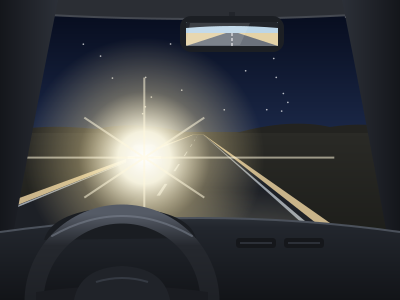
- AFlash your high beams repeatedly until they dim theirs
- BClose one eye and maintain speed
- CSlow down, look towards the left edge of your lane to avoid the glare, and do not retaliate with high beams
- DSteer towards the centre line to get closer and force them to dip
Answer and explanation in the bank
- Q18Safe driving
What is the core principle of defensive driving?
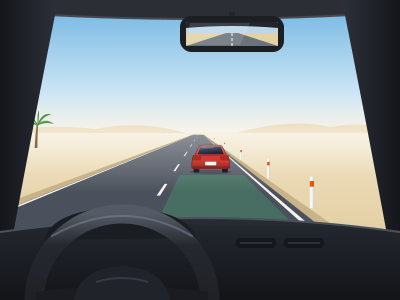
- AAnticipate hazards created by other road users and conditions, and always have an escape plan
- BAlways drive at the speed limit regardless of conditions
- CDrive as close behind the vehicle ahead as possible to prevent others from cutting in
- DUse the horn frequently to warn others of your presence
Answer and explanation in the bank
- Q19Safe driving
Tailgating (following too closely) is dangerous primarily because it does what?
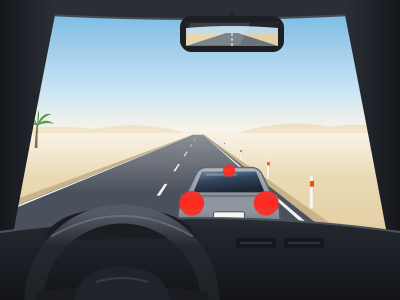
- AIt eliminates the space and time needed to stop safely if the vehicle ahead brakes suddenly
- BIt increases fuel consumption
- CIt reduces the effectiveness of your indicators
- DIt causes tyre overheating
Answer and explanation in the bank
- Q20Safe driving
A vehicle behind you is tailgating aggressively on a highway. What is the safest response?
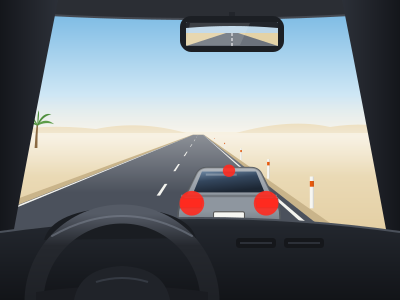
- AIncrease your own following distance ahead so you need to brake less suddenly, and consider moving to a different lane when safe
- BBrake sharply to teach the driver a lesson
- CSpeed up to create more space
- DTurn on your hazard lights to warn them
Answer and explanation in the bank
- Q21Safe driving
You want to overtake a truck on a two-lane road. Before pulling out, how much clear road ahead should you see?
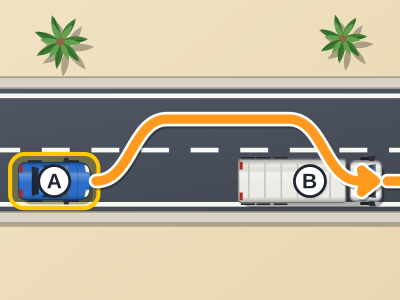
- AEnough to match the truck's speed and pass
- BA gap large enough to accelerate, pass the full length of the truck, return to lane, and have a comfortable margin with oncoming traffic
- CAt least 50 metres
- DThe same distance as the truck's length
Answer and explanation in the bank
- Q22Safe driving
You are overtaking and realise there is not enough space to complete the manoeuvre safely. What should you do?
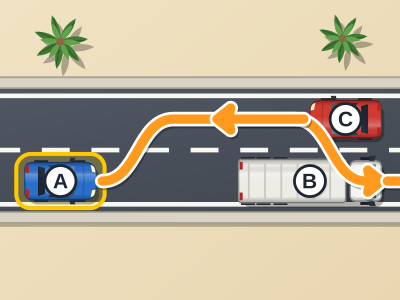
- AAccelerate harder to complete the overtake faster
- BFlash your lights at the oncoming vehicle to ask it to move over
- CSound your horn and continue
- DBrake and return behind the vehicle you were overtaking before it is too late
Answer and explanation in the bank
Every answer above, with the rule it comes from, plus the full 22-question timed test.
Get the Saudi Driving Theory Online Practice Bank - SAR 19What this test covers
Topics include road signs, traffic signals, right of way, roundabouts, speed limits, seat belts, fines and penalties, and the safe-driving rules specific to your vehicle category. Full question-by-question feedback with explanations is shown immediately after you finish the test above.
Frequently asked questions
How many questions is the Asir General Dept. of Traffic light vehicle theory test?
The official General Dept. of Traffic light vehicle theory test in Asir has 35 questions and you need 22 correct (63%) to pass. This practice test has 22 questions.
Is this the real exam?
These are practice questions to help you revise, written to the published rules and to what candidates report from the real test. They are not the official Saudi exam and the real question bank, format, fees and pass mark are set by the General Department of Traffic (Moroor) and the driving schools, and can change. Always confirm the current requirements with your driving school or the traffic department.
Is this practice test free?
The first 10 questions are free, with no signup, and each shows the answer and the reason. The full 22-question test, timed, is in the Saudi Driving Theory Online Practice Bank (SAR 19, one payment), with every question in the bank.
What does the Asir light vehicle theory test cover?
Road signs, traffic signals, right of way, roundabouts, speed limits, seat belts, penalties and safe-driving rules, plus the handling and safety topics specific to your vehicle.