

Hail General Dept. of Traffic Light vehicle
Practice mode· Right of way & safetyHail General Dept. of Traffic - Saudi Safe Driving Practice Test
Covers defensive driving, following distances, fatigue, visibility, adverse weather and hazard awareness. Safe driving habits save lives and keep your licence clean.
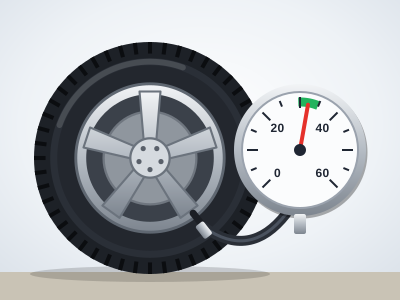
How does driving at high speed in Saudi Arabia's extreme heat affect your tyre pressure?
The other 12 questions in this test
Read them all. The answer and the reason for each, and the timed 22-question run, are in the Saudi Driving Theory Online Practice Bank.
- Q11Safe driving
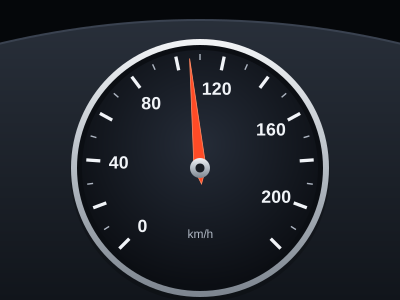
When is it safe to use cruise control on a Saudi highway?
- ADuring rain, fog, or sandstorm to maintain a steady speed
- BOn dry, clear highways with light traffic where you can monitor conditions and disengage quickly
- CAt all times on highways above 100 km/h
- DOnly on toll roads
Answer and explanation in the bank
- Q12Safe driving
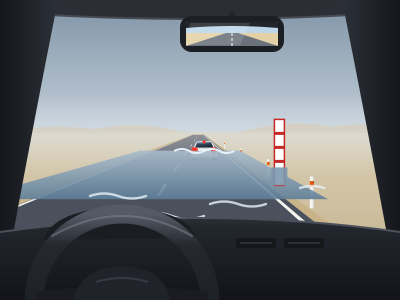
You are crossing a flooded wadi (dry riverbed) that has water flowing across the road. What should you do?
- ADrive through quickly so the water does not have time to affect the engine
- BDrive through slowly in first gear
- CTurn around and find an alternative route; never attempt to cross moving floodwater of unknown depth
- DStop in the middle and assess whether to continue
Answer and explanation in the bank
- Q13Safe driving
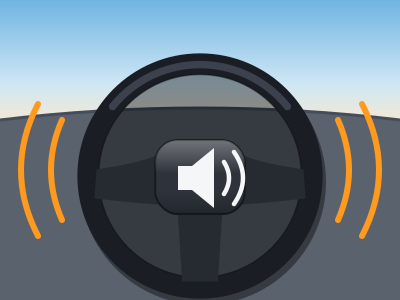
What is the safest position for your hands on the steering wheel for maximum control?
- A12 o'clock position with both hands together at the top
- BOne hand at 6 o'clock for relaxed long-distance driving
- C10 and 2 o'clock position at all times in all vehicles
- D9 and 3 o'clock position (or 8 and 4 for vehicles with large airbags)
Answer and explanation in the bank
- Q14Safe driving
What does a Tyre Pressure Monitoring System (TPMS) warning light in your dashboard mean?
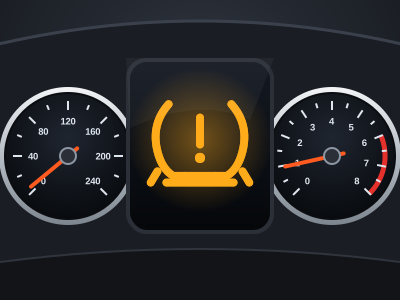
- AYour tyres are over-inflated and you should release air immediately
- BOne or more tyres have dropped significantly below the recommended pressure and you should check and inflate them
- CThe spare tyre has been removed
- DThe tyre tread has reached the wear indicator
Answer and explanation in the bank
- Q15Safe driving
You are the first person to arrive at a collision where a vehicle has caught fire and a person is trapped inside. What is the priority order?
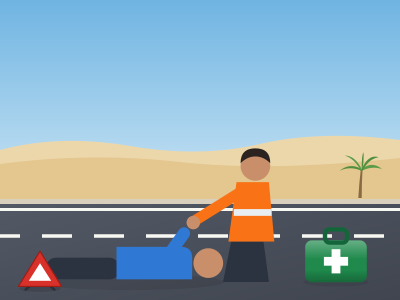
- APhotograph the scene first, then call emergency services, then attempt rescue
- BCall emergency services immediately (911), warn other traffic, and only attempt to free the trapped person if there is no immediate fire danger and you can do so safely
- CAttempt to free the trapped person at all costs before doing anything else
- DWait for other motorists to help before taking any action
Answer and explanation in the bank
- Q16Safe driving
What is the main safety function of the headrest (head restraint) in your seat?
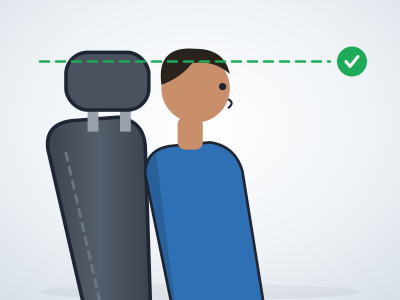
- ATo make long drives more comfortable
- BTo limit rearward head movement and reduce whiplash injury in a rear-end collision
- CTo prevent the driver from falling asleep
- DTo support the neck when checking blind spots
Answer and explanation in the bank
- Q17Safe driving
Before a long desert highway journey, which pre-trip check is most important to minimise breakdown risk?
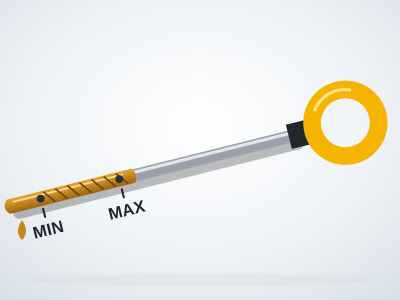
- ACleaning the windscreen and adjusting the radio presets
- BOnly the fuel level; modern vehicles rarely break down
- CChecking tyre condition and pressure, engine oil level, coolant level, brakes, and fuel with a spare for remote sections
- DThe air conditioning refrigerant level only
Answer and explanation in the bank
- Q18Safe driving
You are driving at 120 km/h on the highway when the vehicle in front brakes sharply. If your reaction time is 1.5 seconds, approximately how far do you travel before you even begin braking?
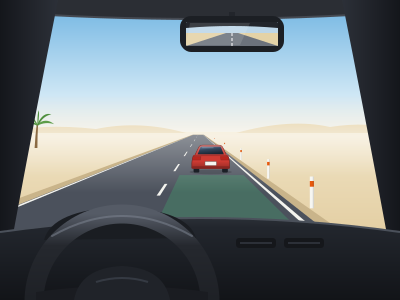
- AAbout 20 metres
- BAbout 100 metres
- CAbout 50 metres
- DAbout 10 metres
Answer and explanation in the bank
- Q19Safe driving
At 100 km/h on a dry road, approximately how far does a typical car travel from the moment the driver sees a hazard to the moment the car stops completely?
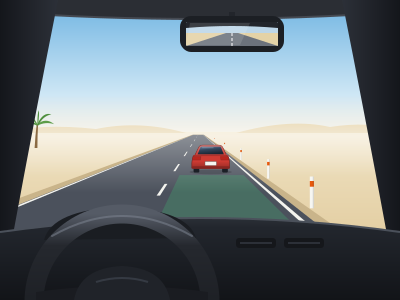
- AAbout 50 metres
- BAbout 70 to 80 metres
- CAbout 130 metres (about 30 m thinking distance plus 100 m braking distance)
- DAbout 300 metres
Answer and explanation in the bank
- Q20Safe driving
How does braking distance change when you double your speed from 60 km/h to 120 km/h?
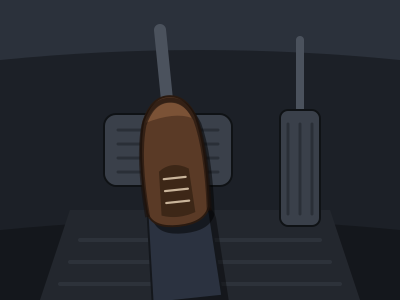
- AIt doubles
- BIt triples
- CIt quadruples (increases by four times)
- DIt stays roughly the same if the road is dry
Answer and explanation in the bank
- Q21Safe driving
You are driving on a wet road after rain. What is the safest approach to braking?
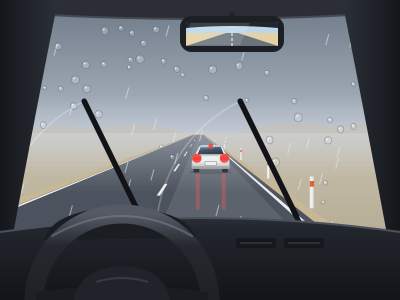
- ABrake firmly and late to maintain speed
- BBrake early, gently and progressively to avoid wheel lock
- CUse only the handbrake on wet roads
- DPump the brakes very rapidly at all times
Answer and explanation in the bank
- Q22Safe driving
Your vehicle enters a sand drift on the highway. What braking technique is safest for a car without ABS?
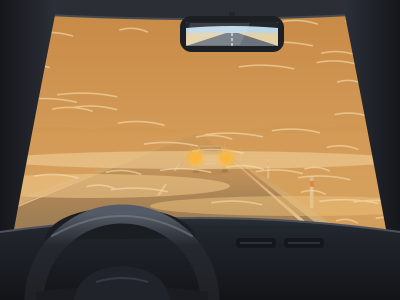
- AStamp the brake pedal hard and hold it
- BRelease the accelerator, steer gently, and if braking is needed use threshold braking (just below wheel lock)
- CApply the handbrake immediately
- DSteer sharply to the right to exit the sand
Answer and explanation in the bank
Every answer above, with the rule it comes from, plus the full 22-question timed test.
Get the Saudi Driving Theory Online Practice Bank - SAR 19What this test covers
Topics include road signs, traffic signals, right of way, roundabouts, speed limits, seat belts, fines and penalties, and the safe-driving rules specific to your vehicle category. Full question-by-question feedback with explanations is shown immediately after you finish the test above.
Frequently asked questions
How many questions is the Hail General Dept. of Traffic light vehicle theory test?
The official General Dept. of Traffic light vehicle theory test in Hail has 35 questions and you need 22 correct (63%) to pass. This practice test has 22 questions.
Is this the real exam?
These are practice questions to help you revise, written to the published rules and to what candidates report from the real test. They are not the official Saudi exam and the real question bank, format, fees and pass mark are set by the General Department of Traffic (Moroor) and the driving schools, and can change. Always confirm the current requirements with your driving school or the traffic department.
Is this practice test free?
The first 10 questions are free, with no signup, and each shows the answer and the reason. The full 22-question test, timed, is in the Saudi Driving Theory Online Practice Bank (SAR 19, one payment), with every question in the bank.
What does the Hail light vehicle theory test cover?
Road signs, traffic signals, right of way, roundabouts, speed limits, seat belts, penalties and safe-driving rules, plus the handling and safety topics specific to your vehicle.