

Makkah General Dept. of Traffic Light vehicle
Practice mode· Road rulesMakkah General Dept. of Traffic - Saudi Road Rules Test 2
Second set of 20 road rules questions covering overtaking, parking, motorway driving, pedestrian crossings and more. Complete both tests for full rules coverage.
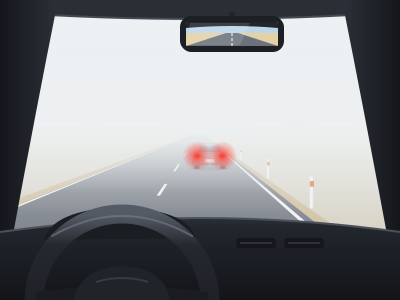
Under what weather conditions are front and rear fog lights permitted to be used in Saudi Arabia?
The other 10 questions in this test
Read them all. The answer and the reason for each, and the timed 20-question run, are in the Saudi Driving Theory Online Practice Bank.
- Q11Traffic rules
When towing a trailer or another vehicle, how should you adjust your speed?
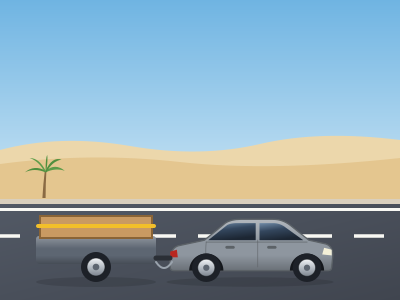
- ADrive at a reduced, steady speed suited to the load, keep to the right lane and allow extra braking distance
- BDrive at the normal limit, because the towing vehicle's brakes are designed for it
- CDrive faster on downhill stretches to stop the load pushing you
- DTowing speed does not matter if hazard lights are on
Answer and explanation in the bank
- Q12Traffic rules
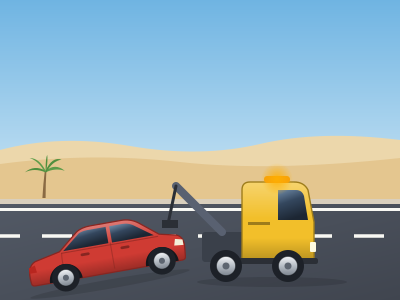
What is a key safety check before towing a broken-down vehicle with a tow rope?
- ACheck that the broken-down vehicle's radio is off
- BMake sure the broken-down vehicle's engine is running
- CEnsure the tow rope is in good condition, the correct length, and clearly marked if it could be a hazard to other drivers
- DThe towing vehicle must always be larger than the towed vehicle
Answer and explanation in the bank
- Q13Traffic rules
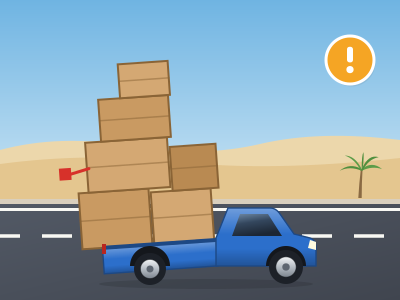
Your load sticks out beyond the rear of your vehicle. What must you do before driving?
- ANothing, provided the load is tied down
- BSecure and cover it, keep within the permitted dimensions, and mark the projecting end clearly (red flag by day, red light at night)
- CDrive only with hazard lights on instead of marking it
- DAny overhang is allowed outside cities
Answer and explanation in the bank
- Q14Traffic rules
On a road with a designated bus lane operating during peak hours, when may a private car enter that lane?
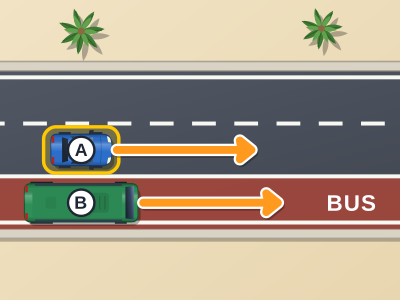
- AAt any time if the lane appears empty
- BWhenever the driver needs to drive faster
- CPrivate cars are always permitted in bus lanes
- DOnly to turn into a road or driveway immediately ahead, if no sign prohibits it
Answer and explanation in the bank
- Q15Traffic rules
What is the purpose of an HOV (High-Occupancy Vehicle) lane on a Saudi highway?
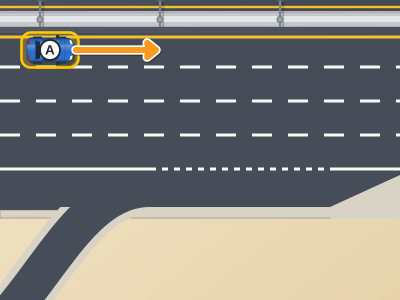
- ATo allow vehicles carrying more than the minimum required number of occupants to use a dedicated lane with less congestion
- BTo allow heavy trucks to travel faster
- CTo provide an emergency lane for police vehicles only
- DHOV lanes are for motorcycles only
Answer and explanation in the bank
- Q16Traffic rules
When is it legal to drive on the hard shoulder of a Saudi motorway?
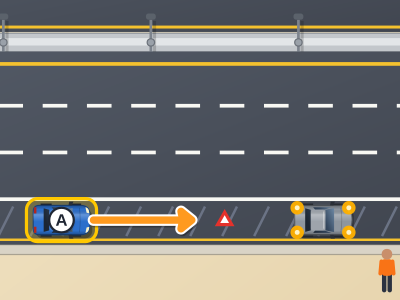
- AOnly in a genuine emergency or when directed by police or traffic management signs
- BWhenever the main lanes are congested
- CTo overtake slow vehicles on the left side
- DAt any time if you drive at 40 km/h or less
Answer and explanation in the bank
- Q17Traffic rules
Your vehicle breaks down on a motorway. What should you do first?
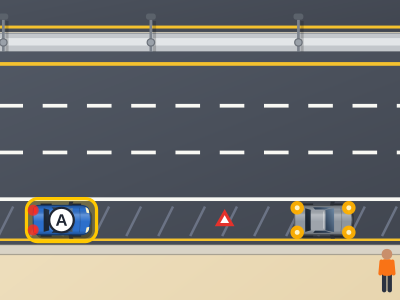
- APull onto the hard shoulder as far right as possible, turn on hazard lights, and use warning triangles
- BStop in the live lane and wait for help
- CAttempt to repair the vehicle in the live lane
- DStand next to your vehicle in the lane to warn drivers
Answer and explanation in the bank
- Q18Traffic rules
A sandstorm is rapidly reducing visibility on a Saudi desert highway. What is the correct response?
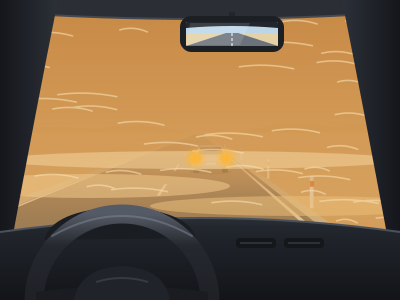
- AReduce speed drastically, turn on headlights and hazard lights, and if safe pull completely off the road
- BSpeed up to pass through the sandstorm quickly
- CStop immediately in your lane and wait
- DTurn off all lights because they reflect sand particles and reduce your own vision
Answer and explanation in the bank
- Q19Traffic rules
You pull off a desert highway during a sandstorm and stop. What is the most important thing to do to avoid another vehicle striking yours?
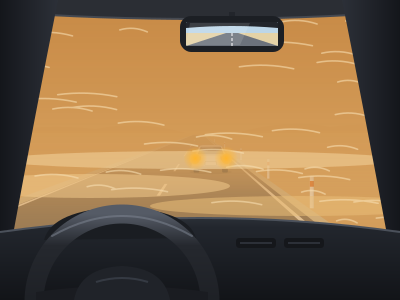
- AMove the vehicle as far from the roadway as possible and keep all exterior lights on
- BTurn off all lights to save battery
- CStay in the vehicle with the engine off and lights off
- DStand outside and wave down other traffic
Answer and explanation in the bank
- Q20Traffic rules
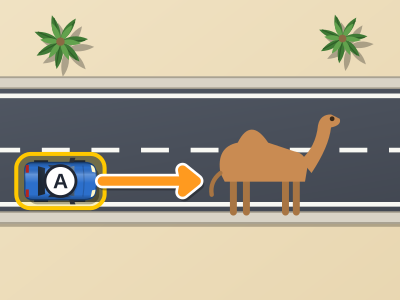
Driving in a desert environment at dusk, why is it particularly important to scan the road ahead carefully?
- ASand dunes appear suddenly on the road after midday
- BCamels and other animals are commonly found on desert roads and are very hard to see in low light
- CThe speed limit doubles at dusk in desert zones
- DRoad markings disappear at dusk in sandy conditions
Answer and explanation in the bank
Every answer above, with the rule it comes from, plus the full 20-question timed test.
Get the Saudi Driving Theory Online Practice Bank - SAR 39What this test covers
Topics include road signs, traffic signals, right of way, roundabouts, speed limits, seat belts, fines and penalties, and the safe-driving rules specific to your vehicle category. Full question-by-question feedback with explanations is shown immediately after you finish the test above.
Frequently asked questions
How many questions is the Makkah General Dept. of Traffic light vehicle theory test?
The official General Dept. of Traffic light vehicle theory test in Makkah has 35 questions and you need 22 correct (63%) to pass. This practice test has 20 questions.
Is this the real exam?
These are practice questions to help you revise, written to the published rules and to what candidates report from the real test. They are not the official Saudi exam and the real question bank, format, fees and pass mark are set by the General Department of Traffic (Moroor) and the driving schools, and can change. Always confirm the current requirements with your driving school or the traffic department.
Is this practice test free?
The first 10 questions are free, with no signup, and each shows the answer and the reason. The full 20-question test, timed, is in the Saudi Driving Theory Online Practice Bank (SAR 39, one payment), with every question in the bank.
What does the Makkah light vehicle theory test cover?
Road signs, traffic signals, right of way, roundabouts, speed limits, seat belts, penalties and safe-driving rules, plus the handling and safety topics specific to your vehicle.