

Najran General Dept. of Traffic Light vehicle
Practice mode· Road rulesNajran General Dept. of Traffic - Saudi Road Rules Test 2
Second set of 20 road rules questions covering overtaking, parking, motorway driving, pedestrian crossings and more. Complete both tests for full rules coverage.
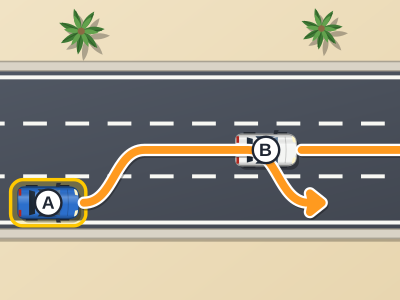
On a Saudi highway, when are you allowed to overtake on the right side of another vehicle?
The other 10 questions in this test
Read them all. The answer and the reason for each, and the timed 20-question run, are in the Saudi Driving Theory Online Practice Bank.
- Q11Traffic rules
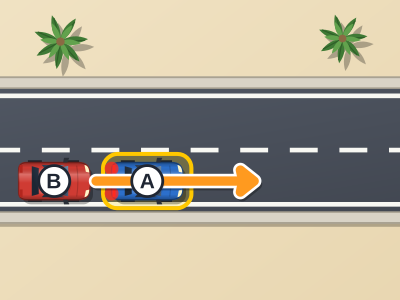
A driver in front of you brakes heavily. You maintain a safe following distance and stop without colliding. The driver behind you, however, rear-ends you. Who is generally considered at fault for the rear collision?
- AThe driver who struck you from behind, for failing to maintain a safe following distance
- BYou, because you were stationary on the road
- CThe driver ahead who braked, because they caused the chain reaction
- DFault is shared equally among all three drivers
Answer and explanation in the bank
- Q12Traffic rules
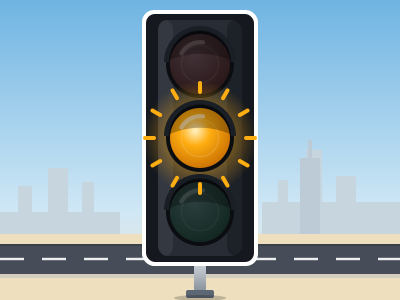
What does a flashing amber (yellow) traffic signal mean?
- AStop immediately and do not cross the line
- BThe signal is about to turn green; accelerate
- CProceed with caution; treat the junction as give-way
- DEmergency vehicles are approaching; pull over
Answer and explanation in the bank
- Q13Traffic rules
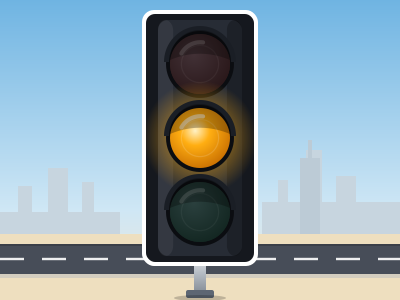
You are approaching a junction and the traffic light turns amber. What should you do?
- AAccelerate to clear the junction before the light turns red
- BStop if you can do so safely; only continue if stopping would be dangerous
- CContinue at the same speed as it is only a warning
- DAmber means go for motorcycles but stop for cars
Answer and explanation in the bank
- Q14Traffic rules
On a motorway, what is the minimum safe gap recommended when following another vehicle at 120 km/h in dry conditions?
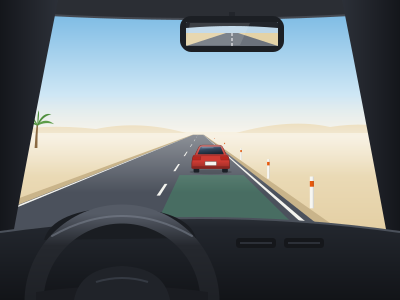
- AOne car length (approximately 5 metres)
- BAt least a two-second gap, which at 120 km/h equates to roughly 67 metres; increase this further in any adverse condition
- C10 metres regardless of speed
- DThere is no recommended gap on highways as drivers are expected to react faster
Answer and explanation in the bank
- Q15Traffic rules
You are driving at night on an unlit rural road. Another vehicle approaches from ahead with full high-beam. You are temporarily blinded. What should you do?
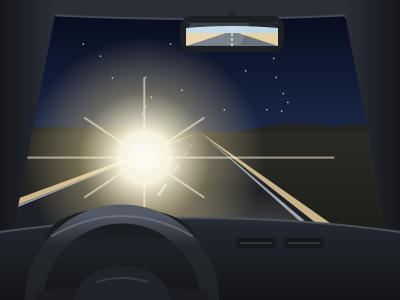
- AFlash your own high-beam repeatedly and maintain speed
- BClose your eyes briefly until the glare passes
- CSwerve to the left to avoid the other vehicle
- DSlow down, look toward the left edge of the road to guide yourself, and do not stop suddenly in the lane
Answer and explanation in the bank
- Q16Traffic rules
When driving in convoy through the Saudi desert, what special precaution should you take regarding following distance?
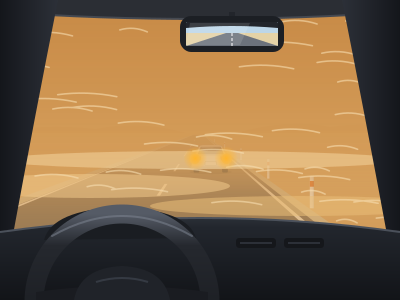
- AIncrease the following distance beyond the normal road rule to account for dust that obscures visibility and loose sand that extends stopping distances
- BDecrease the distance so you do not lose sight of the vehicle ahead in dust
- CDesert convoys have no special following distance rules
- DFollow as closely as possible to use the lead vehicle's tyre tracks as a guide
Answer and explanation in the bank
- Q17Traffic rules
What must you do when an emergency vehicle (ambulance, police, or fire) approaches from behind with lights and siren active?
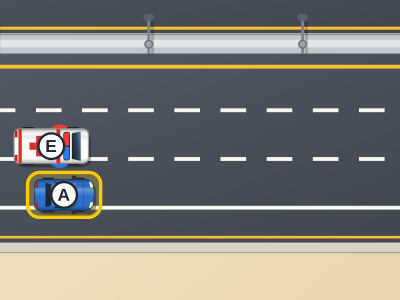
- AMove to the right and slow down or stop to allow the emergency vehicle to pass
- BSpeed up to stay ahead of the emergency vehicle
- CStay in your lane and maintain speed so traffic flow is not disrupted
- DMove to the left lane immediately
Answer and explanation in the bank
- Q18Traffic rules
What does a double continuous yellow centre line on a Saudi road indicate?
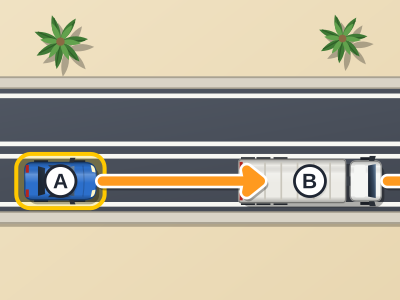
- ANeither direction of traffic may cross or overtake across the line
- BOnly the vehicle on the left may overtake
- CThe road is a two-way road with priority to the right
- DThe line marks the edge of a bus lane
Answer and explanation in the bank
- Q19Traffic rules
You are driving through an underpass (tunnel) and your vehicle breaks down. What must you NOT do?
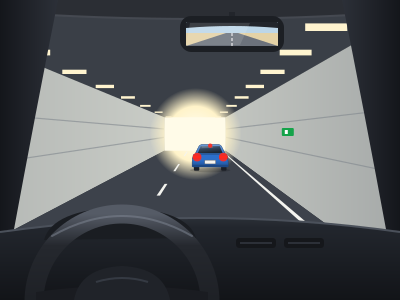
- ASwitch on hazard lights and attempt to reach the nearest emergency exit
- BCall emergency services immediately
- CLeave the vehicle stopped in a live traffic lane without warning devices
- DWarn following drivers by turning on all available lights
Answer and explanation in the bank
- Q20Traffic rules
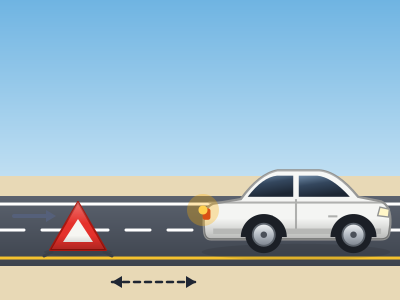
Saudi Arabia requires all vehicles to carry certain safety equipment. Which item from the list below is a mandatory basic requirement?
- AA fire extinguisher rated for class D fires
- BA full first-aid kit with a defibrillator
- CA spare fuel canister of at least 10 litres
- DAt least one reflective warning triangle
Answer and explanation in the bank
Every answer above, with the rule it comes from, plus the full 20-question timed test.
Get the Saudi Driving Theory Online Practice Bank - SAR 19What this test covers
Topics include road signs, traffic signals, right of way, roundabouts, speed limits, seat belts, fines and penalties, and the safe-driving rules specific to your vehicle category. Full question-by-question feedback with explanations is shown immediately after you finish the test above.
Frequently asked questions
How many questions is the Najran General Dept. of Traffic light vehicle theory test?
The official General Dept. of Traffic light vehicle theory test in Najran has 35 questions and you need 22 correct (63%) to pass. This practice test has 20 questions.
Is this the real exam?
These are practice questions to help you revise, written to the published rules and to what candidates report from the real test. They are not the official Saudi exam and the real question bank, format, fees and pass mark are set by the General Department of Traffic (Moroor) and the driving schools, and can change. Always confirm the current requirements with your driving school or the traffic department.
Is this practice test free?
The first 10 questions are free, with no signup, and each shows the answer and the reason. The full 20-question test, timed, is in the Saudi Driving Theory Online Practice Bank (SAR 19, one payment), with every question in the bank.
What does the Najran light vehicle theory test cover?
Road signs, traffic signals, right of way, roundabouts, speed limits, seat belts, penalties and safe-driving rules, plus the handling and safety topics specific to your vehicle.