

Qassim General Dept. of Traffic Light vehicle
Timed mock exam· Full mock examsQassim General Dept. of Traffic - Saudi Theory Mock Test 2
Second full 35-question mock exam covering all Saudi theory topics. A different question selection to Mock Test 1 so you can keep practising without repetition.
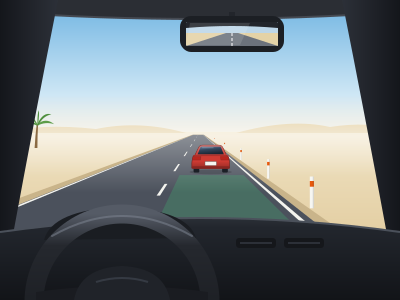
What is the recommended minimum following distance behind the vehicle in front on a dry road at highway speeds?
The other 25 questions in this test
Read them all. The answer and the reason for each, and the timed 35-question run, are in the Saudi Driving Theory Online Practice Bank.
- Q11Road signs and signals
What does a broken (dashed) white centre line on a Saudi road indicate?
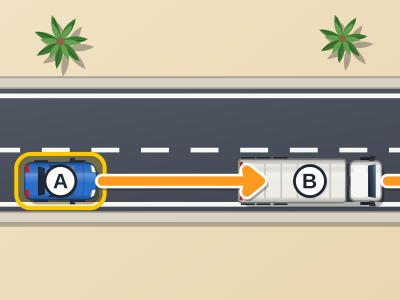
- AOvertaking is permitted when it is safe to do so
- BYou must not cross the line under any circumstances
- CThe lane is for emergency vehicles only
- DA speed-limit change is coming
Answer and explanation in the bank
- Q12Traffic rules
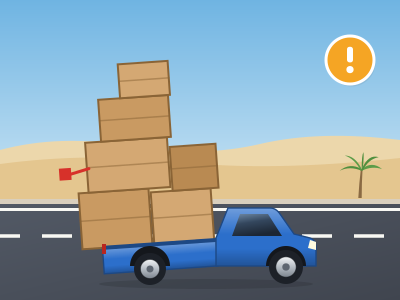
Your load sticks out beyond the rear of your vehicle. What must you do before driving?
- ANothing, provided the load is tied down
- BSecure and cover it, keep within the permitted dimensions, and mark the projecting end clearly (red flag by day, red light at night)
- CDrive only with hazard lights on instead of marking it
- DAny overhang is allowed outside cities
Answer and explanation in the bank
- Q13Right of way
You wish to turn left across oncoming traffic. How large a gap in oncoming traffic do you need?
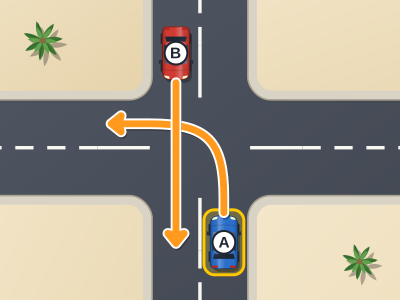
- AA gap just large enough to complete the turn without braking
- BAny gap; the oncoming traffic must brake if needed once you have begun turning
- CA gap of exactly 4 seconds at the speed limit
- DA gap large enough to turn comfortably with a margin of safety for an unexpected delay
Answer and explanation in the bank
- Q14Safe driving
Which tyre condition most increases the risk of aquaplaning?
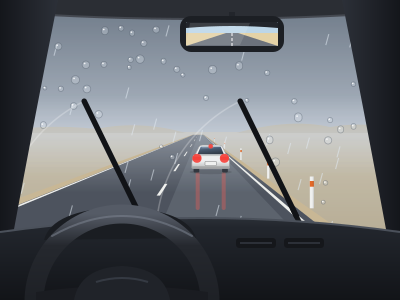
- ATyres with deep tread on a wet road
- BSlightly over-inflated tyres in dry conditions
- CNew tyres on a hot road
- DWorn or bald tyres with insufficient tread depth to channel water away
Answer and explanation in the bank
- Q15Penalties and fines
You drive past a school at 70 km/h where the posted limit is 40 km/h. Which penalty applies?
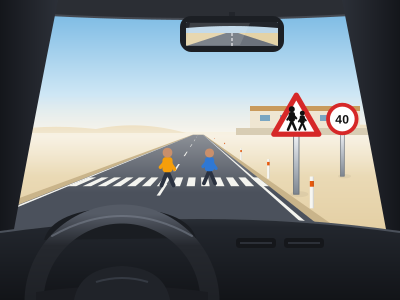
- ASR 150-300 and 2 points
- BNo fine, because you are under 80 km/h
- CSR 300-500 and 6 points, because you are 30 km/h over the limit
- DOnly a warning outside school hours
Answer and explanation in the bank
- Q16Road signs and signals
What do double solid yellow lines in the centre of a Saudi road prohibit?
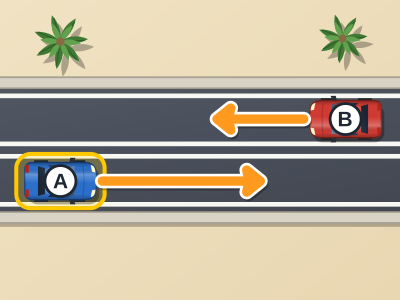
- AParking within 10 metres of the lines
- BDriving above 80 km/h
- CMaking a right turn at the next junction
- DCrossing to overtake from either direction
Answer and explanation in the bank
- Q17Traffic rules
On a road with a designated bus lane operating during peak hours, when may a private car enter that lane?
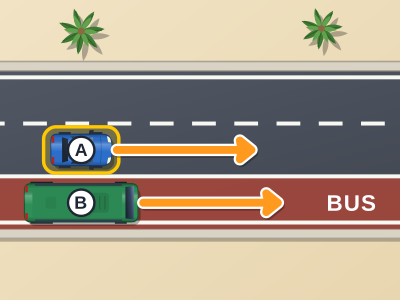
- AAt any time if the lane appears empty
- BWhenever the driver needs to drive faster
- CPrivate cars are always permitted in bus lanes
- DOnly to turn into a road or driveway immediately ahead, if no sign prohibits it
Answer and explanation in the bank
- Q18Right of way
A dedicated left-turn slip lane at a junction has its own set of traffic lights showing green. The main junction lights show red. Can you use the slip lane?
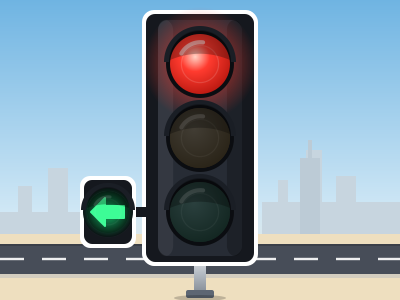
- ANo; you must wait for the main junction lights to turn green
- BYes; the slip lane has no signals so you follow your own judgement
- CNo; slip lanes are only for emergency vehicles
- DYes; a green light on the slip lane means you may proceed, but give way to pedestrians crossing
Answer and explanation in the bank
- Q19Safe driving
You are loading a pickup truck with goods for a desert journey. What must you ensure about the load?
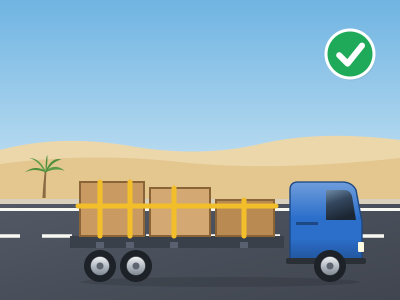
- ALoad can extend beyond the vehicle as long as it is balanced
- BLoad should be concentrated at the back axle for stability
- CThe load is secured so it cannot shift, fall, or project dangerously, and is within the vehicle's load rating
- DSecuring straps are optional if the load fits inside the tray
Answer and explanation in the bank
- Q20Penalties and fines
A driver overtakes a vehicle on the right side (inside lane) of a Saudi expressway, which is not the designated overtaking side. Is this permitted?
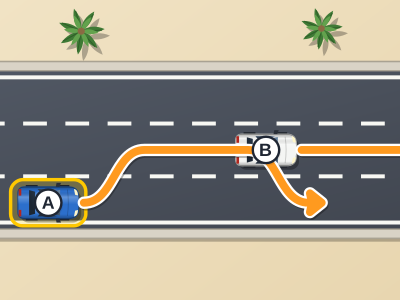
- AYes, overtaking on either side is allowed if the road is clear
- BPermitted only when the vehicle being overtaken is travelling below 60 km/h
- CNo, overtaking on the right is generally prohibited and constitutes a traffic violation
- DPermitted on multi-lane expressways but not on two-lane roads
Answer and explanation in the bank
- Q21Road signs and signals
Yellow zigzag lines are painted on the road leading up to a pedestrian crossing. What do they mean?
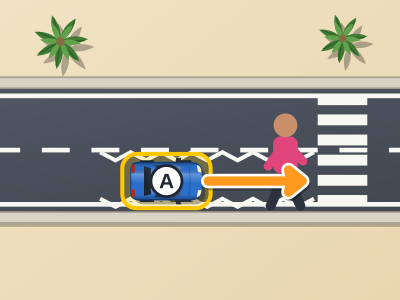
- AThe road surface is slippery - slow down
- BSpeed bumps are marked in yellow for visibility
- CYou must not park or stop on the zigzag lines
- DA school zone begins at this point
Answer and explanation in the bank
- Q22Traffic rules
What is the purpose of an HOV (High-Occupancy Vehicle) lane on a Saudi highway?
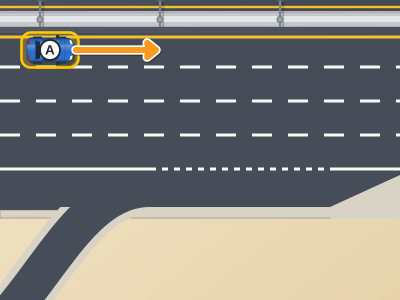
- ATo allow vehicles carrying more than the minimum required number of occupants to use a dedicated lane with less congestion
- BTo allow heavy trucks to travel faster
- CTo provide an emergency lane for police vehicles only
- DHOV lanes are for motorcycles only
Answer and explanation in the bank
- Q23Right of way
A bus lane is operational and you are joining it briefly to reach a left-turn exit. Who has priority in that lane?
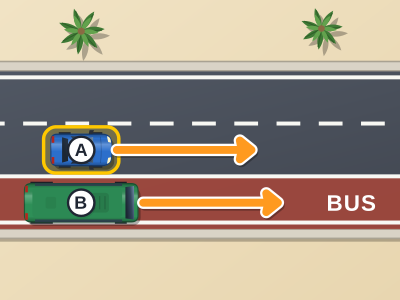
- AYou have priority because you are turning
- BBuses and other authorised vehicles in the lane have priority over you
- CYou share equal priority with buses in the lane
- DNo one has priority in a bus lane
Answer and explanation in the bank
- Q24Safe driving
What effect does using a hand-held mobile phone while driving have on reaction time?
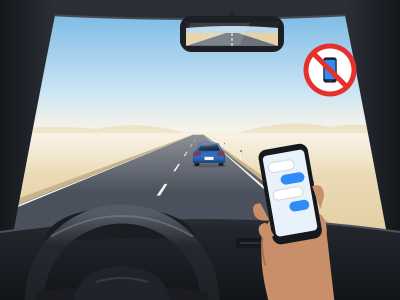
- AIt slows reaction time significantly, comparable to driving at the legal alcohol limit
- BNo measurable effect if the call is brief
- CIt only affects night-time driving
- DIt slightly improves alertness due to mental stimulation
Answer and explanation in the bank
- Q25Penalties and fines
A driver parks their vehicle in a disabled parking bay without a valid disabled-persons permit. What is the consequence?
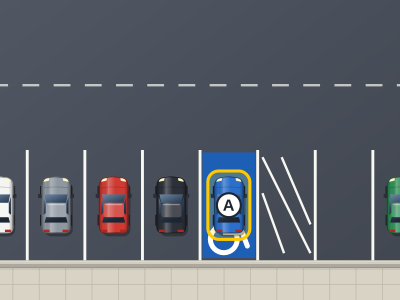
- ANo offence, as the space is public property available to all if no disabled driver is present
- BOnly a fine if a disabled driver is waiting and cannot park
- CThe vehicle is automatically towed with no fine applied
- DA traffic fine for illegal use of a disabled parking space
Answer and explanation in the bank
- Q26Road signs and signals
A sign shows a camera symbol on a Saudi road. What does this most likely indicate?
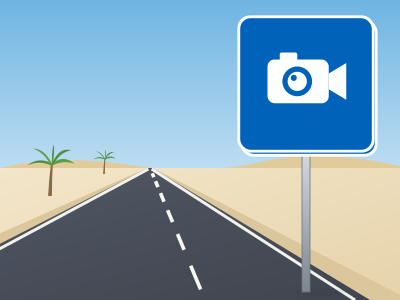
- AA speed or traffic-enforcement camera is monitoring this road
- BA tourist attraction or scenic viewpoint is nearby
- CCCTV cameras are installed for security purposes only
- DPhotography of the road is permitted here
Answer and explanation in the bank
- Q27Traffic rules
When is it legal to drive on the hard shoulder of a Saudi motorway?
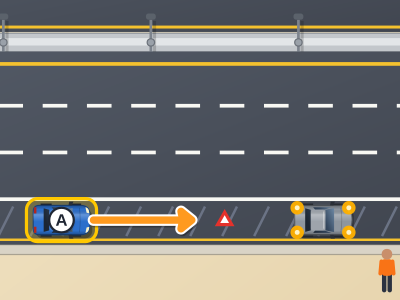
- AOnly in a genuine emergency or when directed by police or traffic management signs
- BWhenever the main lanes are congested
- CTo overtake slow vehicles on the left side
- DAt any time if you drive at 40 km/h or less
Answer and explanation in the bank
- Q28Right of way
At a T-junction you are travelling straight along the top of the T. A vehicle from the base of the T wants to turn right into your road, crossing your path. Who has priority?
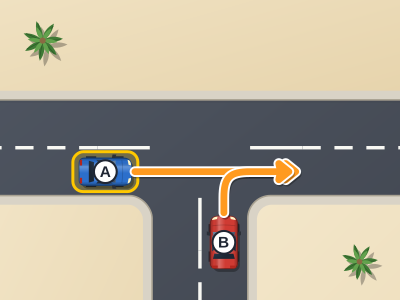
- AThe turning vehicle has priority because it is on a major road
- BYou have priority; the vehicle from the minor road must wait for you
- CBoth vehicles have equal priority
- DThe vehicle to your right has priority by default
Answer and explanation in the bank
- Q29Safe driving
Even with a hands-free kit, why is a phone call while driving still potentially dangerous?
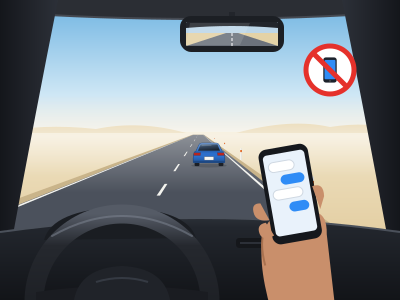
- ACognitive distraction reduces your awareness of the driving environment even though your hands are on the wheel
- BThe microphone interferes with vehicle electronics
- CHands-free kits are illegal in Saudi Arabia
- DIt only becomes dangerous when the call lasts more than 3 minutes
Answer and explanation in the bank
- Q30Penalties and fines
A driver is involved in a collision while driving without insurance in Saudi Arabia and the other driver is injured. What is the likely legal situation for the uninsured driver?
- AThe Saudi government's mandatory accident fund covers all costs so no personal liability arises
- BThe uninsured driver only pays the traffic fine; injury compensation is the injured party's own responsibility
- CThe uninsured driver's employer is automatically held liable for all costs
- DThe uninsured driver faces a fine for driving without insurance, is personally liable for the injured party's medical costs and compensation, and may face criminal charges if negligence caused the injury
Answer and explanation in the bank
- Q31Road signs and signals
A sign shows the number 80 inside a circle with a diagonal bar crossing it out. What does this mean?
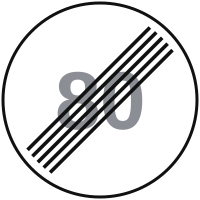
- AA new limit of 80 km/h begins here
- BYou must slow to below 80 km/h immediately
- CThe 80 km/h restriction applies only at night
- DThe 80 km/h speed limit has ended
Answer and explanation in the bank
- Q32Traffic rules
Your vehicle breaks down on a motorway. What should you do first?
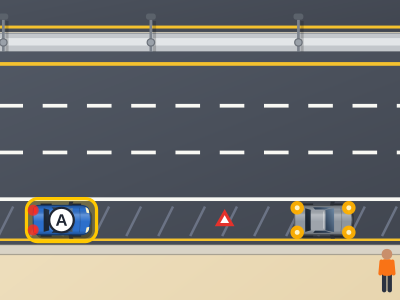
- APull onto the hard shoulder as far right as possible, turn on hazard lights, and use warning triangles
- BStop in the live lane and wait for help
- CAttempt to repair the vehicle in the live lane
- DStand next to your vehicle in the lane to warn drivers
Answer and explanation in the bank
- Q33Right of way
On a two-lane one-way street, the vehicle ahead of you in the left lane signals to turn left into a side road. How should you pass it?
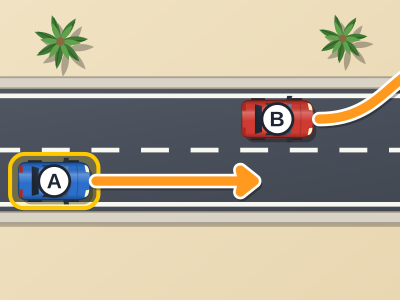
- AOn its left, between it and the kerb
- BSound your horn so it lets you through on either side
- CYou may never pass a vehicle that is turning
- DOn its right, once it is safe
Answer and explanation in the bank
- Q34Safe driving
Which of the following activities while driving is classed as a distraction and is most likely to cause an accident?
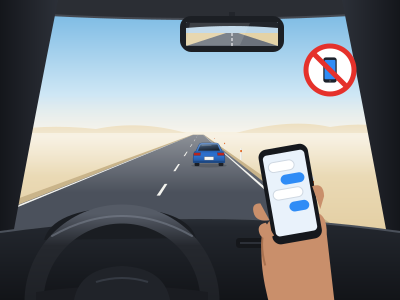
- AScanning mirrors every few seconds
- BEating, adjusting the stereo, or reading a map while the vehicle is in motion
- CUsing cruise control on a clear highway
- DWearing polarised sunglasses on a sunny day
Answer and explanation in the bank
- Q35Penalties and fines
A driver in Saudi Arabia is found to have modified their vehicle's suspension, raising it to an illegal height. Is this a traffic offence?
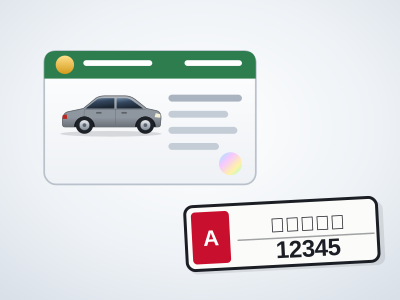
- ANo, suspension modifications are a personal choice and are not regulated
- BYes, illegal vehicle modifications that affect safety or compliance with traffic regulations are a fineable offence and the modification must be reversed
- COnly an offence if the modification was done outside Saudi Arabia
- DPermitted as long as the vehicle can still pass through a standard car-wash
Answer and explanation in the bank
Every answer above, with the rule it comes from, plus the full 35-question timed test.
Get the Saudi Driving Theory Online Practice Bank - SAR 19What this test covers
Topics include road signs, traffic signals, right of way, roundabouts, speed limits, seat belts, fines and penalties, and the safe-driving rules specific to your vehicle category. Full question-by-question feedback with explanations is shown immediately after you finish the test above.
Frequently asked questions
How many questions is the Qassim General Dept. of Traffic light vehicle theory test?
The official General Dept. of Traffic light vehicle theory test in Qassim has 35 questions and you need 22 correct (63%) to pass. This practice test has 35 questions.
Is this the real exam?
These are practice questions to help you revise, written to the published rules and to what candidates report from the real test. They are not the official Saudi exam and the real question bank, format, fees and pass mark are set by the General Department of Traffic (Moroor) and the driving schools, and can change. Always confirm the current requirements with your driving school or the traffic department.
Is this practice test free?
The first 10 questions are free, with no signup, and each shows the answer and the reason. The full 35-question test, timed, is in the Saudi Driving Theory Online Practice Bank (SAR 19, one payment), with every question in the bank.
What does the Qassim light vehicle theory test cover?
Road signs, traffic signals, right of way, roundabouts, speed limits, seat belts, penalties and safe-driving rules, plus the handling and safety topics specific to your vehicle.