

Qassim General Dept. of Traffic Light vehicle
Practice mode· Road rulesQassim General Dept. of Traffic - Saudi Road Rules Test 2
Second set of 20 road rules questions covering overtaking, parking, motorway driving, pedestrian crossings and more. Complete both tests for full rules coverage.
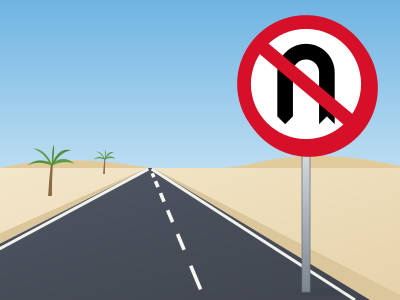
You are on a divided highway with a concrete median barrier. Can you perform a U-turn?
The other 10 questions in this test
Read them all. The answer and the reason for each, and the timed 20-question run, are in the Saudi Driving Theory Online Practice Bank.
- Q11Traffic rules
On a road posted at 120 km/h or less, from what speed above the limit does a speeding fine start?
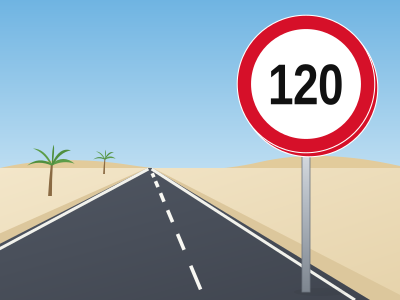
- AMore than 5 km/h over
- BMore than 30 km/h over
- CMore than 10 km/h over (SR 150-300 for 10-20 km/h over)
- DAny speed above the limit, at a flat SR 1,000
Answer and explanation in the bank
- Q12Traffic rules
The road is clear and dry but it is very late at night with almost no visibility beyond your headlights. How should this affect your speed?
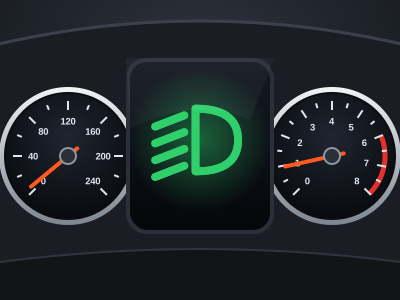
- AReduce speed so that you can stop within the distance illuminated by your headlights
- BMaintain the posted limit because the road is dry
- CSwitch to high-beam and continue at the normal limit
- DIncrease speed to minimise time spent on the dark road
Answer and explanation in the bank
- Q13Traffic rules
You are driving on a highway with a posted limit of 120 km/h. A sign ahead shows temporary roadworks. What should you do?
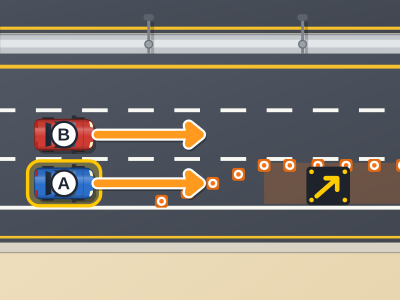
- AReduce speed to the temporary roadworks limit shown on signs and stay alert for workers
- BMaintain 120 km/h because roadworks signs are advisory only
- CSlow to 40 km/h regardless of the signs posted
- DUse the hard shoulder to bypass the roadworks
Answer and explanation in the bank
- Q14Traffic rules
What does a solid white line at the centre of a two-lane road mean for overtaking?
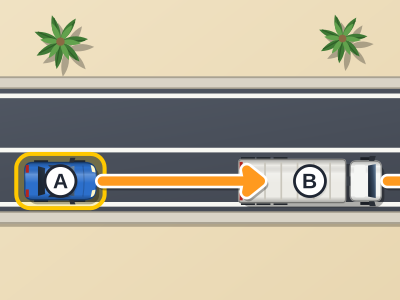
- AOvertaking is permitted if the road is clear ahead
- BThe line only applies to heavy vehicles
- COvertaking is allowed at speeds below 80 km/h
- DOvertaking is prohibited; you must not cross the line to pass another vehicle
Answer and explanation in the bank
- Q15Traffic rules
You want to change lanes on a motorway. In what order should you perform the following checks: mirror, signal, blind spot?
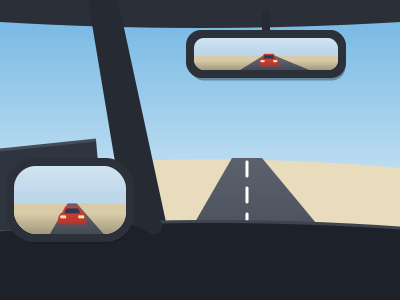
- ASignal, then move without checking mirrors
- BMirror, signal, mirror again, blind spot check, then move if safe
- CBlind spot first, then mirror, then move immediately
- DNo check is needed at low speeds
Answer and explanation in the bank
- Q16Traffic rules
Two vehicles arrive at an unmarked intersection at the same time from different roads. Who has priority?
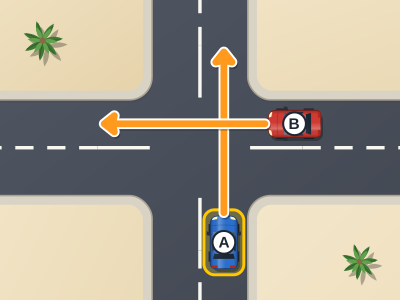
- AThe vehicle on the right has priority
- BThe larger vehicle has priority
- CThe vehicle that arrived first has priority
- DNeither has priority; both must stop and yield to each other indefinitely
Answer and explanation in the bank
- Q17Traffic rules
What is the safest position to adopt when waiting to make a right turn at a junction?
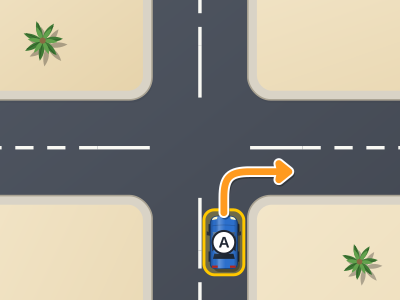
- AStop in the middle of the road straddling both lanes
- BWait in the right turn lane or as close to the right kerb as possible without blocking pedestrians
- CMove to the left lane and then cross all lanes while turning
- DAny position is acceptable provided you use your indicator
Answer and explanation in the bank
- Q18Traffic rules
What does the word 'Moroor' refer to in Saudi traffic and licensing matters?
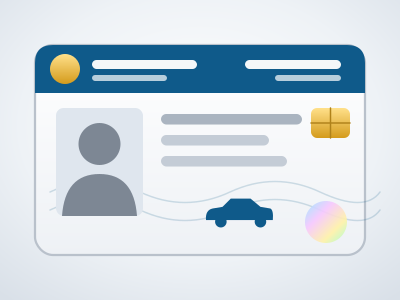
- AA type of Saudi motorway
- BThe mandatory vehicle registration document
- CA Saudi driving school qualification
- DThe General Department of Traffic, the authority responsible for road safety and licensing in Saudi Arabia
Answer and explanation in the bank
- Q19Traffic rules
At what distance should you generally place warning triangles behind a broken-down vehicle on a Saudi road?
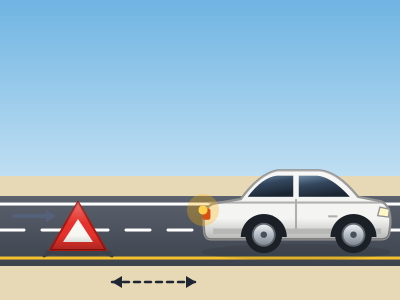
- ADirectly behind the vehicle, touching the bumper
- BFar enough behind the vehicle for approaching drivers to see it and slow down in time, and further back on fast roads
- CWarning triangles are only required on highways, not city roads
- DOn the roof of the vehicle so it is seen from far away
Answer and explanation in the bank
- Q20Traffic rules
You are involved in a minor road traffic collision with no injuries in Saudi Arabia. What must you do?
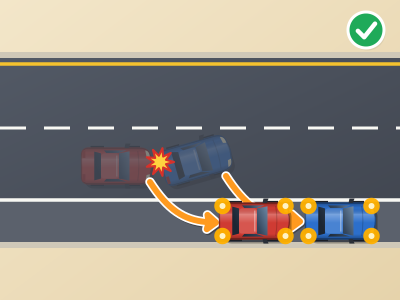
- ALeave the scene immediately to avoid causing more congestion
- BArgue with the other driver and decide who was at fault privately, then drive away
- COnly report the collision if the damage exceeds a certain cost, which you estimate yourself
- DMove vehicles off the road if safe to do so, exchange details, and report to traffic police or use the official app as required
Answer and explanation in the bank
Every answer above, with the rule it comes from, plus the full 20-question timed test.
Get the Saudi Driving Theory Online Practice Bank - SAR 19What this test covers
Topics include road signs, traffic signals, right of way, roundabouts, speed limits, seat belts, fines and penalties, and the safe-driving rules specific to your vehicle category. Full question-by-question feedback with explanations is shown immediately after you finish the test above.
Frequently asked questions
How many questions is the Qassim General Dept. of Traffic light vehicle theory test?
The official General Dept. of Traffic light vehicle theory test in Qassim has 35 questions and you need 22 correct (63%) to pass. This practice test has 20 questions.
Is this the real exam?
These are practice questions to help you revise, written to the published rules and to what candidates report from the real test. They are not the official Saudi exam and the real question bank, format, fees and pass mark are set by the General Department of Traffic (Moroor) and the driving schools, and can change. Always confirm the current requirements with your driving school or the traffic department.
Is this practice test free?
The first 10 questions are free, with no signup, and each shows the answer and the reason. The full 20-question test, timed, is in the Saudi Driving Theory Online Practice Bank (SAR 19, one payment), with every question in the bank.
What does the Qassim light vehicle theory test cover?
Road signs, traffic signals, right of way, roundabouts, speed limits, seat belts, penalties and safe-driving rules, plus the handling and safety topics specific to your vehicle.