

Qassim General Dept. of Traffic Light vehicle
Practice mode· Right of way & safetyQassim General Dept. of Traffic - Saudi Safe Driving Practice Test
Covers defensive driving, following distances, fatigue, visibility, adverse weather and hazard awareness. Safe driving habits save lives and keep your licence clean.
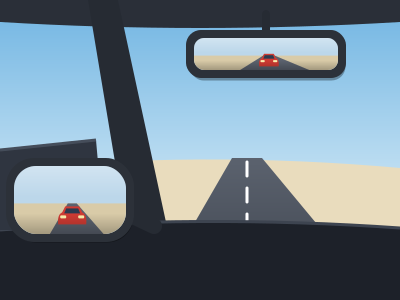
Which area around your vehicle is NOT covered by any mirror and must always be checked with a shoulder glance before changing lanes?
The other 12 questions in this test
Read them all. The answer and the reason for each, and the timed 22-question run, are in the Saudi Driving Theory Online Practice Bank.
- Q11Safe driving
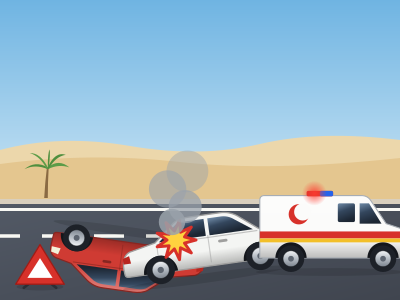
After a collision in Saudi Arabia, what number do you call for emergency services?
- A999
- B112
- C998
- D911
Answer and explanation in the bank
- Q12Safe driving
What is aquaplaning and when is it most likely to occur?
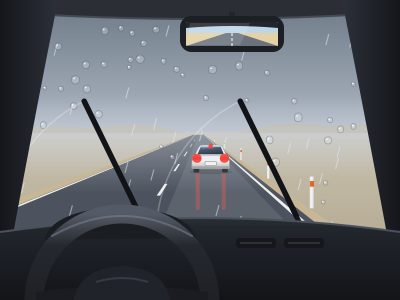
- AA layer of water builds between the tyres and road surface, causing the driver to lose steering control, most likely at high speed on a wet road
- BThe vehicle steering locks when crossing a flooded underpass
- CThe brakes overheat on a wet descent
- DRainwater enters the engine and causes it to stall
Answer and explanation in the bank
- Q13Safe driving
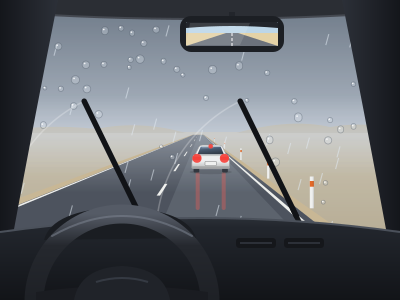
Which tyre condition most increases the risk of aquaplaning?
- ATyres with deep tread on a wet road
- BSlightly over-inflated tyres in dry conditions
- CNew tyres on a hot road
- DWorn or bald tyres with insufficient tread depth to channel water away
Answer and explanation in the bank
- Q14Safe driving
You are loading a pickup truck with goods for a desert journey. What must you ensure about the load?

- ALoad can extend beyond the vehicle as long as it is balanced
- BLoad should be concentrated at the back axle for stability
- CThe load is secured so it cannot shift, fall, or project dangerously, and is within the vehicle's load rating
- DSecuring straps are optional if the load fits inside the tray
Answer and explanation in the bank
- Q15Safe driving
What effect does using a hand-held mobile phone while driving have on reaction time?
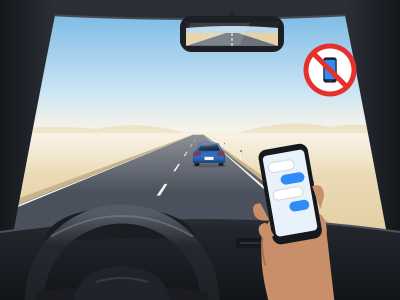
- AIt slows reaction time significantly, comparable to driving at the legal alcohol limit
- BNo measurable effect if the call is brief
- CIt only affects night-time driving
- DIt slightly improves alertness due to mental stimulation
Answer and explanation in the bank
- Q16Safe driving
Even with a hands-free kit, why is a phone call while driving still potentially dangerous?
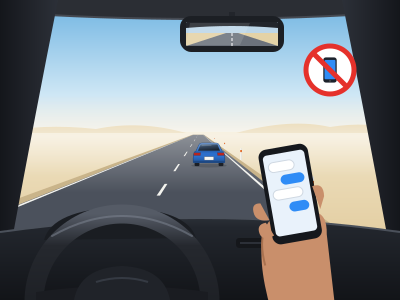
- ACognitive distraction reduces your awareness of the driving environment even though your hands are on the wheel
- BThe microphone interferes with vehicle electronics
- CHands-free kits are illegal in Saudi Arabia
- DIt only becomes dangerous when the call lasts more than 3 minutes
Answer and explanation in the bank
- Q17Safe driving
Which of the following activities while driving is classed as a distraction and is most likely to cause an accident?
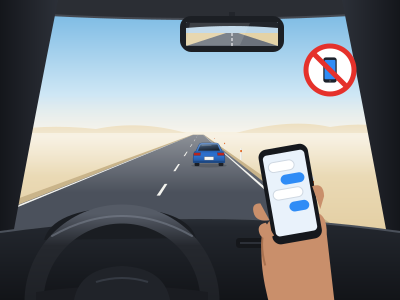
- AScanning mirrors every few seconds
- BEating, adjusting the stereo, or reading a map while the vehicle is in motion
- CUsing cruise control on a clear highway
- DWearing polarised sunglasses on a sunny day
Answer and explanation in the bank
- Q18Safe driving
What is the main environmental benefit of eco-driving (smooth acceleration and early gear changes)?
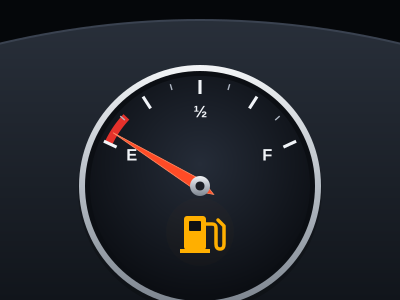
- AIt increases engine wear and therefore generates repair work
- BIt reduces fuel consumption and exhaust emissions while also reducing brake wear
- CIt allows higher top speeds
- DIt only helps automatic transmission vehicles
Answer and explanation in the bank
- Q19Safe driving
To save fuel on a long Saudi highway drive, which speed range is typically most efficient for a modern petrol car?
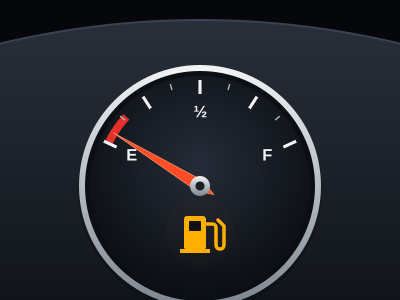
- AAbove 160 km/h
- BBelow 50 km/h
- CBetween 90 and 110 km/h
- DFuel consumption is the same at all speeds
Answer and explanation in the bank
- Q20Safe driving
Correct tyre pressure improves fuel economy. Which direction does under-inflation affect fuel consumption?
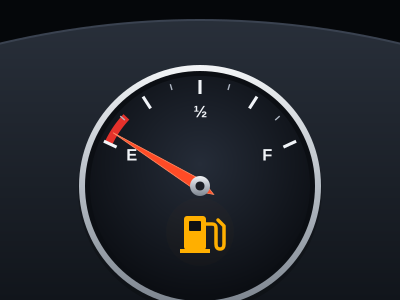
- AUnder-inflated tyres reduce rolling resistance and improve fuel economy
- BTyre pressure has no measurable effect on fuel consumption
- CUnder-inflated tyres increase rolling resistance and increase fuel consumption
- DUnder-inflation only affects fuel economy on gravel roads
Answer and explanation in the bank
- Q21Safe driving
What is the recommended headway increase when driving in a heavy rainstorm in Saudi Arabia compared to dry conditions?
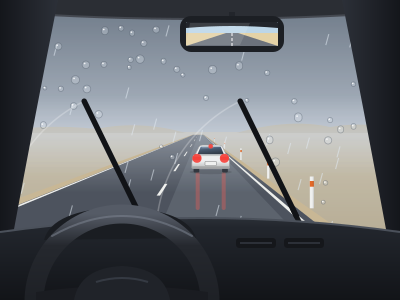
- ANo change is needed if the wipers are on
- BReduce following distance to stay closer and see the road through the vehicle ahead
- CDouble the dry-road following distance to at least 4 to 6 seconds
- DAdd only half a second to the normal gap
Answer and explanation in the bank
- Q22Safe driving
You are driving at night on a desert road with no street lighting. What is meant by driving within your headlight range?
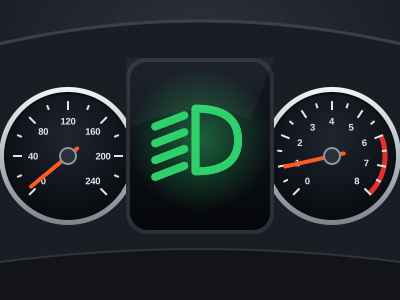
- AKeeping your headlights on at all times
- BNever exceeding 80 km/h at night
- COnly driving on roads that have reflective lane markings
- DDriving at a speed where you could stop within the distance illuminated by your headlights
Answer and explanation in the bank
Every answer above, with the rule it comes from, plus the full 22-question timed test.
Get the Saudi Driving Theory Online Practice Bank - SAR 19What this test covers
Topics include road signs, traffic signals, right of way, roundabouts, speed limits, seat belts, fines and penalties, and the safe-driving rules specific to your vehicle category. Full question-by-question feedback with explanations is shown immediately after you finish the test above.
Frequently asked questions
How many questions is the Qassim General Dept. of Traffic light vehicle theory test?
The official General Dept. of Traffic light vehicle theory test in Qassim has 35 questions and you need 22 correct (63%) to pass. This practice test has 22 questions.
Is this the real exam?
These are practice questions to help you revise, written to the published rules and to what candidates report from the real test. They are not the official Saudi exam and the real question bank, format, fees and pass mark are set by the General Department of Traffic (Moroor) and the driving schools, and can change. Always confirm the current requirements with your driving school or the traffic department.
Is this practice test free?
The first 10 questions are free, with no signup, and each shows the answer and the reason. The full 22-question test, timed, is in the Saudi Driving Theory Online Practice Bank (SAR 19, one payment), with every question in the bank.
What does the Qassim light vehicle theory test cover?
Road signs, traffic signals, right of way, roundabouts, speed limits, seat belts, penalties and safe-driving rules, plus the handling and safety topics specific to your vehicle.