

Riyadh General Dept. of Traffic Light vehicle
Practice mode· Right of way & safetyRiyadh General Dept. of Traffic - Saudi Safe Driving Practice Test
Covers defensive driving, following distances, fatigue, visibility, adverse weather and hazard awareness. Safe driving habits save lives and keep your licence clean.
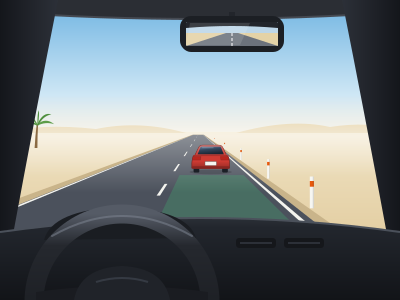
What is the recommended minimum following distance behind the vehicle in front on a dry road at highway speeds?
The other 12 questions in this test
Read them all. The answer and the reason for each, and the timed 22-question run, are in the Saudi Driving Theory Online Practice Bank.
- Q11Safe driving
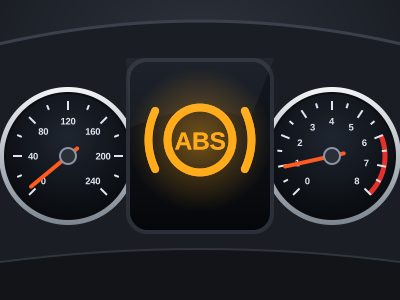
When your ABS activates you will feel the brake pedal pulsating or vibrating under your foot. What should you do?
- ARelease the brake pedal because the system has malfunctioned
- BKeep pressing firmly on the pedal and steer as needed
- CPump the brake pedal quickly to help the ABS
- DApply the handbrake simultaneously
Answer and explanation in the bank
- Q12Safe driving
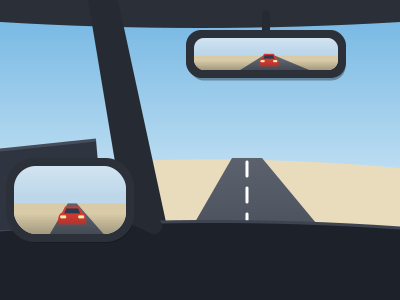
How often should you check your mirrors while driving on a Saudi highway?
- AOnly before overtaking
- BOnce every few minutes
- CEvery 5 to 8 seconds
- DOnly when changing lanes
Answer and explanation in the bank
- Q13Safe driving
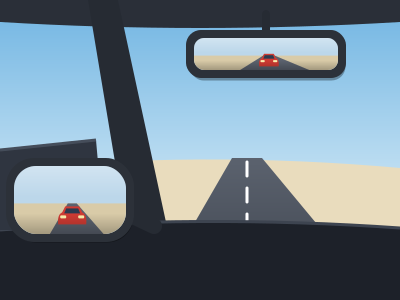
Which area around your vehicle is NOT covered by any mirror and must always be checked with a shoulder glance before changing lanes?
- AThe area directly behind you
- BThe area 100 metres ahead
- CThe blind spot at the side and slightly rear of each door
- DThe area visible in the centre rear-view mirror
Answer and explanation in the bank
- Q14Safe driving
Saudi law requires all occupants of a vehicle to wear seat belts. When should you put on your seat belt?
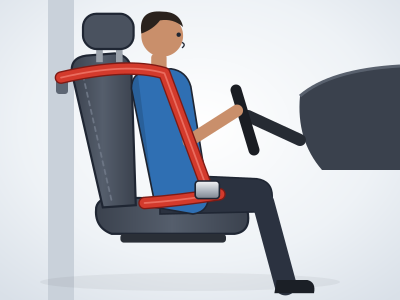
- AOnly on highways above 100 km/h
- BOnly the driver needs to wear a seat belt
- CBefore the vehicle moves, every trip without exception
- DOnly front-seat occupants must wear a seat belt
Answer and explanation in the bank
- Q15Safe driving
How should a seat belt be positioned on the body to work correctly?
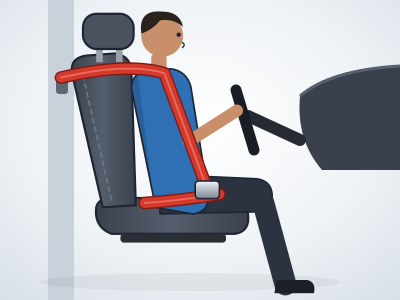
- ALap belt across the stomach and shoulder belt behind the back
- BLap belt across the hips and shoulder belt across the chest and over the collarbone
- CUnder the arm with the shoulder belt across the neck
- DShoulder belt only, without the lap belt fastened
Answer and explanation in the bank
- Q16Safe driving
A child aged 4 years and weighing 18 kg must travel in your car. Which restraint is most appropriate?
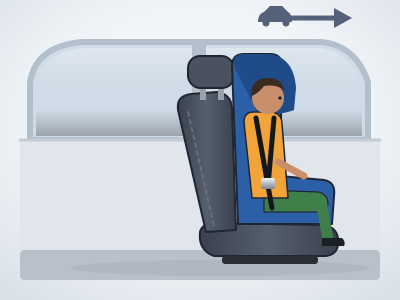
- AA rear-facing infant seat
- BA forward-facing child seat with a harness suitable for their weight
- CThe adult seat belt without any child seat
- DHeld by an adult passenger
Answer and explanation in the bank
- Q17Safe driving
Why must a rear-facing child seat never be installed in a front seat that has an active passenger airbag?
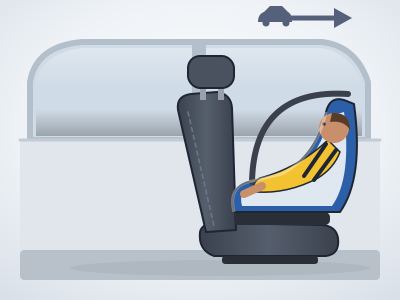
- ABecause the seat belt will not reach around the child seat
- BBecause the front seat is always narrower than the rear seat
- CBecause the deploying airbag can strike the back of the child seat with lethal force
- DBecause it blocks the driver's view of the speedometer
Answer and explanation in the bank
- Q18Safe driving
A front airbag is designed to work best when the driver sits at what minimum distance from the steering wheel?
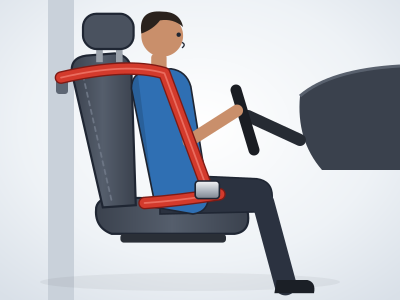
- AAt least 10 cm
- BAt least 50 cm
- CDistance does not matter if a seat belt is worn
- DAt least 25 cm (about 10 inches)
Answer and explanation in the bank
- Q19Safe driving
Airbags are designed to work alongside seat belts, not replace them. What happens if you do not wear a seat belt in a car fitted with airbags?
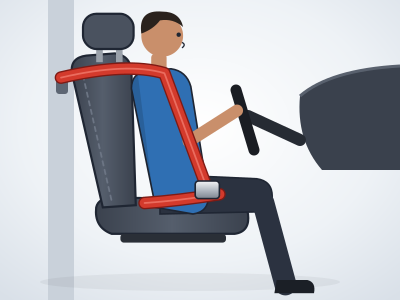
- AThe airbag will protect you just as well as with a seat belt
- BThe airbag will not deploy at all if no seat belt is worn
- CThe airbag only inflates for belted occupants
- DThe airbag may seriously injure an unbelted occupant who is thrown forward into it
Answer and explanation in the bank
- Q20Safe driving
What is the safest approach to a long desert drive of 400 km or more in Saudi Arabia?
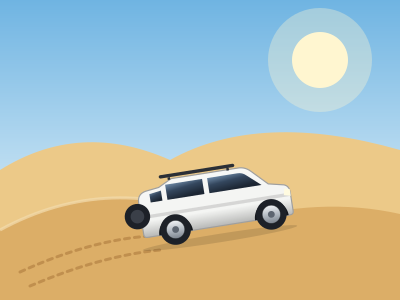
- ADrive non-stop to reach the destination as quickly as possible
- BIncrease speed to shorten time behind the wheel
- CDrive only at midday to make the most of daylight
- DPlan rest stops every 2 hours, carry sufficient water, and travel during cooler parts of the day if possible
Answer and explanation in the bank
- Q21Safe driving
Which of the following is a reliable early warning sign that a driver is becoming dangerously fatigued?
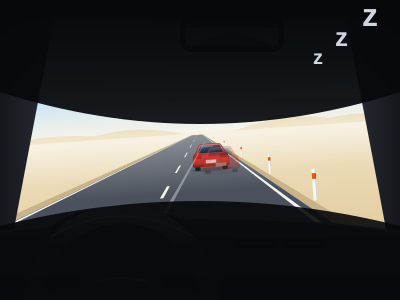
- AFeeling thirsty
- BFeeling slightly warm inside the vehicle
- CNoticing the fuel gauge is low
- DRepeatedly blinking, micro-sleeps, or not remembering the last few kilometres driven
Answer and explanation in the bank
- Q22Safe driving
You are driving in dense fog on a Saudi highway. Which lights should you use?
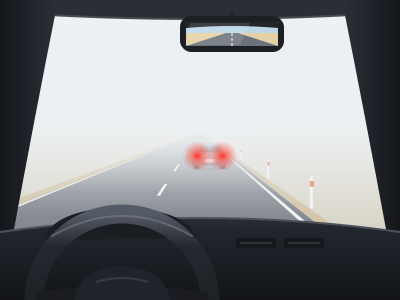
- AHigh beam headlights to see as far ahead as possible
- BHazard warning lights only
- CLow beam headlights and front fog lights if fitted
- DNo lights, as they reflect off the fog
Answer and explanation in the bank
Every answer above, with the rule it comes from, plus the full 22-question timed test.
Get the Saudi Driving Theory Online Practice Bank - SAR 19What this test covers
Topics include road signs, traffic signals, right of way, roundabouts, speed limits, seat belts, fines and penalties, and the safe-driving rules specific to your vehicle category. Full question-by-question feedback with explanations is shown immediately after you finish the test above.
Frequently asked questions
How many questions is the Riyadh General Dept. of Traffic light vehicle theory test?
The official General Dept. of Traffic light vehicle theory test in Riyadh has 35 questions and you need 22 correct (63%) to pass. This practice test has 22 questions.
Is this the real exam?
These are practice questions to help you revise, written to the published rules and to what candidates report from the real test. They are not the official Saudi exam and the real question bank, format, fees and pass mark are set by the General Department of Traffic (Moroor) and the driving schools, and can change. Always confirm the current requirements with your driving school or the traffic department.
Is this practice test free?
The first 10 questions are free, with no signup, and each shows the answer and the reason. The full 22-question test, timed, is in the Saudi Driving Theory Online Practice Bank (SAR 19, one payment), with every question in the bank.
What does the Riyadh light vehicle theory test cover?
Road signs, traffic signals, right of way, roundabouts, speed limits, seat belts, penalties and safe-driving rules, plus the handling and safety topics specific to your vehicle.