

Abu Dhabi ITC Light vehicle
Timed mock exam· Full mock examsAbu Dhabi ITC - UAE RTA Theory Mock Test 3
Third full mock exam - another fresh set of 40 questions drawn from all topics. A great way to check your readiness before the real test.
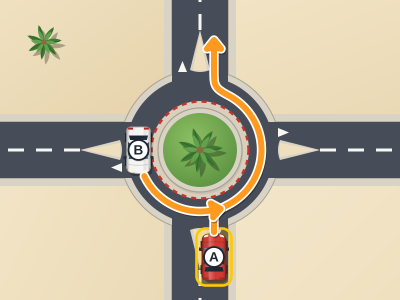
At a roundabout in the UAE, who normally has priority?
The other 30 questions in this test
Read them all. The answer and the reason for each, and the timed 40-question run, are in the Abu Dhabi ITC Theory Test Questions PDF.
- Q11Road signs and signals
How can you tell a give-way (yield) sign apart from other triangular signs?
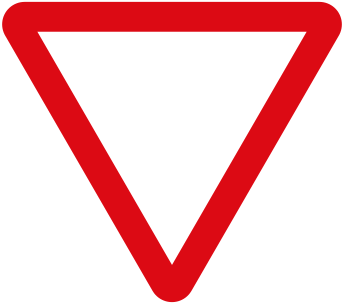
- AIt is a triangle pointing upwards
- BIt is a red circle
- CIt is a blue square
- DIt is a triangle pointing downwards
Answer and explanation in the bank
- Q12Traffic rules
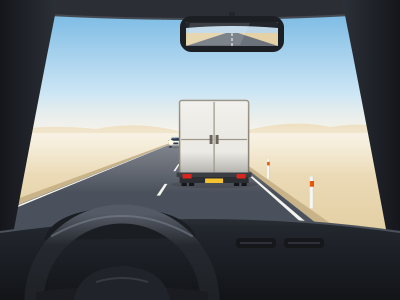
When another vehicle is overtaking you, what should you do?
- ASpeed up so it cannot complete the overtake
- BMove towards the centre line to block it
- CKeep a steady speed and stay in your lane so it can pass safely
- DBrake hard to force it back behind you
Answer and explanation in the bank
- Q13Right of way
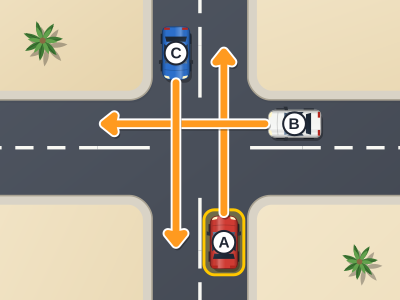
Four vehicles arrive at an unmarked four-way junction at almost the same time, one from each direction. Which vehicle should go first?
- AThe vehicle travelling fastest has priority
- BThe vehicle on the busiest-looking road goes first
- CAll four vehicles may move at the same time with care
- DEach driver gives way to the vehicle on their right, creating a safe order of movement
Answer and explanation in the bank
- Q14Penalties and fines
Which of the following typically adds the most black points and heaviest penalties?
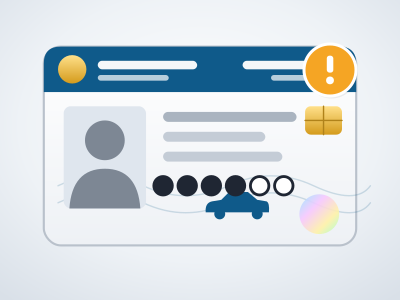
- ASerious offences such as drink-driving, reckless driving or running a red light
- BParking slightly over a marked bay line
- CDriving a clean, well-maintained car
- DFilling up with the wrong grade of fuel
Answer and explanation in the bank
- Q15Safe driving
What are the two main parts that make up your total stopping distance?
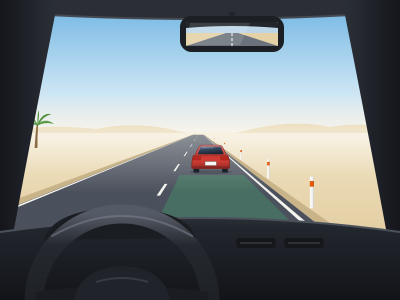
- ASignalling distance and lane-change distance
- BThinking distance and braking distance
- CAcceleration distance and deceleration distance
- DReaction distance and indicator distance
Answer and explanation in the bank
- Q16Road signs and signals
What is the key difference in what a driver must do at a STOP sign compared with a Give Way sign?
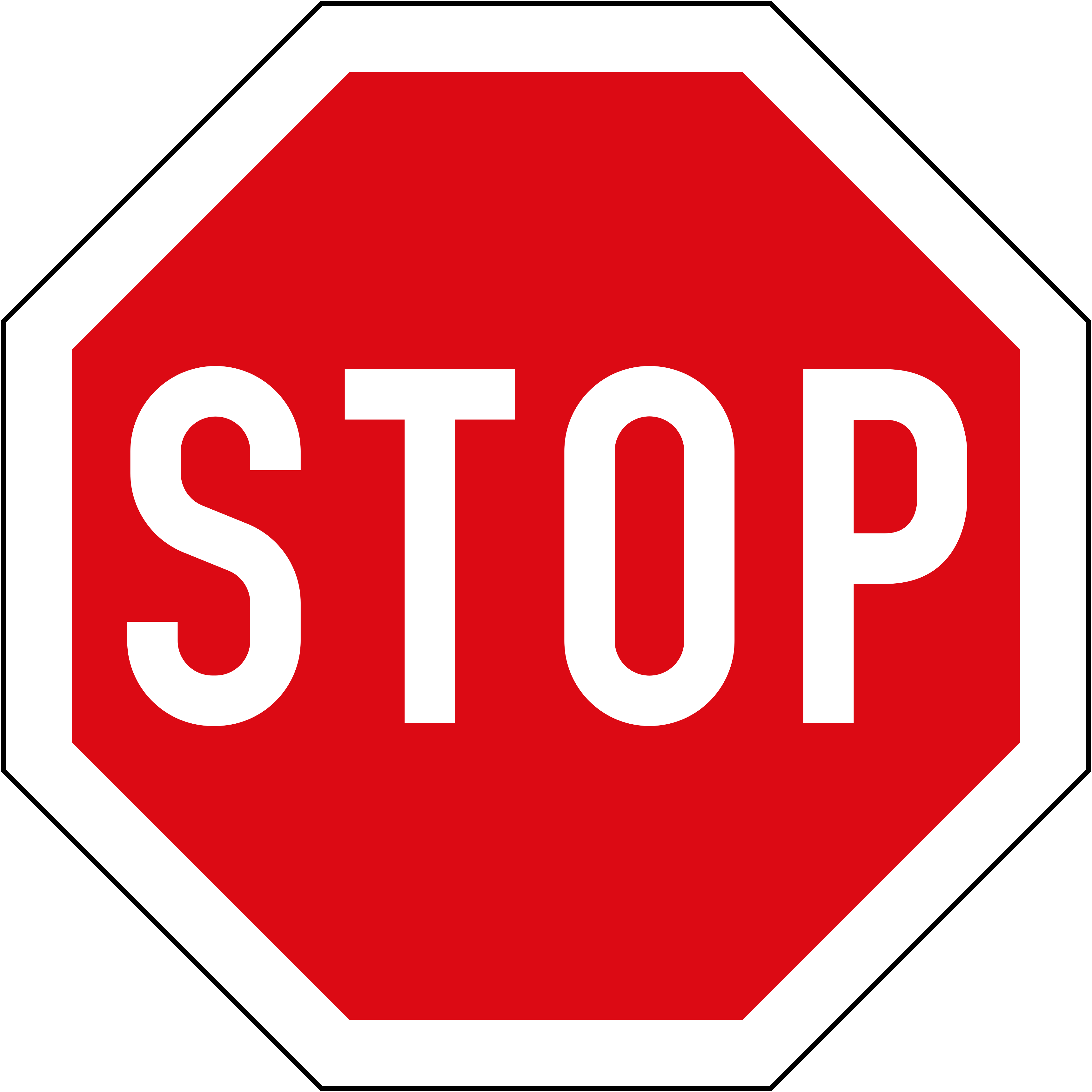
- AAt STOP you must come to a full halt; at Give Way you may roll on if it is clear
- BBoth require a full stop every time
- CNeither requires you to slow down
- DAt Give Way you must stop, at STOP you may keep moving
Answer and explanation in the bank
- Q17Traffic rules
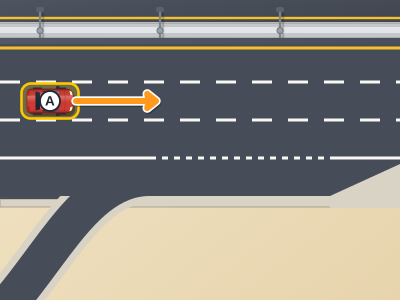
What does a slower minimum-speed situation on a motorway require of you?
- ADrive as slowly as you like in any lane
- BKeep up with the safe flow of traffic and do not drive so slowly that you obstruct others
- CStop on the carriageway if you feel unsure
- DUse the hard shoulder as a slow lane
Answer and explanation in the bank
- Q18Right of way
You are driving around a single-lane roundabout and want to exit. When should you signal right to show you are leaving?
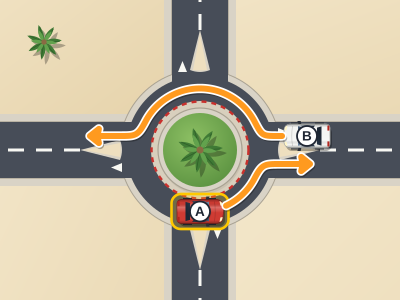
- AOnly after you have already turned into the exit road
- BSignals are not required on a roundabout
- CAs soon as you enter the roundabout
- DBefore the exit you intend to take, after passing the previous exit
Answer and explanation in the bank
- Q19Penalties and fines
You want to send a quick text while stopped at a red light. What is the safest and most correct approach?
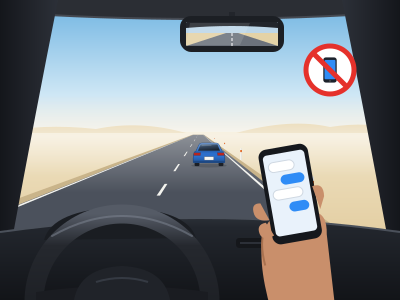
- ATexting is always fine when the car is not moving
- BTexting is allowed if you hold the phone low
- CTexting is only an offence above 60 km/h
- DDo not use a hand-held phone; handling it while in control of the vehicle can still be an offence
Answer and explanation in the bank
- Q20Safe driving
Which factor most directly increases a driver's thinking distance?
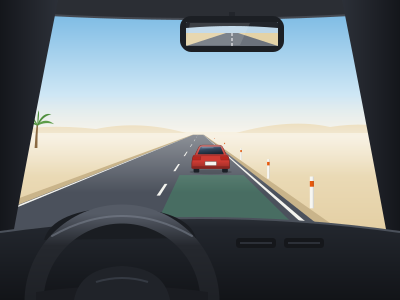
- ASlower reactions caused by fatigue, distraction, or medication
- BFully inflated tyres
- CA clean windscreen
- DAnti-lock braking system fitted to the car
Answer and explanation in the bank
- Q21Road signs and signals
What does a green or blue rectangular sign with place names and arrows usually provide?
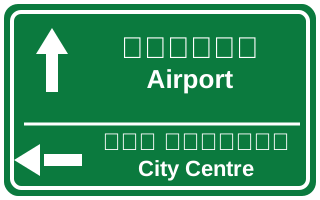
- AA warning of a hazard
- BA speed prohibition
- CDirections and route information
- DA parking ban
Answer and explanation in the bank
- Q22Traffic rules
Two lanes are merging into one because of roadworks. What is the safe and courteous approach?
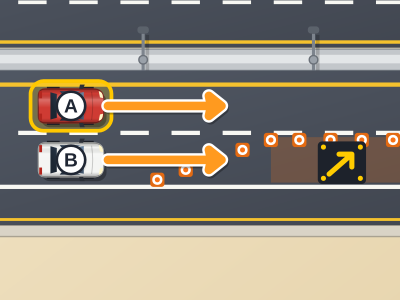
- ATake turns to merge in a zip fashion, one vehicle from each lane
- BForce your way in without letting anyone else go
- CStop completely and wait for every other car to pass
- DStraddle both lanes so no one can pass you
Answer and explanation in the bank
- Q23Right of way
You approach a roundabout and see give-way triangle markings painted on the road at the entry. What do they mean?
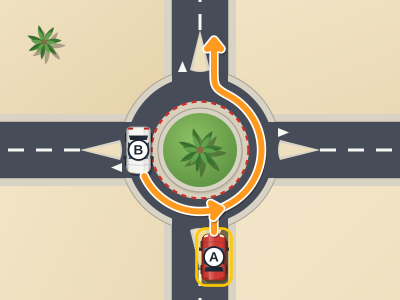
- AYou must yield to traffic already circulating on the roundabout
- BYou have priority over circulating traffic
- CStop completely before entering, as if at a STOP sign
- DThe markings only apply to heavy vehicles
Answer and explanation in the bank
- Q24Penalties and fines
Why must you not lend your car to someone who has no valid driving licence?
- AIt is fine as long as they drive slowly
- BAllowing an unlicensed person to drive is an offence, and both of you can face penalties
- COnly the driver can ever be penalised, never the owner
- DThere is no rule about who drives your car
Answer and explanation in the bank
- Q25Safe driving
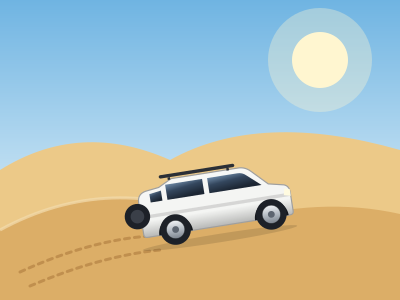
Driving on a sandy or unpaved desert track, how does braking differ from a dry paved road?
- ASand provides extra friction, so braking distances are shorter
- BBraking distance is identical to a paved surface
- CGrip is much lower, so braking distances are significantly longer
- DABS works better on sand than on tarmac
Answer and explanation in the bank
- Q26Road signs and signals
Why is the STOP sign given a shape different from all other signs?
- ATo make it cheaper to produce
- BBecause octagons reflect light better than any other shape
- COnly for decorative reasons
- DSo it can be recognised even when the wording is not visible
Answer and explanation in the bank
- Q27Traffic rules
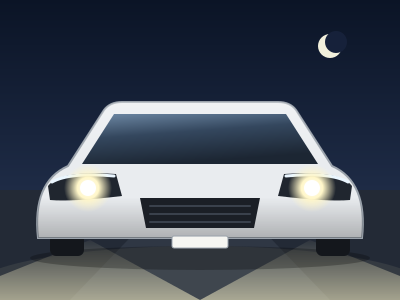
When should dipped headlights normally be switched on?
- AOnly when another car flashes you first
- BNever, so you save the battery
- CAt night and when visibility is poor, such as in rain, fog or dust
- DOnly on unlit desert roads
Answer and explanation in the bank
- Q28Right of way
An emergency vehicle with lights and siren is approaching head-on in the oncoming lane on a divided dual carriageway. What should you do?
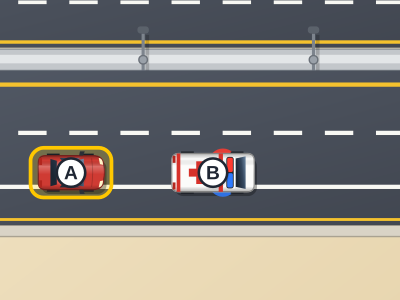
- APull over immediately even though the vehicle is on the opposite side
- BContinue normally in your own lane, as the emergency vehicle is on the other carriageway
- CCross the central reservation to get out of its way
- DMake a U-turn to follow the emergency vehicle
Answer and explanation in the bank
- Q29Penalties and fines
What does it usually cost, in addition to the fine, to get an impounded vehicle released?
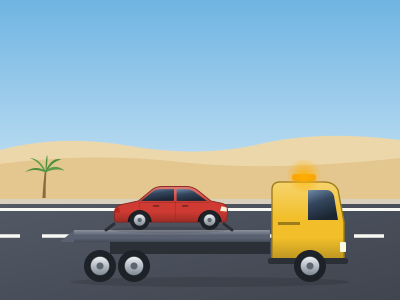
- AA separate release (impound) fee, paid on top of the fine before the car is returned
- BNothing; impounded cars are always released for free
- COnly a signature from the owner
- DA donation of your choice
Answer and explanation in the bank
- Q30Safe driving
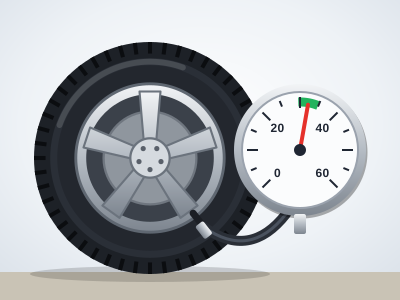
Why does the UAE heat make correct tyre pressure especially important?
- AHeat makes tyres softer so higher pressure is always better
- BHigh temperatures raise tyre pressure and can increase blowout risk if tyres are already over-inflated
- CTyre pressure has no relationship with temperature
- DOver-inflated tyres grip the road better in the heat
Answer and explanation in the bank
- Q31Road signs and signals
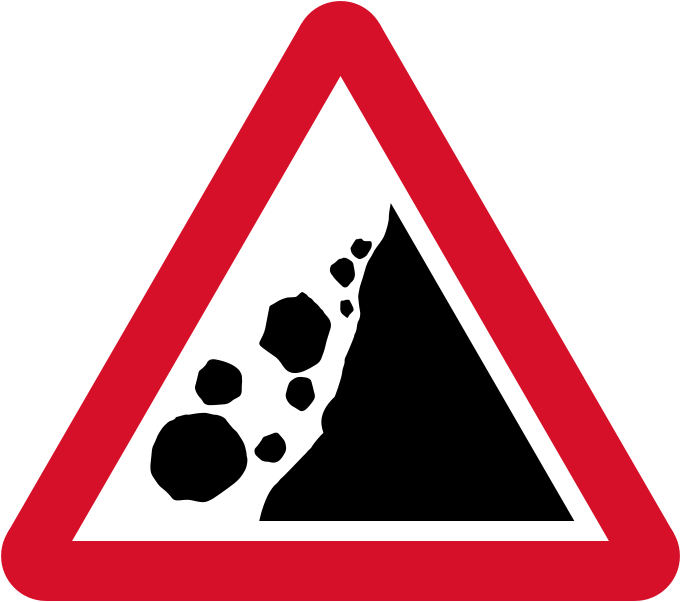
A red-bordered triangle showing a symbol of falling rocks would mean what?
- AQuarry entrance where you must stop
- BNo heavy vehicles allowed
- CWarning: falling or fallen rocks may be on the road ahead
- DConstruction material for sale
Answer and explanation in the bank
- Q32Traffic rules
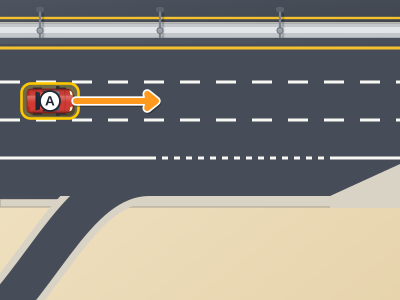
Which statement about lane discipline on a UAE motorway is correct?
- AFrequent quick lane changes are fine if you are a skilled driver
- BYou should not weave between lanes; move in a planned, signalled way and keep right when not overtaking
- CYou may cross several lanes at once to reach your exit
- DStraddling two lanes is allowed in heavy traffic
Answer and explanation in the bank
- Q33Right of way
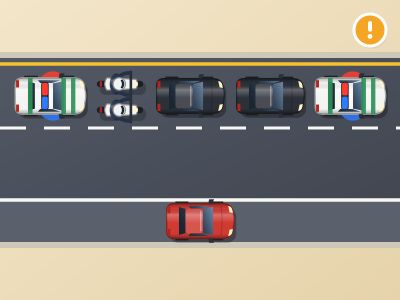
A police escort convoy with lights and sirens is passing through an intersection. What should other drivers do?
- ASlot in between escort vehicles to save time
- BContinue driving carefully around the convoy
- CStop and wait until the entire convoy has passed before moving
- DFollow immediately behind the last escort vehicle
Answer and explanation in the bank
- Q34Penalties and fines
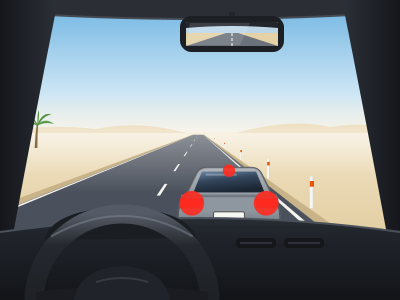
A driver keeps flashing headlights and driving very close to force a slower car out of the fast lane. What is the correct statement?
- AIt is an accepted way to ask others to move over
- BIt is legal in the fast lane only
- CIt carries no penalty because no crash happened
- DThis is tailgating and intimidation, an offence carrying a fine and black points
Answer and explanation in the bank
- Q35Safe driving
You experience a sudden front-tyre blowout at highway speed. What is the correct immediate response?
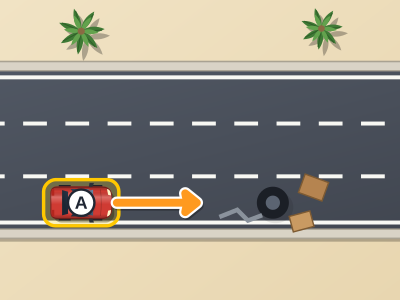
- ABrake hard immediately and steer sharply off the road
- BAccelerate briefly to regain control
- CRelease the steering wheel to prevent overcorrection
- DHold the steering firmly, ease off the accelerator gently, and let the car slow before steering to safety
Answer and explanation in the bank
- Q36Road signs and signals
Which type of sign tells you about a hazard rather than giving an order?
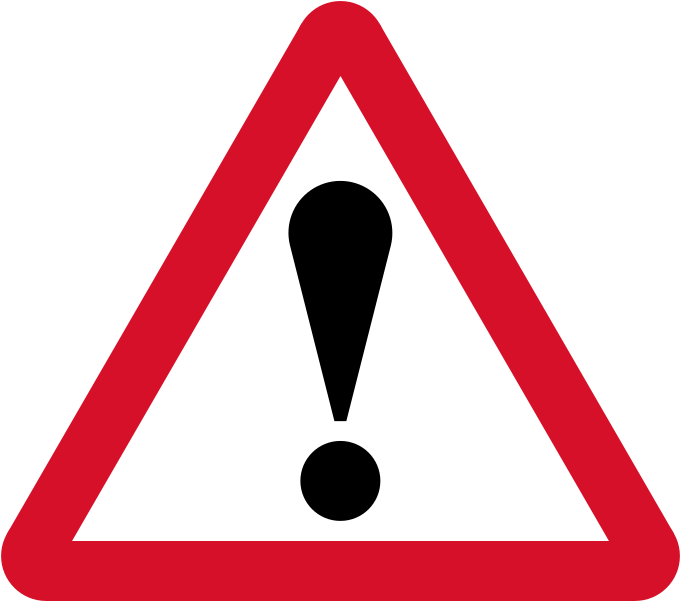
- AA red-bordered triangle
- BA red circle with a bar
- CA blue circle
- DA red octagon
Answer and explanation in the bank
- Q37Traffic rules
You are on a motorway and realise you are about to miss your exit. What should you do?
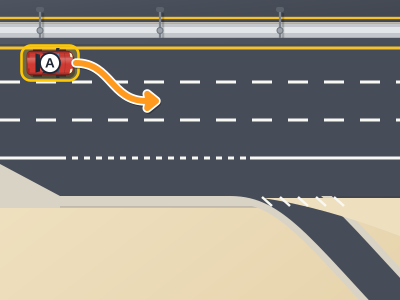
- AReverse along the hard shoulder to reach the slip road
- BStop and wait for a gap to cross back
- CContinue to the next exit and turn around safely; do not reverse or stop
- DMake a sudden swerve across all lanes to the exit
Answer and explanation in the bank
- Q38Right of way
You are approaching a zebra crossing and the vehicle in the lane next to yours has stopped. What should you do?
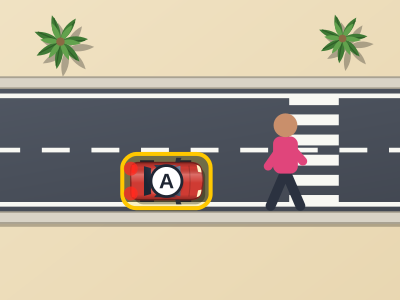
- AContinue at normal speed because the other lane is clear
- BSound your horn to warn anyone crossing
- COvertake the stopped vehicle at the crossing
- DSlow down or stop, because a pedestrian is likely crossing and you may not see them
Answer and explanation in the bank
- Q39Penalties and fines
A camera records a car at a very high speed far above the limit. Besides a fine and black points, what else can happen?
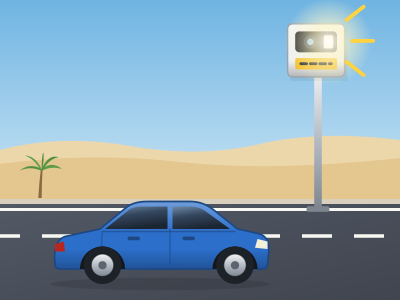
- AThe speed limit is raised for that road
- BThe vehicle can be impounded for a set period for extreme speeding
- CThe driver receives a cash reward for a fast time
- DNothing further ever happens for speed alone
Answer and explanation in the bank
- Q40Safe driving
A rear-tyre blowout causes the car to pull to one side. What should you avoid doing?
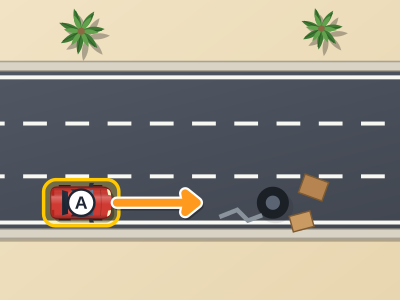
- ABrake as hard as possible immediately
- BSteer sharply away from the blow-out side
- CPut the car in reverse to slow down
- DAvoid braking hard or making sudden steering corrections
Answer and explanation in the bank
Every answer above, with the rule it comes from, plus the full 40-question timed test.
Get the Abu Dhabi ITC Theory Test Questions - AED 29What this test covers
Topics include road signs, traffic signals, right of way, roundabouts, speed limits, seat belts, fines and penalties, and the safe-driving rules specific to your vehicle category. Full question-by-question feedback with explanations is shown immediately after you finish the test above.
Frequently asked questions
How many questions is the Abu Dhabi ITC light vehicle theory test?
The official ITC light vehicle theory test in Abu Dhabi has 40 questions and you need 30 correct (75%) to pass. This practice test has 40 questions.
Is this the real exam?
These are practice questions for study only, written from the public RTA handbook and UAE traffic rules and to what candidates report from the real test. They are not the official exam questions and Wathim is not affiliated with the RTA, ITC, SRTA or any UAE government body. Test format, question count and pass mark can change and vary by emirate, so always confirm the current requirements with the licensing authority before your real test.
Is this practice test free?
The first 10 questions are free, with no signup, and each shows the answer and the reason. The full 40-question test, timed, is in the Abu Dhabi ITC Theory Test Questions PDF (AED 29, one payment), with every question in the bank.
What does the Abu Dhabi light vehicle theory test cover?
Road signs, traffic signals, right of way, roundabouts, speed limits, seat belts, penalties and safe-driving rules, plus the handling and safety topics specific to your vehicle.