

Abu Dhabi ITC Light vehicle
Practice mode· Right of way & safetyAbu Dhabi ITC - UAE Safe Driving Practice Test
Covers defensive driving, following distances, fatigue, visibility, adverse weather and hazard awareness. Safe driving habits save lives and keep your licence clean.
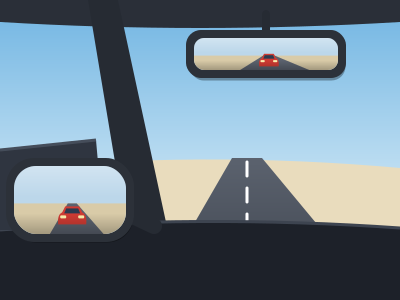
Before setting off, why should you adjust your mirrors and seat properly?
The other 12 questions in this test
Read them all. The answer and the reason for each, and the timed 22-question run, are in the Abu Dhabi ITC Theory Test Questions PDF.
- Q11Safe driving
You experience a sudden front-tyre blowout at highway speed. What is the correct immediate response?
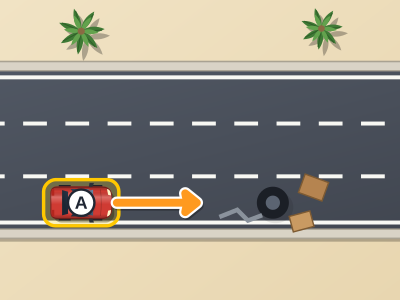
- ABrake hard immediately and steer sharply off the road
- BAccelerate briefly to regain control
- CRelease the steering wheel to prevent overcorrection
- DHold the steering firmly, ease off the accelerator gently, and let the car slow before steering to safety
Answer and explanation in the bank
- Q12Safe driving
A rear-tyre blowout causes the car to pull to one side. What should you avoid doing?
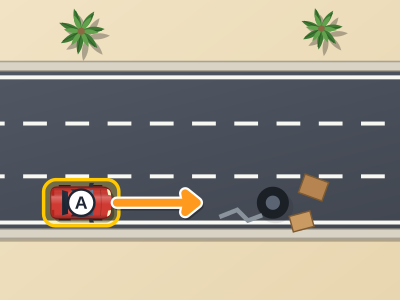
- ABrake as hard as possible immediately
- BSteer sharply away from the blow-out side
- CPut the car in reverse to slow down
- DAvoid braking hard or making sudden steering corrections
Answer and explanation in the bank
- Q13Safe driving
What does an Anti-lock Braking System (ABS) actually do for a driver?
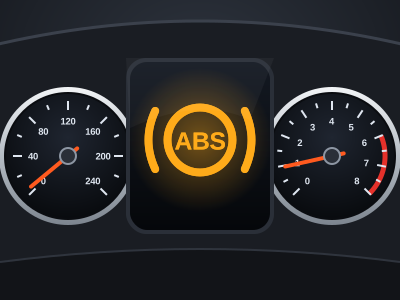
- AIt prevents the wheels from locking so you can still steer while braking hard
- BIt completely removes the need for a following distance
- CIt makes the car stop in a shorter distance than is physically possible
- DIt automatically steers the car away from hazards
Answer and explanation in the bank
- Q14Safe driving
When your car has ABS and you need to brake in an emergency, how should you apply the pedal?
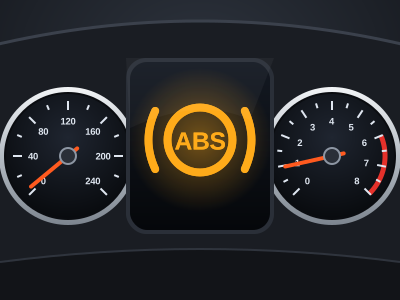
- APress firmly and hold; let the system manage wheel lock-up
- BPump the pedal rapidly yourself to avoid lock-up
- CTap the pedal gently to avoid triggering the ABS
- DPress then immediately release and press again
Answer and explanation in the bank
- Q15Safe driving
What is the main purpose of a convex (curved outward) exterior mirror?
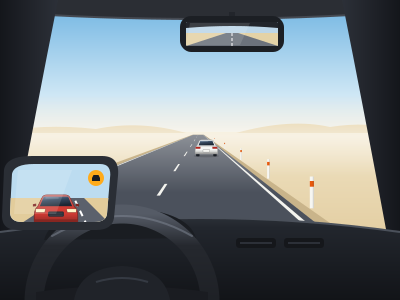
- AIt shows objects at exactly their true distance
- BIt eliminates all blind spots completely
- CIt is purely decorative and has no safety function
- DIt gives a wider field of view but makes vehicles appear further away than they are
Answer and explanation in the bank
- Q16Safe driving
How should the interior rear-view mirror be set for best visibility?
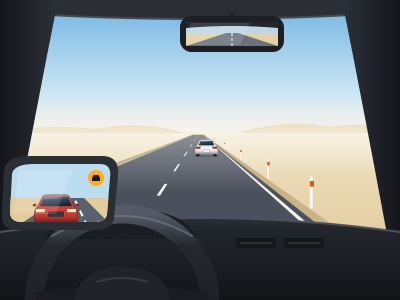
- ATilted down so you can see the back seat
- BAdjusted so you can see the full rear window with minimum head movement
- CPointed at the ceiling to avoid glare
- DIt does not matter as long as it looks symmetrical
Answer and explanation in the bank
- Q17Safe driving
At what age-related size threshold should a child generally move from a rear-facing infant seat to a forward-facing child seat?
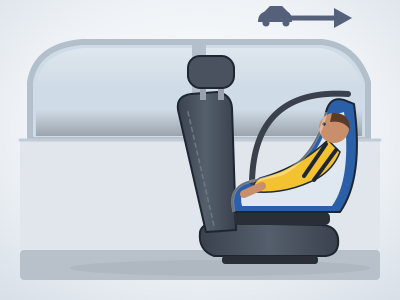
- AAt exactly six months old, regardless of size
- BAs soon as the child can sit unaided
- CWhen the child exceeds the weight or height limit of their current rear-facing seat
- DAt their first birthday without considering weight
Answer and explanation in the bank
- Q18Safe driving
Where should a child seat generally NOT be placed in a vehicle?
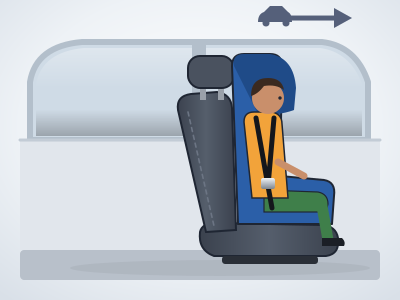
- AIn the centre of the rear seat
- BBehind the driver on the rear seat
- CSecured with the vehicle seat belt as instructed
- DIn front of an active front passenger airbag
Answer and explanation in the bank
- Q19Safe driving
In a collision, what condition can make a driver-side airbag dangerous rather than protective?
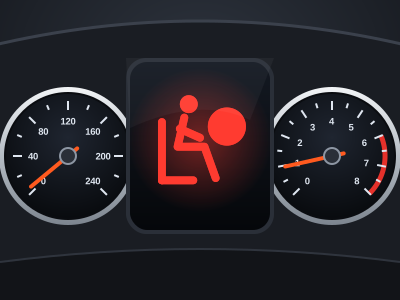
- AWearing a seat belt alongside the airbag
- BHaving a properly adjusted head restraint
- CSitting too close to the steering wheel so the deploying bag strikes you with too much force
- DDriving at a speed above 80 km/h
Answer and explanation in the bank
- Q20Safe driving
Which early warning sign indicates you are becoming dangerously fatigued behind the wheel?
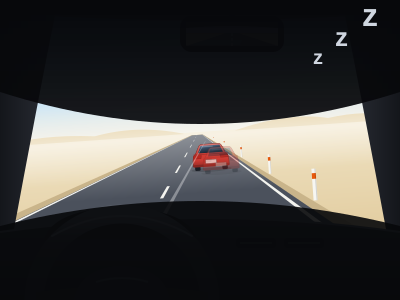
- AYou feel slightly warm but fully alert
- BYour passenger falls asleep
- CYou notice your head nodding, difficulty keeping your eyes open, or lane drifting
- DThe radio signal becomes weak
Answer and explanation in the bank
- Q21Safe driving
How often should you ideally take a break on a long motorway drive to manage fatigue?
- AOnly when you reach your destination
- BOnce every six hours is sufficient
- CBreaks are only needed at night
- DApproximately every two hours or 200 km, whichever comes first
Answer and explanation in the bank
- Q22Safe driving
Visibility drops to almost zero in dense fog. You cannot safely reach the next junction. What should you do?
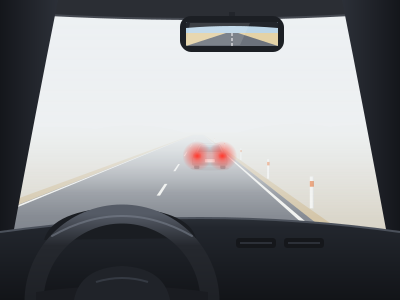
- AStop on the hard shoulder with no lights on
- BIndicate, move fully off the carriageway to a safe place, switch on hazard lights and wait
- CContinue slowly on the carriageway with hazard lights on
- DDo a U-turn on the motorway to escape the fog
Answer and explanation in the bank
Every answer above, with the rule it comes from, plus the full 22-question timed test.
Get the Abu Dhabi ITC Theory Test Questions - AED 15What this test covers
Topics include road signs, traffic signals, right of way, roundabouts, speed limits, seat belts, fines and penalties, and the safe-driving rules specific to your vehicle category. Full question-by-question feedback with explanations is shown immediately after you finish the test above.
Frequently asked questions
How many questions is the Abu Dhabi ITC light vehicle theory test?
The official ITC light vehicle theory test in Abu Dhabi has 40 questions and you need 30 correct (75%) to pass. This practice test has 22 questions.
Is this the real exam?
These are practice questions for study only, written from the public RTA handbook and UAE traffic rules and to what candidates report from the real test. They are not the official exam questions and Wathim is not affiliated with the RTA, ITC, SRTA or any UAE government body. Test format, question count and pass mark can change and vary by emirate, so always confirm the current requirements with the licensing authority before your real test.
Is this practice test free?
The first 10 questions are free, with no signup, and each shows the answer and the reason. The full 22-question test, timed, is in the Abu Dhabi ITC Theory Test Questions PDF (AED 15, one payment), with every question in the bank.
What does the Abu Dhabi light vehicle theory test cover?
Road signs, traffic signals, right of way, roundabouts, speed limits, seat belts, penalties and safe-driving rules, plus the handling and safety topics specific to your vehicle.