

Abu Dhabi ITC Truck & Bus
Practice mode· Heavy vehicle skillsAbu Dhabi ITC - UAE Heavy Vehicle Skills Test 1
First set of questions on truck and bus operation: braking distances, load stability, blind spots, turning space and vehicle checks. Master the skills unique to heavy vehicles.
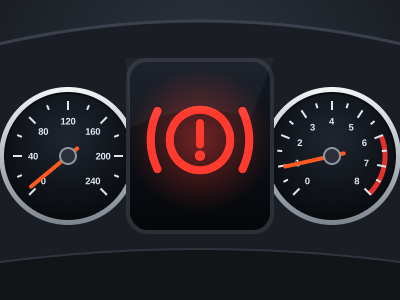
How do air (pneumatic) brakes differ from hydraulic brakes in the way they fail safe?
The other 12 questions in this test
Read them all. The answer and the reason for each, and the timed 22-question run, are in the Abu Dhabi ITC Theory Test Questions PDF.
- Q11Heavy vehicle
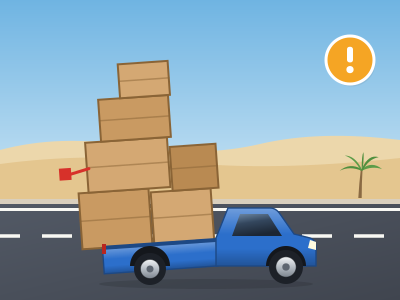
Where can a heavy-vehicle driver verify that the loaded vehicle is within legal weight limits before a long journey?
- ABy estimating the load against the delivery manifest and making no further check
- BBy inspecting the vehicle's suspension visually from outside
- CWeight checks are not necessary if the vehicle is fitted with air suspension
- DAt a certified weighbridge or weigh station
Answer and explanation in the bank
- Q12Heavy vehicle
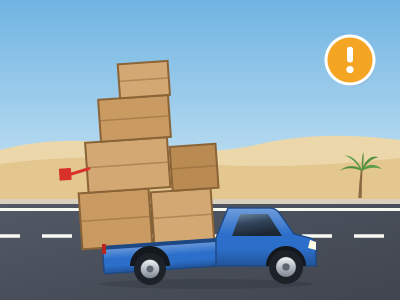
How does overloading a truck affect its braking performance compared with a correctly loaded truck of the same type?
- ABraking performance is unchanged because modern ABS compensates for additional weight
- BOverloading slightly improves braking by increasing the contact area between tyres and road
- CStopping distance increases substantially because kinetic energy is higher and the brakes may be operating beyond their design rating
- DBrakes only degrade significantly when a vehicle is 50% or more over its rated GVW
Answer and explanation in the bank
- Q13Heavy vehicle
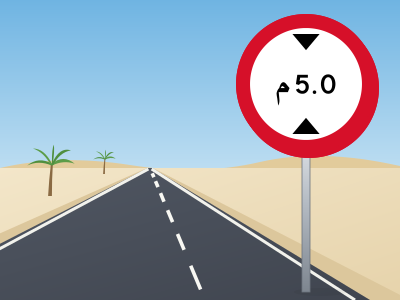
Before driving under a bridge or height-restricting gantry, what must a heavy-vehicle driver know?
- AOnly the vehicle's length is relevant when approaching low structures
- BHeight-limit signs on bridges are advisory only and not legally binding
- CSigns always include a built-in safety margin so there is nothing to worry about
- DThe vehicle's laden height and compare it carefully with the clearance stated on the restriction sign
Answer and explanation in the bank
- Q14Heavy vehicle
Why is it especially important to know the height of your heavy vehicle before entering urban areas?
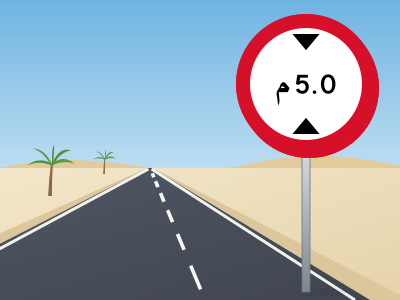
- AUrban speed limits are set lower for tall vehicles only
- BVehicle height affects fuel consumption rates in city traffic
- CLow bridges, car park entry barriers, and overhead cables may have less clearance than the vehicle height
- DHeight only matters for vehicles carrying dangerous goods
Answer and explanation in the bank
- Q15Heavy vehicle
What does a width-restriction sign (a measurement in metres inside a red circle) mean for a heavy vehicle driver?
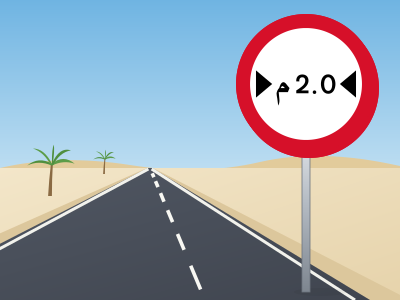
- AThe road narrows to the stated width ahead, for information only
- BVehicles wider than the stated measurement must not proceed beyond that point
- COnly vehicles carrying hazardous materials are subject to the restriction
- DVehicles may proceed if they travel slowly and cautiously enough
Answer and explanation in the bank
- Q16Heavy vehicle
A driver approaches a bridge with a posted height limit that appears to be only marginally less than the vehicle height. The driver cannot reverse. What is the safest course of action?
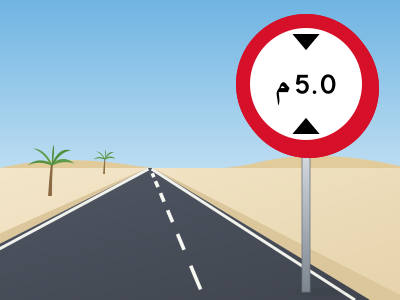
- AStop, seek assistance or a police escort, and do not attempt to pass under the bridge
- BDrive under very slowly with hazard lights on to reduce the risk
- CDeflate the tyres slightly to lower the vehicle and attempt to pass
- DSound the horn, flash the lights, and proceed quickly before other traffic arrives
Answer and explanation in the bank
- Q17Heavy vehicle
Where are the largest blind spots on a typical large rigid truck?
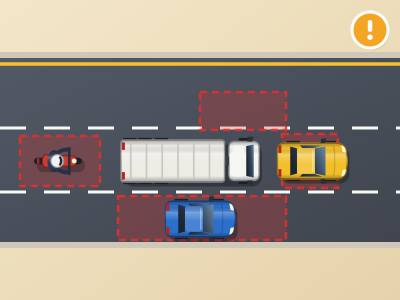
- AOnly directly behind the vehicle, as mirrors cover all other areas
- BOnly to the left side when driving on the right in the UAE
- CImmediately in front of the bumper, directly behind the body, and along both sides close to the vehicle
- DLarge trucks have no significant blind spots because they carry multiple mirrors
Answer and explanation in the bank
- Q18Heavy vehicle
How frequently should a heavy-vehicle driver check mirrors while driving on a busy road?
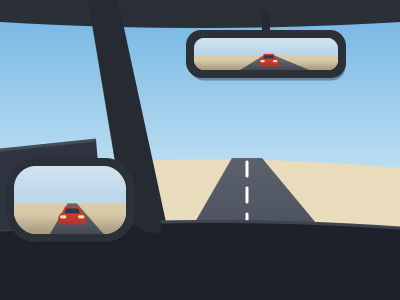
- ARegularly and systematically, every few seconds, and before every manoeuvre
- BOnly when preparing to change lanes
- COnly when reversing
- DEvery five minutes on the motorway is sufficient
Answer and explanation in the bank
- Q19Heavy vehicle
A cyclist moves alongside a truck at a junction. Which mirror is most likely to give the driver a view of them?
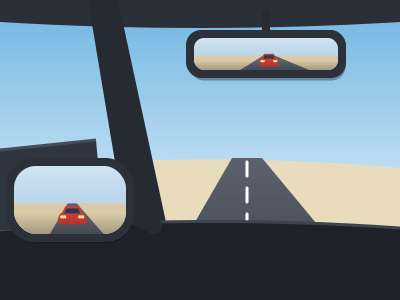
- AThe main interior rear-view mirror only
- BAll mirrors together guarantee the driver will see a cyclist alongside
- CThe wide-angle or close-proximity mirror on the passenger (kerb) side, though even this may not show someone very close to the body
- DNo mirror can show a cyclist positioned directly alongside the cab door
Answer and explanation in the bank
- Q20Heavy vehicle
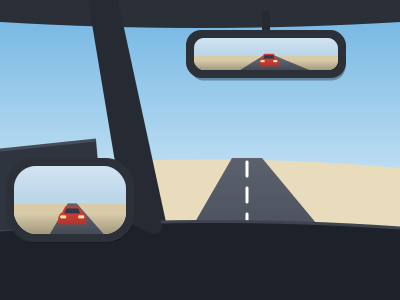
Which mirrors are typically required on a heavy goods vehicle operating in the UAE?
- AOne main interior rear-view mirror is sufficient for a rigid truck
- BOnly one large exterior mirror on the driver's side is required by law
- CMain exterior mirrors on both sides, wide-angle mirrors, and typically a close-proximity (kerb) mirror on the passenger side
- DMirrors are optional if the vehicle is equipped with a reversing camera system
Answer and explanation in the bank
- Q21Heavy vehicle
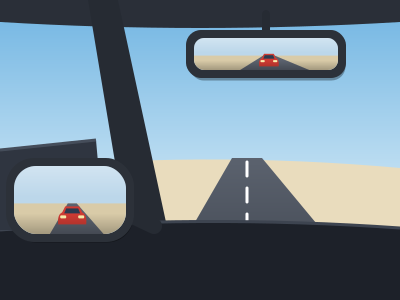
Before moving off from a roadside rest stop, in what order should a truck driver best complete their mirror and safety checks?
- ACheck only the driver-side mirror because it covers the most critical area
- BPhysically walk around the vehicle first to check all blind zones, then set and check each mirror in sequence before pulling away
- CRely on the reversing camera and check one mirror as a backup
- DMirror checks are only necessary before night driving, not during daylight hours
Answer and explanation in the bank
- Q22Heavy vehicle
What is tail swing in a large truck or articulated vehicle?
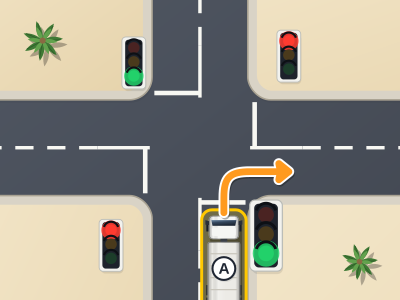
- AThe forward movement of the trailer under heavy braking
- BThe rearward shift of loose cargo during hard acceleration
- CThe outward swing of the rear overhang in the opposite direction to the turn when making a tight turn
- DThe tendency of the trailer's rear wheels to lock under braking
Answer and explanation in the bank
Every answer above, with the rule it comes from, plus the full 22-question timed test.
Get the Abu Dhabi ITC Theory Test Questions - AED 29What this test covers
Topics include road signs, traffic signals, right of way, roundabouts, speed limits, seat belts, fines and penalties, and the safe-driving rules specific to your vehicle category. Full question-by-question feedback with explanations is shown immediately after you finish the test above.
Frequently asked questions
How many questions is the Abu Dhabi ITC truck & bus theory test?
The official ITC truck & bus theory test in Abu Dhabi has 40 questions and you need 30 correct (75%) to pass. This practice test has 22 questions.
Is this the real exam?
These are practice questions for study only, written from the public RTA handbook and UAE traffic rules and to what candidates report from the real test. They are not the official exam questions and Wathim is not affiliated with the RTA, ITC, SRTA or any UAE government body. Test format, question count and pass mark can change and vary by emirate, so always confirm the current requirements with the licensing authority before your real test.
Is this practice test free?
The first 10 questions are free, with no signup, and each shows the answer and the reason. The full 22-question test, timed, is in the Abu Dhabi ITC Theory Test Questions PDF (AED 29, one payment), with every question in the bank.
What does the Abu Dhabi truck & bus theory test cover?
Road signs, traffic signals, right of way, roundabouts, speed limits, seat belts, penalties and safe-driving rules, plus the handling and safety topics specific to your vehicle.