

Dubai RTA Truck & Bus
Practice mode· Heavy vehicle skillsDubai RTA - UAE Heavy Vehicle Skills Test 1
First set of questions on truck and bus operation: braking distances, load stability, blind spots, turning space and vehicle checks. Master the skills unique to heavy vehicles.
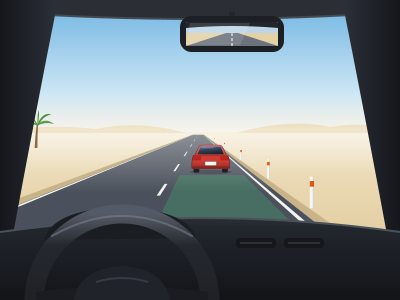
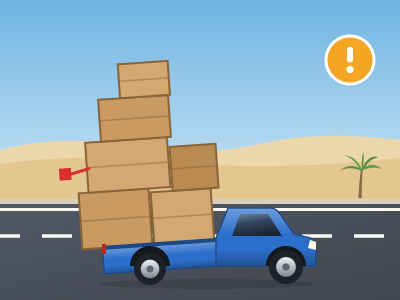
Why does a fully loaded heavy truck need a much greater stopping distance than a car travelling at the same speed?
The other 12 questions in this test
Read them all. The answer and the reason for each, and the timed 22-question run, are in the Dubai RTA Theory Test Questions PDF.
- Q11Heavy vehicle
What is an engine brake (sometimes called a Jake brake or compression release brake) on a heavy vehicle?
- AAn emergency brake that activates automatically if the engine overheats
- BA device that locks the drivetrain to prevent the engine starting when the parking brake is off
- CA retarder system that uses engine compression or exhaust restriction to slow the vehicle without using the service brakes
- DA secondary braking system driven by the vehicle's electrical alternator
Answer and explanation in the bank
- Q12Heavy vehicle
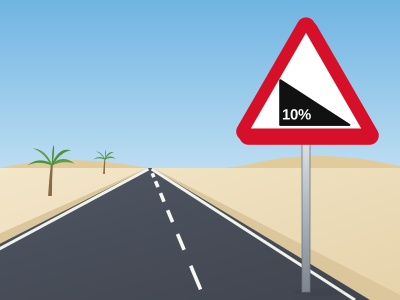
When approaching a long, steep descent in a heavy vehicle, what should you do before starting the downgrade?
- ASelect an appropriate low gear before the descent so engine braking assists speed control throughout the hill
- BShift to neutral to save fuel and control speed with the service brakes as needed
- CIncrease speed before the crest so you can coast to the bottom and minimise brake use
- DSwitch off the engine brake and rely solely on the service brakes for simplicity
Answer and explanation in the bank
- Q13Heavy vehicle
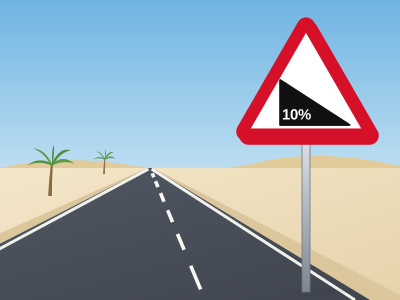
Why is it dangerous to shift into neutral (or disengage the clutch) when descending a long steep hill in a heavy vehicle?
- AShifting to neutral causes the transmission to lock up, making steering very heavy
- BIt causes air system pressure to drop rapidly, releasing the parking brake
- CIt removes all engine braking, so the vehicle accelerates freely under gravity and the driver must rely entirely on service brakes, risking brake fade
- DNeutral is perfectly safe on descents because the transmission still provides resistance
Answer and explanation in the bank
- Q14Heavy vehicle
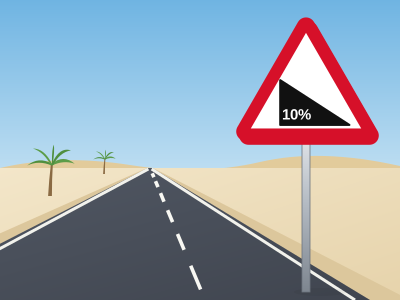
You are driving a fully laden articulated truck down a steep mountain road. Your speed is creeping upward despite light brake applications. What is the correct immediate action?
- ASwitch the engine off to use maximum compression resistance
- BSelect a lower gear, activate the engine brake, and apply the service brakes firmly but briefly to reduce speed before the situation worsens
- CSteer toward the uphill bank and use it to slow the vehicle
- DAccelerate briefly so the engine governor automatically limits your speed
Answer and explanation in the bank
- Q15Heavy vehicle
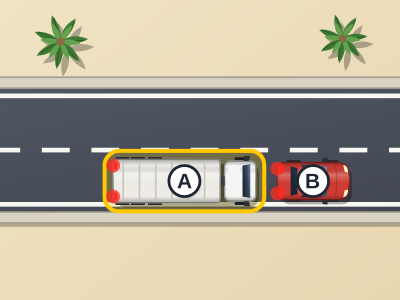
What is the purpose of under-run protection bars (rear and side guards) fitted to heavy vehicles?
- ATo strengthen the chassis so it can carry heavier loads over rough ground
- BTo mark the outer edges of the vehicle visually for other road users at night
- CTo prevent cars and motorcycles from sliding under the vehicle body in a collision, which could cause decapitation or catastrophic crush injuries
- DTo provide a step platform for loading crew to access the cargo area safely
Answer and explanation in the bank
- Q16Heavy vehicle
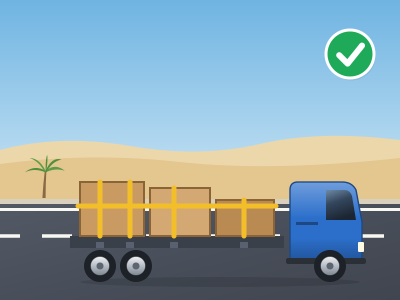
Why must cargo on a flatbed truck be properly secured before the journey begins?
- ASecuring is only required when the journey is over 100 km
- BCargo securing is optional if the goods are not classified as hazardous
- CCargo only needs to be secured when travelling on motorways
- DUnsecured cargo can shift under braking or cornering, altering the vehicle's balance and potentially falling onto other road users
Answer and explanation in the bank
- Q17Heavy vehicle
How does an improperly distributed load affect an articulated truck when cornering?
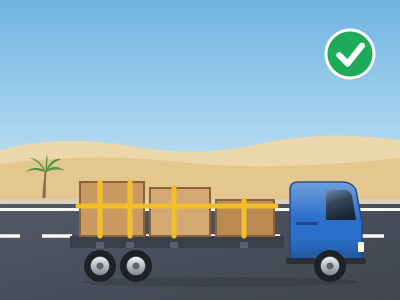
- AA load concentrated too high or to one side raises the centre of gravity and greatly increases rollover risk on bends
- BLoad position has no effect on cornering because modern air suspension self-levels the vehicle
- CA rear-heavy load improves cornering by adding downforce on the drive axles
- DUneven loading only matters on unpaved or off-road surfaces
Answer and explanation in the bank
- Q18Heavy vehicle
Where should the heaviest items be placed within a truck load to promote vehicle stability?
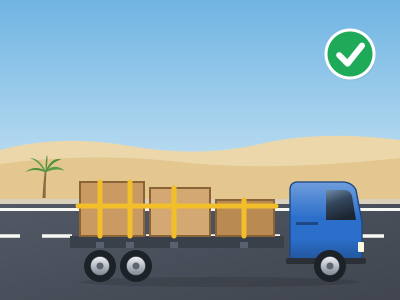
- ALow down and centred over the axles
- BAt the very rear of the load to add weight over the drive axles
- CAs high as possible for easy access during delivery
- DPosition does not matter as long as total weight is within legal limits
Answer and explanation in the bank
- Q19Heavy vehicle
How often should a driver check cargo security during a long journey?
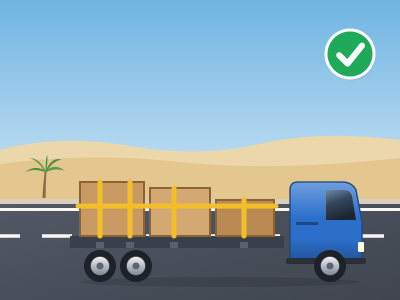
- AOnly at the start and end of the journey
- BNever, if the load was correctly secured at the beginning
- CAt regular intervals during the journey, especially shortly after departure, because loads settle and lashings loosen over time
- DOnly when the driver notices a change in how the vehicle handles
Answer and explanation in the bank
- Q20Heavy vehicle
A load falls from a truck onto a motorway and causes an accident. Who bears primary responsibility under UAE traffic law?
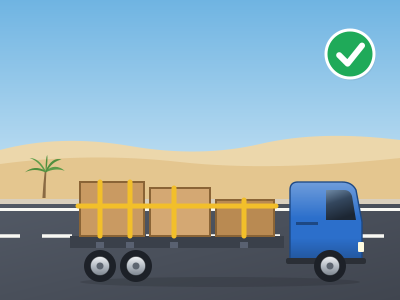
- AThe loading crew only, because the driver did not personally load the vehicle
- BThe vehicle owner only, not the driver
- CNo one is liable if the total load was within the legal weight limit
- DThe driver, who is responsible for ensuring the load is secure before and during every journey
Answer and explanation in the bank
- Q21Heavy vehicle
What does Gross Vehicle Weight (GVW) mean?
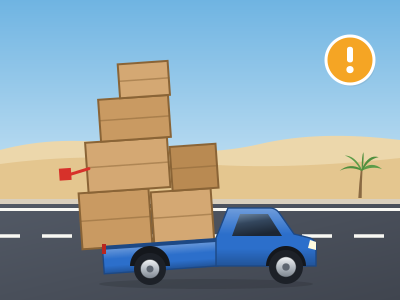
- AThe weight of the vehicle when it is completely empty
- BThe total weight of the cargo only, excluding the vehicle itself
- CThe weight distributed on the rear axles alone
- DThe maximum total permitted weight of the vehicle including the vehicle itself, its cargo, fuel, and any passengers
Answer and explanation in the bank
- Q22Heavy vehicle
What is the main danger of overloading a truck axle?
- AIt only causes the speedometer to read inaccurately
- BThe engine will automatically shut down if an axle is overloaded
- COverloading an axle improves traction and grip
- DIt can cause tyre blowouts, brake overheating, loss of steering, and structural damage to both the road and the vehicle
Answer and explanation in the bank
Every answer above, with the rule it comes from, plus the full 22-question timed test.
Get the Dubai RTA Theory Test Questions - AED 29What this test covers
Topics include road signs, traffic signals, right of way, roundabouts, speed limits, seat belts, fines and penalties, and the safe-driving rules specific to your vehicle category. Full question-by-question feedback with explanations is shown immediately after you finish the test above.
Frequently asked questions
How many questions is the Dubai RTA truck & bus theory test?
The official RTA truck & bus theory test in Dubai has 40 questions and you need 30 correct (75%) to pass. This practice test has 22 questions.
Is this the real exam?
These are practice questions for study only, written from the public RTA handbook and UAE traffic rules and to what candidates report from the real test. They are not the official exam questions and Wathim is not affiliated with the RTA, ITC, SRTA or any UAE government body. Test format, question count and pass mark can change and vary by emirate, so always confirm the current requirements with the licensing authority before your real test.
Is this practice test free?
The first 10 questions are free, with no signup, and each shows the answer and the reason. The full 22-question test, timed, is in the Dubai RTA Theory Test Questions PDF (AED 29, one payment), with every question in the bank.
What does the Dubai truck & bus theory test cover?
Road signs, traffic signals, right of way, roundabouts, speed limits, seat belts, penalties and safe-driving rules, plus the handling and safety topics specific to your vehicle.