

Ras Al Khaimah RAK Traffic Light vehicle
Practice mode· Right of way & safetyRas Al Khaimah RAK Traffic - UAE Right of Way Practice Test
Tests your understanding of priority rules: unmarked junctions, roundabouts, emergency vehicles, merging lanes and more. Getting right of way right can prevent serious accidents.
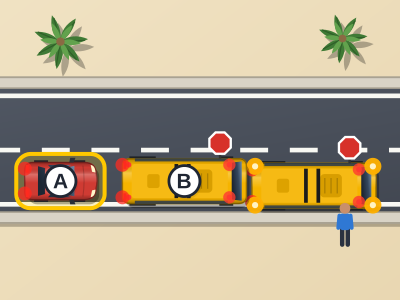
A school bus ahead has stopped and its warning lights are flashing while children get on or off. What should you do?
The other 12 questions in this test
Read them all. The answer and the reason for each, and the timed 22-question run, are in the RAK Traffic Theory Test Questions PDF.
- Q11Right of way
You are approaching a narrow bridge and can see an oncoming vehicle already on it. What should you do?
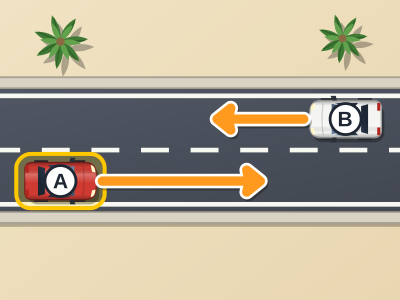
- AStop before the bridge and let the oncoming vehicle clear it before you enter
- BEnter the bridge and force the oncoming vehicle to reverse
- CBoth enter slowly and squeeze past each other
- DSound the horn to claim priority and drive on
Answer and explanation in the bank
- Q12Right of way
In a residential area with no pavement markings or pedestrian crossings, a group of children is crossing the road. What should you do?
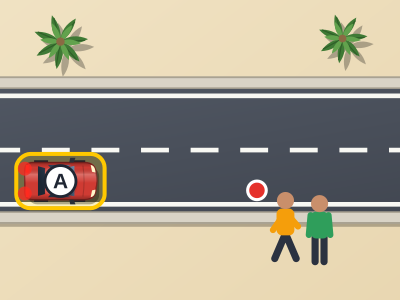
- AProceed at normal speed because children should not cross mid-road
- BSlow right down, stop if needed, and wait for them to cross safely
- CSound the horn to warn them and drive past quickly
- DProceed once you can see a gap between the children
Answer and explanation in the bank
- Q13Right of way
A bus lane is active on your left. An emergency ambulance is using the bus lane at speed to bypass traffic. Should other vehicles enter the bus lane to give the ambulance more room?
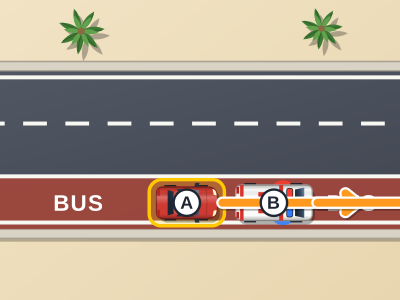
- AYes, pull into the bus lane to give the ambulance the full main lane
- BNo, stay out of the bus lane; you would obstruct the ambulance by entering it
- CYes, if your vehicle fits in the bus lane you may use it briefly for this purpose
- DStop in the main lane so the ambulance has all available space
Answer and explanation in the bank
- Q14Right of way
Two roads of equal status meet at an unmarked T-junction and both have no signs. You are on the road that ends (the stem of the T). Who has priority?
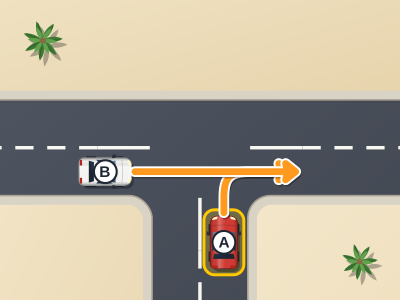
- ATraffic on the continuous through road has priority over you on the road that ends
- BYou have priority because you arrived at the junction first
- CThe vehicle to your right on the through road has priority but only if turning
- DBoth roads have equal priority even at a T-junction
Answer and explanation in the bank
- Q15Right of way
When do pedestrians have priority over you?
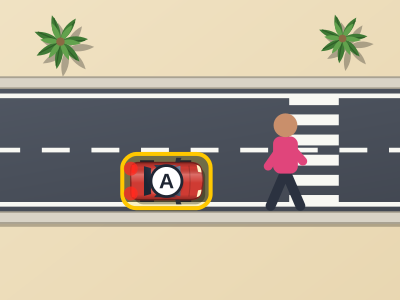
- AWhen they are on a pavement you need to drive across
- BWhen they are crossing a road you are turning into
- CWhen they are on a zebra crossing
- DIn all of these situations
Answer and explanation in the bank
- Q16Right of way
A pedestrian waiting to cross is holding a white cane. What does this tell you?
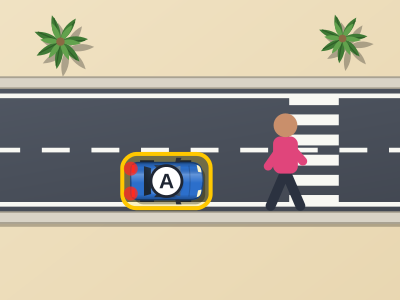
- AThey are elderly
- BThey are visually impaired: be patient and give them plenty of time
- CThey are a crossing patrol
- DThey want a lift
Answer and explanation in the bank
- Q17Right of way
A school bus has stopped and extended its STOP arm. Where must you stop?
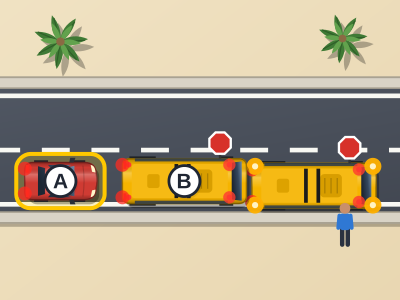
- ARight behind its bumper
- BAt least 5 metres away from the bus
- CYou may pass slowly if no children are visible
- DOnly stop if you are behind it on a dual carriageway
Answer and explanation in the bank
- Q18Right of way
You see camels close to the edge of a desert highway. What should you do?
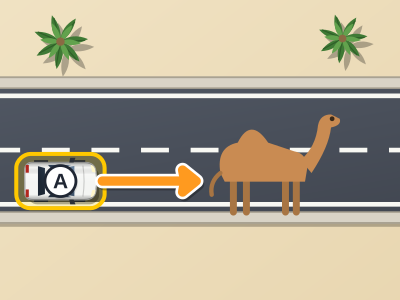
- ASound the horn to scare them away
- BSlow down, be ready to stop and pass carefully
- CKeep your speed; they will move
- DFlash your headlights at them
Answer and explanation in the bank
- Q19Right of way
At an unmarked junction, a car arrives from your left at the same time as you. Who should go first?
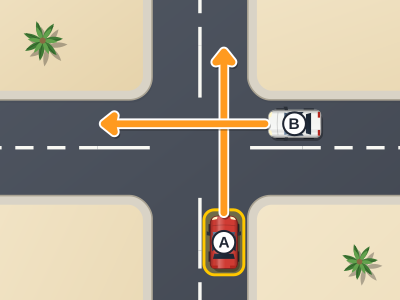
- AThe car on your left
- BYou, because you are on its right, but only once you are sure it is giving way
- CWhoever is driving faster
- DNeither; both must wait for a police officer
Answer and explanation in the bank
- Q20Right of way
An emergency vehicle approaches with lights and sirens on. What should you do?
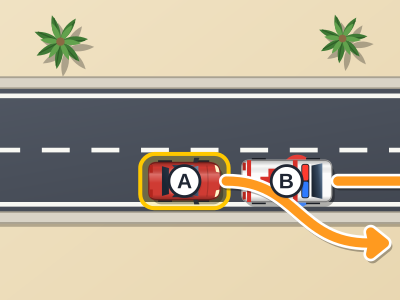
- ASpeed up to clear the road faster
- BStop immediately in your lane
- CPull over safely to the right and let it pass
- DIgnore it if you have right of way
Answer and explanation in the bank
- Q21Right of way
At an unmarked junction where two roads of equal importance meet and there are no signs or signals, who has priority?
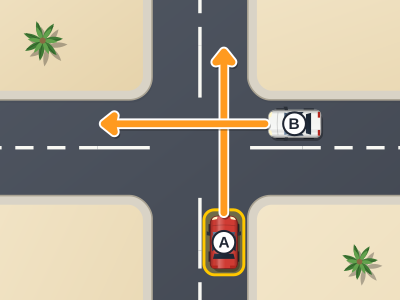
- AThe vehicle approaching from your left
- BThe vehicle approaching from your right
- CThe larger of the two vehicles
- DWhoever reaches the junction fastest
Answer and explanation in the bank
- Q22Right of way
As you approach a roundabout, who normally has priority?
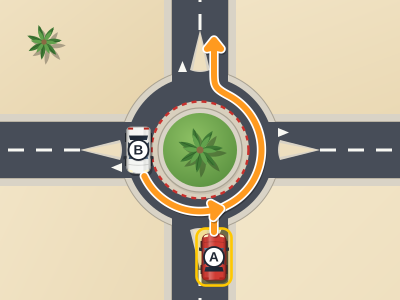
- ATraffic waiting to enter from your lane
- BThe vehicle travelling at the highest speed
- CTraffic already circulating on the roundabout
- DVehicles entering from the left only
Answer and explanation in the bank
Every answer above, with the rule it comes from, plus the full 22-question timed test.
Get the RAK Traffic Theory Test Questions - AED 29What this test covers
Topics include road signs, traffic signals, right of way, roundabouts, speed limits, seat belts, fines and penalties, and the safe-driving rules specific to your vehicle category. Full question-by-question feedback with explanations is shown immediately after you finish the test above.
Frequently asked questions
How many questions is the Ras Al Khaimah RAK Traffic light vehicle theory test?
The official RAK Traffic light vehicle theory test in Ras Al Khaimah has 40 questions and you need 30 correct (75%) to pass. This practice test has 22 questions.
Is this the real exam?
These are practice questions for study only, written from the public RTA handbook and UAE traffic rules and to what candidates report from the real test. They are not the official exam questions and Wathim is not affiliated with the RTA, ITC, SRTA or any UAE government body. Test format, question count and pass mark can change and vary by emirate, so always confirm the current requirements with the licensing authority before your real test.
Is this practice test free?
The first 10 questions are free, with no signup, and each shows the answer and the reason. The full 22-question test, timed, is in the RAK Traffic Theory Test Questions PDF (AED 29, one payment), with every question in the bank.
What does the Ras Al Khaimah light vehicle theory test cover?
Road signs, traffic signals, right of way, roundabouts, speed limits, seat belts, penalties and safe-driving rules, plus the handling and safety topics specific to your vehicle.