

Ras Al Khaimah RAK Traffic Light vehicle
Practice mode· Road rulesRas Al Khaimah RAK Traffic - UAE Road Rules Test 1
First 20 questions on UAE traffic rules - lane discipline, roundabouts, seat belts, mobile phone use, speed limits and more. Essential knowledge for any UAE driver.
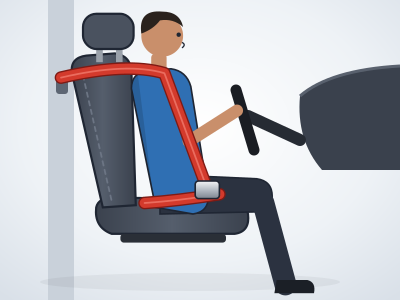
What is the rule on wearing seat belts in the UAE?
The other 10 questions in this test
Read them all. The answer and the reason for each, and the timed 20-question run, are in the RAK Traffic Theory Test Questions PDF.
- Q11Traffic rules
When towing a trailer or caravan, how does it generally affect the maximum speed you should drive?
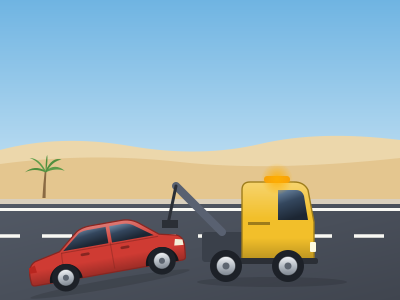
- AYou should reduce speed below the normal road limit because handling and braking distances increase with a trailer
- BYou can drive at the same speed as without the trailer
- CTowing actually improves stability so higher speeds are fine
- DSpeed limits only apply to the trailer, not the towing vehicle
Answer and explanation in the bank
- Q12Traffic rules
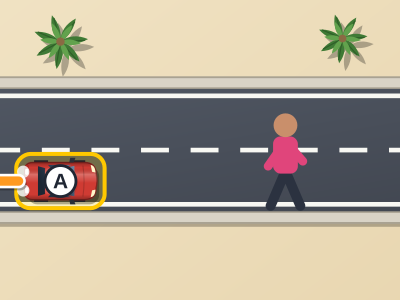
Before you reverse your vehicle, what checks should you carry out?
- AOnly look in the reversing camera and then go
- BSound the horn once and then reverse without looking
- CCheck only the left mirror before moving back
- DCheck all around the vehicle including behind, to the sides and in blind spots, looking for pedestrians, cyclists and other vehicles
Answer and explanation in the bank
- Q13Traffic rules
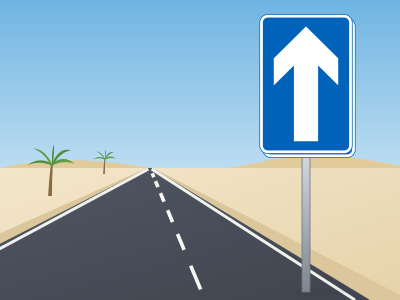
On a one-way street with multiple lanes, which lane should you use if you intend to turn left at the end?
- AThe right-hand lane regardless of your intended direction
- BAny lane, because lane position does not matter on one-way streets
- CThe middle lane to keep options open
- DThe left-hand lane, which is closest to your intended exit direction
Answer and explanation in the bank
- Q14Traffic rules
A cyclist is riding in a cycle lane that runs along the right edge of the road. You need to turn right across the cycle lane. Who has priority?
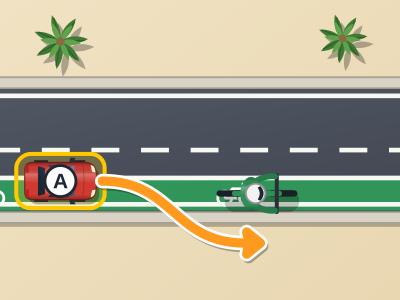
- AThe cyclist in the cycle lane; you must give way before crossing it
- BThe turning vehicle, because it is a larger vehicle
- CWhoever reaches the point first at any speed
- DNeither; both should stop and agree who goes
Answer and explanation in the bank
- Q15Traffic rules
What is the key reason speed limits in residential areas and near schools are set much lower than on main roads?
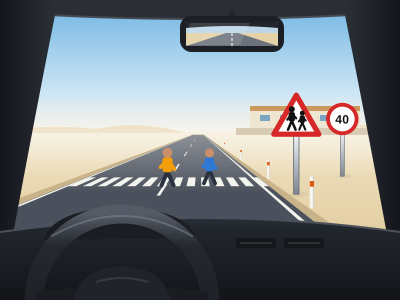
- ATo protect pedestrians, especially children, who may step into the road unexpectedly
- BTo reduce noise levels for residents during the day
- CTo allow road-cleaning vehicles to operate alongside traffic
- DBecause the roads are too narrow for speeds above 40 km/h
Answer and explanation in the bank
- Q16Traffic rules
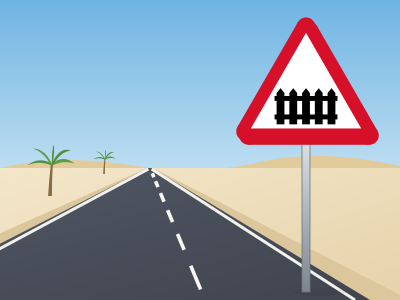
You reach a level crossing and the barrier is down but you can see no train. What should you do?
- ADrive around the barrier if the track looks empty
- BWait; never try to drive around or under a closed barrier because a train may be approaching out of sight
- CSound the horn repeatedly until the barrier opens
- DPush through the barrier if waiting takes more than two minutes
Answer and explanation in the bank
- Q17Traffic rules
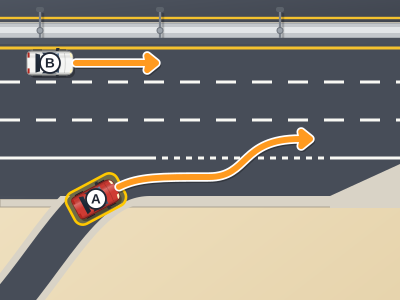
When joining a motorway from an on-ramp, who generally has priority: the vehicle on the ramp or traffic on the main carriageway?
- AThe vehicle on the ramp always has priority because it is joining from the right
- BNeither vehicle has priority; they must both stop and negotiate
- CTraffic on the main carriageway generally has priority; the merging vehicle must give way and find a safe gap
- DThe ramp vehicle has priority if it is travelling faster than motorway traffic
Answer and explanation in the bank
- Q18Traffic rules
An ambulance with lights and siren on is driving on the opposite side of a divided dual carriageway. Do you need to pull over?
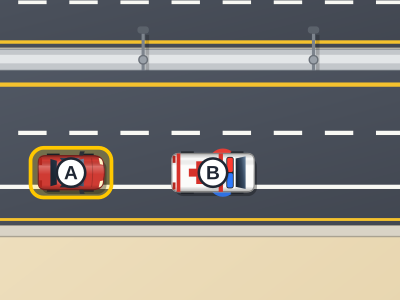
- AYes, always stop immediately for any emergency vehicle regardless of road layout
- BNo, if there is a solid central barrier separating the carriageways the emergency vehicle cannot cross to your side, so you may continue
- CYes, stop and reverse to the nearest lay-by
- DYes, drive onto the hard shoulder until the siren fades
Answer and explanation in the bank
- Q19Traffic rules
A bus lane sign shows operating hours of 7 am to 9 am and 4 pm to 7 pm. What are you allowed to do outside those hours?
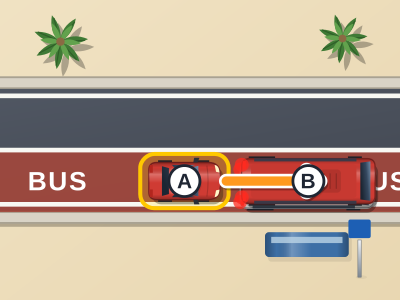
- ANever use the bus lane regardless of the time
- BUse it only if a bus is present and you are following it
- CDrive in the bus lane as a normal traffic lane, because the restriction only applies during the posted times
- DUse it only at night from 10 pm onwards
Answer and explanation in the bank
- Q20Traffic rules
After stopping on the hard shoulder in a breakdown, where is the safest place for you and your passengers to wait?
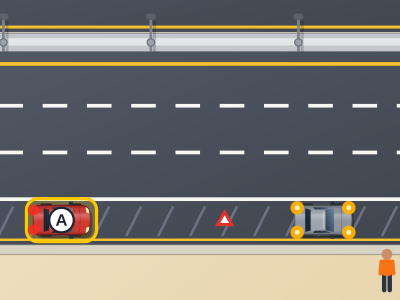
- ASeated in the car with seat belts on
- BBehind the vehicle safety barrier away from the carriageway, not in or beside the car
- CStanding directly behind the car to warn traffic
- DWalking back along the hard shoulder to the last junction
Answer and explanation in the bank
Every answer above, with the rule it comes from, plus the full 20-question timed test.
Get the RAK Traffic Theory Test Questions - AED 29What this test covers
Topics include road signs, traffic signals, right of way, roundabouts, speed limits, seat belts, fines and penalties, and the safe-driving rules specific to your vehicle category. Full question-by-question feedback with explanations is shown immediately after you finish the test above.
Frequently asked questions
How many questions is the Ras Al Khaimah RAK Traffic light vehicle theory test?
The official RAK Traffic light vehicle theory test in Ras Al Khaimah has 40 questions and you need 30 correct (75%) to pass. This practice test has 20 questions.
Is this the real exam?
These are practice questions for study only, written from the public RTA handbook and UAE traffic rules and to what candidates report from the real test. They are not the official exam questions and Wathim is not affiliated with the RTA, ITC, SRTA or any UAE government body. Test format, question count and pass mark can change and vary by emirate, so always confirm the current requirements with the licensing authority before your real test.
Is this practice test free?
The first 10 questions are free, with no signup, and each shows the answer and the reason. The full 20-question test, timed, is in the RAK Traffic Theory Test Questions PDF (AED 29, one payment), with every question in the bank.
What does the Ras Al Khaimah light vehicle theory test cover?
Road signs, traffic signals, right of way, roundabouts, speed limits, seat belts, penalties and safe-driving rules, plus the handling and safety topics specific to your vehicle.