

Ras Al Khaimah RAK Traffic Motorcycle
Timed mock exam· Full mock examsRas Al Khaimah RAK Traffic - UAE Motorcycle Theory Mock Test 1
A full 40-question timed practice exam for the UAE motorcycle (bike) theory test. Covers shared road rules and signs plus motorcycle-specific control and safety. Aim for 30/40 (75%) to pass.
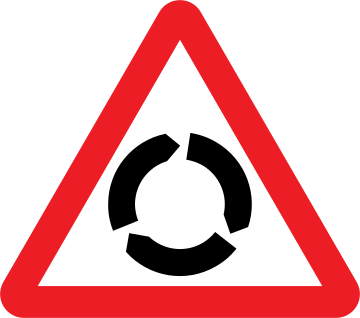
What is the meaning of this sign?
The other 30 questions in this test
Read them all. The answer and the reason for each, and the timed 40-question run, are in the RAK Traffic Theory Test Questions PDF.
- Q11Motorcycle safety
It begins to rain after a long dry period on a UAE road. Why is this especially dangerous for motorcyclists?
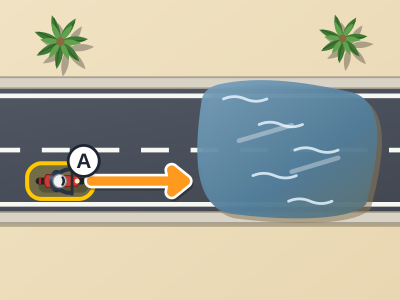
- ARain makes the road surface softer and reduces tyre pressure
- BOils, rubber dust, and sand accumulated during the dry period rise to the surface and mix with rain, creating an extremely slippery film
- CRainwater fills potholes and makes them impossible to see
- DRain reduces engine temperature and causes misfiring
Answer and explanation in the bank
- Q12Road signs and signals
The letter P on a blue sign usually indicates what?
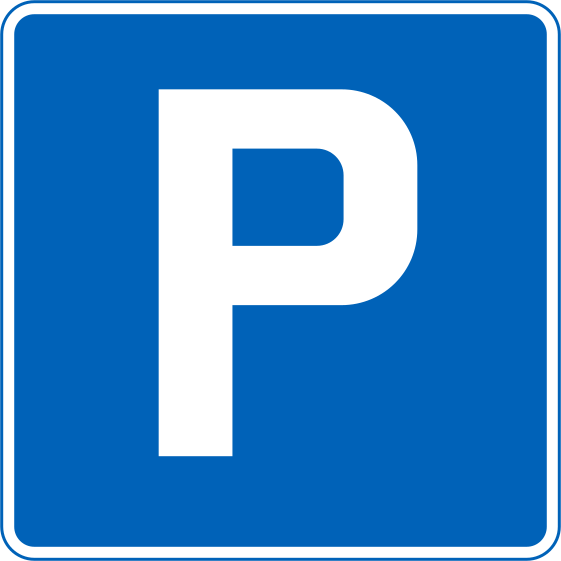
- AA parking area or parking information
- BA pedestrian-only zone
- CA police checkpoint only
- DA petrol station
Answer and explanation in the bank
- Q13Traffic rules
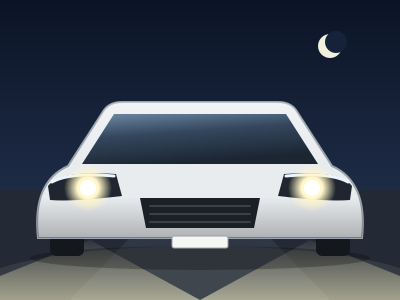
When is it acceptable to flash your headlights at another driver?
- ATo order slower cars to get out of your way aggressively
- BTo thank someone by holding the flash for several seconds
- CTo tell others you are ignoring the traffic signals
- DBriefly, to let another road user know you are there
Answer and explanation in the bank
- Q14Right of way
At a junction where your traffic light has failed and is completely dark, how should you treat it?
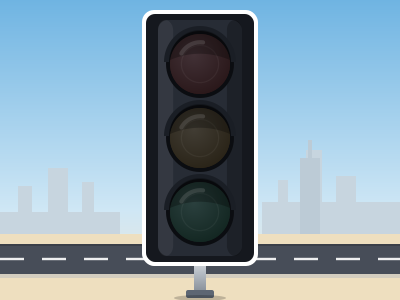
- AAssume you have priority and drive straight through
- BTreat it with caution, slow down and give way as if it were an unmarked junction
- CSpeed up to clear the junction before others
- DStop permanently until the lights are repaired
Answer and explanation in the bank
- Q15Penalties and fines
Do black points expire, or do they stay on a licence forever?
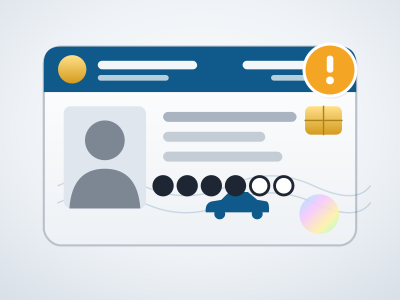
- AThey always stay on the licence permanently
- BThey are removed every time you pay any fine
- CThey can be deleted by asking your insurer
- DThey are cleared 12 months after they were recorded, if the 24-point limit was not reached
Answer and explanation in the bank
- Q16Safe driving
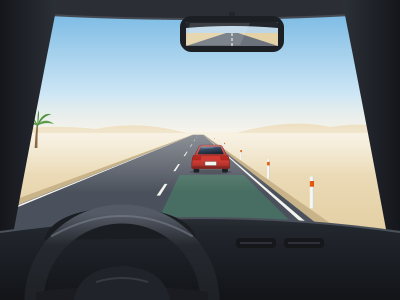
In which situation should you at least double your normal two to three second following gap?
- AOnly when following a motorcycle
- BOnly when the speed limit is above 120 km/h
- CDoubling the gap is never necessary
- DWhen driving in rain, fog, or on a sandy road surface
Answer and explanation in the bank
- Q17Motorcycle control
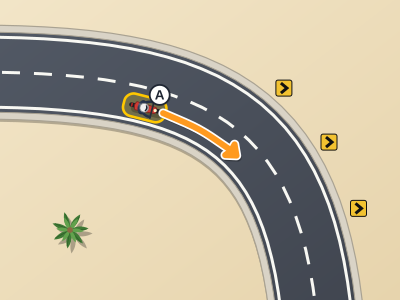
You are mid-corner and realise you are going too fast. What is the safest first action?
- AApply the front brake firmly to scrub speed immediately
- BApply the rear brake firmly while maintaining the current lean angle
- CStraighten the bike upright and then brake hard
- DLook through the corner exit, relax, gently increase lean, and hold or very gently add throttle
Answer and explanation in the bank
- Q18Motorcycle safety
How should a motorcyclist adjust their riding in wet conditions?
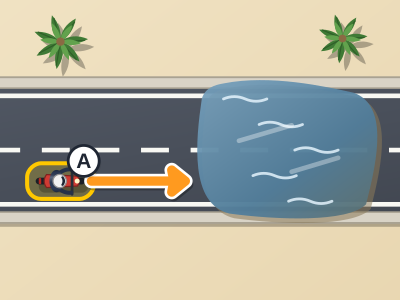
- AMaintain the same following distance but increase throttle for better stability
- BUse the rear brake more than the front because the front locks easily in the wet
- CReduce tyre pressure slightly to increase the contact patch size
- DIncrease following distance, reduce speed, use smoother and more progressive control inputs, and avoid painted surfaces
Answer and explanation in the bank
- Q19Road signs and signals
How can you tell a give-way (yield) sign apart from other triangular signs?
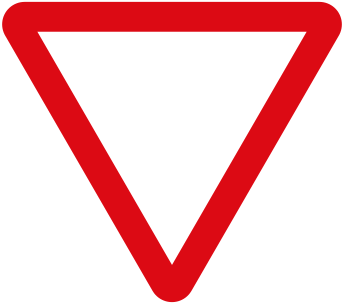
- AIt is a triangle pointing upwards
- BIt is a red circle
- CIt is a blue square
- DIt is a triangle pointing downwards
Answer and explanation in the bank
- Q20Traffic rules
When another vehicle is overtaking you, what should you do?
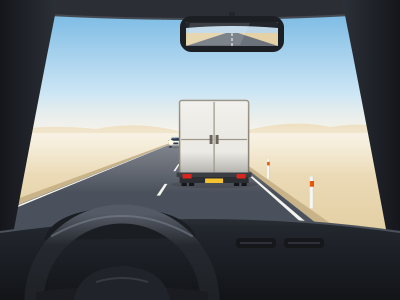
- ASpeed up so it cannot complete the overtake
- BMove towards the centre line to block it
- CKeep a steady speed and stay in your lane so it can pass safely
- DBrake hard to force it back behind you
Answer and explanation in the bank
- Q21Right of way
Four vehicles arrive at an unmarked four-way junction at almost the same time, one from each direction. Which vehicle should go first?
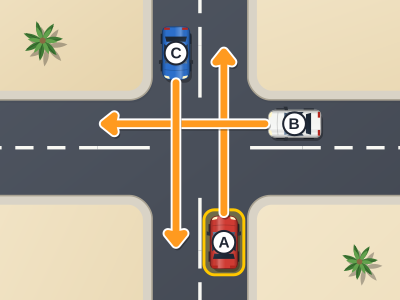
- AThe vehicle travelling fastest has priority
- BThe vehicle on the busiest-looking road goes first
- CAll four vehicles may move at the same time with care
- DEach driver gives way to the vehicle on their right, creating a safe order of movement
Answer and explanation in the bank
- Q22Penalties and fines
Which of the following typically adds the most black points and heaviest penalties?
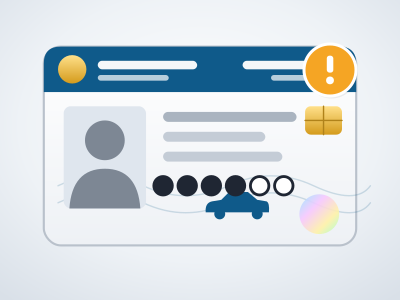
- ASerious offences such as drink-driving, reckless driving or running a red light
- BParking slightly over a marked bay line
- CDriving a clean, well-maintained car
- DFilling up with the wrong grade of fuel
Answer and explanation in the bank
- Q23Safe driving
What are the two main parts that make up your total stopping distance?
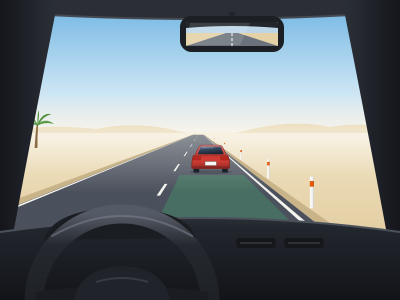
- ASignalling distance and lane-change distance
- BThinking distance and braking distance
- CAcceleration distance and deceleration distance
- DReaction distance and indicator distance
Answer and explanation in the bank
- Q24Motorcycle control
Which of the following statements about trail braking is correct?
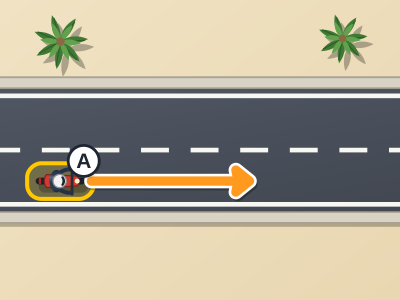
- ATrail braking means completing all braking after the corner apex
- BTrail braking means dragging the rear brake through the whole corner
- CTrail braking is recommended for all novice riders as it is safer than braking before a corner
- DTrail braking means maintaining light front brake pressure while transitioning from upright to leaned, and requires advanced skill
Answer and explanation in the bank
- Q25Motorcycle safety
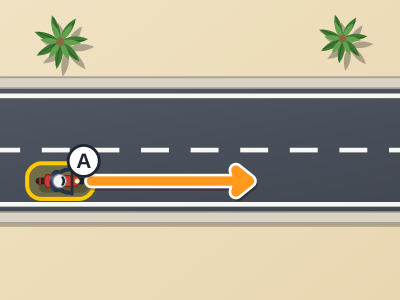
What is a lifesaver check in motorcycle riding?
- AChecking the fuel level before starting a long journey
- BChecking tyre pressure before every ride
- CLooking ahead for hazards at every junction
- DA final glance over the shoulder in the direction of intended movement, performed just before changing lane or turning
Answer and explanation in the bank
- Q26Road signs and signals
What is the key difference in what a driver must do at a STOP sign compared with a Give Way sign?
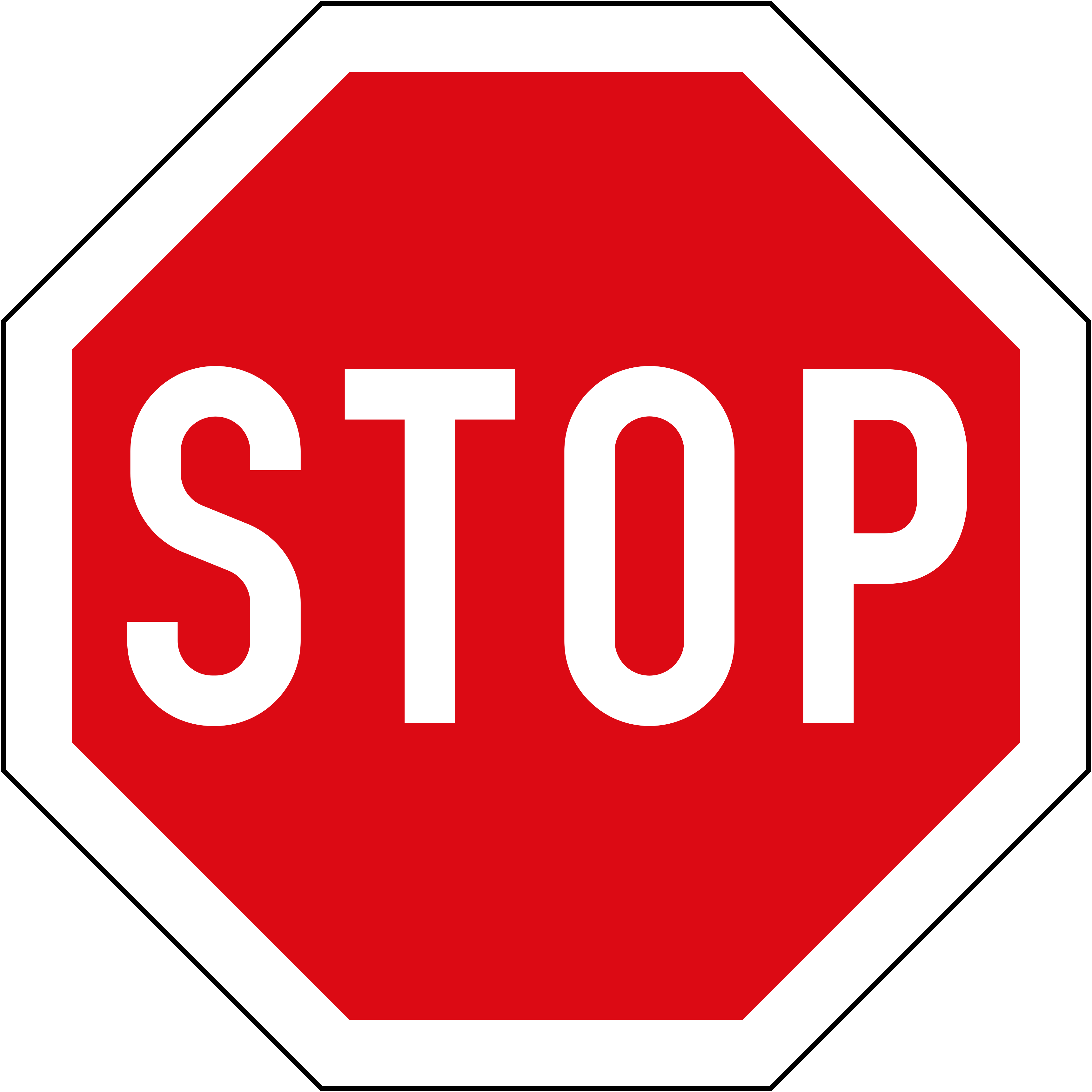
- AAt STOP you must come to a full halt; at Give Way you may roll on if it is clear
- BBoth require a full stop every time
- CNeither requires you to slow down
- DAt Give Way you must stop, at STOP you may keep moving
Answer and explanation in the bank
- Q27Traffic rules
What does a slower minimum-speed situation on a motorway require of you?
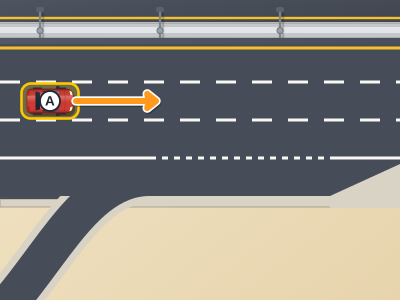
- ADrive as slowly as you like in any lane
- BKeep up with the safe flow of traffic and do not drive so slowly that you obstruct others
- CStop on the carriageway if you feel unsure
- DUse the hard shoulder as a slow lane
Answer and explanation in the bank
- Q28Right of way
You are driving around a single-lane roundabout and want to exit. When should you signal right to show you are leaving?
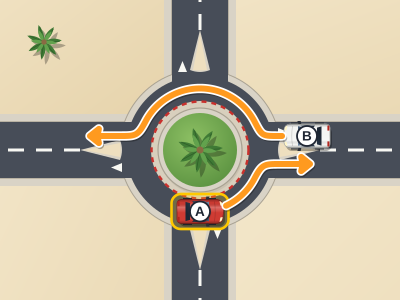
- AOnly after you have already turned into the exit road
- BSignals are not required on a roundabout
- CAs soon as you enter the roundabout
- DBefore the exit you intend to take, after passing the previous exit
Answer and explanation in the bank
- Q29Penalties and fines
You want to send a quick text while stopped at a red light. What is the safest and most correct approach?
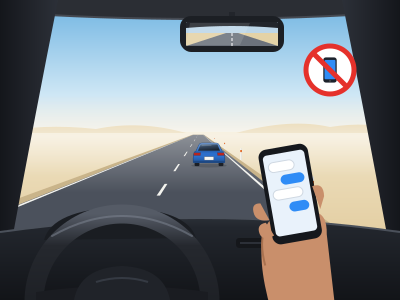
- ATexting is always fine when the car is not moving
- BTexting is allowed if you hold the phone low
- CTexting is only an offence above 60 km/h
- DDo not use a hand-held phone; handling it while in control of the vehicle can still be an offence
Answer and explanation in the bank
- Q30Safe driving
Which factor most directly increases a driver's thinking distance?
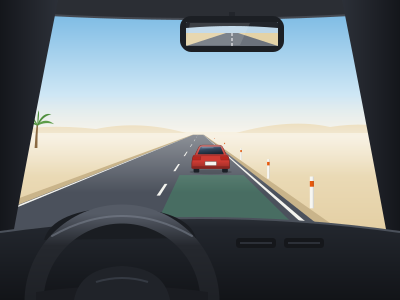
- ASlower reactions caused by fatigue, distraction, or medication
- BFully inflated tyres
- CA clean windscreen
- DAnti-lock braking system fitted to the car
Answer and explanation in the bank
- Q31Motorcycle control
When should a rider change into a lower gear while riding on a UAE expressway?
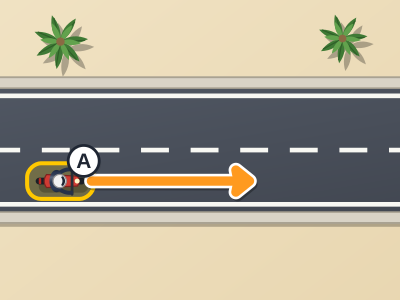
- ANever; expressway riding should always use the highest available gear
- BOnly when an engine warning light appears
- CWhen outside temperature exceeds 40 degrees Celsius
- DWhen approaching a hazard or junction requiring more power or engine braking
Answer and explanation in the bank
- Q32Motorcycle safety
What is the defensive riding concept of planning an escape route?
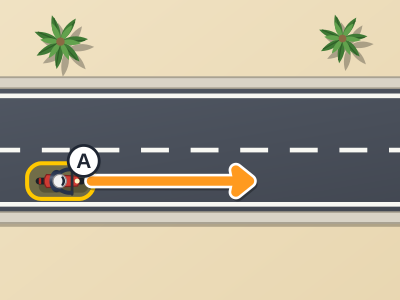
- APlanning the fastest route home to minimise exposure time on the road
- BIdentifying the nearest petrol station in case of fuel shortage
- CIdentifying a space or path where you could steer if a hazard suddenly materialises ahead
- DKeeping the engine running in neutral at junctions in case you need to leave quickly
Answer and explanation in the bank
- Q33Road signs and signals
What does a green or blue rectangular sign with place names and arrows usually provide?
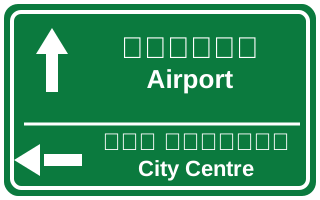
- AA warning of a hazard
- BA speed prohibition
- CDirections and route information
- DA parking ban
Answer and explanation in the bank
- Q34Traffic rules
Two lanes are merging into one because of roadworks. What is the safe and courteous approach?
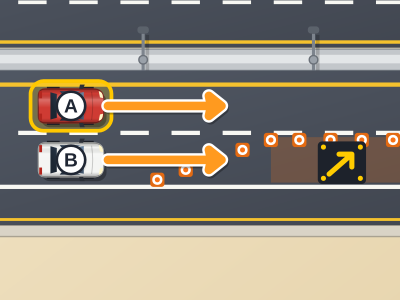
- ATake turns to merge in a zip fashion, one vehicle from each lane
- BForce your way in without letting anyone else go
- CStop completely and wait for every other car to pass
- DStraddle both lanes so no one can pass you
Answer and explanation in the bank
- Q35Right of way
You approach a roundabout and see give-way triangle markings painted on the road at the entry. What do they mean?
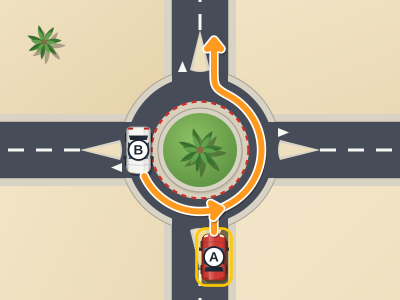
- AYou must yield to traffic already circulating on the roundabout
- BYou have priority over circulating traffic
- CStop completely before entering, as if at a STOP sign
- DThe markings only apply to heavy vehicles
Answer and explanation in the bank
- Q36Penalties and fines
Why must you not lend your car to someone who has no valid driving licence?
- AIt is fine as long as they drive slowly
- BAllowing an unlicensed person to drive is an offence, and both of you can face penalties
- COnly the driver can ever be penalised, never the owner
- DThere is no rule about who drives your car
Answer and explanation in the bank
- Q37Safe driving
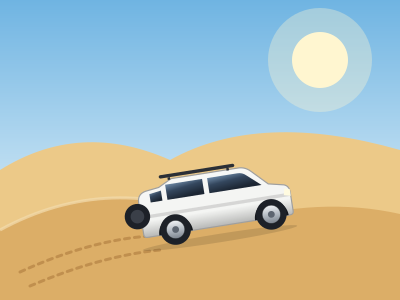
Driving on a sandy or unpaved desert track, how does braking differ from a dry paved road?
- ASand provides extra friction, so braking distances are shorter
- BBraking distance is identical to a paved surface
- CGrip is much lower, so braking distances are significantly longer
- DABS works better on sand than on tarmac
Answer and explanation in the bank
- Q38Motorcycle control
You are riding through heavy urban traffic with frequent stops. Which gear approach is most appropriate?
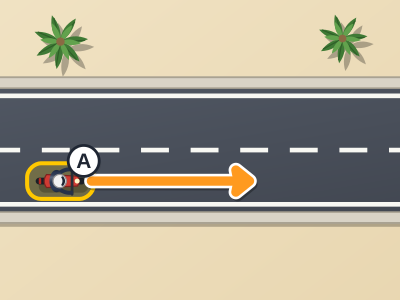
- AStay in 4th or 5th gear to reduce fuel consumption in traffic
- BUse neutral between each slow section to rest the clutch
- CUse the highest gear possible and rely only on the brakes to manage speed
- DStay in lower gears (1st to 3rd) for responsive acceleration and smooth stops
Answer and explanation in the bank
- Q39Motorcycle safety
You are approaching a junction on a UAE urban road when a car pulls out of a side street without warning. What is the correct defensive response?
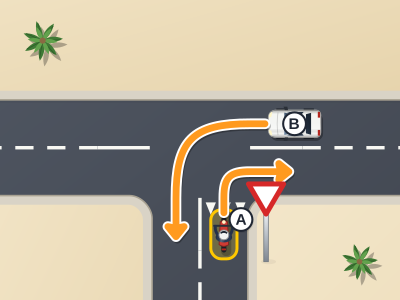
- ASwerve to the right across the centre line to go around behind the car
- BApply the rear brake only to maintain directional stability
- CAssess the space available, use the horn and both brakes progressively, and steer to any pre-identified escape route if stopping is not possible
- DFlash the headlight and sound the horn without braking, to warn the driver
Answer and explanation in the bank
- Q40Road signs and signals
Why is the STOP sign given a shape different from all other signs?
- ATo make it cheaper to produce
- BBecause octagons reflect light better than any other shape
- COnly for decorative reasons
- DSo it can be recognised even when the wording is not visible
Answer and explanation in the bank
Every answer above, with the rule it comes from, plus the full 40-question timed test.
Get the RAK Traffic Theory Test Questions - AED 29What this test covers
Topics include road signs, traffic signals, right of way, roundabouts, speed limits, seat belts, fines and penalties, and the safe-driving rules specific to your vehicle category. Full question-by-question feedback with explanations is shown immediately after you finish the test above.
Frequently asked questions
How many questions is the Ras Al Khaimah RAK Traffic motorcycle theory test?
The official RAK Traffic motorcycle theory test in Ras Al Khaimah has 40 questions and you need 30 correct (75%) to pass. This practice test has 40 questions.
Is this the real exam?
These are practice questions for study only, written from the public RTA handbook and UAE traffic rules and to what candidates report from the real test. They are not the official exam questions and Wathim is not affiliated with the RTA, ITC, SRTA or any UAE government body. Test format, question count and pass mark can change and vary by emirate, so always confirm the current requirements with the licensing authority before your real test.
Is this practice test free?
The first 10 questions are free, with no signup, and each shows the answer and the reason. The full 40-question test, timed, is in the RAK Traffic Theory Test Questions PDF (AED 29, one payment), with every question in the bank.
What does the Ras Al Khaimah motorcycle theory test cover?
Road signs, traffic signals, right of way, roundabouts, speed limits, seat belts, penalties and safe-driving rules, plus the handling and safety topics specific to your vehicle.