

Ras Al Khaimah RAK Traffic Truck & Bus
Practice mode· Heavy vehicle skillsRas Al Khaimah RAK Traffic - UAE Heavy Vehicle Skills Test 1
First set of questions on truck and bus operation: braking distances, load stability, blind spots, turning space and vehicle checks. Master the skills unique to heavy vehicles.
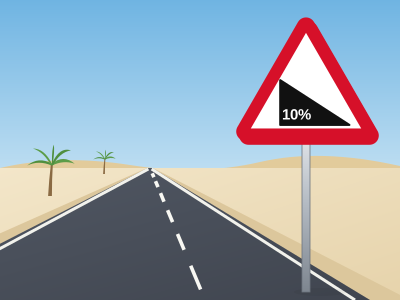
You are driving a fully laden articulated truck down a steep mountain road. Your speed is creeping upward despite light brake applications. What is the correct immediate action?
The other 12 questions in this test
Read them all. The answer and the reason for each, and the timed 22-question run, are in the RAK Traffic Theory Test Questions PDF.
- Q11Heavy vehicle
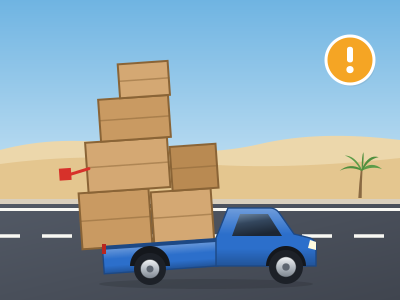
How does an improperly distributed load affect an articulated truck when cornering?
- AA load concentrated too high or to one side raises the centre of gravity and greatly increases rollover risk on bends
- BLoad position has no effect on cornering because modern air suspension self-levels the vehicle
- CA rear-heavy load improves cornering by adding downforce on the drive axles
- DUneven loading only matters on unpaved or off-road surfaces
Answer and explanation in the bank
- Q12Heavy vehicle
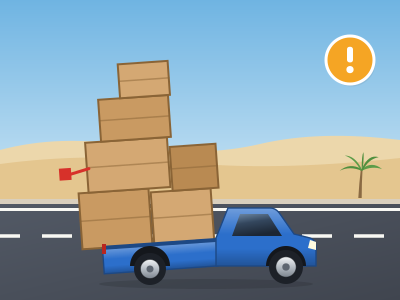
Where should the heaviest items be placed within a truck load to promote vehicle stability?
- ALow down and centred over the axles
- BAt the very rear of the load to add weight over the drive axles
- CAs high as possible for easy access during delivery
- DPosition does not matter as long as total weight is within legal limits
Answer and explanation in the bank
- Q13Heavy vehicle
How often should a driver check cargo security during a long journey?
- AOnly at the start and end of the journey
- BNever, if the load was correctly secured at the beginning
- CAt regular intervals during the journey, especially shortly after departure, because loads settle and lashings loosen over time
- DOnly when the driver notices a change in how the vehicle handles
Answer and explanation in the bank
- Q14Heavy vehicle
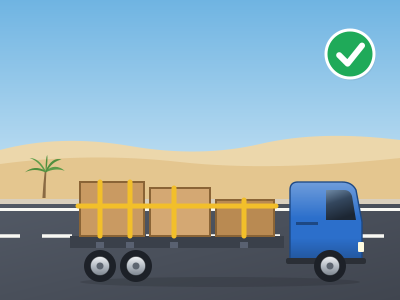
A load falls from a truck onto a motorway and causes an accident. Who bears primary responsibility under UAE traffic law?
- AThe loading crew only, because the driver did not personally load the vehicle
- BThe vehicle owner only, not the driver
- CNo one is liable if the total load was within the legal weight limit
- DThe driver, who is responsible for ensuring the load is secure before and during every journey
Answer and explanation in the bank
- Q15Heavy vehicle
What does Gross Vehicle Weight (GVW) mean?
- AThe weight of the vehicle when it is completely empty
- BThe total weight of the cargo only, excluding the vehicle itself
- CThe weight distributed on the rear axles alone
- DThe maximum total permitted weight of the vehicle including the vehicle itself, its cargo, fuel, and any passengers
Answer and explanation in the bank
- Q16Heavy vehicle
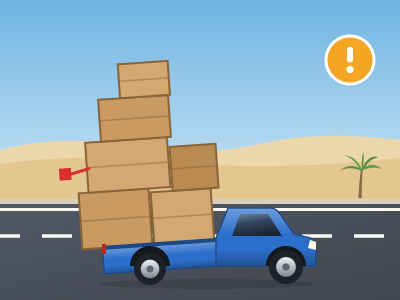
What is the main danger of overloading a truck axle?
- AIt only causes the speedometer to read inaccurately
- BThe engine will automatically shut down if an axle is overloaded
- COverloading an axle improves traction and grip
- DIt can cause tyre blowouts, brake overheating, loss of steering, and structural damage to both the road and the vehicle
Answer and explanation in the bank
- Q17Heavy vehicle
Where can a heavy-vehicle driver verify that the loaded vehicle is within legal weight limits before a long journey?
- ABy estimating the load against the delivery manifest and making no further check
- BBy inspecting the vehicle's suspension visually from outside
- CWeight checks are not necessary if the vehicle is fitted with air suspension
- DAt a certified weighbridge or weigh station
Answer and explanation in the bank
- Q18Heavy vehicle
How does overloading a truck affect its braking performance compared with a correctly loaded truck of the same type?
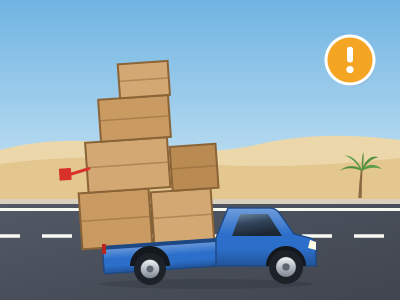
- ABraking performance is unchanged because modern ABS compensates for additional weight
- BOverloading slightly improves braking by increasing the contact area between tyres and road
- CStopping distance increases substantially because kinetic energy is higher and the brakes may be operating beyond their design rating
- DBrakes only degrade significantly when a vehicle is 50% or more over its rated GVW
Answer and explanation in the bank
- Q19Heavy vehicle
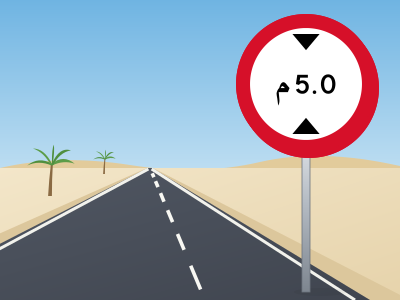
Before driving under a bridge or height-restricting gantry, what must a heavy-vehicle driver know?
- AOnly the vehicle's length is relevant when approaching low structures
- BHeight-limit signs on bridges are advisory only and not legally binding
- CSigns always include a built-in safety margin so there is nothing to worry about
- DThe vehicle's laden height and compare it carefully with the clearance stated on the restriction sign
Answer and explanation in the bank
- Q20Heavy vehicle
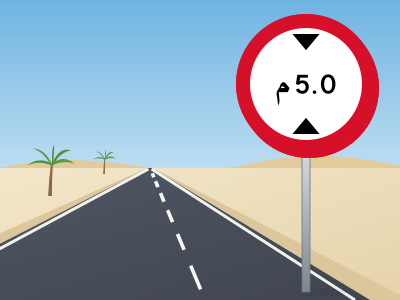
Why is it especially important to know the height of your heavy vehicle before entering urban areas?
- AUrban speed limits are set lower for tall vehicles only
- BVehicle height affects fuel consumption rates in city traffic
- CLow bridges, car park entry barriers, and overhead cables may have less clearance than the vehicle height
- DHeight only matters for vehicles carrying dangerous goods
Answer and explanation in the bank
- Q21Heavy vehicle
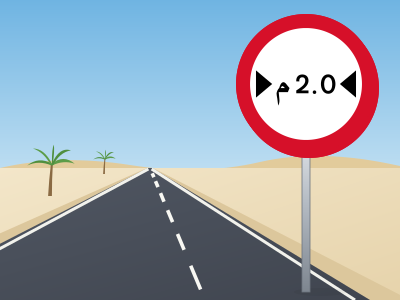
What does a width-restriction sign (a measurement in metres inside a red circle) mean for a heavy vehicle driver?
- AThe road narrows to the stated width ahead, for information only
- BVehicles wider than the stated measurement must not proceed beyond that point
- COnly vehicles carrying hazardous materials are subject to the restriction
- DVehicles may proceed if they travel slowly and cautiously enough
Answer and explanation in the bank
- Q22Heavy vehicle
A driver approaches a bridge with a posted height limit that appears to be only marginally less than the vehicle height. The driver cannot reverse. What is the safest course of action?
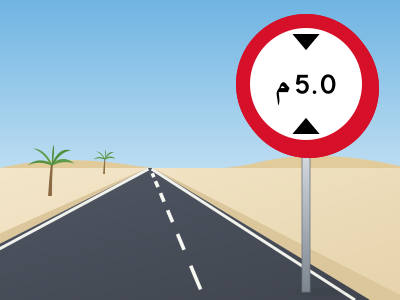
- AStop, seek assistance or a police escort, and do not attempt to pass under the bridge
- BDrive under very slowly with hazard lights on to reduce the risk
- CDeflate the tyres slightly to lower the vehicle and attempt to pass
- DSound the horn, flash the lights, and proceed quickly before other traffic arrives
Answer and explanation in the bank
Every answer above, with the rule it comes from, plus the full 22-question timed test.
Get the RAK Traffic Theory Test Questions - AED 29What this test covers
Topics include road signs, traffic signals, right of way, roundabouts, speed limits, seat belts, fines and penalties, and the safe-driving rules specific to your vehicle category. Full question-by-question feedback with explanations is shown immediately after you finish the test above.
Frequently asked questions
How many questions is the Ras Al Khaimah RAK Traffic truck & bus theory test?
The official RAK Traffic truck & bus theory test in Ras Al Khaimah has 40 questions and you need 30 correct (75%) to pass. This practice test has 22 questions.
Is this the real exam?
These are practice questions for study only, written from the public RTA handbook and UAE traffic rules and to what candidates report from the real test. They are not the official exam questions and Wathim is not affiliated with the RTA, ITC, SRTA or any UAE government body. Test format, question count and pass mark can change and vary by emirate, so always confirm the current requirements with the licensing authority before your real test.
Is this practice test free?
The first 10 questions are free, with no signup, and each shows the answer and the reason. The full 22-question test, timed, is in the RAK Traffic Theory Test Questions PDF (AED 29, one payment), with every question in the bank.
What does the Ras Al Khaimah truck & bus theory test cover?
Road signs, traffic signals, right of way, roundabouts, speed limits, seat belts, penalties and safe-driving rules, plus the handling and safety topics specific to your vehicle.