In This Guide
- Quick answer: what does mulkiya renewal cost and involve?
- Three drivers, three renewal stories
- Insurance first: why this is the real first step
- Testing: which vehicles need an RTA inspection?
- How to renew online via Dubai Drive (step by step)
- Decision table: online, test centre, or service centre?
- Late renewal fines: the maths, by month
- Fines and debts that silently block the renewal
- Other emirates and the cross-emirate question
- Selling or buying a car: the transfer adds steps
- Edge cases and special situations
- Common problems and fixes
- Need help sorting your vehicle or residency paperwork?
Quick answer: what does mulkiya renewal cost and involve?
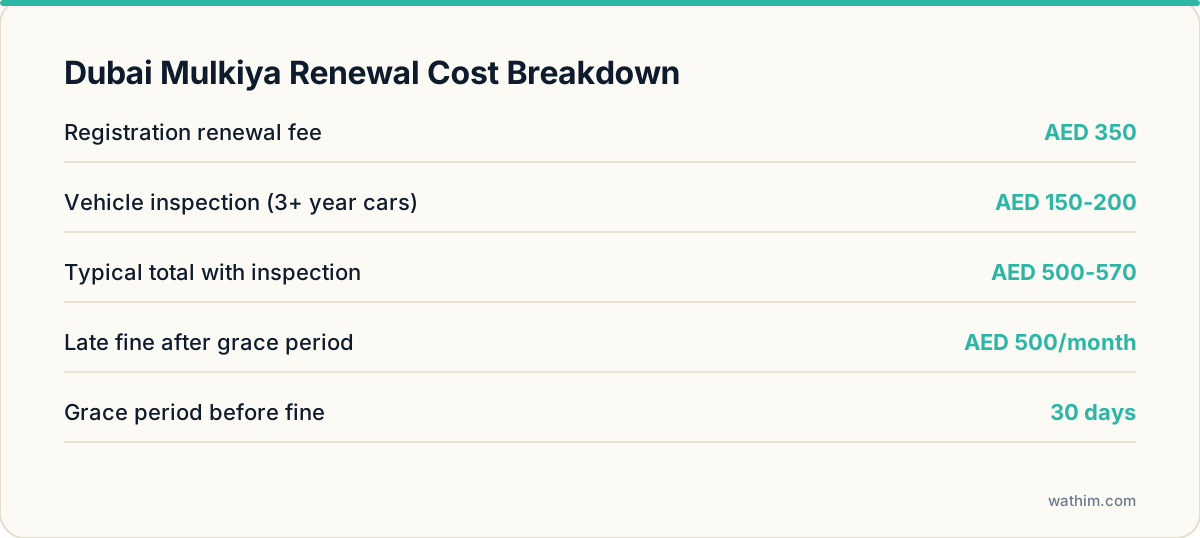
Renewing your Dubai mulkiya (vehicle registration card) costs AED 350 for the registration fee, plus AED 150-200 for the RTA technical inspection if your car is three years old or older. You also need valid car insurance before you can renew anything. Total out-of-pocket for most drivers: AED 500-570.
You have a 30-day grace period after your mulkiya expires. After that, late fines kick in at AED 500 per month. If you drive on an expired registration beyond the grace period and get stopped, that is a separate AED 500 fine plus four black points and a possible seven-day impoundment.
| Item | Fee |
|---|---|
| Registration renewal fee | AED 350 |
| Vehicle inspection (3+ year old cars) | AED 150-200 |
| Typical total with inspection | AED 500-570 |
| Late fine (after 30-day grace) | AED 500 per month |
The renewal is handled by the Roads and Transport Authority (RTA) through the Dubai Drive app or rta.ae. The whole online flow takes 10-15 minutes once insurance is linked and (if applicable) the inspection has been cleared. For help with related issues, see our guide to UAE fines and overstay and the GDRFA Dubai portal guide.
This guide walks through every cost, every prerequisite, and every reason the renewal stalls, with worked examples for three real driver scenarios and a decision table for choosing between the online route and the one-stop test-centre route.
Three drivers, three renewal stories
To make the numbers and timelines tangible, here are three Dubai drivers in different situations. We will refer back to them throughout the guide.
Persona 1: Aisha, two-year-old Nissan, on time
Aisha bought her Nissan Sentra new in January 2024. The mulkiya is up for renewal in January 2026. The car is two years old, so no inspection is required. Her insurance auto-renews each January. She opens the Dubai Drive app on her phone the morning the registration is due, confirms insurance is linked, pays AED 350, and has a digital mulkiya in her wallet within five minutes. Total cost: AED 350. Total time: about 5 minutes.
Persona 2: Rahul, five-year-old Toyota, slightly late
Rahul drives a 2021 Toyota Camry. The mulkiya expired on 3 May 2026 and he only remembered on 28 May, twenty-five days into the 30-day grace period. The car is five years old, so it needs an inspection. He drives to an RTA-approved test centre, pays AED 175 for the inspection, the car passes, and the centre handles the renewal in the same visit. Registration fee AED 350. Total cost: AED 525. He paid no late fine because he renewed inside the grace window. Lesson: even at day 25, you can still avoid the AED 500 monthly late charge if you act before day 31.
Persona 3: Khalid, four-year-old SUV, two months overdue
Khalid bought a 2022 Pajero second-hand in late 2023 and missed the email reminders. Registration expired 1 March 2026, he renewed on 4 May 2026. That is 64 days past expiry: 30 days of grace, then 34 days of late period. The late fine accrues monthly: roughly two months of AED 500 = AED 1,000 (the fine is charged per month, not pro-rated, so the second month tick happens at day 31 of lateness, i.e. day 61 from expiry). Inspection AED 175 because the SUV is four years old. Registration AED 350. Total cost: AED 350 + 175 + 1,000 = AED 1,525. He also had two unpaid Salik charges and one parking ticket blocking the renewal, which he had to clear first. Lesson: late fines compound fast and unrelated debts block the process.
Hold these three in mind as we go through the rules. The difference between Persona 2 and Persona 3 is a single calendar week.
Insurance first: why this is the real first step
You cannot renew your mulkiya without valid car insurance. The RTA system checks this automatically by querying the insurer's feed; there is no workaround and no manual override at the counter. Your policy must be in the registered owner's name and must be issued by a UAE-licensed insurer.
12 vs 13 months: the source conflict
Different RTA-aligned sources state the insurance must cover either 12 or 13 months from the renewal date. The conservative answer is 13 months, as some RTA-linked portals apply this stricter check during the online flow. If your insurer offers only 12-month policies, confirm with them in writing that their RTA integration accepts the 12-month feed before you pay anything. We have seen renewals stall here on the same day the policy was bought because the insurer's feed labelled the policy as 12 months instead of 13.
When to buy: the 24-48 hour rule
Buy or renew your insurance at least 24-48 hours before you intend to renew your mulkiya. Insurers batch-update their RTA feeds, typically overnight. A policy purchased at 10am may not appear in the RTA database until the following day. If you try to renew the same morning, the system will return "no active insurance" even though you have just paid your premium.
Policy in the wrong name
If you bought the car second-hand and the insurance is still in the previous owner's name, the renewal will not go through. Transfer the insurance to your name or buy a new policy in your name first. This is a common gotcha for used-car buyers in their first renewal cycle after purchase.
Sort insurance before you book the inspection or open Dubai Drive. If the insurance is not linked to your plate in the RTA database, the whole renewal process stalls at step one and you waste a trip to the test centre.
Testing: which vehicles need an RTA inspection?
The rule is simple in principle, but the edge cases matter: any vehicle three years old or older must pass an RTA technical inspection before renewal. Vehicles under three years old skip the inspection entirely.
How "three years" is calculated
The clock starts on the date of first registration, not the manufacture date. A 2023 model first registered in March 2023 hits the three-year threshold in March 2026. If you imported a low-mileage used car that was first registered abroad in 2022 and then re-registered in Dubai in 2024, the Dubai registration date is what RTA uses. Practical examples: a car first registered in 2022 needs testing for the 2026 renewal cycle. A 2024 model does not.
| Year first registered | 2026 renewal: inspection? | Reason |
|---|---|---|
| 2024 or later | No | Under 3 years old |
| 2023 | Depends on month | Tipping into the 3-year window during 2026 |
| 2022 or earlier | Yes | 3+ years old; mandatory inspection |
What the inspection covers
The technical test takes 15-20 minutes at an RTA-approved centre and checks brakes, lights, tyres, suspension, emissions, glass condition, seatbelts and chassis integrity. Most newer well-maintained cars pass first time. The most common failures are cracked windscreens (any chip in the driver's line of sight is a fail), worn tyres below the tread limit, broken brake lights and tinted glass beyond the legal threshold.
The 30-day pass certificate window
A pass certificate is valid for 30 days. Do not test the car three weeks before you intend to renew unless you are certain you will complete the renewal inside that window. If the certificate expires you pay for the inspection again. The cleanest approach is: test on Saturday, renew on Sunday.
If your car fails
You get a printed list of failures. Most workshops adjacent to RTA test centres handle common issues (bulb changes, windscreen repair, tyre swap) in two to three hours. Return the same day for a re-test. Re-test fees apply, typically half the original. Inspection fees are AED 150-200 depending on the centre; light private vehicles sit at the lower end of the range.
For Dubai-specific centre locators, use rta.ae. For non-Dubai checks, see our ICP portal guide.
How to renew online via Dubai Drive (step by step)
The fastest route for most drivers is the Dubai Drive app or rta.ae. Here is the full flow with what tends to go wrong at each step:
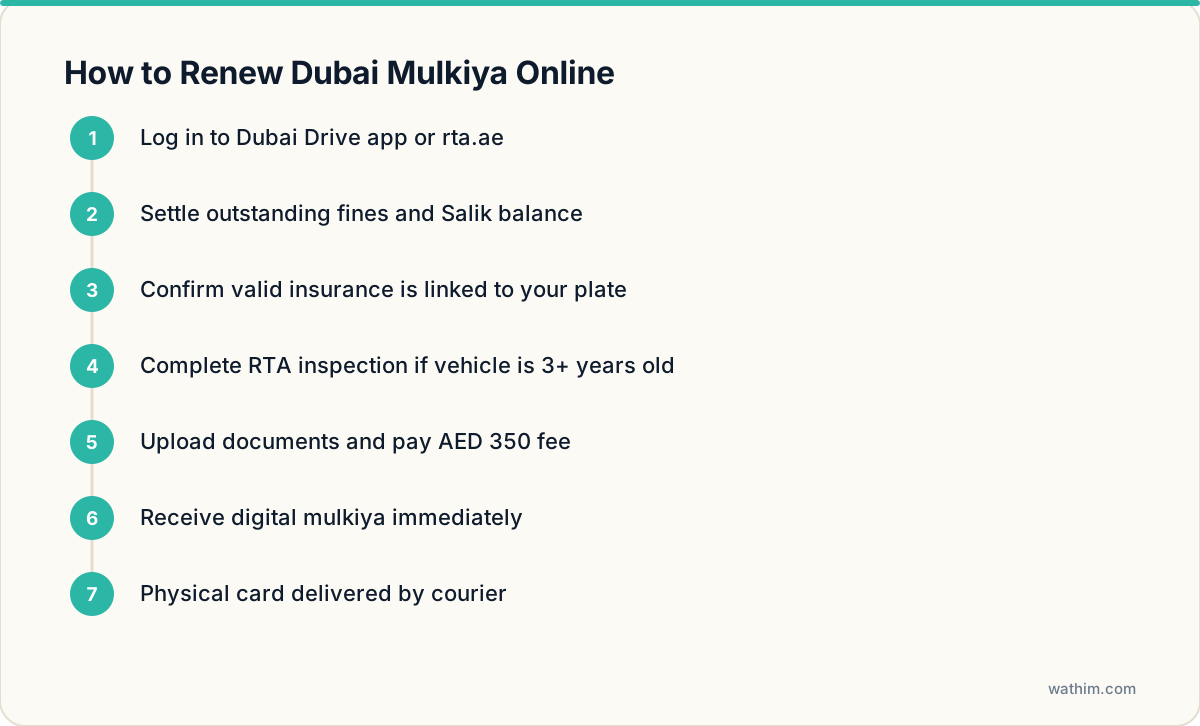
- Log in to Dubai Drive or rta.ae using UAE Pass or your RTA account credentials. UAE Pass is the smoother route because it auto-authenticates everything else in the flow. If your Emirates ID is expired, UAE Pass login fails; renew the EID first.
- Settle outstanding fines. Any unpaid RTA fines, traffic violations, parking tickets or negative Salik balances block the renewal. The app shows a consolidated balance on the dashboard. Pay everything down to zero before moving on.
- Confirm insurance is active and linked to your plate. If it shows "no active insurance" despite you having a fresh policy, wait 24 hours and re-check, or contact your insurer's RTA integration desk (not the general customer line).
- Complete the inspection if your vehicle is three or more years old. The pass certificate is linked automatically when the test was done at an RTA centre, or upload the PDF if you went to an authorised third-party centre.
- Upload documents: Emirates ID, insurance certificate and the inspection pass certificate if applicable. Most of this auto-fills from UAE Pass.
- Pay fees online: AED 350 for registration plus any applicable charges (late fines, knowledge fee, innovation fee). Payment via credit/debit card or Apple Pay.
- Receive digital mulkiya immediately. It appears in the Dubai Drive app under My Vehicles. The physical card is delivered by courier within a few working days. The digital version is fully valid in the interim.
The whole process takes 10-15 minutes once your inspection is cleared. For residency-related services you may need alongside this, see UAE residency visa services.
Decision table: online, test centre, or service centre?
You have three main routes for the actual renewal transaction. They are not interchangeable; the right one depends on your vehicle age and which problems you are trying to solve at the same time.
| Your situation | Best route | Why |
|---|---|---|
| Car under 3 years, insurance live, no fines | Dubai Drive app | 5 minutes from sofa; no benefit to driving anywhere |
| Car 3+ years, needs inspection | RTA-approved test centre (one-stop) | Inspection + renewal in one visit; centre handles upload |
| Multiple unpaid fines or Salik mess | Dubai Drive app, but clear fines first | Same dashboard for fines + renewal; sort the dependency chain |
| Insurance mid-dispute, ownership transfer pending | RTA service centre in person | Staff can override edge cases the app cannot |
| Mulkiya expired 90+ days ago | RTA service centre | Impoundment risk; staff can confirm vehicle status before payment |
The one-stop test-and-renew option
If your vehicle needs an inspection, most RTA-approved test centres offer a combined test-and-renew service in one visit. You arrive, get the inspection, pay the renewal fee at the same counter, and leave with a digital mulkiya confirmation. This is usually the most efficient option for older vehicles because you avoid juggling app steps after the inspection. Fees are identical to the online route; the centre simply handles the document submission on your behalf.
Centres are noticeably busier on weekends. Weekday mornings are typically fastest. If you are going on a Friday afternoon, expect to wait 45-60 minutes; on a Tuesday at 9am you can be in and out in 20.
Late renewal fines: the maths, by month
You have a 30-day grace period after your mulkiya expiry date. During this window there are no fines and you can still drive legally while sorting the renewal. After the grace period ends, the late fee is AED 500 per month.
Worked example: monthly accrual
Imagine your registration expired on 1 January 2026. Grace runs to 31 January. The clock starts on 1 February.
- Renew on 31 January: no late fine. Total: AED 350 (assuming under 3 years) or AED 525-550 (with inspection).
- Renew on 5 February: 1 month late fine = AED 500. Plus AED 350 (or AED 525-550). Cost so far: AED 850 or AED 1,025-1,050.
- Renew on 5 March: 2 month late fine = AED 1,000. Plus base costs. Total: AED 1,350 or AED 1,525-1,550.
- Renew on 5 April: 3 month late fine = AED 1,500 AND vehicle now at impoundment risk. Plus base costs. Total: AED 1,850 or AED 2,025-2,050.
After three months of non-renewal the vehicle risks impoundment. If you are stopped driving on expired mulkiya beyond the 30-day grace, that triggers a separate AED 500 traffic fine, four black points, and a possible seven-day vehicle impoundment, all on top of the monthly late renewal fine.
Late fines do not expire
The accrued late fines remain payable. They cannot be waived by ignoring them and they must be paid in full before the renewal goes through. If you let this slide for a year you are looking at six figures of risk on top of the registration. Calculate what you owe, pay it, then complete the renewal in the same Dubai Drive session.
Vehicle-related fines (traffic, parking, Salik) are separate from registration late fines but all of them must be cleared before renewal completes. Use the Dubai Drive app to see everything outstanding in one place. For the broader UAE fines picture, see our UAE fines balance guide.
Fines and debts that silently block the renewal
The RTA system blocks renewal if the vehicle has any outstanding balance, even small ones. This includes:
- Unpaid traffic fines registered against the plate (even if you were not the driver)
- Unpaid parking fines
- Negative Salik balance, even by a few dirhams
- Outstanding RTA admin fees from a previous transaction
- Black points exceeding limits in some cases
Used car buyers: check before you buy
If you bought a used car in Dubai, run a vehicle fine check before transferring ownership. A Salik deficit or a stack of unpaid traffic fines from the previous owner become your problem the moment the car is transferred into your name, and they block your first renewal. The Dubai Police fine inquiry service and the Dubai Drive vehicle fine lookup both show the history attached to a plate.
The clean workflow: previous owner pays all outstanding balances, both parties verify the balance is zero in Dubai Drive, then complete the ownership transfer. Anything else is gambling.
Disputed fines
You can dispute a traffic fine through Dubai Police, but the renewal still gets blocked until the dispute is resolved or paid. Practical advice: if you have a legitimate dispute and a renewal coming up, pay the fine to unblock the renewal, then continue the dispute. Refunds are processed if you win.
For anything related to your residency documents, the UAE driving licence service and UAE overstay and fines service cover the adjacent questions.
Other emirates and the cross-emirate question
This guide focuses on Dubai, where vehicle registration is managed by RTA. The other emirates have their own authorities:
- Abu Dhabi: Department of Municipalities and Transport (DMT). Registration is renewed via the Abu Dhabi Police online portal or the Tamm app.
- Sharjah: Sharjah Traffic Department. Walk-in counters or the Sharjah City Municipality portal.
- Ajman, RAK, UAQ, Fujairah: Each has its own traffic department and online portal.
The core rules, inspection requirement for 3+ year vehicles, valid insurance before renewal, are broadly similar across emirates. Fees vary slightly. If you have a Dubai-issued vehicle and moved to another emirate, you still renew with the RTA Dubai. Registration stays with the emirate of original issue. You do not transfer the registration across emirates by changing your residential address.
Driving an Abu Dhabi car in Dubai
Perfectly fine. Salik works the same way; Salik tags transfer between vehicles, not between emirates. Just renew your registration with the issuing emirate's authority on the normal cycle.
For non-vehicle residency and ID questions, see our UAE country hub.
Selling or buying a car: the transfer adds steps
If you are selling your car, the mulkiya renewal and the ownership transfer are two separate transactions. You cannot transfer a car with an expired registration. Renew first, then transfer.
Worked example: selling a 4-year-old car
Say you bought a 2022 Honda Civic new and you want to sell it in June 2026. Registration expires in May. The buyer is keen but wants the transfer in early July. Sequence:
- Get the inspection done (AED 175). Pass.
- Renew the registration (AED 350). Total AED 525.
- Buyer arranges their own insurance in their name.
- Both parties (or buyer with power of attorney) visit an RTA service centre or authorised typing office.
- Transfer fees are paid (separate from renewal; typically AED 350 plate transfer + admin).
- New mulkiya issued in buyer's name.
The car is now four years old, and the buyer's next renewal will need a fresh inspection. Worth factoring into the asking price.
Buyer checklist
Before you hand over money:
- Run a Dubai Drive vehicle history check on the plate. Confirm zero outstanding fines and zero Salik debt.
- Confirm the seller is the actual registered owner (Emirates ID match).
- Verify the inspection pass certificate (if recent) is still in its 30-day window.
- Get a written, dated sales agreement. Keep this; it is what lets you dispute fines that predate your ownership.
For fines checks before you finalise a purchase, the GDRFA Dubai portal handles Dubai-issued records and the ICP portal covers the other emirates.
Edge cases and special situations
Vehicle abroad on the renewal date
If your car is genuinely outside the UAE (shipped, on a long road trip into Oman) when the registration expires, the inspection requirement still applies. You cannot renew remotely if a test is due. Options: arrange to renew while the car is back in Dubai, or accept the late fine clock and renew on return. Some owners ask a relative with a UAE driving licence to take the car for inspection on their behalf; this works if insurance covers the second driver.
Modified vehicles (lifted, body kits, performance mods)
Modifications must be RTA-approved (an MOD plate or recorded modification in the registration record). Unapproved modifications cause inspection failures. If you have added a body kit, lift kit, tints below the legal threshold, or non-standard wheels, get the modifications declared and approved through the RTA modifications service before the inspection.
Plate transfer mid-renewal
If you are mid-way through transferring a vanity plate to a different vehicle when renewal falls due, complete the plate transfer first, then renew the registration. The renewal is tied to the chassis/plate combination at the moment of payment.
Company-owned vehicles
Cars registered to a company need an additional authorisation from the company representative (trade licence holder or authorised signatory). The driver renewing on the company's behalf needs a power of attorney or signed letter. Insurance must be in the company's name, not the driver's.
Classic and antique vehicles
Vehicles over 30 years old can be registered as classics under a separate RTA category, with different inspection thresholds and reduced fees. If you own a true classic, ask RTA about the classic vehicle programme rather than registering it as a standard private vehicle.
Mulkiya lost or stolen
The digital mulkiya in Dubai Drive cannot be lost. If you had the physical card and lost it, a replacement is issued through rta.ae or any RTA service centre for a small admin fee. The digital version remains valid in the meantime.
Bought from auction with outstanding fines
Auction purchases can carry hidden debts that block your first renewal. The RTA position is generally that the registered owner at the time of the fine is liable, and ownership transfer does not erase liability. Negotiate the price down or insist on a clean balance before completing the auction transfer.
Common problems and fixes
Insurance not appearing in RTA system
Wait 24-48 hours after purchasing your policy. Insurers batch-update their RTA feeds. If it still does not appear after 48 hours, call your insurer's RTA integration team (not the general helpline) and quote the policy number plus the plate.
Failed inspection with minor issues
Get a printed receipt showing the specific failures. Many workshops near test centres handle common inspection failures (tyre condition, lights, brake lights, windscreen chips) in a few hours. Return the same day for a re-test. Re-test fees are roughly half the original inspection fee.
Outstanding fines from previous owner
File a dispute through Dubai Police or RTA. If the fines predate your ownership and you have a dated sales agreement, you can contest them. This takes time. In the meantime, pay to unblock the renewal and continue the dispute for a refund.
Digital mulkiya not received after payment
Check the email registered to your RTA account. The digital card is also in the Dubai Drive app under My Vehicles. If it is missing there after 30 minutes, call RTA on 800 9090 with the transaction reference number.
Late fines higher than expected
AED 500 per month accumulates fast. If you are several months overdue, calculate what you owe and request a payment plan at an RTA service centre if the total is unmanageable in one hit. Plans are at RTA's discretion.
UAE Pass not authenticating
The most common cause is an expired Emirates ID. UAE Pass is tied to the EID record; if the ID is expired, login silently fails. Renew the EID first; see our Emirates ID renewal guide.
Need help sorting your vehicle or residency paperwork?
Mulkiya renewal is one of those tasks that sounds simple but blocks itself in multiple ways: insurance timing, fines from previous owners, inspection failures, expired ID upstream. If you are time-pressed or the renewal has become complicated, Wathim can help you navigate it.
We also handle related UAE residency and ID services, so if your mulkiya renewal is sitting alongside an Emirates visa renewal or an Emirates ID renewal, we can coordinate both. Contact us and tell us where you are stuck.
Also useful: our guides on UAE overstay fines, Emirates ID renewal, and checking your UAE visa status.
Run your numbers: if you mistimed the renewal, the UAE overstay fine calculator and Emirates ID fine calculator cover related catch-up costs. Mulkiya, salik recharge, and inspection bookings now sit inside UAE Pass, with Salik and Nol/RTA linked through it for a single dashboard.
Frequently Asked Questions
The RTA registration fee is AED 350. If your vehicle is three years old or older, add AED 150-200 for the mandatory technical inspection. Most drivers pay a total of AED 500-570. You also need valid car insurance before the renewal can proceed, but that is a separate annual cost. Late fines (AED 500 per month after the 30-day grace period) and outstanding traffic or Salik balances will add to this total.
Yes, if your vehicle is three years old or older from the date of first registration. Cars under three years old skip the inspection entirely. The pass certificate is valid for 30 days, so do not book the inspection too far in advance of your intended renewal date or you will pay for it twice. Light private vehicles cost AED 150-200; the inspection itself takes 15-20 minutes at an RTA-approved centre.
You have 30 days after the expiry date during which there are no fines and you can technically still drive while sorting the renewal. After 30 days, late fines of AED 500 per month start accumulating, charged monthly rather than pro-rated. So a renewal completed on day 31 already incurs the first AED 500. After three months of non-renewal, the vehicle risks impoundment by RTA on enforcement sweeps.
Yes, if your vehicle does not require an inspection (under three years old), has no outstanding fines or Salik debt, and insurance is linked to your plate. Log into Dubai Drive or rta.ae, confirm insurance is live, pay the AED 350 fee, and the digital mulkiya is issued immediately. The physical card follows by courier within a few working days. If an inspection is due, you cannot complete the renewal fully online; you must visit a test centre first.
During the 30-day grace period you can still drive legally. After that, if you are stopped by police: AED 500 traffic fine, four black points on your driving licence, and the vehicle may be impounded for seven days. Insurance also typically becomes invalid for claims when driving on an expired registration, so an accident in this window can leave you personally liable for damages. None of these consequences cancel the underlying monthly late renewal fines.
Do not drive the vehicle until it is renewed. Calculate your outstanding late fines (roughly three months at AED 500, so AED 1,500), clear any other vehicle fines and Salik balances, then complete the inspection if needed and renew online or at an RTA service centre. At three months you are at the impoundment threshold, so prioritise this. If the accumulated bill is unaffordable in one go, ask an RTA service centre about a payment plan, though approval is at RTA's discretion.
The digital mulkiya is issued immediately after payment and appears in the Dubai Drive app under My Vehicles. The physical card is delivered by courier within a few working days, typically within a week. The digital version is legally valid for use in the meantime, including for police stops and ferry/border checks. You do not need to wait for the physical card to drive after renewal.
You renew with whichever authority originally issued the registration. If your car was registered with RTA Dubai, you continue renewing through RTA even after moving to Abu Dhabi. The registration follows the emirate of issue, not where you live or where you drive. To switch to an Abu Dhabi registration you would deregister the Dubai mulkiya and start a fresh registration with the Abu Dhabi DMT, which involves new fees and an inspection.
Stuck on a Government Service Step?
Wathim publishes free plain-English guides to GCC visas, IDs, driving licences, attestation, and fines. If a fee table looks off or a step is missing, tell us and we will update the guide. You can also book a free guidance call with our GCC services desk.

Wathim Editorial
GCC Services Desk
The Wathim team writes plain-English guides to GCC government services. We track ICP, GDRFA, MOHRE, Absher, Muqeem, Qiwa, Metrash, LMRA, ROP Oman, and MOI Kuwait so expats can plan visa, residency, ID, and licence steps without guesswork.