

Al Jouf General Dept. of Traffic Light vehicle
Practice mode· Road rulesAl Jouf General Dept. of Traffic - Saudi Road Rules Test 1
First 20 questions on Saudi traffic rules - lane discipline, roundabouts, seat belts, mobile phone use, speed limits and more. Essential knowledge for any driver in Saudi Arabia.
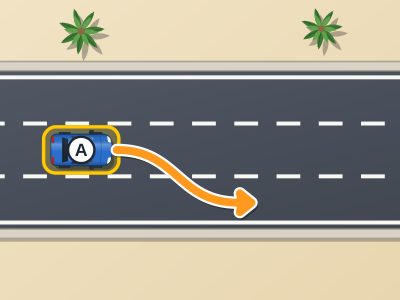
When must you cancel your indicator after completing a lane change or turn?
The other 10 questions in this test
Read them all. The answer and the reason for each, and the timed 20-question run, are in the Saudi Driving Theory Online Practice Bank.
- Q11Traffic rules
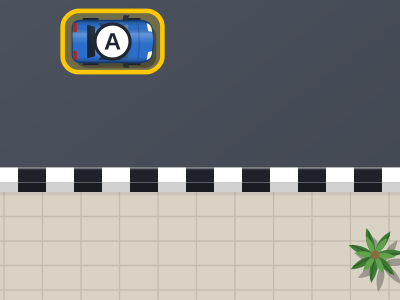
Is it permitted to park your vehicle on a pedestrian crossing in Saudi Arabia?
- AYes, for no more than five minutes
- BYes, if your hazard lights are on
- CYes, provided the vehicle is fully off the road surface
- DNo, parking on or within the approach zone of a pedestrian crossing is prohibited
Answer and explanation in the bank
- Q12Traffic rules
A yellow kerb line is painted along the side of a road. What does this normally indicate?

- AParking is prohibited alongside that kerb
- BLoading is permitted for up to 30 minutes
- CThe road is a bus lane
- DParking is reserved for taxis only
Answer and explanation in the bank
- Q13Traffic rules
You park on a hill facing downhill and there is no kerb. Which way should you turn your front wheels?
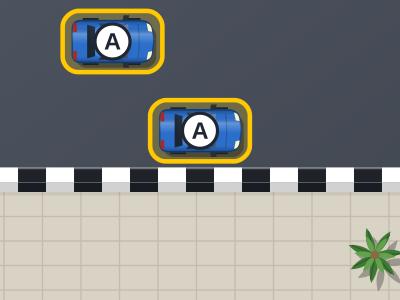
- ATurn wheels to the right so the vehicle would roll away from traffic if it moved
- BTurn wheels to the left to face traffic
- CKeep wheels straight and rely on the handbrake alone
- DDirection of wheels does not matter on a hill
Answer and explanation in the bank
- Q14Traffic rules
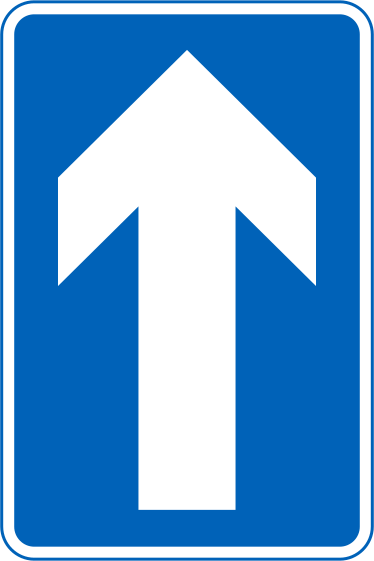
What does a one-way street sign require of you?
- AGive way to oncoming traffic at all times
- BUse only the rightmost lane
- CSound your horn before entering the street
- DDrive only in the direction shown by the arrow on the sign
Answer and explanation in the bank
- Q15Traffic rules
You accidentally enter a one-way street travelling in the wrong direction. What should you do?
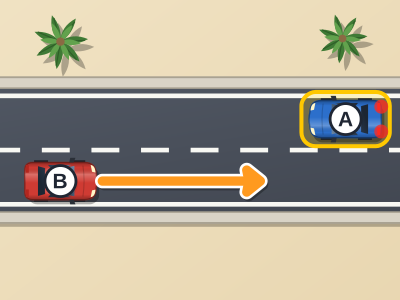
- AContinue in the wrong direction if the road is clear
- BStop immediately in the middle of the road and wait
- CReverse out carefully to the nearest safe point where you can exit legally
- DPerform a U-turn in the middle of the street
Answer and explanation in the bank
- Q16Traffic rules
When joining a motorway (highway) from an on-ramp, how should you match your speed?
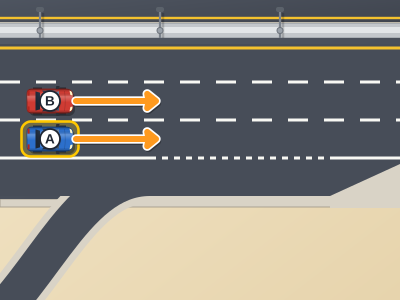
- AStop at the end of the on-ramp and wait for a gap
- BAccelerate on the acceleration lane to match the speed of motorway traffic, then merge smoothly
- CMerge immediately at whatever speed you are travelling
- DEnter the motorway at 60 km/h and speed up once on it
Answer and explanation in the bank
- Q17Traffic rules
When leaving a motorway via an off-ramp, when should you begin reducing your speed?
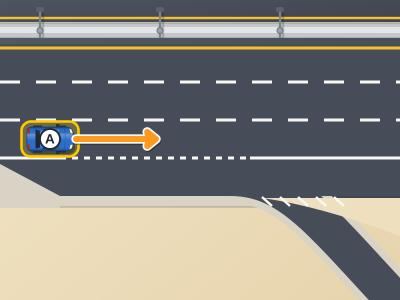
- AAs soon as you see the exit sign, in the main lane
- BAfter moving into the deceleration lane, not on the main carriageway
- COnly after you have fully entered the slip road
- DIt does not matter where you reduce speed
Answer and explanation in the bank
- Q18Traffic rules
You are merging onto a motorway but the acceleration lane is very short. Traffic on the motorway is heavy. What is the best action?
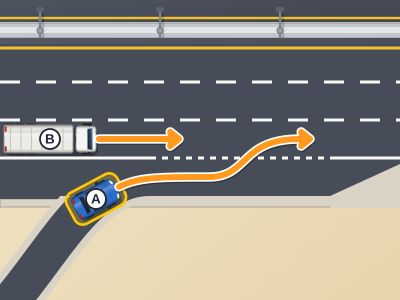
- AUse all available acceleration lane to build speed, and adjust timing to find the smallest safe gap
- BStop at the end and force your way in
- CDrive on the hard shoulder to reach a longer gap
- DReturn to the main road and try a different entry
Answer and explanation in the bank
- Q19Traffic rules
Heavy rain has just reduced visibility on a Saudi highway. What adjustment to following distance is required?
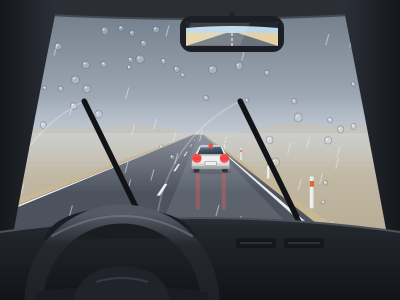
- AIncrease the following distance significantly beyond the normal dry-road gap
- BKeep the same following distance as in dry conditions
- CDecrease the gap so you can see the vehicle ahead better
- DFollowing distance only matters in fog, not rain
Answer and explanation in the bank
- Q20Traffic rules
What is the two-second rule used for when driving?
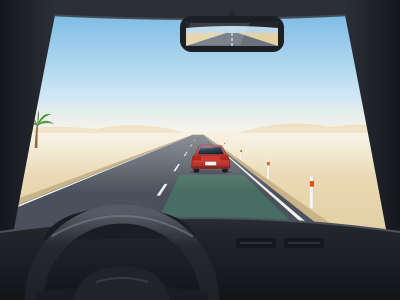
- AThe time allowed for a courtesy wave after being let in
- BThe maximum time to check mirrors before changing lanes
- CMaintaining a minimum safe following distance from the vehicle ahead
- DThe interval between indicator flashes
Answer and explanation in the bank
Every answer above, with the rule it comes from, plus the full 20-question timed test.
Get the Saudi Driving Theory Online Practice Bank - SAR 39What this test covers
Topics include road signs, traffic signals, right of way, roundabouts, speed limits, seat belts, fines and penalties, and the safe-driving rules specific to your vehicle category. Full question-by-question feedback with explanations is shown immediately after you finish the test above.
Frequently asked questions
How many questions is the Al Jouf General Dept. of Traffic light vehicle theory test?
The official General Dept. of Traffic light vehicle theory test in Al Jouf has 35 questions and you need 22 correct (63%) to pass. This practice test has 20 questions.
Is this the real exam?
These are practice questions to help you revise, written to the published rules and to what candidates report from the real test. They are not the official Saudi exam and the real question bank, format, fees and pass mark are set by the General Department of Traffic (Moroor) and the driving schools, and can change. Always confirm the current requirements with your driving school or the traffic department.
Is this practice test free?
The first 10 questions are free, with no signup, and each shows the answer and the reason. The full 20-question test, timed, is in the Saudi Driving Theory Online Practice Bank (SAR 39, one payment), with every question in the bank.
What does the Al Jouf light vehicle theory test cover?
Road signs, traffic signals, right of way, roundabouts, speed limits, seat belts, penalties and safe-driving rules, plus the handling and safety topics specific to your vehicle.