

Al Jouf General Dept. of Traffic Light vehicle
Practice mode· Right of way & safetyAl Jouf General Dept. of Traffic - Saudi Safe Driving Practice Test
Covers defensive driving, following distances, fatigue, visibility, adverse weather and hazard awareness. Safe driving habits save lives and keep your licence clean.
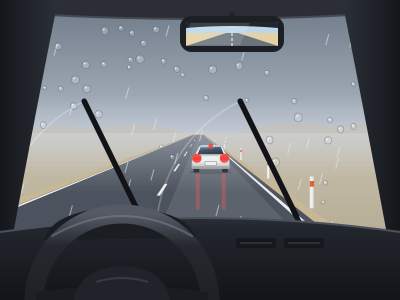
You are driving on a wet road after rain. What is the safest approach to braking?
The other 12 questions in this test
Read them all. The answer and the reason for each, and the timed 22-question run, are in the Saudi Driving Theory Online Practice Bank.
- Q11Safe driving
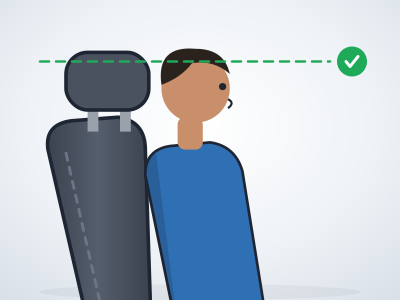
Before setting off on a long journey, how should you adjust your seat position?
- ARecline the seat fully back for comfort
- BPush the seat as far forward as possible to reach the pedals easily
- CSet the seat so your arms are slightly bent when holding the wheel and your knees are slightly bent when the pedals are fully depressed
- DSeat height does not affect driving safety
Answer and explanation in the bank
- Q12Safe driving
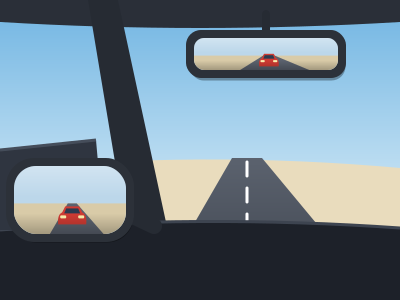
How should you set your interior rear-view mirror correctly?
- AAngled so you can see the back seat passengers clearly
- BTilted down so it does not reflect headlights at night
- CAdjusted to see the parcel shelf behind you
- DPositioned so you can see the full rear window with minimal head movement
Answer and explanation in the bank
- Q13Safe driving
How should each side mirror be adjusted to minimise the blind spot?
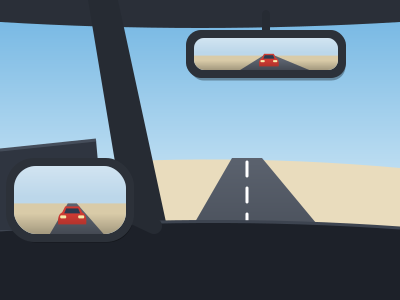
- AAngled so you can see the side of your own car in most of the mirror
- BAngled outward until only a sliver of your car's side is visible, maximising the view of the adjacent lane
- CPointing fully outward to the side of the road
- DSet the same angle on both sides
Answer and explanation in the bank
- Q14Safe driving
Where are the main blind spots around a large truck or heavy vehicle?
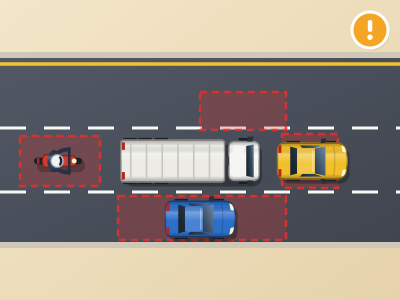
- ADirectly in front of the cab, directly behind the trailer, and on both sides alongside the trailer
- BOnly directly in front of the cab
- COnly to the right side of the trailer
- DLarge vehicles have no blind spots because they use wide mirrors
Answer and explanation in the bank
- Q15Safe driving
Why should you avoid cutting in front of a large truck immediately after overtaking it?
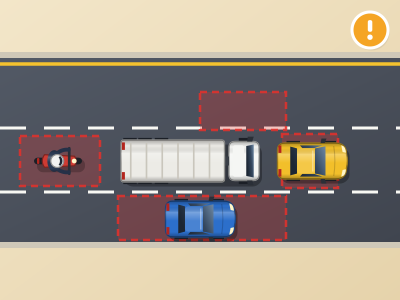
- ATrucks need a much longer stopping distance than cars, so cutting in front leaves insufficient space for them to brake
- BTrucks accelerate faster than cars and may rear-end you
- CIt is only a problem at night
- DTrucks always drive at higher speeds than cars
Answer and explanation in the bank
- Q16Safe driving
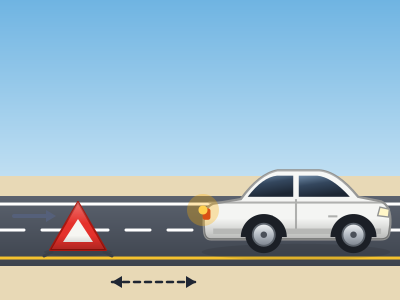
Your vehicle breaks down on a Saudi highway. What is the correct sequence of actions?
- AStay in the vehicle and call for help without moving
- BSwitch on hazard lights, move the vehicle off the carriageway if possible, place a warning triangle well behind it, and stand well away from traffic
- CWalk along the carriageway to the nearest phone
- DOpen the bonnet and wait for other drivers to stop
Answer and explanation in the bank
- Q17Safe driving
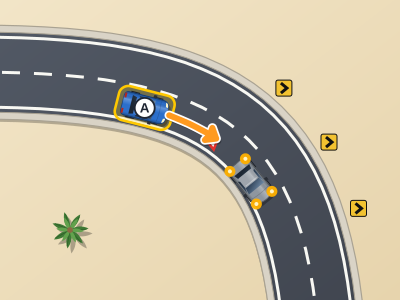
Your car breaks down just after a sharp bend. Where should you place the warning triangle?
- ARight next to your car so it is not hit
- BBefore the bend, so drivers see it before they see your car
- COn the far side of the car, beyond it
- DLeave it in the boot; hazard lights are enough on a bend
Answer and explanation in the bank
- Q18Safe driving
You arrive at a road traffic collision. What is the very first action you should take?
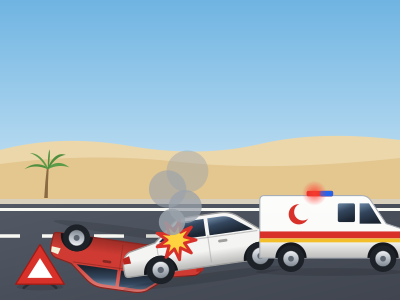
- AMove all injured persons away from the vehicles immediately
- BTake photographs for your insurance before doing anything else
- CMake the scene safe: warn approaching traffic, switch off engines if possible, and call emergency services
- DRemove passengers from vehicles before calling for help
Answer and explanation in the bank
- Q19Safe driving
After a collision in Saudi Arabia, what number do you call for emergency services?
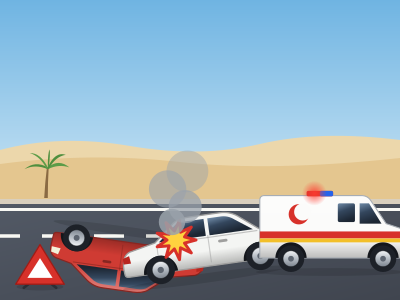
- A999
- B112
- C998
- D911
Answer and explanation in the bank
- Q20Safe driving
What is aquaplaning and when is it most likely to occur?
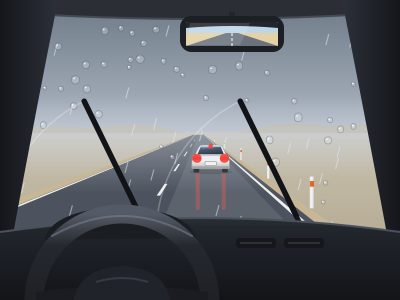
- AA layer of water builds between the tyres and road surface, causing the driver to lose steering control, most likely at high speed on a wet road
- BThe vehicle steering locks when crossing a flooded underpass
- CThe brakes overheat on a wet descent
- DRainwater enters the engine and causes it to stall
Answer and explanation in the bank
- Q21Safe driving
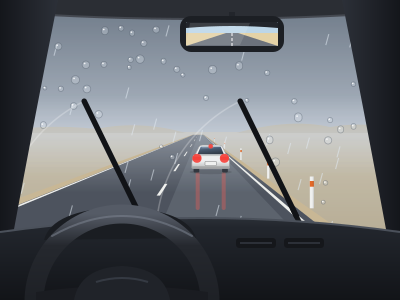
Which tyre condition most increases the risk of aquaplaning?
- ATyres with deep tread on a wet road
- BSlightly over-inflated tyres in dry conditions
- CNew tyres on a hot road
- DWorn or bald tyres with insufficient tread depth to channel water away
Answer and explanation in the bank
- Q22Safe driving
You are loading a pickup truck with goods for a desert journey. What must you ensure about the load?
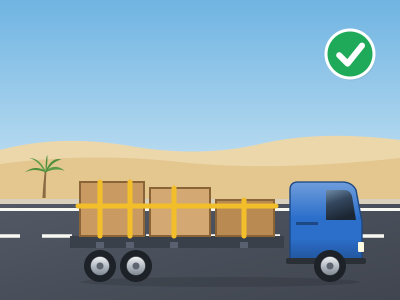
- ALoad can extend beyond the vehicle as long as it is balanced
- BLoad should be concentrated at the back axle for stability
- CThe load is secured so it cannot shift, fall, or project dangerously, and is within the vehicle's load rating
- DSecuring straps are optional if the load fits inside the tray
Answer and explanation in the bank
Every answer above, with the rule it comes from, plus the full 22-question timed test.
Get the Saudi Driving Theory Online Practice Bank - SAR 39What this test covers
Topics include road signs, traffic signals, right of way, roundabouts, speed limits, seat belts, fines and penalties, and the safe-driving rules specific to your vehicle category. Full question-by-question feedback with explanations is shown immediately after you finish the test above.
Frequently asked questions
How many questions is the Al Jouf General Dept. of Traffic light vehicle theory test?
The official General Dept. of Traffic light vehicle theory test in Al Jouf has 35 questions and you need 22 correct (63%) to pass. This practice test has 22 questions.
Is this the real exam?
These are practice questions to help you revise, written to the published rules and to what candidates report from the real test. They are not the official Saudi exam and the real question bank, format, fees and pass mark are set by the General Department of Traffic (Moroor) and the driving schools, and can change. Always confirm the current requirements with your driving school or the traffic department.
Is this practice test free?
The first 10 questions are free, with no signup, and each shows the answer and the reason. The full 22-question test, timed, is in the Saudi Driving Theory Online Practice Bank (SAR 39, one payment), with every question in the bank.
What does the Al Jouf light vehicle theory test cover?
Road signs, traffic signals, right of way, roundabouts, speed limits, seat belts, penalties and safe-driving rules, plus the handling and safety topics specific to your vehicle.