

Al Jouf General Dept. of Traffic Motorcycle
Timed mock exam· Full mock examsAl Jouf General Dept. of Traffic - Saudi Motorcycle Theory Mock Test 1
A full 35-question timed practice exam for the Saudi motorcycle theory test. Covers shared road rules and signs plus motorcycle-specific control and safety. Aim for 22/35 to pass.
On a Saudi highway, when are you allowed to overtake on the right side of another vehicle?
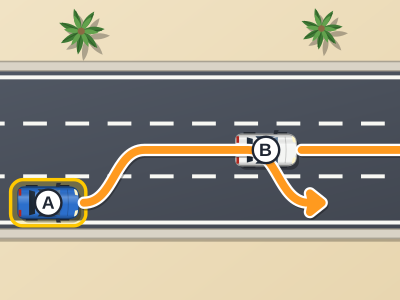
The other 25 questions in this test
Read them all. The answer and the reason for each, and the timed 35-question run, are in the Saudi Driving Theory Online Practice Bank.
- Q11Road signs and signals
A sign at the side of the road shows a white horizontal arrow inside a blue rectangle pointing left. What does this informational sign indicate?
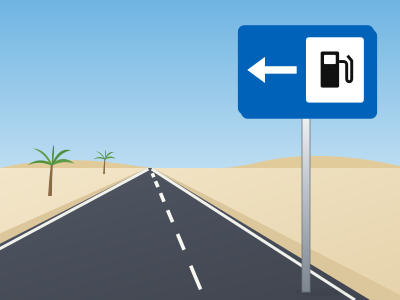
- AYou must turn left immediately
- BThe left lane is closing ahead
- CLeft turns are prohibited on this road
- DA service or facility is accessible in that direction
Answer and explanation in the bank
- Q12Traffic rules
On a motorway, what is the minimum safe gap recommended when following another vehicle at 120 km/h in dry conditions?
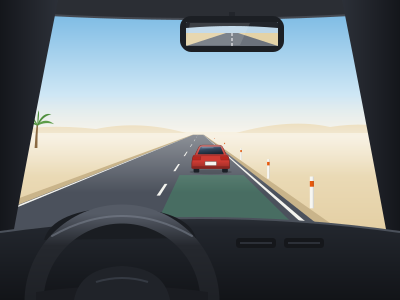
- AOne car length (approximately 5 metres)
- BAt least a two-second gap, which at 120 km/h equates to roughly 67 metres; increase this further in any adverse condition
- C10 metres regardless of speed
- DThere is no recommended gap on highways as drivers are expected to react faster
Answer and explanation in the bank
- Q13Right of way
A level crossing has two sets of tracks side by side. The barriers rise after the first train passes. Can you cross immediately?
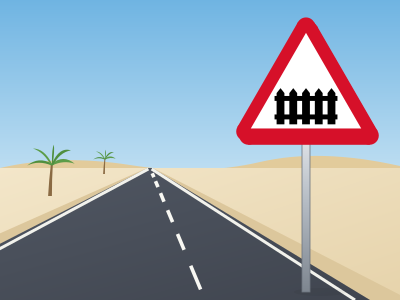
- ANo; check both tracks carefully before crossing because a second train may be on the adjacent track
- BYes, rising barriers mean it is safe to cross
- CYes, but only proceed at walking speed
- DYes, because the barrier system prevents two trains passing simultaneously
Answer and explanation in the bank
- Q14Safe driving
You are crossing a flooded wadi (dry riverbed) that has water flowing across the road. What should you do?
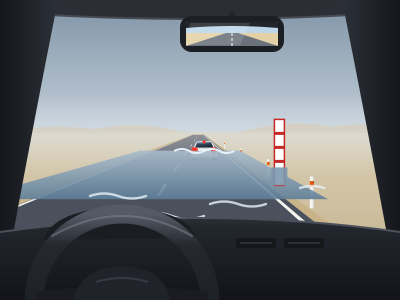
- ADrive through quickly so the water does not have time to affect the engine
- BDrive through slowly in first gear
- CTurn around and find an alternative route; never attempt to cross moving floodwater of unknown depth
- DStop in the middle and assess whether to continue
Answer and explanation in the bank
- Q15Penalties and fines
A driver parks a vehicle blocking a fire-brigade access lane in Saudi Arabia. What is the risk?
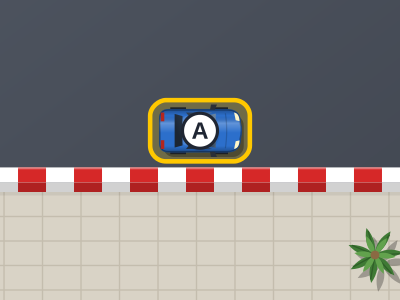
- ANo penalty, as fire-access lanes are not regulated by traffic law
- BA warning notice is placed on the windscreen but no fine or towing is authorised
- COnly penalised if a fire actually occurs and access is genuinely needed
- DThe vehicle is likely to be towed immediately and the driver fined for obstructing emergency access
Answer and explanation in the bank
- Q16Road signs and signals
A variable message sign (VMS) on a Saudi expressway displays a flashing amber speed limit of 80 km/h, lower than the normal posted limit. What should you do?
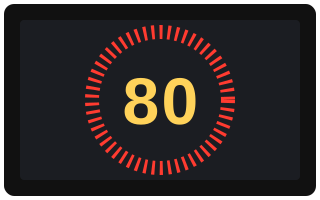
- AReduce speed to 80 km/h as the displayed limit is now legally in force
- BIgnore it and maintain the permanently posted speed limit
- CVariable signs are only advisory - follow the permanent sign
- DSlow to 80 km/h only if you personally observe a hazard
Answer and explanation in the bank
- Q17Traffic rules
You are driving at night on an unlit rural road. Another vehicle approaches from ahead with full high-beam. You are temporarily blinded. What should you do?
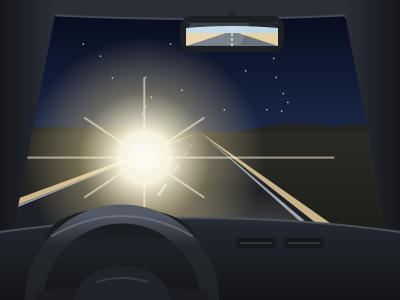
- AFlash your own high-beam repeatedly and maintain speed
- BClose your eyes briefly until the glare passes
- CSwerve to the left to avoid the other vehicle
- DSlow down, look toward the left edge of the road to guide yourself, and do not stop suddenly in the lane
Answer and explanation in the bank
- Q18Right of way
You meet an oncoming lorry on a narrow road with a steep drop on your side. The lorry is partially on your side. What should you do?
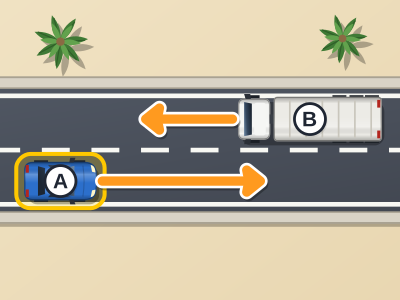
- ASound your horn and hold your position; the lorry must move back
- BAccelerate past the lorry before it can move further into your lane
- CSlow down, stay as far to the right as safely possible, and communicate calmly to find a solution
- DReverse at speed to the nearest junction
Answer and explanation in the bank
- Q19Safe driving
What is the safest position for your hands on the steering wheel for maximum control?
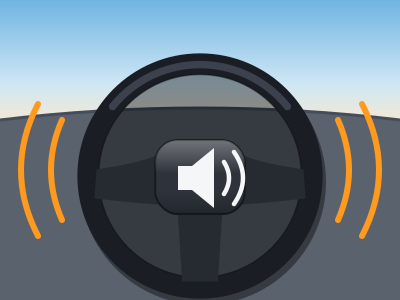
- A12 o'clock position with both hands together at the top
- BOne hand at 6 o'clock for relaxed long-distance driving
- C10 and 2 o'clock position at all times in all vehicles
- D9 and 3 o'clock position (or 8 and 4 for vehicles with large airbags)
Answer and explanation in the bank
- Q20Penalties and fines
A driver discovers a traffic fine in Absher that they were unaware of from two years ago. Can this old fine still be enforced?
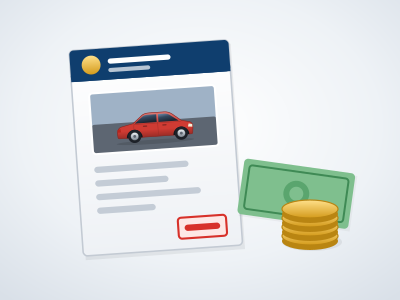
- ANo, fines automatically expire after 12 months if unpaid
- BOnly fines from the past 90 days can be enforced; older ones are written off
- CYes, traffic fines in Saudi Arabia do not automatically expire and remain enforceable until paid, blocking Istimara renewal
- DOld fines are waived automatically during the annual royal pardon period
Answer and explanation in the bank
- Q21Traffic rules
When driving in convoy through the Saudi desert, what special precaution should you take regarding following distance?
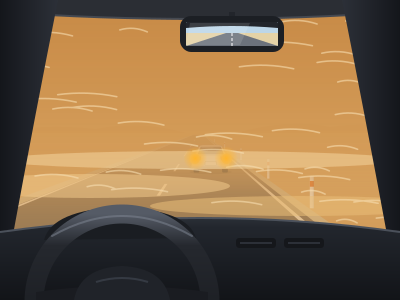
- AIncrease the following distance beyond the normal road rule to account for dust that obscures visibility and loose sand that extends stopping distances
- BDecrease the distance so you do not lose sight of the vehicle ahead in dust
- CDesert convoys have no special following distance rules
- DFollow as closely as possible to use the lead vehicle's tyre tracks as a guide
Answer and explanation in the bank
- Q22Right of way
A cyclist approaches a roundabout and continues to ride around it rather than dismounting. Who has priority between the cyclist inside the roundabout and a car trying to enter?
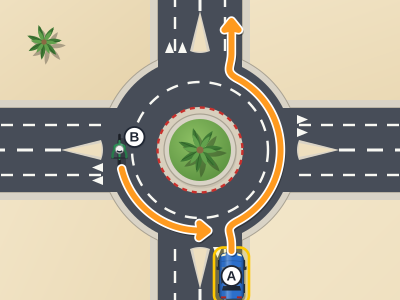
- AThe car entering the roundabout has priority because it is heavier
- BThe cyclist already in the roundabout has priority as circulating traffic
- CBoth have equal priority and must negotiate
- DThe car has priority because cyclists should dismount at roundabouts
Answer and explanation in the bank
- Q23Safe driving
What does a Tyre Pressure Monitoring System (TPMS) warning light in your dashboard mean?
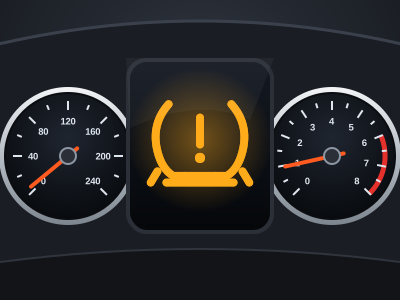
- AYour tyres are over-inflated and you should release air immediately
- BOne or more tyres have dropped significantly below the recommended pressure and you should check and inflate them
- CThe spare tyre has been removed
- DThe tyre tread has reached the wear indicator
Answer and explanation in the bank
- Q24Penalties and fines
A driver is caught transporting a passenger in a pick-up truck's open cargo bed without proper seating or restraints. What is the likely penalty?
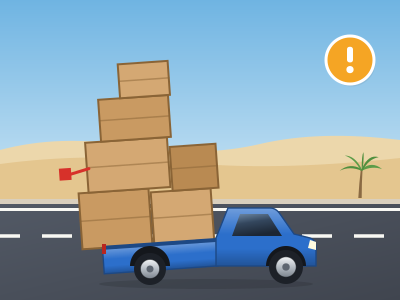
- AA traffic fine for illegally carrying passengers in an unsafe manner, because passengers must be carried in properly equipped seating areas
- BNo offence; riding in a pick-up truck bed is a traditional practice that is legally permitted
- COnly an offence if the truck is travelling at more than 60 km/h
- DPermitted outside city limits on rural roads
Answer and explanation in the bank
- Q25Traffic rules
What must you do when an emergency vehicle (ambulance, police, or fire) approaches from behind with lights and siren active?
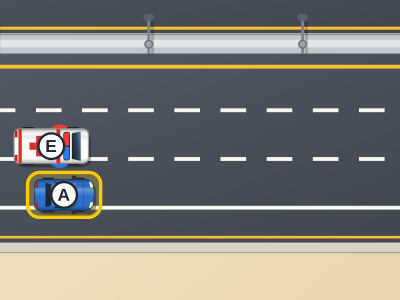
- AMove to the right and slow down or stop to allow the emergency vehicle to pass
- BSpeed up to stay ahead of the emergency vehicle
- CStay in your lane and maintain speed so traffic flow is not disrupted
- DMove to the left lane immediately
Answer and explanation in the bank
- Q26Right of way
You are approaching speed humps in a school zone. A child is on the pavement near the humps. What should you do?
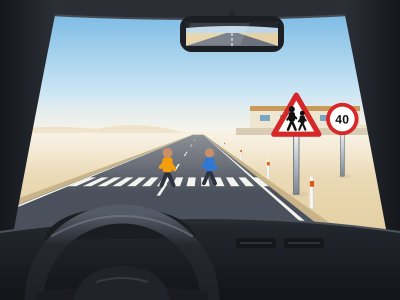
- AMaintain your speed and cross the humps normally
- BSlow down significantly for the humps and be prepared to stop if the child steps onto the road
- CSound your horn to warn the child and proceed
- DSpeed up to pass quickly before the child can react
Answer and explanation in the bank
- Q27Safe driving
You are the first person to arrive at a collision where a vehicle has caught fire and a person is trapped inside. What is the priority order?
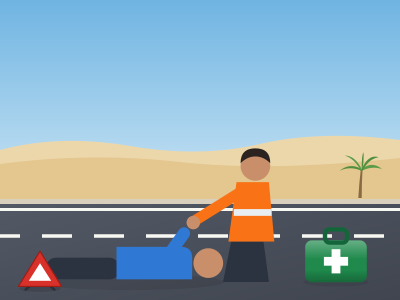
- APhotograph the scene first, then call emergency services, then attempt rescue
- BCall emergency services immediately (911), warn other traffic, and only attempt to free the trapped person if there is no immediate fire danger and you can do so safely
- CAttempt to free the trapped person at all costs before doing anything else
- DWait for other motorists to help before taking any action
Answer and explanation in the bank
- Q28Penalties and fines
A driver allows an unlicensed person to drive their vehicle in Saudi Arabia. Who is held responsible?
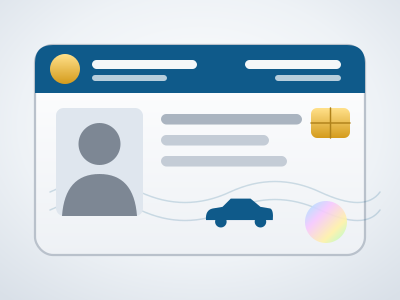
- ABoth the vehicle owner and the unlicensed driver can face penalties; the owner for permitting an unlicensed person to drive
- BOnly the unlicensed driver is penalised; the owner bears no responsibility
- CNeither is penalised unless an accident occurs
- DOnly the owner is penalised; the unlicensed driver cannot be charged as they hold no licence
Answer and explanation in the bank
- Q29Traffic rules
What does a double continuous yellow centre line on a Saudi road indicate?
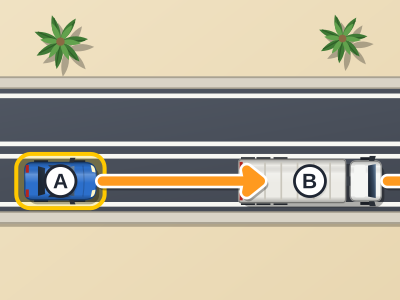
- ANeither direction of traffic may cross or overtake across the line
- BOnly the vehicle on the left may overtake
- CThe road is a two-way road with priority to the right
- DThe line marks the edge of a bus lane
Answer and explanation in the bank
- Q30Right of way
A military convoy is moving with police escort vehicles fore and aft with flashing lights. You want to turn right across its path at a junction. What must you do?
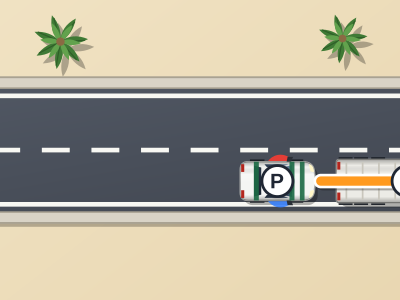
- AWait until the entire convoy and its escort vehicles have passed before turning
- BInsert yourself into the convoy gap and turn when clear
- CTurn as soon as the lead escort clears the junction
- DFlash your lights and the convoy must give way to you
Answer and explanation in the bank
- Q31Safe driving
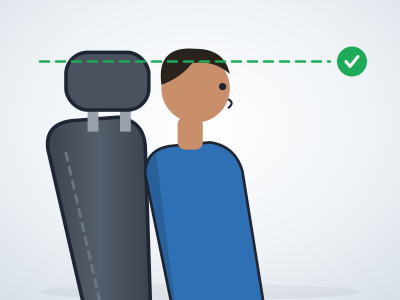
What is the main safety function of the headrest (head restraint) in your seat?
- ATo make long drives more comfortable
- BTo limit rearward head movement and reduce whiplash injury in a rear-end collision
- CTo prevent the driver from falling asleep
- DTo support the neck when checking blind spots
Answer and explanation in the bank
- Q32Penalties and fines
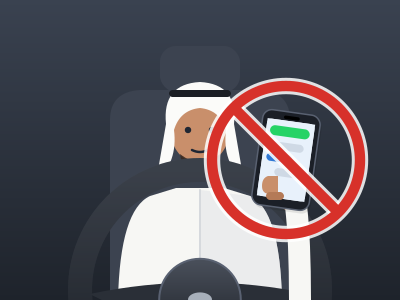
A commercial truck driver in Saudi Arabia is caught driving while using a mobile phone. Are the penalties the same as for a private car driver?
- ACommercial drivers are exempt if the call is work-related
- BThe same handheld-device violation applies to every driver: SR 500-900 and 2 points
- CTrucks can only be fined by a police officer, not by Saher cameras
- DTruck drivers only receive a warning for the first offence
Answer and explanation in the bank
- Q33Traffic rules
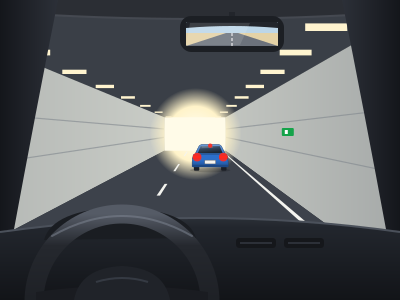
You are driving through an underpass (tunnel) and your vehicle breaks down. What must you NOT do?
- ASwitch on hazard lights and attempt to reach the nearest emergency exit
- BCall emergency services immediately
- CLeave the vehicle stopped in a live traffic lane without warning devices
- DWarn following drivers by turning on all available lights
Answer and explanation in the bank
- Q34Right of way
You are approaching an unmarked crossroads at speed. What is the safest approach even before applying right-hand priority?
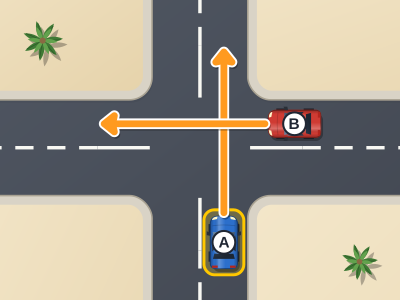
- AMaintain your speed; you have priority if no one is to your right
- BSound your horn to warn cross-traffic and proceed
- CPriority rules mean you never need to reduce speed at such junctions
- DReduce speed so that you can stop safely if another vehicle appears, then apply right-hand priority
Answer and explanation in the bank
- Q35Safe driving
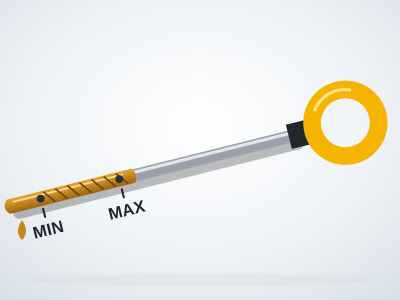
Before a long desert highway journey, which pre-trip check is most important to minimise breakdown risk?
- ACleaning the windscreen and adjusting the radio presets
- BOnly the fuel level; modern vehicles rarely break down
- CChecking tyre condition and pressure, engine oil level, coolant level, brakes, and fuel with a spare for remote sections
- DThe air conditioning refrigerant level only
Answer and explanation in the bank
Every answer above, with the rule it comes from, plus the full 35-question timed test.
Get the Saudi Driving Theory Online Practice Bank - SAR 39What this test covers
Topics include road signs, traffic signals, right of way, roundabouts, speed limits, seat belts, fines and penalties, and the safe-driving rules specific to your vehicle category. Full question-by-question feedback with explanations is shown immediately after you finish the test above.
Frequently asked questions
How many questions is the Al Jouf General Dept. of Traffic motorcycle theory test?
The official General Dept. of Traffic motorcycle theory test in Al Jouf has 35 questions and you need 22 correct (63%) to pass. This practice test has 35 questions.
Is this the real exam?
These are practice questions to help you revise, written to the published rules and to what candidates report from the real test. They are not the official Saudi exam and the real question bank, format, fees and pass mark are set by the General Department of Traffic (Moroor) and the driving schools, and can change. Always confirm the current requirements with your driving school or the traffic department.
Is this practice test free?
The first 10 questions are free, with no signup, and each shows the answer and the reason. The full 35-question test, timed, is in the Saudi Driving Theory Online Practice Bank (SAR 39, one payment), with every question in the bank.
What does the Al Jouf motorcycle theory test cover?
Road signs, traffic signals, right of way, roundabouts, speed limits, seat belts, penalties and safe-driving rules, plus the handling and safety topics specific to your vehicle.