

Al Jouf General Dept. of Traffic Motorcycle
Practice mode· Motorcycle skillsAl Jouf General Dept. of Traffic - Saudi Motorcycle Control Practice Test
Focused practice on motorcycle handling: balance, braking, cornering, gear use, positioning and low-speed control. Build the machine skills the theory test expects.
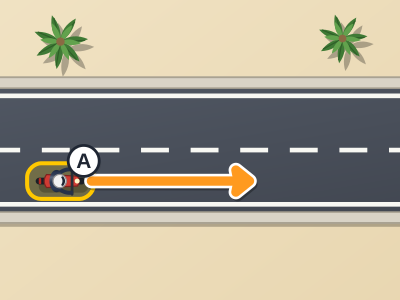
What is the safest way to maintain balance on a motorcycle when riding at very low speeds?
The other 10 questions in this test
Read them all. The answer and the reason for each, and the timed 20-question run, are in the Saudi Driving Theory Online Practice Bank.
- Q11Motorcycle control
When starting a motorcycle on a steep uphill gradient, which technique prevents rolling back?
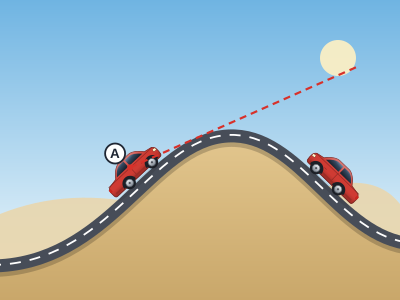
- AUse only the front brake to hold the bike and release it as you open the throttle
- BHold the rear brake on, bring the clutch to the friction point with throttle, then release the brake as drive is felt
- CKeep both feet on the ground and hop forward as you release the clutch
- DStart in second gear to reduce engine power and avoid wheel spin
Answer and explanation in the bank
- Q12Motorcycle control
Your motorcycle begins to understeer (run wide) on a corner because you entered too fast. What is the correct response?
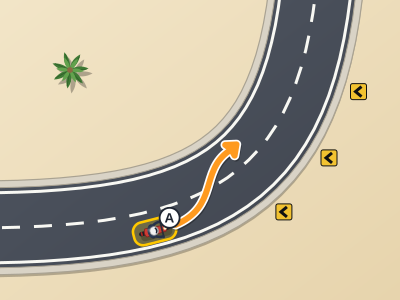
- ALook through the corner, press harder on the inside bar to increase lean angle, and smoothly roll on a little throttle to settle the chassis
- BApply the front brake firmly to reduce speed before you run out of road
- CSit upright to reduce lean angle and allow the tyres to regain grip
- DRelease the throttle abruptly to shed speed through engine braking
Answer and explanation in the bank
- Q13Motorcycle control
What is the correct throttle technique through the apex of a corner?
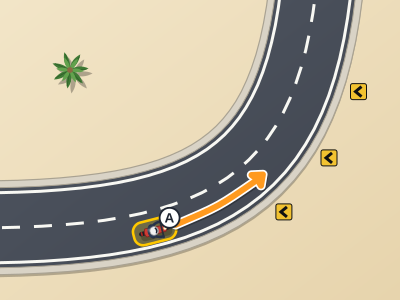
- AClose the throttle completely at the apex for maximum traction
- BMaintain a steady throttle through the apex and gradually roll on as you straighten up
- CApply full throttle at the apex to power out of the bend quickly
- DRapidly open and close the throttle to keep revs in the power band
Answer and explanation in the bank
- Q14Motorcycle control
What does the clutch friction point (biting point) refer to on a motorcycle?
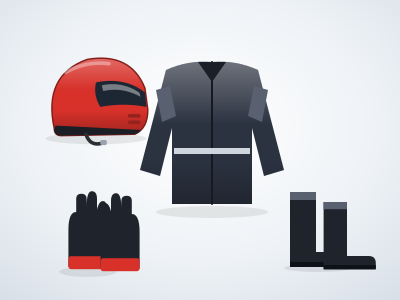
- AThe position of the clutch lever where the clutch plates begin to engage and transmit engine torque to the gearbox
- BThe point at which the front tyre begins to lose grip under braking
- CThe moment the rear brake engages and stops rear-wheel rotation
- DThe maximum throttle position before the engine over-revs
Answer and explanation in the bank
- Q15Motorcycle control
How does tyre pressure that is too low affect motorcycle handling in a corner?
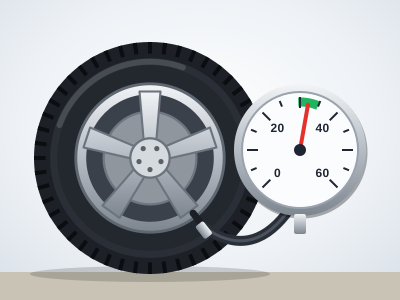
- AIt increases grip because a larger contact patch forms, making cornering safer
- BThe tyre sidewall flexes excessively, causing imprecise steering and a risk of sudden roll-off from the rim at speed
- CIt has no effect on cornering; only tread depth affects grip
- DIt makes the steering feel heavier but does not affect the actual grip level
Answer and explanation in the bank
- Q16Motorcycle control
You are riding in fifth gear at 90 km/h and need rapid acceleration to overtake. What should you do first?
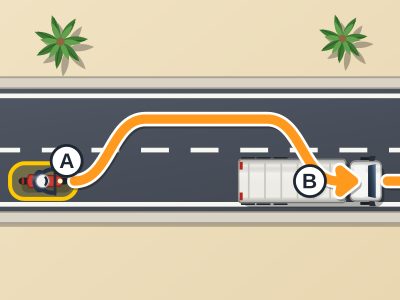
- AOpen the throttle fully in fifth gear and wait for speed to build gradually
- BDownshift one or two gears to bring the engine into its peak torque range before opening the throttle
- CPull in the clutch, open the throttle fully, then release the clutch quickly
- DDownshift all the way to second gear for maximum acceleration
Answer and explanation in the bank
- Q17Motorcycle control
Which factor most reduces tyre grip on a sand-covered road surface in Saudi Arabia?
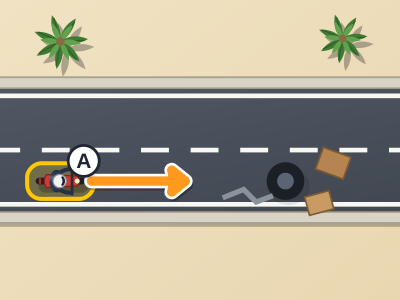
- ASand acts as ball bearings between the tyre and the road, drastically reducing the friction coefficient
- BSand increases grip by filling in surface voids and creating a smoother contact area
- COnly wet sand reduces grip; dry sand on a paved road has negligible effect
- DSand only affects steering feel and does not change actual stopping distance
Answer and explanation in the bank
- Q18Motorcycle control
What happens to a motorcycle when the rear brake only is applied hard enough to lock the rear wheel on a straight road?
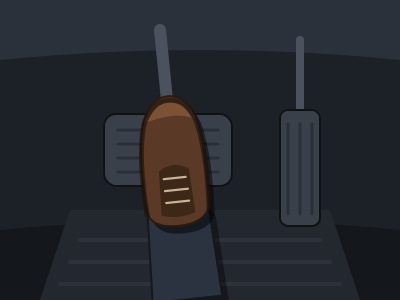
- AThe bike stops in a straight line safely because only the rear wheel is locked
- BThe front wheel immediately locks as well, stopping the bike quickly
- CNothing unusual happens; a locked rear wheel is safe and controllable at any speed
- DThe rear wheel slides sideways (fishtail or highside risk) and control can be regained by easing the brake gently; do not suddenly fully release it
Answer and explanation in the bank
- Q19Motorcycle control
Where should you look when performing a tight slow-speed manoeuvre?
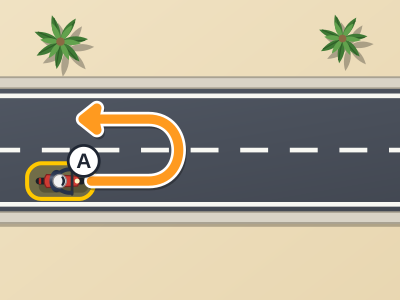
- AAt your intended exit point or destination, not at obstacles or the ground in front of the wheel
- BDirectly at the obstacle you are trying to avoid
- CAt the instrument cluster to monitor engine revs
- DAlternate between the ground and the mirrors every few seconds
Answer and explanation in the bank
- Q20Motorcycle control
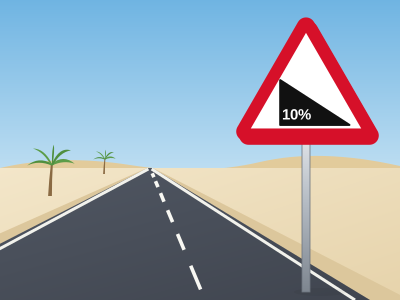
When should engine braking alone be sufficient to slow a motorcycle without using the brake levers?
- AWhenever you need to stop, because engine braking is safer than the brakes in all conditions
- BOn dry highways above 80 km/h where there is plenty of run-off space
- COnly when a gentle reduction in speed is needed, such as easing off on a slight downhill; it is never enough for emergency or rapid stops
- DOnly on motorcycles with anti-lock brakes, where engine braking is magnified
Answer and explanation in the bank
Every answer above, with the rule it comes from, plus the full 20-question timed test.
Get the Saudi Driving Theory Online Practice Bank - SAR 39What this test covers
Topics include road signs, traffic signals, right of way, roundabouts, speed limits, seat belts, fines and penalties, and the safe-driving rules specific to your vehicle category. Full question-by-question feedback with explanations is shown immediately after you finish the test above.
Frequently asked questions
How many questions is the Al Jouf General Dept. of Traffic motorcycle theory test?
The official General Dept. of Traffic motorcycle theory test in Al Jouf has 35 questions and you need 22 correct (63%) to pass. This practice test has 20 questions.
Is this the real exam?
These are practice questions to help you revise, written to the published rules and to what candidates report from the real test. They are not the official Saudi exam and the real question bank, format, fees and pass mark are set by the General Department of Traffic (Moroor) and the driving schools, and can change. Always confirm the current requirements with your driving school or the traffic department.
Is this practice test free?
The first 10 questions are free, with no signup, and each shows the answer and the reason. The full 20-question test, timed, is in the Saudi Driving Theory Online Practice Bank (SAR 39, one payment), with every question in the bank.
What does the Al Jouf motorcycle theory test cover?
Road signs, traffic signals, right of way, roundabouts, speed limits, seat belts, penalties and safe-driving rules, plus the handling and safety topics specific to your vehicle.