

Asir General Dept. of Traffic Truck & Bus
Timed mock exam· Full mock examsAsir General Dept. of Traffic - Saudi Truck & Bus Theory Mock Test 1
A full 35-question timed practice exam for the Saudi heavy-vehicle (truck and bus) theory test. Covers shared road rules and signs plus heavy-vehicle handling and safety. Aim for 22/35 to pass.
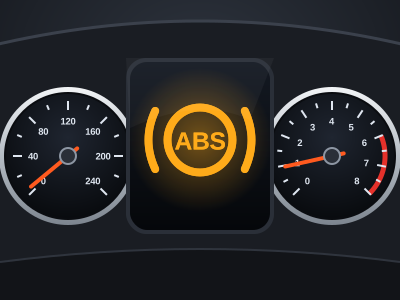
What does ABS (Anti-lock Braking System) allow a driver to do during emergency braking?
The other 25 questions in this test
Read them all. The answer and the reason for each, and the timed 35-question run, are in the Saudi Driving Theory Online Practice Bank.
- Q11Right of way
The traffic signals at a junction have failed and show no light at all. How should you proceed?
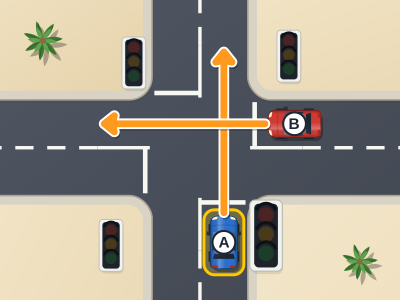
- ATraffic on the larger road proceeds freely while others wait
- BThe first vehicle to arrive at the junction has priority
- CStop until authorities arrive to direct traffic
- DTreat the junction as an unmarked crossroads and give way to traffic from your right
Answer and explanation in the bank
- Q12Safe driving
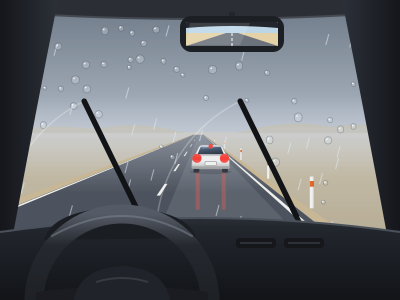
When driving in heavy rain at night, why should you avoid using full high beam headlights?
- AHigh beams use more fuel in wet conditions
- BHigh beams are illegal on wet roads in Saudi Arabia
- CRain droplets reflect high beam light back at the driver, creating glare that reduces visibility
- DHigh beams cause the windscreen wipers to operate incorrectly
Answer and explanation in the bank
- Q13Penalties and fines
A driver blocks an emergency vehicle by refusing to move aside on a Saudi road. What is the consequence?
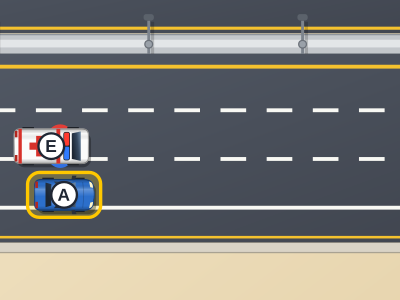
- AA traffic fine for failing to give way to an emergency vehicle
- BNo penalty exists; giving way is a courtesy, not a legal requirement
- CThe driver is only penalised if the delay caused the patient to be harmed
- DThe driver receives a warning letter mailed to their home address
Answer and explanation in the bank
- Q14Heavy vehicle
A driver is transporting a prefabricated concrete beam that extends beyond the rear of the trailer by 2 metres. What is required in Saudi Arabia before this vehicle is driven on a public road?
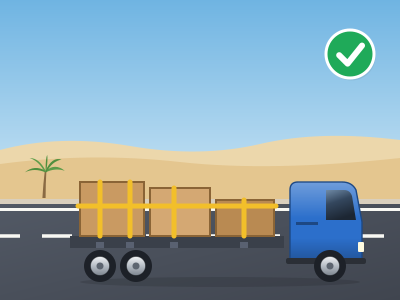
- AAn abnormal-load permit, rear overhang markers or flags, and an escort vehicle if the permit requires one
- BSimply attaching red tape to the end of the beam and driving at reduced speed
- CNo additional action is needed if the load does not exceed the maximum width
- DNotifying the nearest police station by phone is the only requirement
Answer and explanation in the bank
- Q15Road signs and signals
What colour border do hazard warning signs have in Saudi Arabia?
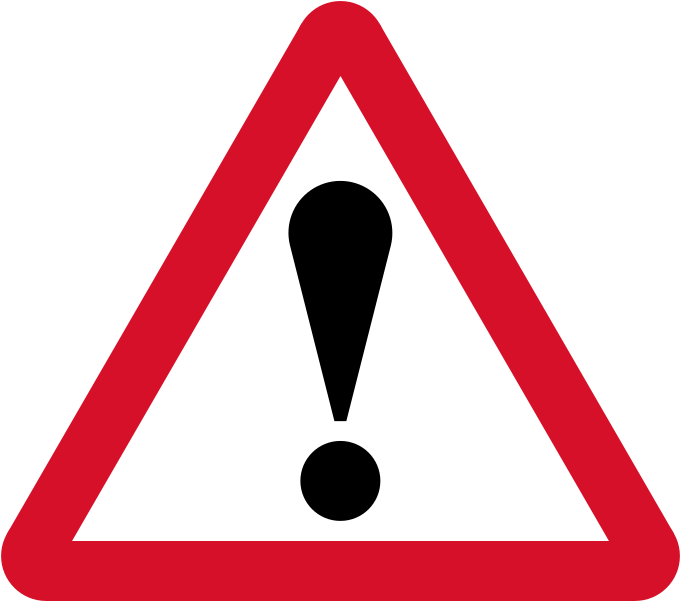
- ABlue
- BYellow
- CRed
- DBlack
Answer and explanation in the bank
- Q16Traffic rules
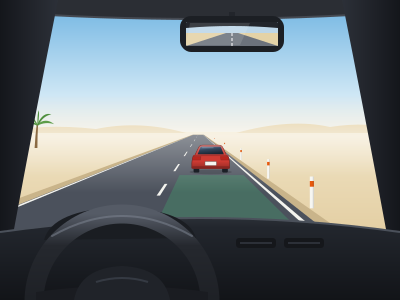
A large truck is travelling ahead of you. How should your following distance compare to the gap you would keep behind a car?
- AIt should be the same as behind a car
- BIt should be smaller, to reduce the chance of other vehicles cutting in
- CFollowing distance behind trucks is not regulated
- DIt should be greater, because trucks are longer and take more time to stop
Answer and explanation in the bank
- Q17Right of way
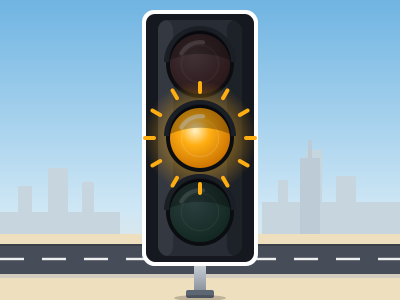
A traffic light is showing a steady flashing amber at a junction. What should you do?
- AStop and wait for the light to change to green
- BProceed at normal speed because amber means caution only
- CTreat the junction as if there are no signals
- DSlow down, apply caution, give way where necessary, and proceed only when safe
Answer and explanation in the bank
- Q18Safe driving
You are approaching oncoming traffic at night whose driver has not dipped their high beams. What should you do?
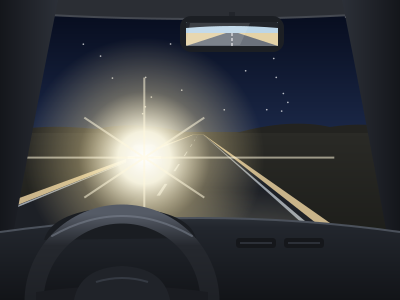
- AFlash your high beams repeatedly until they dim theirs
- BClose one eye and maintain speed
- CSlow down, look towards the left edge of your lane to avoid the glare, and do not retaliate with high beams
- DSteer towards the centre line to get closer and force them to dip
Answer and explanation in the bank
- Q19Penalties and fines
Which of the following is an example of illegal parking in Saudi Arabia that would attract a fine?
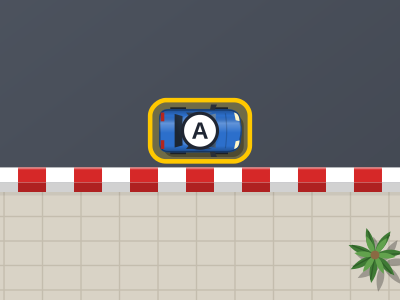
- AParking in front of a fire-hydrant access point or blocking a driveway
- BParking in a designated paid parking bay after paying the meter fee
- CParking in a marked residential bay with the owner's permission
- DParking in a multi-storey car park on an upper level
Answer and explanation in the bank
- Q20Heavy vehicle
Large mirrors are fitted to heavy trucks primarily to help the driver do what?
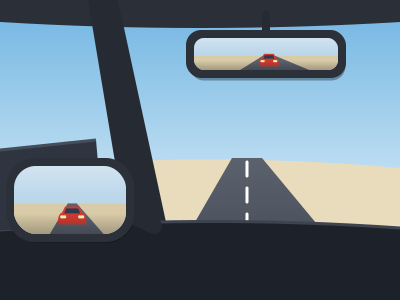
- ASee around blind spots that are much larger than those of a light vehicle, including the areas beside and behind the trailer
- BReflect sunlight to warn other road users of the truck's presence
- CMonitor the load to ensure it has not shifted during the journey
- DComply with a legal requirement that exists only for aesthetic reasons
Answer and explanation in the bank
- Q21Road signs and signals
What is the shape of a hazard warning sign in the Saudi / GCC road-sign system?
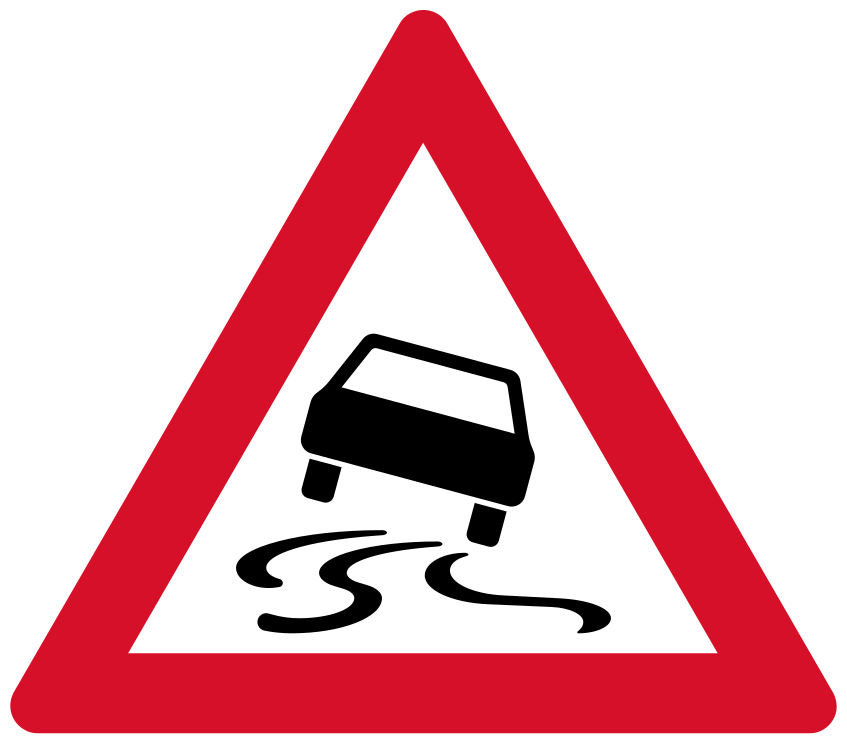
- AUpward-pointing triangle with a red border
- BDiamond shape with a yellow border
- CCircle with a red border
- DSquare with a black border
Answer and explanation in the bank
- Q22Traffic rules
Who must wear a seat belt in a Saudi vehicle?
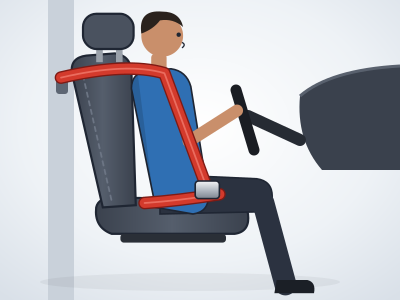
- AOnly the driver and front passenger
- BOnly the driver
- CSeat belts are optional for adults in the rear
- DThe driver and all passengers, including those in the rear seats
Answer and explanation in the bank
- Q23Right of way
A traffic light is showing a steady flashing red at a junction. What does this mean?
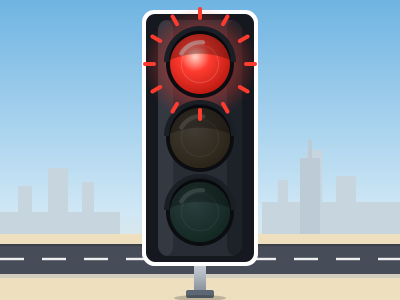
- AStop completely, give way to all traffic, then proceed when safe
- BProceed carefully at reduced speed
- CThe light is broken so treat the junction as unmarked
- DOnly emergency vehicles may proceed
Answer and explanation in the bank
- Q24Safe driving
What is the core principle of defensive driving?
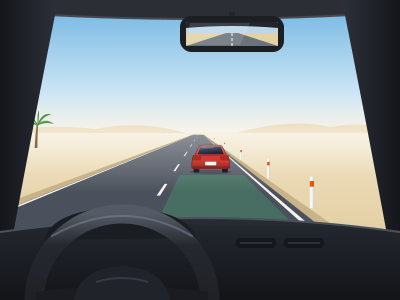
- AAnticipate hazards created by other road users and conditions, and always have an escape plan
- BAlways drive at the speed limit regardless of conditions
- CDrive as close behind the vehicle ahead as possible to prevent others from cutting in
- DUse the horn frequently to warn others of your presence
Answer and explanation in the bank
- Q25Penalties and fines
A driver double-parks on a busy street in Riyadh, blocking another vehicle. What is likely to happen?
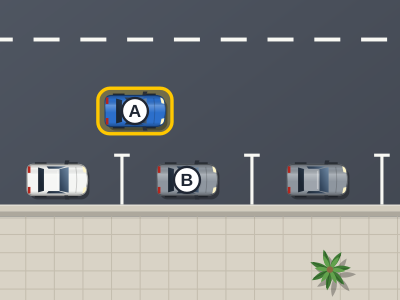
- ANo action is taken as long as the driver returns within 15 minutes
- BThe driver receives a parking fine and the vehicle may be clamped or towed at the owner's expense
- CThe blocked driver can legally move the offending vehicle themselves
- DOnly a verbal warning from municipal inspectors is issued
Answer and explanation in the bank
- Q26Heavy vehicle
Where is the largest blind spot for a standard left-hand-drive heavy truck operating in Saudi Arabia?
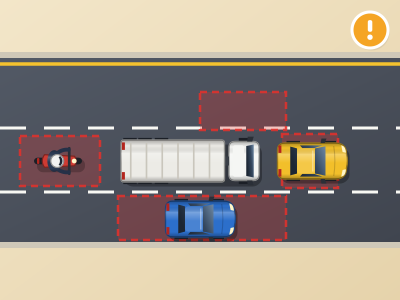
- ADown the right (passenger) side of the vehicle and immediately behind the trailer, where no mirror can give a complete view
- BDirectly in front of the cab, which is fully visible through the windscreen
- COn the driver's left side, right beside the driver's window
- DThere are no blind spots if the truck is fitted with two side mirrors
Answer and explanation in the bank
- Q27Road signs and signals
What shape are mandatory positive instruction signs in Saudi Arabia, such as 'Keep Right' or 'Proceed Straight Only'?
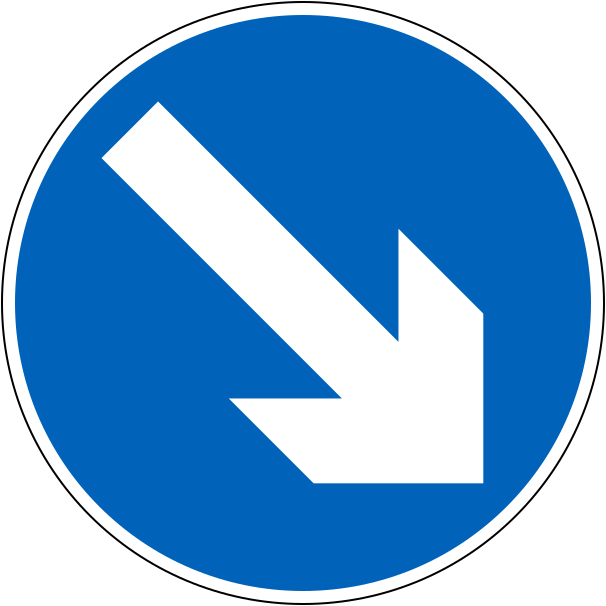
- ARed circle with a white symbol
- BBlue circle with a white symbol
- CGreen rectangle with white text
- DRed triangle with a black symbol
Answer and explanation in the bank
- Q28Traffic rules
A child aged three years old must travel in a vehicle. How must they be restrained?
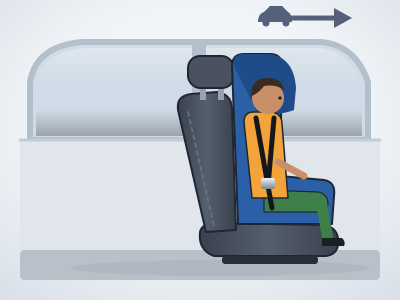
- AIn an approved child safety seat that is appropriate for their weight and height
- BHeld on an adult's lap in the front seat
- CUsing only the standard adult seat belt
- DNo special restraint is needed for children under five
Answer and explanation in the bank
- Q29Right of way
You approach a level crossing with barriers. The barriers are down and red lights are flashing. What must you do?
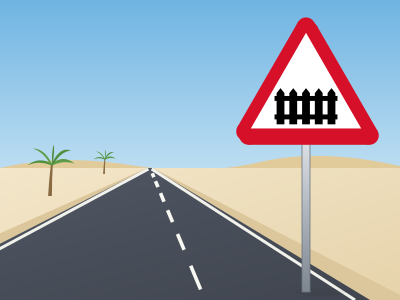
- AStop before the barrier and wait until it rises and the lights stop flashing
- BProceed slowly between the barriers if the gap is wide enough
- CSound your horn and proceed at reduced speed
- DStop only if you can see a train approaching
Answer and explanation in the bank
- Q30Safe driving
Tailgating (following too closely) is dangerous primarily because it does what?
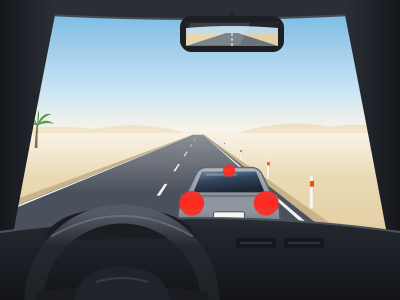
- AIt eliminates the space and time needed to stop safely if the vehicle ahead brakes suddenly
- BIt increases fuel consumption
- CIt reduces the effectiveness of your indicators
- DIt causes tyre overheating
Answer and explanation in the bank
- Q31Penalties and fines
What is the legal limit for window tinting darkness on side and rear windows in Saudi Arabia?
- AThere is no limit; owners may tint windows to any darkness they choose
- BThere is a regulated maximum darkness (Visible Light Transmission percentage) beyond which tinting is illegal; vehicles with excessively dark tint face fines and may be required to remove the tinting
- CTinting is completely banned on all windows of private cars
- DTinting limits apply only to commercial vehicles, not private cars
Answer and explanation in the bank
- Q32Heavy vehicle
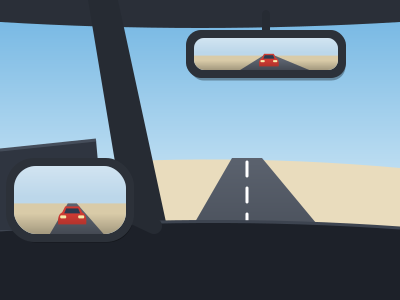
How often should a heavy truck driver check their mirrors while driving on a busy urban road?
- AOnly when changing lanes or overtaking
- BEvery five minutes is sufficient on straight roads
- CFrequently and regularly, including before every lane change, turn, speed change, and at regular intervals when travelling straight
- DOnly before braking, because that is when rear collisions are most likely
Answer and explanation in the bank
- Q33Road signs and signals
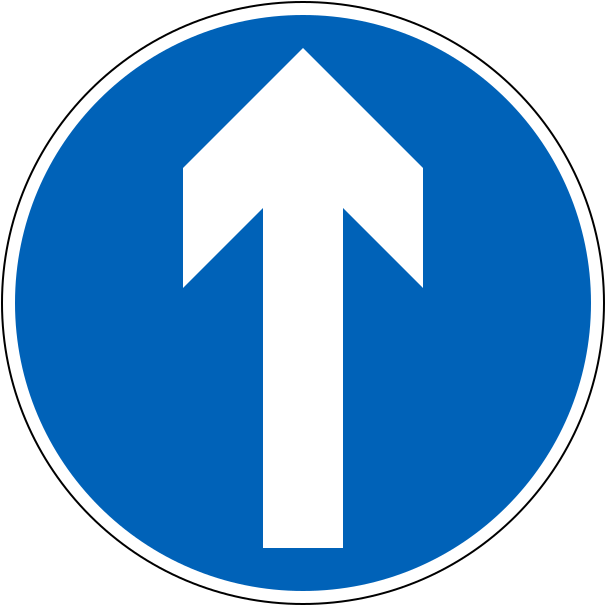
What colour background do mandatory instruction signs have in Saudi Arabia?
- ARed
- BWhite
- CYellow
- DBlue
Answer and explanation in the bank
- Q34Traffic rules
Under what age are children generally required to sit in the rear seats of a vehicle in Saudi Arabia?
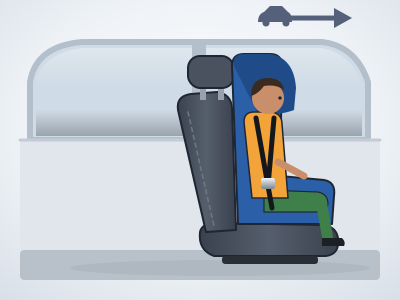
- AUnder ten years old, unless the vehicle has no rear seats
- BUnder five years old only
- CThere is no age rule, only a weight rule
- DChildren of any age may sit in the front if wearing a belt
Answer and explanation in the bank
- Q35Right of way
You approach a level crossing without barriers. The red warning lights are flashing. What must you do?
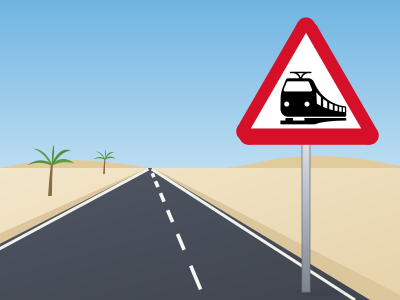
- ASlow down and cross quickly before the train arrives
- BLook both ways and cross if no train is visible
- CStop at the white line, wait for the lights to stop flashing, then check and cross
- DSound your horn to warn the train and proceed
Answer and explanation in the bank
Every answer above, with the rule it comes from, plus the full 35-question timed test.
Get the Saudi Driving Theory Online Practice Bank - SAR 39What this test covers
Topics include road signs, traffic signals, right of way, roundabouts, speed limits, seat belts, fines and penalties, and the safe-driving rules specific to your vehicle category. Full question-by-question feedback with explanations is shown immediately after you finish the test above.
Frequently asked questions
How many questions is the Asir General Dept. of Traffic truck & bus theory test?
The official General Dept. of Traffic truck & bus theory test in Asir has 35 questions and you need 22 correct (63%) to pass. This practice test has 35 questions.
Is this the real exam?
These are practice questions to help you revise, written to the published rules and to what candidates report from the real test. They are not the official Saudi exam and the real question bank, format, fees and pass mark are set by the General Department of Traffic (Moroor) and the driving schools, and can change. Always confirm the current requirements with your driving school or the traffic department.
Is this practice test free?
The first 10 questions are free, with no signup, and each shows the answer and the reason. The full 35-question test, timed, is in the Saudi Driving Theory Online Practice Bank (SAR 39, one payment), with every question in the bank.
What does the Asir truck & bus theory test cover?
Road signs, traffic signals, right of way, roundabouts, speed limits, seat belts, penalties and safe-driving rules, plus the handling and safety topics specific to your vehicle.